


Politics
Brexit: not the least surprised

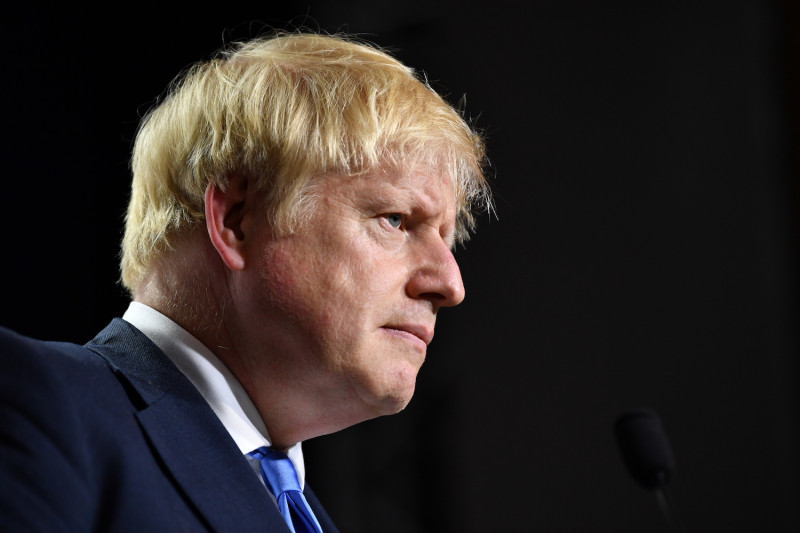
IF it was a tiger that went in the tank, as enthusiastically advocated by Prime Minister Johnson, it was a paper tiger. And all that does is clog up the filters and prevent the engine running. Furthermore, cleaning out the debris is a difficult and expensive job.
But that’s always the same with Johnson. He bounces onto the stage, utters some singularly inappropriate phrases, prattles incoherently for a while and then buggers off to let everyone else – anyone else – sort out the details that he can’t be bothered with (which is all of them).
And so it has come to pass that those “future relationship” talks, even with the “tiger in their tank”, have got absolutely nowhere and have broken up early over “serious” disagreements, with Michel Barnier complaining of “lack of respect and engagement by the UK”.
“Our goal was to get negotiations successfully and quickly on a trajectory to reach an agreement”, Barnier said in a statement. “However, after four days of discussions, serious divergences remain”.
That, of course, comes as absolutely no surprise. If there is any surprise to be had, it’s that the talks lasted as long as four days. There have never been any indications that Johnson has been serious about these talks, so the likelihood was always that they were going to break up in disarray.

NO NEW PROPOSALS FROM UK
Barnier says that Brussels had “listened carefully” to Johnson when he did his “thing” about tigers, and made vacuous noises about wanting a “political agreement” over the summer. And now that the talks have broken down, the recriminations flow, to the point where not much sense can be made of them.
We learn from Barnier, for instance, that the EU has recognised British “red lines”. These include the role of the ECJ, the refusal to be bound by EU law, and a fisheries agreement that recognises the UK’s sovereignty. It has thus hinted at several concessions, across the board.
This is matched by a complaint that the EU’s willingness to be flexible on its initial demands in light of the British positions had not been met with similar understanding from Downing Street over Brussels’ red lines. Downing Street needed to “reciprocate with new proposals”, the EU says.
David Frost, on the other hand, seems to be in the market for extruded verbal material, saying virtually nothing at some length. His big thing is that the British side still wants “an early understanding of the principles underlying an agreement”, which he hopes can be secured by the end of July.
SHIFTING THE BLAME
Oddly enough, the normally astute Denis Staunton for the Irish Times seems to think that the abrupt end to these talks was “not only surprising but perplexing”.

Perplexing it may be – nothing to do with Johnson is ever straightforward – but surprising it never was. The writing has been on the wall so long it is starting to fade.
Staunton, however, takes some comfort from “the language on both sides”. He says it was “restrained” and Frost’s had none of the belligerence that often characterises his rhetoric towards Brussels.
The fact that Barnier chose not to give a press conference, he says, was seen by some as another happy augury but Staunton says it wasn’t. Simply, he was deferring to Angela Merkel and Ursula von der Leyen, who gave a joint press conference later.

However, Barnier is also said to have accused British trade negotiators of “a lack of respect” and when von der Leyen and the German Chancellor got going, Merkel warned the EU Member States that they needed to be prepared for a no-deal TransEnd.
Why the tone of the two parties should thus give rise to such optimism isn’t immediately apparent. At this stage, with little to be gained either way – with only a very limited trade deal on the stocks, one of the greater concerns must be to establish a firm base for blame avoidance.
Barnier, in particular, will want to tell his domestic audience that the EU has gone the extra mile, not least because it then clears the way for the EU to do what it always does – screw the Brits.
A WEAK, UNLOVELY THING
Team Johnson, from the look of it, is away with the fairies anyway. And with Frost apparently trotting off to a new job at the end of the month (or not), he has good reasons for not starting a spat that he can’t finish.
But what makes this more than a little bit redundant – and so utterly tedious – is that we’re almost down to the level of two bald men fighting over a comb. Any deal done – if there is one done – must be measured not by what it includes but what is left out. So very little can be agreed in the time that anything delivered will be a weak, unlovely thing.
But the real giveaway is that the UK has yet to set out plans for how it wants an agreement to work, on areas as diverse its own state aid regime, to a fully functioning fishing policy.
Throughout the entire Brexit period the UK stance has been to let the EU make the running, and then knock down what it offers. There is only so much of that one can take before even the most patient of negotiators begins to feel they are being taken for mugs.
JOHNSON GOING THROUGH THE MOTIONS
Yet, on fishing, in particular, Barnier is saying that there needs to be a “sustainable and long-term solution” on fisheries, taking into account the needs of European fishermen for certainty over their livelihoods. An effective all-encompassing dispute settlement mechanism is also necessary, to ensure both sides stick to their obligations.
Here, the issue is – as it is elsewhere – that the British government doesn’t have the first idea of how to manage a modern fishery. The Ministry of Agriculture, Fisheries and Food (MAFF) has given way to Defra, which doesn’t even have “fisheries” in its title. Any expertise there was in the department has long gone.
Something about which we haven’t been hearing much of late is also of importance – governance. A little while back, this was of some importance, with the EU wanting a single, over-arching agreement, with standard rules and institutions, and a common dispute procedure.
Now we don’t seem to hear so much of this, but that doesn’t mean it is no longer important. Most likely, Barnier has given up on trying to get any sense out of Team Johnson and is just going through the motions.
THE EU CAN WAIT
The thing for sure here is that he doesn’t need to throw his toys out of the pram. All he has to do is wait until after December 31, and watch the Brits having hissy-fits when they discover what being outside the internal market really means.
In time – and perhaps when there is a different administration – Barnier (or his successor) can come back and we can all start talking again. Then perhaps the UK will have people who are prepared to behave like adults and look anew at what sort of relationship we need with our closest neighbours.
Until then, we are going to see a lot of this sort of ritual dance. It may die down during the holiday period and pick up the tempo as the autumn turns to winter. And there may be a last flurry of activity in the dying days of December, although that will be for show. Any agreement has to be ratified, so a last-minute deal is not on the cards.
Meanwhile, there will be more talks next week. These will be in London, another session of face-to-face meetings. I don’t expect we’ll get much more out of them than we did this week. If we do, then that really will be a surprise.
This article is reproduced by kind permission of Dr Richard North from his blog http://eureferendum.com/.
Dr Richard North is a veteran supported of Britain’s exit from the EU and co-author, with Christopher Booker, of ‘The Great Deception: The Definitive History of the EU’ and before that co-author of two other books on EU-related matters.
He was group research director of the EDD group in the European Parliament and has written numerous pamphlets and articles on EU matters.



A CALL by a Pembrokeshire shooting club for more disability-friendly facilities has been given the go-ahead by county planners.
In an application to Pembrokeshire County Council, Haverfordwest Target Shooting Club, through agent Andrew Sutton Architecture, sought permission for an extension to existing target shooting club building at The Firing Range, Withybush Road, Haverfordwest to improve accessibility and internal facilities, together with associated landscaping works.
A supporting statement said: “The club’s own published history states it was founded in 1968, moved from the Drill Hall to the old wartime airfield butts at Withybush by the early 1970s, and had developed facilities over time, including the clubhouse by 1999. The established leisure/community use has existed on the site for a number of years and the proposal does not seek to intensify the core activity beyond that already authorised/established.”
It added: “The primary objective of the scheme is to improve inclusive access to the club’s facilities for disabled users and those with reduced mobility. The internal arrangement will provide adequate entrance and lobby space, clear accessible routes and appropriately designed sanitary accommodation, including an accessible wetroom/shower and separate WC.”
It also said accessible parking and surfacing designed to provide a firm, even, slip-resistant route from parking to the principal entrance.
It added: “The Equality Act 2010 places duties on service providers to make reasonable adjustments so that people with additional access needs are not placed at a substantial disadvantage.
“The proposal is therefore a positive enhancement to a community/leisure facility and supports wider policy objectives for inclusive environments.”
It went on to say: “The club operates within a highly controlled environment, and the proposed works will maintain and enhance safety and security measures.”
The application was conditionally approved by planners.

A HEALTH board has been criticised by Audit Wales after GP contracts worth more than £10m were awarded without sufficient due diligence checks.
Aneurin Bevan University Health Board allowed a GP partnership associated with eHarley Street Primary Care Solutions to take on eight GP contracts in south-east Wales, with a combined annual value of around £10.1m.
Audit Wales said the board should have carried out greater scrutiny before approving the arrangements, including checks on financial resilience, workforce plans, business risks and the partnership’s ability to manage several practices at once.
However, the watchdog found no evidence of fraud and noted the board was dealing with significant pressure in general practice, including vacant contracts and limited interest from other bidders.
The report said weaknesses in governance and scrutiny contributed to later disruption and uncertainty for patients and staff when problems emerged.
Concerns included financial and workforce pressures, unpaid invoices, and issues relating to tax and pension payments. Some contracts were later handed back, requiring the health board to step in to protect services.
Natasha Asghar MS, Welsh Conservative Shadow Cabinet Minister for Health and Social Care, said the findings were “deeply concerning”.
She said: “Patients and staff were left facing disruption and uncertainty because proper scrutiny was not carried out before these contracts were awarded.
“The Welsh Conservatives believe lessons must be learned to ensure robust checks are in place, protect frontline services and restore confidence in primary care across Wales.”
Aneurin Bevan University Health Board accepted the recommendations and said it had already strengthened its processes.
Audit Wales said the case highlighted the need for stronger checks before GP contracts are transferred, particularly when a single partnership is taking on multiple practices in a short period.

THE WELSH CONSERVATIVES have called on the Welsh Government to clarify whether new Equality and Human Rights Commission guidance will be implemented in schools across Wales.
Shadow education minister Sam Rowlands MS has written to Cabinet Minister for Education and the Welsh Language Anna Brychan MS following the UK Supreme Court ruling on the Equality Act.
Mr Rowlands said schools, teachers, governors and parents needed clear answers on how the guidance would apply in practice, including on single-sex spaces, safeguarding, changing facilities and sports participation.
He said: “Parents, teachers and pupils deserve clarity from the Welsh Government.
“Schools cannot be left in limbo while ministers avoid making a decision on such an important safeguarding and legal issue.
“The Equality Act applies in Wales, and schools now need clear guidance on what this means in practice.”
In his letter, Mr Rowlands asks whether updated guidance will be issued to schools in Wales, whether schools will be expected to amend existing policies, and what advice will be given to headteachers on safeguarding and compliance with the Equality Act.
He also asks whether the Welsh Government intends to diverge from the approach set out by the EHRC.
The letter says schools and parents require “clear and consistent guidance” to ensure the rights, dignity and safety of all pupils are respected.


Business4 hours ago
Plaid energy policy challenged by Labour after Adam Price interview
LABOUR SAYS MINISTERS MUST EXPLAIN COST AND TIMETABLE FOR PYLON PLANS PLAID CYMRU’S approach to energy infrastructure has come under...


Community4 hours ago
Pembroke Fair praised as well-organised community event
HORSES, STALLS AND FAMILY CROWDS RETURN TO MONKTON FAMILIES, horse owners and visitors turned out in force for Pembroke Fair...

Local Government3 days ago
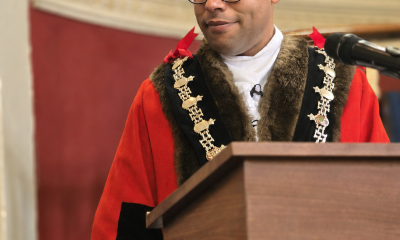
Youngest mayor in century takes office in Haverfordwest
Randell Izaiah Thomas-Turner makes history as town’s first millennial mayor and first from a diverse background HAVERFORDWEST has welcomed a...


Community3 days ago
Pembroke Fair set to return after last year’s success
STALL HOLDERS INVITED AS HORSE DRIVE PLANNED PEMBROKE Fair is set to return this weekend following the success of last...


Crime3 days ago
Neyland man accused of running over traffic worker’s foot
Jury hears conflicting accounts over roadworks incident in Milford Haven A NEYLAND man has appeared before Swansea Crown Court accused...

Community3 days ago
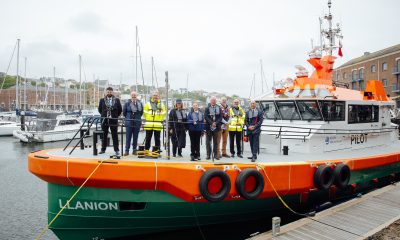
New pilot boat Llanion dedicated at emotional Milford Haven ceremony
Vessel dedicated at Mackerel Quay as Port marks major investment in safety and resilience MILFORD HAVEN’S new state-of-the-art pilot vessel...


Local Government3 days ago
Police and GoSafe to target speeding in Newport and Dinas
RESIDENTS’ concerns over speeding and anti-social driving have prompted planned enforcement action in the Newport and Dinas areas. Dyfed-Powys Police...

Community4 days ago
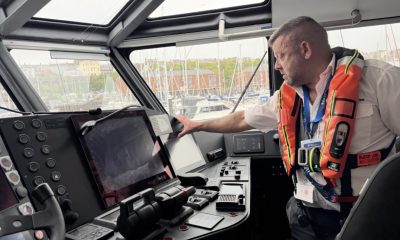
Safety first as Milford Haven’s new pilot boat marks end of troubled chapter
Gary Solomon, who was aboard St Davids during the 2016 collision, helped shape new self-righting vessel Llanion from conception to...


Crime4 days ago
Cocaine courier caught with £15,000 haul in Pembroke Dock
Defendant transported high-purity drugs from Cardiff to Pembrokeshire for £210 A PEMBROKESHIRE man caught transporting more than £15,000 of high-purity...


News5 days ago
Car bursts into flames near Redberth Croft as road closed after incident
Nobody injured after vehicle fire near A477 prompts emergency response A CAR was destroyed by fire near the entrance to...
-

 News2 days ago
Watchdog criticises health board over £10m GP contract checks
-

 Crime4 days ago
Farm owner in court after 26 dogs removed over welfare concerns
-
 News3 days ago
Paul Davies meets Openreach Cymru at the Senedd to discuss Full Fibre rollout
-
 Crime4 days ago
Tree surgeon sentenced for failing to provide breath test
-

 Crime4 days ago
Pembrokeshire teenager admits driving almost four times over drug-drive limit
-

 News4 days ago
Milford man admits handling stolen goods from three local properties
-

 Crime6 days ago
Builder jailed for £82,000 fraud affecting 18 victims
-
 Crime4 days ago
Pembroke Dock drink-driver arrested on Cleddau Bridge