


Politics
Russia Report flays government inaction


AFTER nine months of delay, which had nothing whatsoever to do with the embarrassment its content could have caused to successive Conservative Prime Ministers, the long-awaited Intelligence Services Committee report into Russian interference in the UK’s democratic processes was published on Tuesday, July 21.
The Committee delivered its report to the UK Government last autumn, well before the announcement of December’s General Election. However, the Government delayed its release indefinitely.
PUBLICATION AFTER GRAYLING FAILED AGAIN
The report’s publication on Tuesday followed an attempt by Number 10 Downing Street to rig the election of a new Chair for the Committee. Former Attorney-General Dominic Grieve QC stood down at the last election.
Last week, Number 10 attempted to parachute in a patsy to replace Dominic Grieve, former Cabinet Minister Chris Grayling, hoping to kick the report even further into the long grass. The effort failed comically when the Government’s nominee lost a rigged election. The new Chair, Julian Lewis, a Conservative MP, had the Conservative whip withdrawn from him as a result of ‘disloyalty’ to Number 10.
The attempt to thwart the report’s publication – or to neuter its already heavily redacted form – rebounded badly on Boris Johnson and draws attention to some of the report’s more uncomfortable conclusions regarding the extent of Russian infiltration into the UK’s public life.
The report is a scathing assessment of the UK Government’s continued failure to either adequately assess or even investigate how Russia, or those associated with the Putin regime, attempted to influence the UK electorate.

KEY FINDINGS
• Russian influence in the UK is the new normal. Successive Governments have welcomed the oligarchs and their money with open arms, providing them with a means of recycling illicit finance through the London ‘laundromat’, and connections at the highest levels with access to UK companies and political figures.• This has led to a growth industry of ‘enablers’ including lawyers, accountants, and estate agents who are – wittingly or unwittingly – de facto agents of the Russian state.
• It clearly demonstrates the inherent tension between the Government’s prosperity agenda and the need to protect national security. While we cannot now shut the stable door, greater powers and transparency are needed urgently.
• UK is clearly a target for Russian disinformation. While the mechanics of our paper-based voting system are largely sound, we cannot be complacent about a hostile state taking deliberate action to influence our democratic processes.
• Yet the defence of those democratic processes has appeared something of a ‘hot potato’, with no one organisation considering itself to be in the lead, or apparently willing to conduct an assessment of such interference. This must change.
• Social media companies must take action and remove covert hostile state material: Government must ‘name and shame’ those who fail to act.
• We need other countries to step up with the UK and attach a cost to Putin’s actions. [The Russian state’s coordination of the Novichok attack in] Salisbury must not be allowed to become the high watermark in international unity over the Russia threat.
Several issues addressed in the published version of the Russia Report are covered in more depth in a Classified Annex which is unavailable for public scrutiny.
GOVERNMENT DIDN’T RECOGNISE THREAT
A statement by the Committee said: “There have been widespread allegations that Russia sought to influence voters in the 2016 referendum on the UK’s membership of the EU: studies have pointed to the preponderance of pro-Brexit or anti-EU stories on RT and Sputnik, and the use of ‘bots’ and ‘trolls’, as evidence.
“The actual impact of such attempts on the result itself would be difficult – if not impossible – to prove. However what is clear is that the Government was slow to recognise the existence of the threat – only understanding it after the ‘hack and leak’ operation against the Democratic National Committee, when it should have been seen as early as 2014 (when Russia attempted to interfere in the Scottish Independence Referendum). As a result, the Government did not take action to protect the UK’s process in 2016.”
“The Committee has not been provided with any post-referendum assessment – in stark contrast to the US response to reports of interference in the 2016 presidential election. In our view, there must be an analogous assessment of Russian interference in the EU referendum.”

In a press conference following the report’s publication, Chair of the Intelligence Services Committee, Julian Lewis recused himself from commenting on the report. He told media as he was not a member of the committee when it drew up the report, he would leave answers on its contents to two MPs who were members of it at the relevant time.
NO EFFORT TO INVESTIGATE
Members of the Intelligence Select Committee (ISC) said there was ‘no evidence’ that Russia sought to influence the 2016 Brexit referendum, but only because the government did not try to find out if it had.
One member, Stewart Hosie MP (SNP) said: “There has been no assessment of Russian interference in the EU referendum and this goes back to nobody wanting to touch the issue with a 10-foot pole.

“The UK Government has actively avoided seeking evidence as to whether Russia interfered.”
The report notes: “For example, it was widely reported shortly after the Scottish referendum that Russian election observers had suggested that there were irregularities in the conduct of the vote, and this position was widely pushed by Russian state media.
“We understand that HMG viewed this as being primarily aimed at discrediting the UK in the eyes of a domestic Russian audience.”
Russian propaganda was widely shared and effective in Scotland.
Over 87,000 people signed a petition demanding a re-vote following the Russian allegations of electoral fraud.
Kevan Jones, a former Labour defence minister, said all the evidence of Russian interference was there from the Scottish referendum
He said: “Short of a large van outside Downing Street, with a billboard on it saying, ’this is what was going on’, what more did the government need? Why was the decision taken not to look at the (Brexit) referendum?”
He said the Government lied about why Russia report couldn’t be published before the election.
Commenting on the report the Shadow Home Secretary, Kit Thomas-Symonds, said: “The report outlines a litany of hostile state activity, from cyber warfare, interfering in democratic processes, acts of violence on UK soil and illicit finance. On every level, the government’s response does not appear to be equal to the threat. While on key issues it is clear that there is no overall strategic response to this challenge – little wonder the government has been so keen to delay the publication.”
MONEY TALKS REALITY BITES
The Committee’s reports and its members’ comments leave little doubt that Theresa May actively declined to start an investigation into allegations of foreign interference in the 2016 Referendum campaign.
In a section about the referendum, the report says: “The written evidence provided to us appeared to suggest that HMG [Her Majesty’s government] had not seen or sought evidence of successful interference in UK democratic processes or any activity that has had a material impact on an election, for example influencing results.”
While any number of conspiracy theories swirl about her failure to at least ask GCHQ, MI6 or MI5 to look into the allegations, it is entirely likely that Mrs May’s decision was based in cold, hard realpolitik.
If an investigation had uncovered evidence of Russian interference, the consequences for the UK potentially outweighed any effect the interference had on the Referendum’s outcome.
Brexit hardliners within her party and fringe figures such as Nigel Farage would never have accepted any finding which undermined the legitimacy of the Referendum result. The result could have been political chaos and – quite possibly – civil disruption.
An investigation would also have provided an impetus for defeated Remain campaigners to challenge the result through the Courts.
The scope for revelations about prominent Conservative figures’ connection with Russia and Russian money might have caused severe embarrassment at a time the Government was trying to set the Brexit agenda.
For example, Alexander Termerko is a former senior apparatchik in the Russian Ministry of Defence. He is among the Conservative’s largest donors (£1.3m over seven years). Born in Ukraine when it was part of the former Soviet Union, Mr Termerko rose to prominence during the Yeltsin era. He became involved in manufacturing arms and an oil tycoon under Vladimir Putin. He fled to the UK when threatened with a politically-motivated prosecution. Mr Termerko has donated generously to several Conservative MPs, including Carmarthen West and South Pembrokeshire MP Simon Hart.
None of the above excuses the failure to investigate but, as one possible reading of events, it offers a compelling rationale for Mrs May’s and Mr Johnson’s reluctance to look too deeply into any foreign interference in the Brexit Referendum.


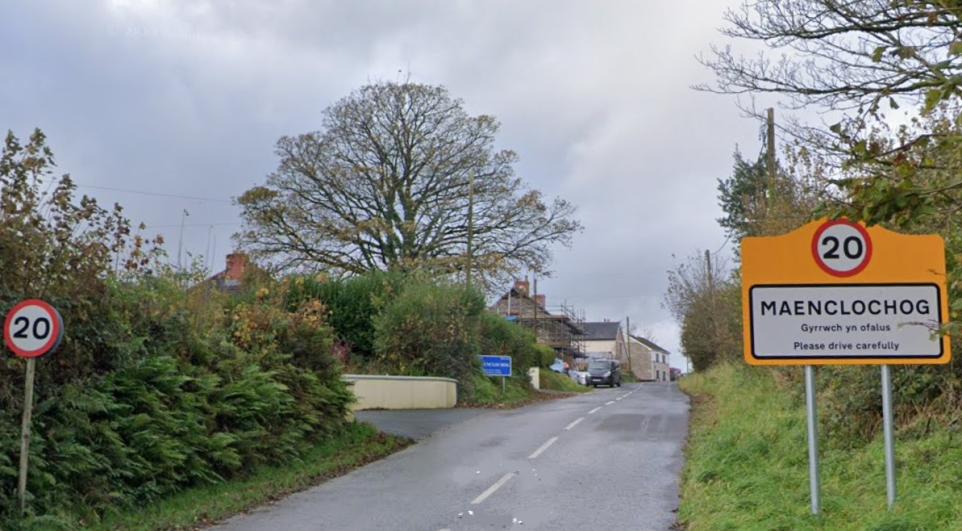
A CARE HOME scheme for a Pembrokeshire village, which saw objections from the local community council after youngsters had ‘absconded’ from similar sites locally, will need a formal application, planners have said.
In an application to Pembrokeshire County Council, Future Nest Care Ltd, through agent Evans Banks Planning Limited, sought a certificate of lawfulness to allow the use of dwelling house Brynawel, Maenclochog as a care home for two youngsters between the ages of five and 16 with specific needs.
A supporting statement said the youngsters would be supported by three qualified and experienced staff members during the day and two at night; the certificate of lawfulness application made to establish that formal planning permission is not required to use an existing two-storey detached dwellinghouse into a residential care facility to accommodate two children, supervised 24/7 by staff.
It added: “The proposed use is designed to provide a safe, nurturing, and family-style environment to help the young residents develop essential life skills and prepare for independent living. The residing youngsters will attend local schools or colleges and participate in community life, in the same manner as any young person living in a traditional family home.
“The qualified and experienced staff will prepare those children for their re-introduction back into a life without supervised care. The residing youngsters would attend the local school or further education college, as would any youngster under 18 living in a family home.”
However, Maenclochog Community Council objected to the proposals after residents expressed their concerns.
In its objection, it said: “This proposal has raised significant concern within the village, particularly as there are already multiple provisions for similar accommodation on the outskirts of Maenclochog.
“In the past, young people accommodated at these facilities have frequently absconded, leading to repeated searches across the surrounding area. This history heightens local anxiety regarding the introduction of further such provision within the village.”
It added: “Neighbouring residents have not been consulted regarding the proposed change of use, which has led to unease and a lack of confidence in the applicants’ intentions and in the suitability of the site for this form of development.”
It went on to say: “Before any decision is made, Maenclochog Community Council strongly believes that local residents should be afforded the opportunity of a public consultation. While the proposal may represent an economic decision for the property owners, it has wider implications for the village and its residents.”
An officer report recommended refusal of the certificate of lawfulness, concluding that “a material change of use would occur in relation to the proposed use of the site and as a result a certificate of proposed lawful use cannot be granted”.
In refusing the lawfulness call, planners said “the frequency of staff changes and the number of vehicle movements associated with the proposed use of the property would be materially different to those associated with its lawful use as a dwelling,” the material change of use to a care home requiring a formal planning application.


A CALL by a Pembrokeshire shooting club for more disability-friendly facilities has been given the go-ahead by county planners.
In an application to Pembrokeshire County Council, Haverfordwest Target Shooting Club, through agent Andrew Sutton Architecture, sought permission for an extension to existing target shooting club building at The Firing Range, Withybush Road, Haverfordwest to improve accessibility and internal facilities, together with associated landscaping works.
A supporting statement said: “The club’s own published history states it was founded in 1968, moved from the Drill Hall to the old wartime airfield butts at Withybush by the early 1970s, and had developed facilities over time, including the clubhouse by 1999. The established leisure/community use has existed on the site for a number of years and the proposal does not seek to intensify the core activity beyond that already authorised/established.”
It added: “The primary objective of the scheme is to improve inclusive access to the club’s facilities for disabled users and those with reduced mobility. The internal arrangement will provide adequate entrance and lobby space, clear accessible routes and appropriately designed sanitary accommodation, including an accessible wetroom/shower and separate WC.”
It also said accessible parking and surfacing designed to provide a firm, even, slip-resistant route from parking to the principal entrance.
It added: “The Equality Act 2010 places duties on service providers to make reasonable adjustments so that people with additional access needs are not placed at a substantial disadvantage.
“The proposal is therefore a positive enhancement to a community/leisure facility and supports wider policy objectives for inclusive environments.”
It went on to say: “The club operates within a highly controlled environment, and the proposed works will maintain and enhance safety and security measures.”
The application was conditionally approved by planners.

A HEALTH board has been criticised by Audit Wales after GP contracts worth more than £10m were awarded without sufficient due diligence checks.
Aneurin Bevan University Health Board allowed a GP partnership associated with eHarley Street Primary Care Solutions to take on eight GP contracts in south-east Wales, with a combined annual value of around £10.1m.
Audit Wales said the board should have carried out greater scrutiny before approving the arrangements, including checks on financial resilience, workforce plans, business risks and the partnership’s ability to manage several practices at once.
However, the watchdog found no evidence of fraud and noted the board was dealing with significant pressure in general practice, including vacant contracts and limited interest from other bidders.
The report said weaknesses in governance and scrutiny contributed to later disruption and uncertainty for patients and staff when problems emerged.
Concerns included financial and workforce pressures, unpaid invoices, and issues relating to tax and pension payments. Some contracts were later handed back, requiring the health board to step in to protect services.
Natasha Asghar MS, Welsh Conservative Shadow Cabinet Minister for Health and Social Care, said the findings were “deeply concerning”.
She said: “Patients and staff were left facing disruption and uncertainty because proper scrutiny was not carried out before these contracts were awarded.
“The Welsh Conservatives believe lessons must be learned to ensure robust checks are in place, protect frontline services and restore confidence in primary care across Wales.”
Aneurin Bevan University Health Board accepted the recommendations and said it had already strengthened its processes.
Audit Wales said the case highlighted the need for stronger checks before GP contracts are transferred, particularly when a single partnership is taking on multiple practices in a short period.



Business22 hours ago
Plaid energy policy challenged by Labour after Adam Price interview
LABOUR SAYS MINISTERS MUST EXPLAIN COST AND TIMETABLE FOR PYLON PLANS PLAID CYMRU’S approach to energy infrastructure has come under...


Community23 hours ago
Pembroke Fair praised as well-organised community event
HORSES, STALLS AND FAMILY CROWDS RETURN TO MONKTON FAMILIES, horse owners and visitors turned out in force for Pembroke Fair...

Local Government3 days ago
Youngest mayor in century takes office in Haverfordwest
Randell Izaiah Thomas-Turner makes history as town’s first millennial mayor and first from a diverse background HAVERFORDWEST has welcomed a...


Community4 days ago
Pembroke Fair set to return after last year’s success
STALL HOLDERS INVITED AS HORSE DRIVE PLANNED PEMBROKE Fair is set to return this weekend following the success of last...


Crime4 days ago
Neyland man accused of running over traffic worker’s foot
Jury hears conflicting accounts over roadworks incident in Milford Haven A NEYLAND man has appeared before Swansea Crown Court accused...


Community4 days ago
New pilot boat Llanion dedicated at emotional Milford Haven ceremony
Vessel dedicated at Mackerel Quay as Port marks major investment in safety and resilience MILFORD HAVEN’S new state-of-the-art pilot vessel...


Local Government4 days ago
Police and GoSafe to target speeding in Newport and Dinas
RESIDENTS’ concerns over speeding and anti-social driving have prompted planned enforcement action in the Newport and Dinas areas. Dyfed-Powys Police...


Community5 days ago
Safety first as Milford Haven’s new pilot boat marks end of troubled chapter
Gary Solomon, who was aboard St Davids during the 2016 collision, helped shape new self-righting vessel Llanion from conception to...


Crime5 days ago
Cocaine courier caught with £15,000 haul in Pembroke Dock
Defendant transported high-purity drugs from Cardiff to Pembrokeshire for £210 A PEMBROKESHIRE man caught transporting more than £15,000 of high-purity...


News6 days ago
Car bursts into flames near Redberth Croft as road closed after incident
Nobody injured after vehicle fire near A477 prompts emergency response A CAR was destroyed by fire near the entrance to...
-

 News2 days ago
Watchdog criticises health board over £10m GP contract checks
-

 Crime5 days ago
Farm owner in court after 26 dogs removed over welfare concerns
-
 News4 days ago
Paul Davies meets Openreach Cymru at the Senedd to discuss Full Fibre rollout
-
 Crime5 days ago
Tree surgeon sentenced for failing to provide breath test
-

 Crime5 days ago
Pembrokeshire teenager admits driving almost four times over drug-drive limit
-

 News5 days ago
Milford man admits handling stolen goods from three local properties
-

 Crime7 days ago
Builder jailed for £82,000 fraud affecting 18 victims
-

 Crime4 days ago
Milford Haven man admits affray after alleged pub incident