


Politics
Stephen Crabb secures debate on Cashfield Estate evictions


PRESELI MP Stephen Crabb has secured an urgent debate in the House of Commons to draw attention to the eviction of civilian tenants from Ministry of Defence homes.
Seventeen families on the Cashfield estate in Haverfordwest were last month issued with eviction notices by the MoD. Across the UK, 350 households have been issued with eviction notices.
Following initial representations from Stephen Crabb, the MoD said that the notice period can be extended to 12 months. However, the Preseli MP is calling for the eviction notices to be withdrawn altogether and for the MoD to reach an agreement with the owner of the properties, Annington Homes, that will enable the tenants to remain in their homes.
Stephen Crabb has now secured an end-of-day adjournment debate next Thursday (Oct 15) to press the Minister on why the MoD has issued these notices in the middle of a public health and economic crisis. The responsible MoD Minister, Jeremy Quin MP, will respond on behalf of the Government.
Crabb is also working with other MPs who have constituents affected by this recent move and they have a meeting scheduled with the Minister next week where they will again urge a fair outcome from the MoD and Annington Homes for all tenants.

In securing the debate, Stephen Crabb said: “When I met with residents on the Cashfield estate last month I promised I would use whatever opportunity I have to challenge the MoD over its appalling decision to issue these eviction notices. I am pleased I now have the opportunity to speak about this issue in Parliament and to request that the Minister withdraw these notices.
“The homes on the Cashfield estate are good quality properties and the local families like living there. We have a shortage of decent affordable homes for families to rent in Pembrokeshire. The MoD and Annington need to take a different approach.”


PLAID CYMRU has renewed calls for the Crown Estate to be devolved to Wales after figures showed income linked to Wales rising from £8.7 million to £210 million in five years.
The party says the increase, described as a rise of around 2,300 per cent, shows that Welsh natural resources are generating huge sums while communities in Wales see little direct benefit.
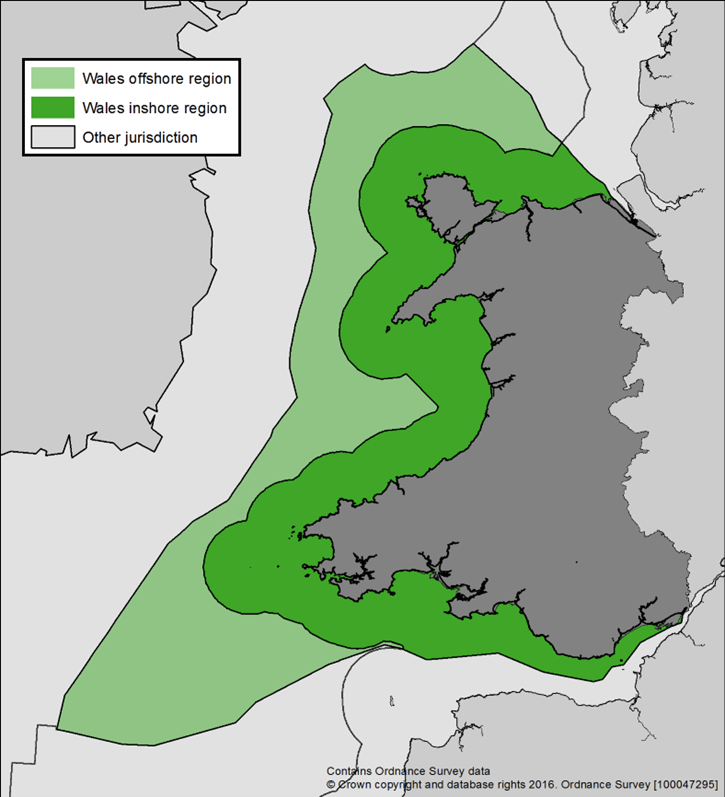
The Crown Estate manages much of the seabed around Wales, England and Northern Ireland, including areas leased for offshore wind developments. Its profits are paid to the UK Treasury, rather than being retained directly in Wales.
Plaid Cymru’s Ceredigion-Penfro branch said: “Crown Estate profits are up 2,300% but Welsh communities see no benefit.”
The issue has become increasingly topical as Pembrokeshire and the wider west Wales coast are being promoted as key locations for the next generation of floating offshore wind in the Celtic Sea.
Supporters of devolution argue that Wales should have control over the revenue generated from its coastline, seabed and natural resources, with profits reinvested in local infrastructure, ports, skills, transport and public services.
They also point to Scotland, where the Crown Estate has already been devolved. In Scotland, revenue from Crown Estate assets is managed north of the border and contributes to Scottish public finances.
Plaid Cymru says Wales should be treated in the same way.
The party argues that, as offshore wind expands, Wales risks seeing major energy infrastructure developed around its coastline while the financial rewards continue to flow to Westminster.
The Crown Estate has benefited significantly from offshore wind leasing in recent years. Across the UK, the estate has reported profits of more than £1 billion for a third consecutive year, with offshore wind continuing to play a major role in its income.
In Wales, the political argument is sharpened by the scale of potential development in the Celtic Sea.
Ports such as Milford Haven and Port Talbot are expected to play a major role in supporting floating offshore wind, with politicians and industry leaders saying the sector could bring thousands of jobs and major investment.

However, campaigners say Wales must secure more than construction work and supply-chain promises. They argue that long-term control of Crown Estate revenues would allow Wales to build a lasting national benefit from renewable energy.
The UK Government has previously resisted calls to devolve the Crown Estate in Wales. Ministers have argued that Crown Estate profits are returned to the Treasury and used for public spending across the UK.
Opponents of devolution also say Wales already receives funding through the wider UK funding settlement, and that changing the Crown Estate model could add complexity at a time when major energy projects need certainty.
But calls for change have continued to grow, particularly as the value of offshore wind leases has increased.
For Plaid Cymru, the issue is now being framed as a question of fairness.
The party says Wales is being asked to host nationally important renewable energy infrastructure while having limited control over the income generated from its own natural resources.
With the Senedd election approaching, the future of the Crown Estate is likely to remain a major political dividing line.
For campaigners, the argument is simple: if Welsh waters are helping to generate hundreds of millions of pounds, Welsh communities should see the benefit.
For the UK Government, the current system keeps Crown Estate revenue within the UK-wide public finances.
The debate now turns on whether Wales should continue under that arrangement, or follow Scotland in taking control of Crown Estate assets for itself.

FIRST MINISTER Rhun ap Iorwerth has told European ambassadors that Wales is ready to play a stronger role in rebuilding relationships with the EU.
Speaking at Europe House in London yesterday, the First Minister addressed representatives to the UK from major EU nations, setting out his government’s ambition for closer cultural, economic and political co-operation with Europe.
The meeting came just a day after Mr ap Iorwerth made his first overseas visit as First Minister, travelling to Dublin on Wednesday.
In his speech, he described Wales as an “internationalist nation” and said the Welsh Government wanted to strengthen ties with European neighbours.
He said: “This Welsh Government is determined to take meaningful action to strengthen cultural and economic ties with our European neighbours.
“But we must have the tools to do this. That means a stronger Welsh voice in international engagement.”
Mr ap Iorwerth also repeated his support for a closer UK-EU relationship, saying Wales would continue to make the case for the UK to rejoin the Single Market and Customs Union.
He said doing so would “reduce friction, restore alignment and unlock the full potential of our shared economies.”
The First Minister said international engagement was already helping Welsh exports, inward investment and job creation, but added that Wales wanted to build further partnerships across Europe.
He also said the relationship with Europe was about more than trade.
“For generations, opportunities to live, study and work across Europe have shaped Welsh lives and broadened horizons,” he said.
“We are determined that the next generation will not be denied those opportunities.”

Mr ap Iorwerth said Wales was “full of national pride” while also being “confidently internationalist”.
He added: “We stand ready to work with you to deliver that future, together.”

THE WELSH CONSERVATIVES have called for urgent action on hospice funding after Hospice UK warned that services in Wales are facing growing pressure from rising demand, more complex patient needs and increasing staff strain.
Hospice UK says all adult hospices in Wales are now caring for patients with increasingly urgent and complex conditions, while half reported staff distress linked to being unable to support everyone who needs help.
The charity has warned that demand for palliative care in Wales is expected to rise significantly over the coming decades, at the same time as hospices face higher workforce costs, inflationary pressures and continued uncertainty over long-term funding.
Hospices provide end-of-life and palliative care for patients and families, often supporting people in their own homes and communities. Campaigners argue that without sustainable funding, more pressure could fall back on already stretched NHS services.
The Welsh Government has previously announced extra support for the sector, including a £4.3m package in March to help stabilise adult and children’s hospices, alongside a £3m annual uplift in hospice funding. Ministers said the money was intended to help protect staffing capacity and maintain essential services.
However, hospice leaders have continued to call for a longer-term settlement, arguing that one-off grants do not provide the certainty needed to plan services, retain staff and meet future demand.
Natasha Asghar MS, Welsh Conservative Shadow Cabinet Secretary for Health and Social Care, said the latest findings were “deeply worrying”.
She said: “Hospice staff do incredible work supporting patients and families through the most difficult moments imaginable.
“But they cannot be expected to carry on facing rising demand and growing pressure without proper support.
“Plaid Cymru must now deliver a sustainable funding model for hospices in Wales, so patients can receive the compassionate care they deserve, when and where they need it.”
The call comes as end-of-life care remains under increasing scrutiny across the UK, with charities warning that hospices are being asked to do more while relying heavily on charitable donations and short-term support.
Hospice UK has said sustainable funding is needed to ensure patients in Wales can access the right care, in the right place, when they need it.



Sport2 minutes ago
Long Course Weekend gets underway in Tenby as thousands head for county
Three days of swimming, cycling and running begin with The Wales Swim at North Beach THOUSANDS of athletes and supporters...


Climate3 hours ago
Welsh waters, Westminster profits: Crown Estate row reignited in Wales
PLAID CYMRU has renewed calls for the Crown Estate to be devolved to Wales after figures showed income linked to...


Community6 hours ago
Working-class young people ‘shut out’ of marine conservation careers in Wales
New study says marine conservation is becoming a “functionally middle-class” profession as barriers to entry grow A NEW report has...

News8 hours ago
Reform MS: ‘I felt like shouting get out of the water’
Paul Marr says children playing in streams at Pembrokeshire beaches deserve better protection from pollution risks REFORM UK MS Paul...


Health1 day ago
Senedd backs call to rule out hospital downgrades after heated NHS debate
Reform UK amendment passes as West Wales hospital fears remain central political issue THE SENEDD has backed a call for...


News1 day ago
Coastguard callout payments axe sparks fears for coastal communities
VOLUNTEER coastguards across the UK are set to lose callout payments, prompting concern over the future resilience of emergency cover...


Farming2 days ago
Rural Wales ‘left out’ of net zero debate, warns carbon entrepreneur
A WELSH carbon entrepreneur has warned that rural Wales risks being left behind in the national conversation about net zero....


Local Government2 days ago
Tenby Spectacular row continues as organisers say key question remains unanswered
Round Table says legal clarity over pedestrian access is still holding up event plan TENBY ROUND TABLE has welcomed Pembrokeshire...


Community3 days ago
Manorbier fire scandal: Council’s payout just £63,777 after school destroyed
PEMBROKESHIRE COUNTY COUNCIL has accepted an insurance settlement which leaves it with just £63,777.07 after the catastrophic fire which destroyed...


News3 days ago
Bus overturns in major incident near Kidwelly
All passengers rescued as emergency services remain at scene A BUS overturned on the A484 between Kidwelly and Ferryside on...
-

 Health6 days ago
Woman jailed assaults on police, harassment and XL Bully possession
-

 Crime1 day ago
Police appeal after reported rape at Young Farmers rally
-

 Crime6 days ago
Milford Haven woman spared jail despite string of shop thefts
-

 Community5 days ago
The gentle giant behind the tattoos
-

 Crime6 days ago
Spittal man to stand trial accused of ABH
-

 Crime6 days ago
Carmarthenshire pensioner, 86, accused of causing prostitution for gain
-

 Entertainment5 days ago
Harbour Fest to bring music, food and maritime magic to Milford Waterfront
-

 Community7 days ago
Cabinet to review recent decision on crematorium services at special meeting