


News
BBC Wales investigation uncovers potential new evidence in Clydach Murders case

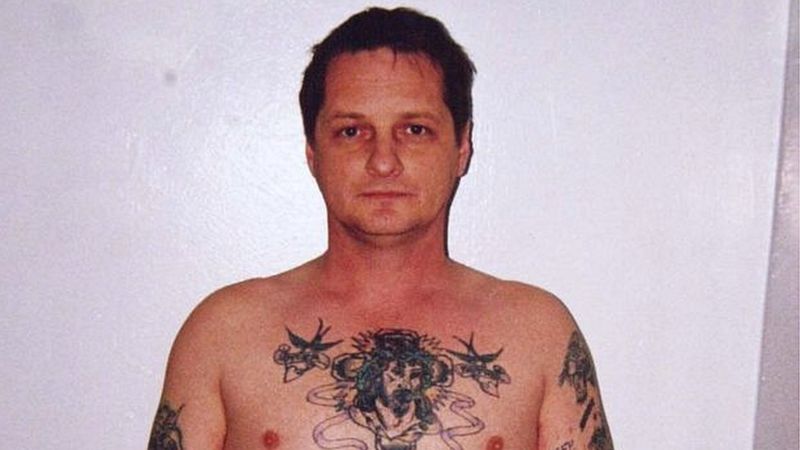
A BBC WALES investigation has uncovered potential new evidence casting doubt over the guilt of a man for the horrific murders of three generations of one family 21-years-ago.
In a powerful one-hour documentary made by the BBC Wales Investigates team, later tonight on BBC One Wales at 9pm and then on BBC iPlayer, reporter Wyre Davies explores whether the conviction of David Morris for one of Wales’ most shocking crimes could be a miscarriage of justice.
Mandy Power, her elderly mother and two young daughters were brutally bludgeoned to death with a metal pole coated in fibre glass at their home in Kelvin Road, Clydach, near Swansea in the summer of 1999. It led to South Wales Police’s largest ever murder inquiry.
Seven years after the murders, local labourer Morris was sentenced to four life prison terms at Newport Crown Court in 2006, later to be reduced to 32 years, after being found guilty of the mass murders.
A year earlier his conviction from a previous trial at Swansea Crown Court in 2002 had been quashed in the Court of Appeal but he was soon to be convicted again.

The brutal murders had sent shockwaves through the close-knit Welsh community in the summer of 1999 and it soon emerged 34-year-old Mandy Power had been involved in a serious love affair with former police officer Alison Lewis at the time she was killed.
Alison Lewis was married and living with her husband – South Wales Police Sergeant Stephen Lewis – when the murders occurred sometime between June 26th and the early hours of June 27th in 1999.
In a twist to the tragic events, Stephen’s twin brother Stuart, an acting inspector with the force at the time, was the most senior officer to arrive at the crime scene that morning.
All three of the Lewis’s quickly became suspects in connection with the murders and just over a year later – in July 2000 – Alison and Stephen Lewis were arrested on suspicion of murder and Stuart Lewis was arrested on the suspicion of perverting the course of justice.

They were questioned but weren’t charged as the Crown Prosecution Service said there was insufficient evidence. All three maintained they were innocent of any involvement.
The focus of the police investigation then sharply turned to Morris after police linked him to a gold chain left at the murder scene, which he admitted was his just weeks before his first trial. He was arrested in March 2001, questioned and charged with the horrific killings in the same month.
However, a new eyewitness account from the night questions whether South Wales Police missed investigating potentially important information during their original inquiries.

Tonight’s programme will hear from a taxi driver, Mike, who claims to have seen twin brothers Stephen and Stuart Lewis walking along Vardre Road minutes away from the crime scene in Kelvin Road after 2am.
“There were two blokes walking towards me on the pavement next to the taxi my side,” Mike said.
“And what struck me was they were very, very similar. Both dark hair, cropped. Very, very similar features.”
Mike says that after seeing their photos in local press coverage he was “100% convinced” the two men he saw were the Lewis brothers. He was working as a taxi driver for a local firm on the night of the murders. He said he contacted police twice about the sightings but says his calls and information he gave to police were never followed up.
Stephen Lewis issued a statement, saying any witnesses who suggest he was in Clydach on the night were mistaken as he was at home all night.
Stuart Lewis has said he did not see either Alison or his twin Stephen that night and was on general patrol when the killings took place; while Alison has said she was at home in bed with her husband, Stephen.
BBC Wales now understands Mike has given his statement to the police, who are investigating.
Wyre Davies also talks to another potential eyewitness in the programme.
John Allen claims to have seen a man carrying a green coloured “kit bag” under his arm near to the crime scene as he drove as a disqualified driver in country lanes in the early hours of the morning with three others.
He says he regrets not informing police at the time but has come forward now.
“I seen him perfectly. Standing there in the middle of the road. When I come round the corner I had to slam on or I would have hit him cause he was practically on my bonnet,” Mr Allen said.
Mr Allen did not report what he saw to the police at the time, and admits that he was driving while disqualified, but says he has now come forward as it’s “been on his mind” for 20 years, and he wants justice.
Another witness who actually gave evidence at David Morris’ trials, also claims to have seen a man carrying a bundle that night near to Kelvin Road.
Nicola Williams reported what she saw to police, provided an e-fit and later identified the man as Stephen Lewis at a video ID parade. At trial her evidence was disputed and it seems it didn’t cause the jury to doubt David Morris’ guilt.
Morris’ legal team believe the potential new sightings could be significant and their testimonials should be investigated by police and the Criminal Cases Review Commission.
Solicitor Maslen Merchant said: “It’s very, very interesting the accounts that they’ve given.
“It’s interesting that they describe events and seeing the same individual – or possibly one of two individuals – around that area at exactly the right time.
“Potentially, new witnesses could provide Dai with a ground of appeal; new “witnesses could get these convictions quashed.
Morris, who has spent more than 19 years in prison for the crime, has always protested his innocence.
His DNA and fingerprints were never discovered at the crime scene in Kelvin Road where he was said to have started four fires to destroy the house after brutally beating his victims to death.
The most incriminating evidence against Morris was the gold chain found at the crime scene which he lied was his until weeks before his first trial.
Winchester University lecturer Brian Thornton has been investigating the murders for more than 10 years from the Crime and Research Centre he set up at the university. He gave BBC Wales access to the original court files housed in a bunker at the university containing thousands of documents and exhibits from the case to investigate.
Professor Thornton said the potential new evidence could prove significant and hopefully provide a breakthrough in terms of getting the case reviewed and back to the Court of Appeal. They plan to include the potential new evidence in a fresh application to the Criminal Cases Review Commission (CCRC).
“The threshold that you have to pass is you have to establish that there is fresh evidence, new evidence, essentially evidence that the jury never heard.
“And this new evidence is going to be right at the heart of the fresh application,” Brian Thornton said.
Morris’ defence team also believe the key to potentially proving his innocence could still lie in the forensics, despite their client’s DNA never being discovered at the scene.
Forensic scientist Joanne Millington has been looking at the case again with fresh eyes.
In the programme she argues there were shortcomings in the original DNA testing of the murder weapon as well as a blood-soaked sock thought to be used as a glove by the killer and both found at the crime scene. Her findings will be included in the new application to be submitted to the CCRC.
Ms Millington says it is already known that an unidentified partial male DNA trace was detected on the murder weapon that isn’t a match to an elimination sample provided by Morris.
“We have an elimination sample from him to compare directly and it doesn’t match his profile,” she said.
Wyre Davies also traces the steps of Morris on the night of the murders and examines the potential sequence of who was killed at the victims’ home in Kelvin Road.
Also appearing in the programme is barrister Simon McKay who has expertise in disclosure and high-profile cases around terrorism and security.
After looking again at disclosure details in both of Morris’s trials, he raises concerns that too many documents were withheld from the defence under the legal umbrella of Public Interest Immunity (PII). The type of documents normally held back as PII are usually only those seen as important for protecting government and public security as well as covert police intelligence.
Mr McKay said: “This case certainly has a significant volume of material which was subject to a series of public interest immunity applications and there is not an obvious reason why you would expect that to arise.
“When one looks at the entire context of the case … then it’s understandable that one walks away from this case with serious concerns that justice has been done.”
The 21-year-old murder case has been back in the spotlight following a campaign set up by Morris’s family.
An online Facebook page aimed at freeing him now has more than 22,000 members. Before lockdown, meetings were held regularly in Swansea to rally support.
Supporters who believe there has been a miscarriage of justice wear or decorate their cars or house with yellow or green garlands and bows.
Morris’ sister Debra Thomas has always protested her brother’s innocence and says she hopes the programme will convince other potential witnesses to come forward with information.
Two attempts to convince the review body to take a fresh look at the case have so far failed, the latest in 2018.
South Wales Police says it undertook an extensive investigation; Morris has twice been convicted by a jury and they await the content of the programme with interest.
The victims’ families – the Dawson and Power families – both issued statements earlier this week, saying they believe the right man was behind bars for the killings.
The Clydach Murders: Beyond Reasonable Doubt airs on BBC One Wales tonight (Thursday) at 9pm; and will be available on BBC iPlayer.

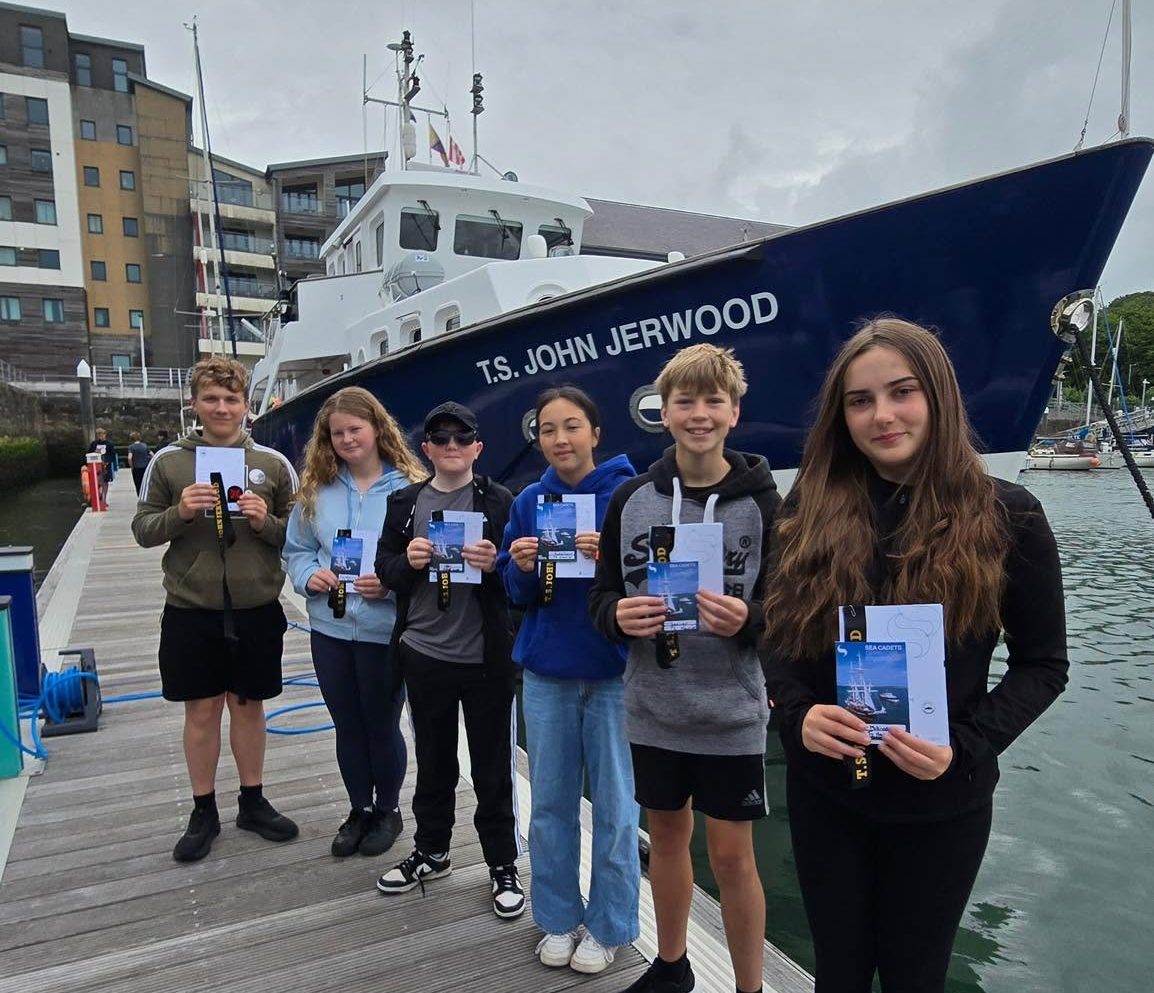
SIX CADETS from Milford Haven Sea Cadets and Royal Marines Cadets have completed a challenging week-long offshore voyage aboard T.S. John Jerwood.
The cadets took to the water for a demanding but enjoyable week, gaining a number of qualifications despite difficult weather conditions.
The unit congratulated all six cadets on their achievements and thanked the Sea Cadet Offshore team for making the voyage possible.
A spokesperson said: “Voyages like this are only made possible by the brilliant Sea Cadet Offshore team. Thank you for the amazing work you do to allow this amazing opportunity to be possible.
“BZ all!”
The Milford Haven unit also thanked West Wales District Sea Cadets, South West Area Sea Cadets, Sea Cadets Offshore, South West Area Senior Staff Officer, and RFCA for Wales for their support.
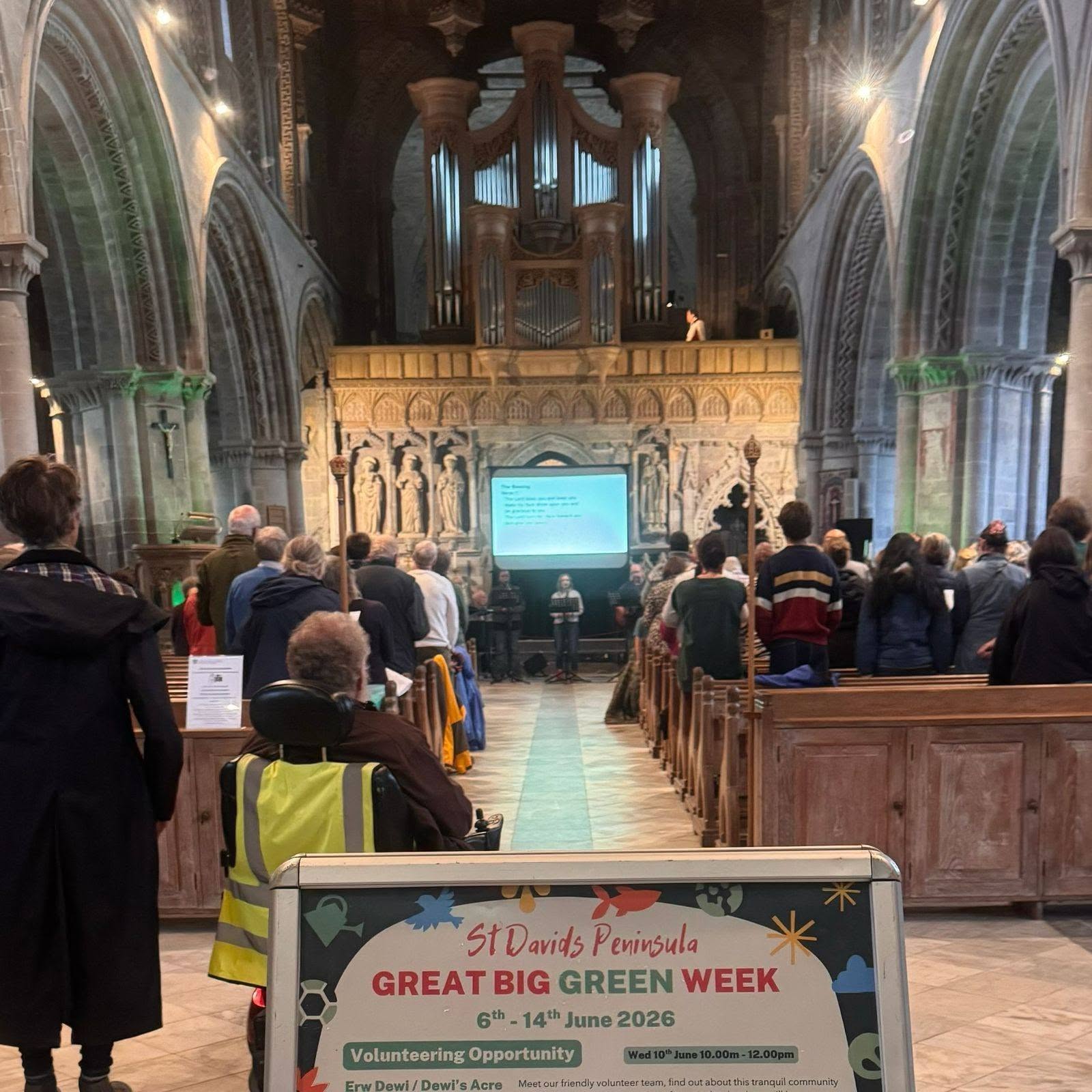
COMMUNITY EVENT CELEBRATES FAITH, NATURE AND ACTION ON CLIMATE CHANGE
NEARLY 100 people gathered at St Davids Cathedral for the Big Green Service, a celebration of faith, community action and care for the natural world.
The service brought together worshippers, local churches and chapels, members of the Cathedral congregation, and visitors from across the world.
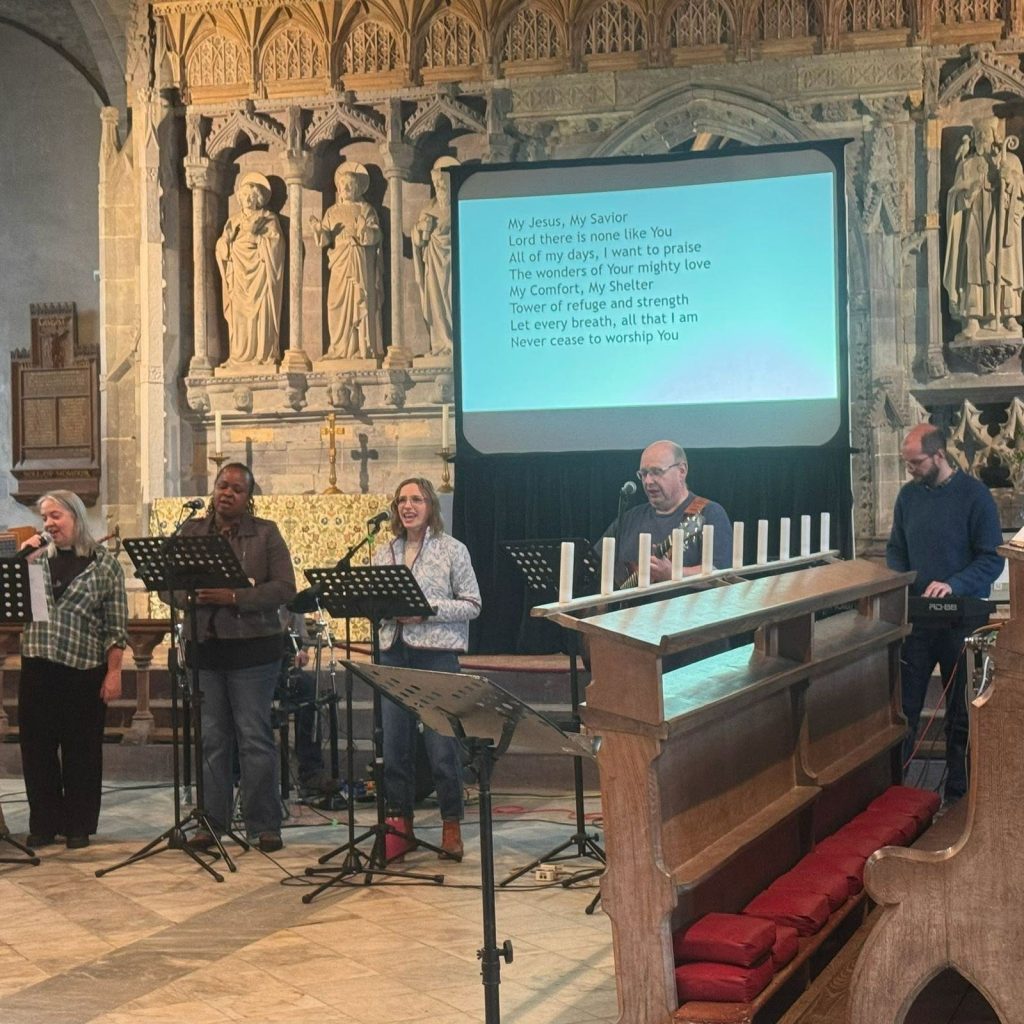
Those taking part included EcoDewi, Erw Dewi, Hope Worship Band, the Cathedral Choristers, Canon Sheridan, Ysgol Penrhyn Dewi, Mamgu Welshcakes, the refreshments team, Cathedral staff and volunteers.
Visitors also attended from California, Philadelphia, Belgium, Malaysia and Patagonia.
Organisers said the event was a reminder to be grateful for the planet and to continue working together to protect it for future generations.

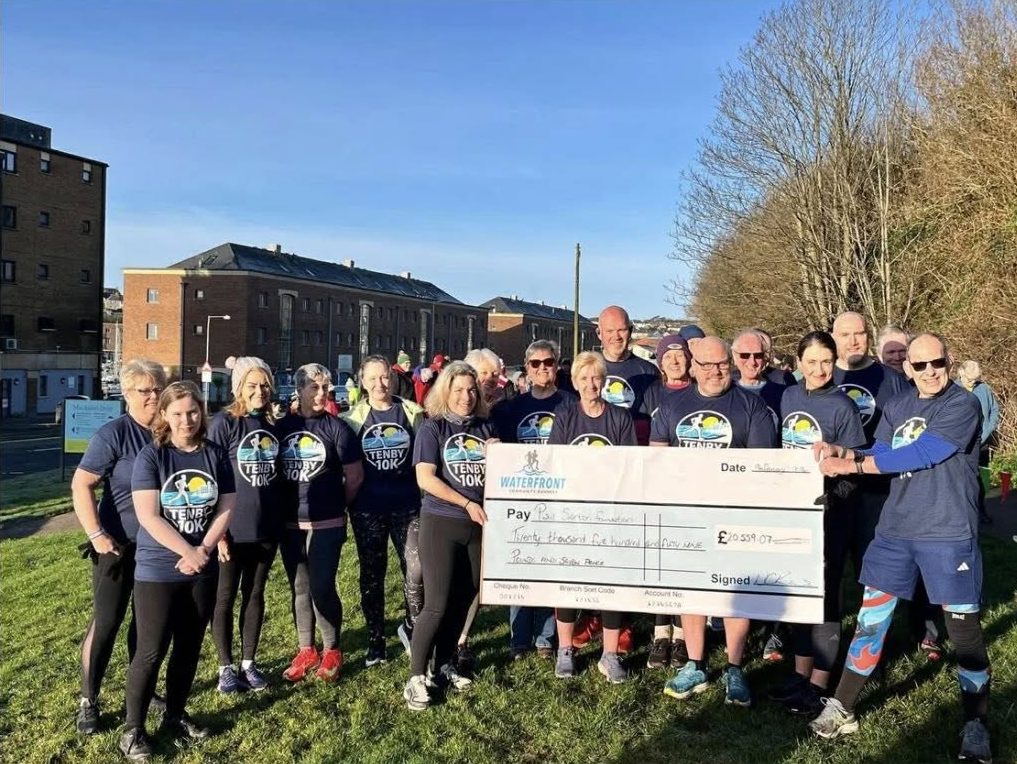
A POPULAR Tenby road race has raised more than £20,000 for Paul Sartori Hospice at Home.
Runners and sponsors taking part in last year’s Tenby 10k raised £20,559.07 for the Pembrokeshire charity, which provides hospice care to people in their own homes.
The race, organised by Waterfront Community Runners, took place in October 2025 and was well supported by locals and visitors, who lined the route through the town to cheer on competitors.
Laura Hugman, Chief Executive of Paul Sartori, has now received the cheque, presented by a selection of those who took part in the event.
This year’s Tenby 10k will take place on Sunday, October 25, 2026, on a closed-road, two-lap course through the centre of Tenby.
More than 400 runners have already signed up, with entries now past 40 per cent capacity and organisers expecting the event to sell out again.
Anyone wishing to take part can enter at www.waterfrontcommunityrunners.co.uk.
All proceeds from this year’s race will again be donated to the Paul Sartori Foundation.
Caption:
Laura Hugman, Chief Executive of Paul Sartori, receives the cheque from Tenby 10k runners and organisers.


Community13 hours ago
Forgotten wartime archive found in Pembroke Dock attic after 80 years
Remarkable family collection reveals story of father and son who served through two world wars A REMARKABLE untouched family archive...


Crime16 hours ago
Milford Haven woman left with facial fractures after drunken attack
A WOMAN in her late fifties suffered facial fractures after being repeatedly punched through the window of her car during...


Crime19 hours ago
Sex offender in senior role at Tenby family hotel
CREST HOTEL GROUP says it is investigating safeguarding concerns after staff at the Imperial Hotel in Tenby raised alarm over...

Sport1 day ago
Runners tackle new route in Ras Y Castell 10k
MORE than 90 runners took to the streets and paths around Cardigan on Friday evening (June 5) for the annual...


Business2 days ago
Turkish Kitchen reaches Welsh restaurant award semi-finals
Haverfordwest café praised as small independent business flies flag for Pembrokeshire A HAVERFORDWEST café has been named as a semi-finalist...

News2 days ago
Person taken to hospital after major emergency response on Tenby Esplanade
A PERSON has been taken to hospital following a major multi-agency emergency response on The Esplanade in Tenby. Dyfed-Powys Police...

News2 days ago
St Davids lifeboat crews rescue damaged yacht and stranded kayaker
TWO St Davids RNLI lifeboats were launched within hours of each other after a yacht was left disabled in a...

Community2 days ago
D-Day 82: Milford Haven remembers sacrifice of Normandy landings
COMMUNITIES gathered in Milford Haven on Saturday (Jun 6) to mark the 82nd anniversary of D-Day. The service, held at...


News2 days ago
D-Day at 82: The secret Pembrokeshire invasion that helped prepare for Normandy
Forgotten wartime operation saw thousands of troops storm Pembrokeshire beaches in rehearsal for D-Day LONG before Allied troops landed on...


News3 days ago
Welsh Water hit with £44.7m enforcement package over sewage failures
Pembrokeshire campaigners say regulator’s action vindicates years of concern over pollution in rivers and coastal waters DŴR Cymru Welsh Water...
-
 Crime4 days ago
Paddleboard company owner loses bid to cut sentence over Haverfordwest tragedy
-

 Crime3 days ago
Milford Haven man admits harassment and assault
-

 Crime6 days ago
Milford Haven man bit neighbour’s neck near cashpoint
-

 News2 days ago
Community appeal for privacy after serious emergency in Pendine
-

 Crime7 days ago
Milford Haven man jailed for illegal Premier League streaming service
-
Crime7 days ago
Haverfordwest man admits cocaine offence as Crown disputes basis of plea
-

 Crime6 days ago
Pembroke Dock driver avoided jail after drug-drive crash
-

 Local Government7 days ago
National Express use of new Haverfordwest interchange still subject to risk checks