


Community
Domestic abuse victims in Wales to be given more time to report assaults

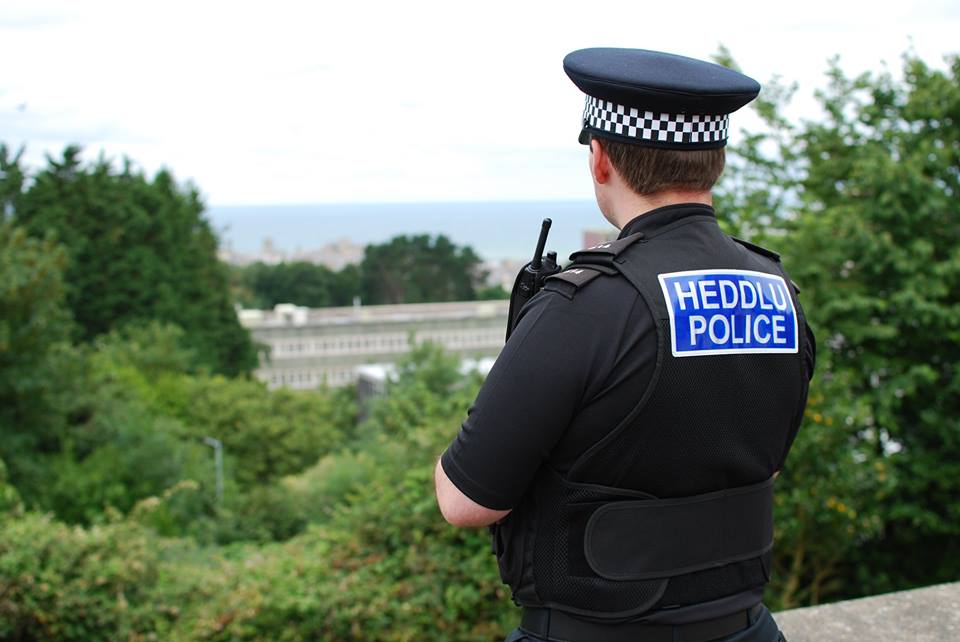
DOMESTIC abuse victims in Wales and England to be given more time to report assaults.
New measures targeted directly at keeping women and girls safer will be added to the Police, Crime, Sentencing and Courts Bill last week (Jan 4) the UK Government has announced.
Under the changes, victims of domestic abuse will be allowed more time to report incidents of common assault or battery against them. Currently, prosecutions must commence within six months of the offence.
Instead, this requirement will be moved to six months from the date the incident is formally reported to the police – with an overall time limit of two years from the offence to bring a prosecution.
Domestic abuse is often reported late relative to other crimes; so this will ensure victims have enough time to seek justice and that perpetrators answer for their actions.
The UK Government says that today’s announcement builds on measures already in the Bill to better protect women such as ending the halfway release of offenders sentenced between four and seven years in prison for serious sexual offences – forcing them to spend two-thirds of their time in prison.

In December, the legislation was amended to make clear that a new legal duty requiring public bodies to work together to tackle serious violence can also include domestic abuse and sexual offences.
It means that these crimes should be taken as seriously as knife crime and homicide, with police, government, and health bodies required to collaborate locally, so that they can develop more holistic strategies to protect people from harm, including through early intervention.
Home Secretary, Priti Patel, said: “My commitment to making our homes, streets and communities safer for women and girls is clear.”
“Every department in government is working to address and tackle all issues relating to violence against women and girls.”
“The Government has a focussed strategy, dedicated to providing essential support for survivors, the prevention of crimes against women and girls and bringing perpetrators to justice with the full force of the law.”
“Our actions include the new Domestic Abuse Act, with important changes to our laws; a newly created national police lead responsible solely on violence against women and girls, and millions of pounds have been invested in direct safety measures through the Safer Streets Fund.”
“These are all important public confidence measures and changes to ensure the safety of women and girls in public spaces.”

The UK Government has also said that taking non-consensual photographs or video recordings of breastfeeding mothers will be made a specific offence punishable by up to two years in prison.
It covers situations where the motive is to obtain sexual gratification, or to cause humiliation, distress or alarm.
Similar legislation introduced by the UK Government in 2019 that criminalised “up skirting” has led to more than 30 prosecutions since it became law.


LEARNING DISABILITY WEEK MARKED WITH MUSIC, LAUGHTER AND INCLUSION IN PEMBROKE DOCK
THE VC GALLERY in Pembroke Dock was filled with music, laughter and energy as visitors came together to celebrate Learning Disability Week.
The event saw popular entertainer Bongo Clive lead a lively session of singing, drumming and participation, with those attending joining in throughout the day.
The gallery said the session had created a joyful atmosphere, with music helping to bring people together and celebrate inclusion, creativity and wellbeing.

A spokesperson for The VC Gallery said: “The smiles said it all. A huge thank you to Bongo Clive for bringing your incredible energy, enthusiasm and positivity to The VC today. You certainly had everyone moving to the beat.”
Learning Disability Week celebrates inclusion and the abilities, creativity and individuality of people with learning disabilities.
The Pembroke Dock event highlighted the role of community spaces such as The VC Gallery in supporting wellbeing, friendship and confidence through shared creative activities.

SIR KARL JENKINS has been named President of the Llangollen International Musical Eisteddfod for 2026.
The internationally acclaimed Welsh composer, one of the world’s most performed living composers, will take on the role as the festival prepares to welcome performers, competitors and visitors from across the globe.
Sir Karl is best known for works including The Armed Man: A Mass for Peace, Adiemus and Requiem.
His appointment comes in a landmark year after The Armed Man: A Mass for Peace was voted the most popular work in the Classic FM Hall of Fame 2026.
Opening night return
Sir Karl’s presidential year will begin with the opening night concert, Uniting Nations: One World, on Tuesday, July 7.
The concert had been due to take place in 2025 but was postponed, causing disappointment for volunteers, performers and audience members who had travelled from across the UK and overseas.
The Eisteddfod has now brought the event back with support from the Arts Council of Wales.
Sir Karl said: “I’m delighted to be returning to the Llangollen Festival this year and especially honoured to do so in the role of President.
“Llangollen is always a very special place to be, with its unique sense of community and international spirit.
“I’m greatly looking forward to conducting my most recent choral work, One World, particularly following the postponement of last year’s performance.
“It’s a piece that I feel reflects the very essence of the festival, bringing together outstanding musicians from across the globe to form one powerful collective voice.”
Global chorus
The evening will feature a full performance of One World, conducted by Sir Karl and performed by an international massed chorus made up of WorldChoir and NEW Voices, accompanied by the Llangollen International Orchestra.

The work blends Jenkins’ distinctive musical style with themes of humanity, compassion and environmental stewardship.
The concert will also include a complete staging of Peace Child: The Musical, which places young people at the heart of its message of peace and global citizenship.
Opening the evening will be the world premiere of Greeting the Dawn, a newly commissioned bilingual work by emerging Welsh composer Sam Buttler.
The piece was written for the 2026 Eisteddfod through the Harmony Without Borders initiative, continuing Llangollen’s tradition of supporting new talent and giving Welsh composers an international platform.
‘Great cultural ambassador’
John Gambles, Chair of the Llangollen International Musical Eisteddfod, said: “We are absolutely delighted that Sir Karl Jenkins has agreed to serve as President of the Eisteddfod for 2026.
“Few musicians have done more to promote the values of peace, friendship and international understanding that lie at the heart of our festival.
“Sir Karl is one of Wales’s greatest cultural ambassadors and his music has inspired audiences across every continent.
“The fact that The Armed Man has just been voted the nation’s favourite classical work is a testament not only to his extraordinary talent, but also to the universal appeal of the messages of peace, hope and humanity that run through so much of his music.”
Mr Gambles added: “The postponement of One World last year was heartbreaking for everyone involved.
“We knew how much the concert meant to audiences, performers and volunteers alike, and we were determined to find a way to bring it back.
“Thanks to the support of the Arts Council of Wales, we can now finally give this extraordinary concert the audience it deserves.
“With Sir Karl as our President, the return of One World, the world premiere of a major new Welsh composition and the powerful message of Peace Child, this promises to be one of the most memorable and significant opening nights in the Eisteddfod’s history.”
Festival programme
The Llangollen International Musical Eisteddfod returns for its 79th year on Tuesday, July 7.
This year’s programme includes performances from Michael Ball, Emeli Sandé with the Absolute Orchestra, Uniting Nations: One World featuring Sir Karl Jenkins, and the Choir of the World competition.
Thousands of competitors from around the world will also take part in the daytime programme, with the Parade of Nations returning on Friday, July 10.
Tickets are on sale now, with prices starting from £33.
Further information is available at llangollen.net.

Giant puppet begins historic journey marking 850 years since the first Eisteddfod
MIST swirled around St Davids Cathedral on Friday evening as a giant Lord Rhys puppet emerged from the fog to begin a journey celebrating 850 years since the first recorded Eisteddfod.
Accompanied by traditional musicians and followed by crowds of spectators, the towering figure cut an imposing sight against the backdrop of the ancient cathedral.
The procession marked the start of Taith yr Arglwydd Rhys (The Journey of Lord Rhys), a cultural pilgrimage retracing the legacy of the Welsh prince whose gathering of poets and musicians at Cardigan Castle in 1176 is widely regarded as the first recorded Eisteddfod.
As fog drifted across the city and church towers faded into the background, the scene felt more like a chapter from Welsh folklore than a modern-day celebration.
The giant puppet, accompanied by fellow performers and musicians, travelled from St Davids Cathedral to Oriel y Parc before beginning a wider journey through west Wales.
The travelling celebration will visit communities across Pembrokeshire and Ceredigion before culminating in Cardigan, where Lord Rhys originally staged his famous cultural gathering eight and a half centuries ago.
Video and photographs shared by DrifterStDavids captured the remarkable atmosphere, with many describing the spectacle as one of the most memorable cultural events seen in St Davids for years.
Photo caption: Lord Rhys emerges from the mist outside St Davids Cathedral as celebrations begin to mark the 850th anniversary of the first recorded Eisteddfod
(Pic: SmallWorld – Video: Drifter St Davids)



Charity4 hours ago
Toy Story fans fill charity toy box at Haverfordwest cinema
Donations pour in for SNAP Specialist Play as families embrace Toy Story 5 launch A TOY STORY-themed charity appeal at...


Community8 hours ago
Lord Rhys emerges from the mist in St Davids
Giant puppet begins historic journey marking 850 years since the first Eisteddfod MIST swirled around St Davids Cathedral on Friday...


News1 day ago
Tragic tribute paid to Haverfordwest man after A4075 collision
FAMILY REMEMBERS “KIND AND LOVING” CALLUM HANSON THE FAMILY of a 22-year-old man from Haverfordwest who died following a road...


News2 days ago
Motorcyclist, 22, dies in A4075 crash in Pembrokeshire
A 22-year-old woman remains in hospital after two-vehicle collision A MOTORCYCLIST has died following a serious two-vehicle crash on the...

Community2 days ago
Why police will be visiting every home in Pembrokeshire
New operation aims to knock on more than 257,000 doors across Dyfed-Powys over the next three years DYFED-POWYS POLICE has...


Crime2 days ago
Prisons at breaking point: MPs warn Wales is paying the price of a failing system
Frozen healthcare budgets, overcrowded jails, homelessness on release and mounting pressure on staff are undermining rehabilitation across Wales, according to...


News3 days ago
Brexit at 10: How Britain was sold a dream that cost us dearly
A decade after the referendum, the promised benefits remain hard to find while the economic costs are increasingly difficult to...


Crime3 days ago
Worcestershire man jailed after violent attack on woman in Tenby
Defendant was already serving a suspended sentence when serious assault took place A WORCESTERSHIRE man has been jailed for more...


Climate3 days ago
Offshore wind ‘could bring new generation of jobs to Milford Haven’
Pembrokeshire ports and Celtic Sea projects placed at centre of Wales’ green energy ambitions MILFORD HAVEN and Pembroke Dock could...


Community4 days ago
Police officer hailed hero after midnight sea rescue in Milford Haven
PC swam 100 metres offshore to save distressed woman heard calling for help in darkness A DYFED-POWYS POLICE officer has...
-
 Community6 days ago
Pembrokeshire Chess Club crowned Welsh champions
-

 Crime2 days ago
Milford Haven man jailed for breaching domestic violence protection order
-

 Local Government4 days ago
Security privately arranged by Mayor at Beating of the Bounds
-

 News2 days ago
Crash on Freeman’s Way causes school-run chaos across Haverfordwest
-

 Crime4 days ago
Man wanted by court after failing to attend hearing over alleged shop thefts
-
 Crime4 days ago
Man banned from roads after drink-driving offence
-

 Crime4 days ago
Man jailed after admitting strangulation and assaults
-
 Crime4 days ago
Man sentenced over stalking campaign and lock knife offence