


News
As police look at the case again: Was Llangolman the double-murder Cooper didn’t do?

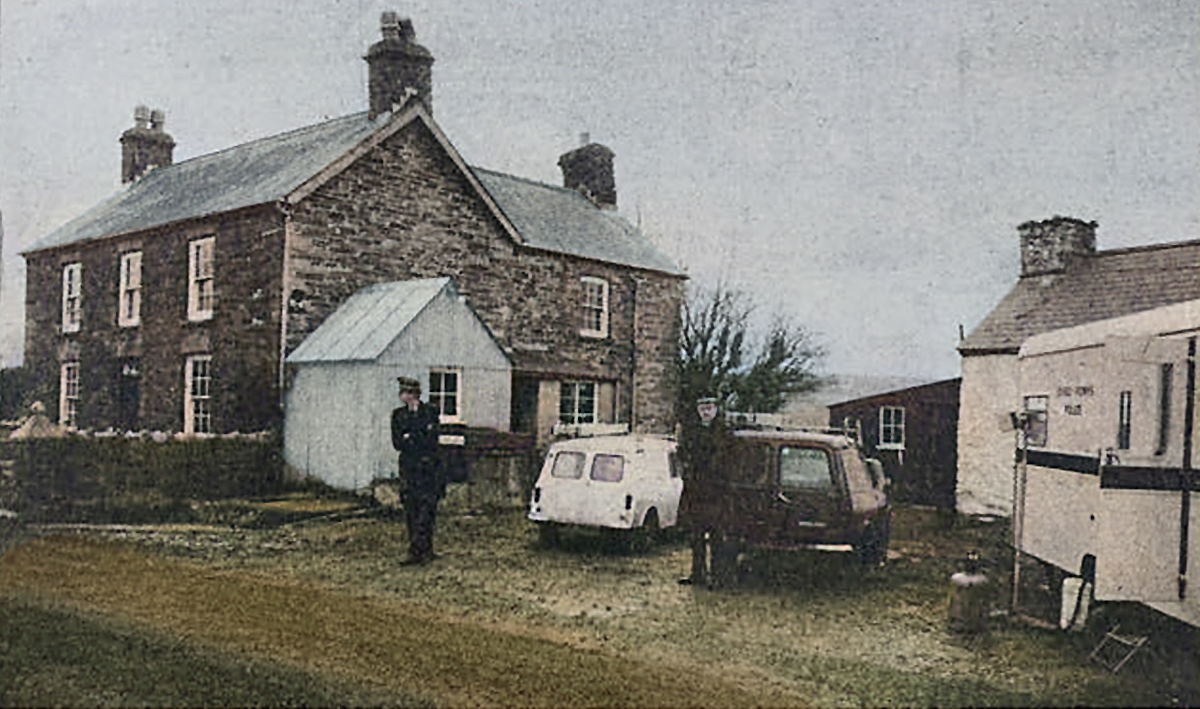
AS THIS newspaper reported last week, Dyfed-Powys Police, following a lot of campaigning, has commenced a forensic review of material held in connection with the deaths of siblings Martha and Griff Thomas at Ffynnon Samson, Llangolman in 1976.
The original inquest in 1977 found that Martha was unlawfully killed, whilst an open verdict was returned on Griff.
The work to identify what material remained and feasibility of further examination, in consultation with forensic scientists, has now been completed, and based on the advice, it is thought that modern techniques can be applied to establish if additional evidence is present on a limited number of items that may be relevant to this case.
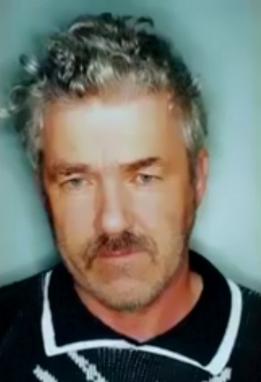
Detective Superintendent Paul Jones said: “Significant developments have been seen in forensic science over the last forty years which may provide additional information even in cases of this age. Whilst the investigation at the time (1976) was thorough, the forensic science was limited compared with today, and we will explore whether modern techniques can shed further light on the events at Ffynnon Samson in 1976.
“At this stage we don’t know what answers, if any, the forensic review will give us, but I am keeping an open mind.

“We will continue to keep the family informed of any developments.
The decision by Dyfed-Powys Police follows months of campaigning by Clebran, the local papur bro, calling for justice in the Ffynnon Samson case, and significant coverage given in The Pembrokeshire Herald to the historical murders, with a great deal of time and work being put in by Herald journalists Andy Chandler and Jon Coles.
They have both said they are delighted with the latest developments.
However, there is a lot of speculation in the Welsh media this week that John Cooper could have been responsible for these murders.
In January, The Herald received intriguing new information which counters the long-held belief in John Cooper’s involvement in the siblings’ death.
Rumour, gossip and convenience placed Cooper in the Llangolman area around December of 1976 doing work for a fencing contractor.
We spoke with a source who has an intimate knowledge of the area and community. Vitally, they know about the fencing contractors and workers active in the Llangolman area at the time. They dismissed the suggestion John Cooper was in the area as ‘bullshit’.

They said contractors from outside the area would’ve ‘stuck out like a sore thumb’. The presence of an outsider, they continued, would’ve been remembered by the remote, close-knit, Welsh-speaking community. In 1976, they added, anyone coming to the area from further south than Haverfordwest would’ve been seen as ‘down-below-ers’.
Our source told us that supply runs by ‘outsiders’ to local merchants for things like nails or timber for fencing posts did not occur. It would’ve been improbable, they added, that ‘boys from Milford’ would come to the area with every item to complete a job.
As for the possibility that Cooper might’ve been ‘hobbling’, our source told us that Cooper’s accent alone would’ve been considered ‘exotic’. So incongruous that if Cooper went to a pub for a pint and a game of darts or visited the local shop, he would’ve been remembered at the time of the original inquiry.
Large jobs would’ve meant working alongside local workers. We were told none of them recalled working with John Cooper. Even when directly and repeatedly asked over the years since Cooper’s conviction for the Scoveston Manor and Coast Path killings, no local workers placed him in the area.
Poor weather during November and December meant that large jobs would not have been planned for those months. In context, this was just after the long and hot summer of 1976.
Any emergency fencing work would’ve been done by locals as, in those days, ‘boys from Milford’ would’ve taken too long to get there.
Another source claimed that John Cooper’s connection stems from a local, unrelated family with the same surname and vivid imaginations.
Whatever you choose to believe, no eyewitness testimony placing John Cooper in the Llangolman area in the weeks or months leading up to the deaths has been seen by anyone with even a passing interest in the bizarre deaths of the Thomas siblings.
We will, of course, keep an open mind and if anyone has information that definitively proves Cooper was there and when, we’d be very eager to see it.
Whilst we might be able to cross off Cooper’s name for the deaths of Griff and Patti Thomas. Indeed, those we spoke to this week were clear that we could. However, that leaves a terrifying alternative. Someone local, someone who knew Griff and Patti, was capable of a double murder. They were never caught or even questioned by the Police.
The Herald has heard enough information that, we believe, whittles down the list of possible suspects to just two individuals. Both lived in the area at the time and knew the victims well enough. Both, it seems, knew of Griff’s daily walk to Charing Cross Stores some 20 minutes away.
Our sources sketch out an alternative scenario. Someone known by both Thomas siblings entered Ffynnon Samson, knowing Patti would be on her own. They planned to steal the money they believed was kept in the house bureau by the ‘tight’ brother and sister.
When Griff returned, nothing would’ve seemed amiss until he entered the parlour. There he found his younger sister critically injured. A confrontation followed, during which the thief struck Griff fracturing his skull and Griff’s blood ended up on the doorframe.
With Griff incapacitated, the settle was pulled down on top of him, and a fire started to cover the killer’s tracks. The murderer then fled the property through the back door. They took enough money to ‘sort Christmas out’ but not so much to raise others’ suspicions with them.
They left the Thomas siblings to die. Patti died first from her injuries, her body showed signs of smoke inhalation from the burning settle, but not enough to end her life.
Griff died second, the post-mortem discovered that he died primarily from burns and the contemporaneous description of the crime scene supports that scenario.
It is at least as likely as the one advanced at the subsequent inquest.
For the account given to the inquest to work, belief needs to be suspended. A profoundly religious elderly man, known to be a timid personality, and who had arthritis of the spine, slew his sister by picking up heavy furniture and striking her with it. Repeatedly.
Somehow, he fractured his own skull in the process. He then covered up a bloody thumbprint from an unknown third party by replacing the cover on a sewing machine, staggered to the kitchen and set fire to himself whether by accident or design.
Or a third party committed the offence and got away with it in a scenario similar to the one presented to us.
If that wasn’t enough, there are other details which raise questions.
Specifically Griff’s coat, which was found hung up with the cheese he’d brought from the shop still in his pocket, had Griff come home to an argument, he’d surely still be wearing his coat and had the killer not arrived until later, Griff and Patti would’ve eaten the cheese discovered in Griff’s coat pocket as they had planned to have it with dinner.
The Sewing Machine. Who put the cover back on it? Whose finger-print was found, alongside Griff’s blood, under the replaced cover?
Why, according to locals, were the footprints in the snow around the farmhouse not properly investigated until after police had thoroughly inspected the property and the footprints had started melting?
We hesitate to describe the Police investigation as ‘botched’. No matter how unlikely the inquest verdict, we cannot say it’s ‘unsafe’. We can say the case looks as though a theory was formed and the evidence made to fit its frame.
An unlikely link to John Cooper has prevented a full view of the facts.
We reported previously that Dyfed-Powys Police’s refusal to re-investigate ‘based on speculation’ prevents any final resolution being reached anytime soon.
However now the cold-case has been re-opened we may be nearer to finding out what really happened back in 1976.


Samuel Kurtz says public frustration has grown after two years of Labour controversies and policy decisions
FORMER West Wales MS Samuel Kurtz has said Sir Keir Starmer’s resignation felt “increasingly inevitable” after months of controversy and public frustration.
The Welsh Conservative said he watched the Prime Minister’s Downing Street statement with “genuine frustration”, adding that he wanted the UK to be respected regardless of which party was in government.
Starmer announced on Monday (Jun 22) that he would resign as Prime Minister and Labour leader, just 12 days before the second anniversary of Labour’s 2024 general election victory.
Mr Kurtz said: “As a British citizen, I sighed genuine frustration while watching this morning. Whatever the political colour of the Government, I want our country to be respected at home and on the international stage.
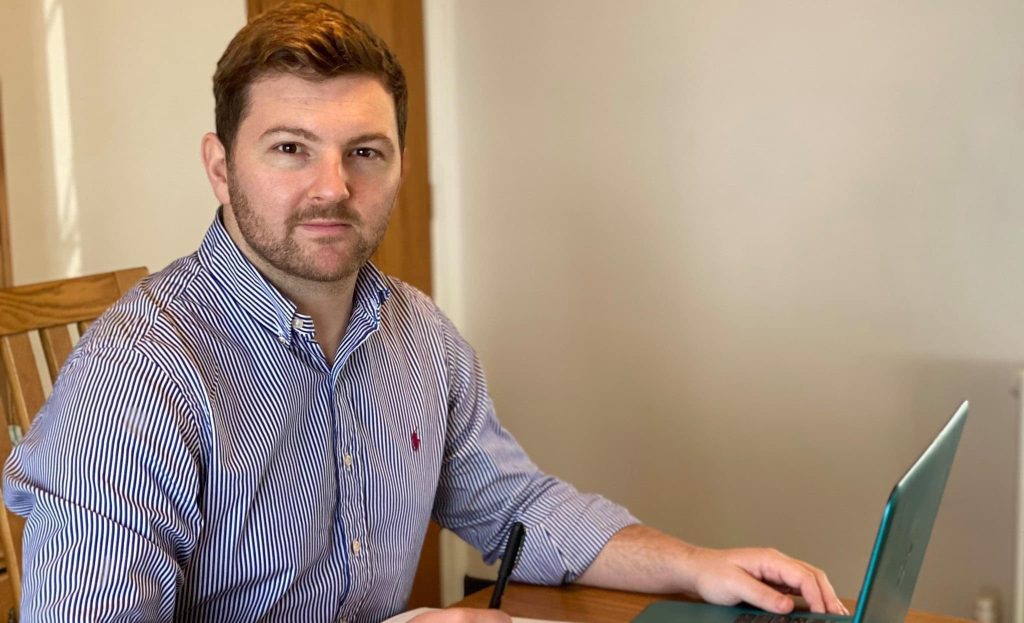
“But, in truth, this moment has felt increasingly inevitable as the weeks turned into months.”
He pointed to a series of controversies and policy decisions, including the Lord Alli gifts row, winter fuel allowance cuts, the Family Farm Tax, rising National Insurance, defence spending and domestic energy production.
Mr Kurtz said people “simply feel worse off”, adding that confidence in the economy remained low.
He said: “A Government should ultimately be judged on whether life is getting better for the people it serves.
“After two years marked by the controversies and a series of damaging policy decisions mentioned above, it’s difficult to argue this Government has passed that test.”
Mr Kurtz also questioned what would happen next, asking whether Labour would see an “Andy Burnham coronation”, whether Wes Streeting could build enough support, or whether an outsider could emerge.
He added that he would be watching the leadership contest “from the sidelines with interest”.
Labour is expected to open nominations for a new leader on July 9, with Starmer remaining in office until his successor is chosen.

A HAVERFORDWEST venue has been praised for raising more than £2,600 for local charities through a series of community events.
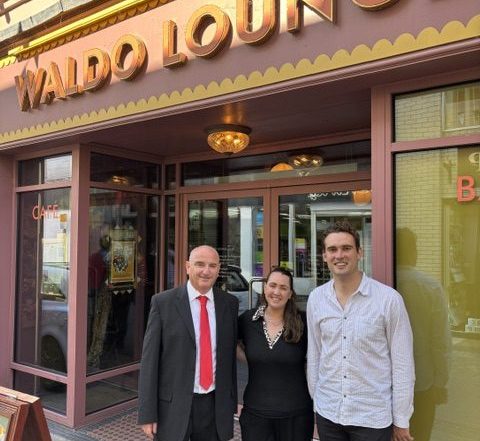
Castle Ward county councillor Thomas Tudor visited The Waldo Lounge in Haverfordwest with Henry Tufnell MP, where they met manager Stephanie Davies.
Cllr Tudor said Stephanie had “truly embraced” her role in the community, organising events including a duck race, sports quiz, Mad Hatter’s tea party for Little Loungers, a bake sale and a drag night show.
Together, the events have raised £2,637 for local good causes.
Charities to benefit include The VC Gallery, Tŷ Hafan and Adam’s Bucketful of Hope Cancer Support Centre.
Cllr Tudor said: “It was lovely to introduce Henry Tufnell MP to Stephanie Davies, manager of The Waldo Lounge in Haverfordwest.
“Stephanie has truly embraced her role in the community of Haverfordwest, running many exciting initiatives and raising a staggering £2,637 for local charities.”
The fundraising continues this week, with Rock ’n’ Roll Bingo and a Wild West country and western night featuring a rodeo bull.
Caption: Community support: Thomas Tudor, Stephanie Davies and Henry Tufnell MP outside The Waldo Lounge in Haverfordwest.
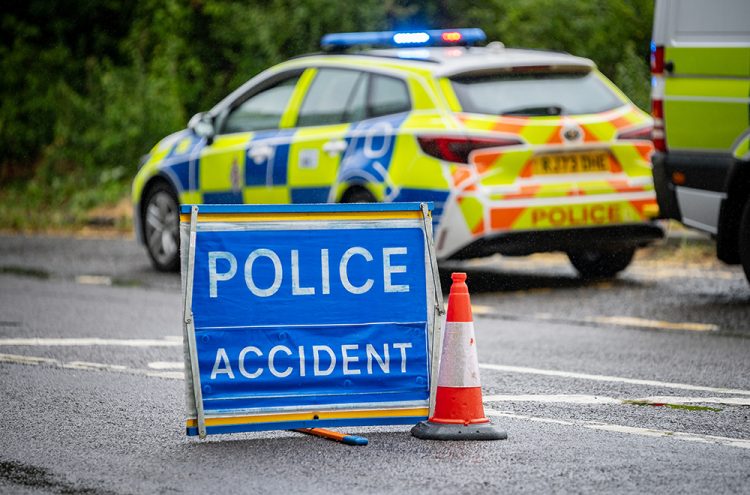
A MOTORCYCLIST has died following a four-vehicle collision on the A40 between St Clears and Whitland.
Dyfed-Powys Police said the crash happened at around 12:00pm on Sunday (Jun 21) and involved a grey Audi, a blue Seat, a grey Vauxhall and an orange KTM motorbike.
Sadly, the rider of the KTM died from their injuries and was pronounced dead at the scene. Their next of kin have been informed and are being supported by specialist officers.
A 38-year-old man has been arrested on suspicion of causing death by careless driving. He has since been released on conditional bail while further enquiries continue.
The road was closed while collision investigators examined the scene and reopened at around 8:30pm.
The latest tragedy follows two other serious motorcycle crashes in west Wales.
On Sunday afternoon, another motorcyclist was injured in a separate collision and is recovering in hospital.
Last week, a 22-year-old rider sadly died in a crash near Narberth, while his female pillion passenger was taken to hospital.
Anyone with information, or dashcam footage which could assist the investigation, is asked to contact Dyfed-Powys Police online, by emailing [email protected], by direct message on social media, or by calling 101.
Alternatively, contact Crimestoppers anonymously on 0800 555111 or visit crimestoppers-uk.org.
Quote reference: DP-20260621-177.


News2 hours ago
Motorcyclist dies after four-vehicle crash on A40 in Carmarthenshire
A MOTORCYCLIST has died following a four-vehicle collision on the A40 between St Clears and Whitland. Dyfed-Powys Police said the...


News3 hours ago
Rhun ap Iorwerth urges new deal for Wales after Starmer quits
First Minister says next Prime Minister must focus on greater powers, fair funding and respect for Wales’ democratic mandate FIRST...


News3 hours ago
How Labour’s landslide victory unravelled in just two years
Prime Minister announces resignation after losing support within his own party as Andy Burnham emerges as overwhelming favourite to take...


News16 hours ago
Long Course Weekend set to bring thousands to Pembrokeshire
Three days of swimming, cycling and running will once again transform Tenby into one of the UK’s biggest endurance sporting...

Community22 hours ago
The gentle giant behind the tattoos
Pembrokeshire security worker Josh Davies praised for professionalism, kindness and proving first impressions can be wrong JOSH Davies is hard...


Charity2 days ago
Toy Story fans fill charity toy box at Haverfordwest cinema
Donations pour in for SNAP Specialist Play as families embrace Toy Story 5 launch A TOY STORY-themed charity appeal at...

Community2 days ago
Lord Rhys emerges from the mist in St Davids
Giant puppet begins historic journey marking 850 years since the first Eisteddfod MIST swirled around St Davids Cathedral on Friday...


News3 days ago
Tragic tribute paid to Haverfordwest man after A4075 collision
FAMILY REMEMBERS “KIND AND LOVING” CALLUM HANSON THE FAMILY of a 22-year-old man from Haverfordwest who died following a road...

News4 days ago
Motorcyclist, 22, dies in A4075 crash in Pembrokeshire
A 22-year-old woman remains in hospital after two-vehicle collision A MOTORCYCLIST has died following a serious two-vehicle crash on the...

Community4 days ago
Why police will be visiting every home in Pembrokeshire
New operation aims to knock on more than 257,000 doors across Dyfed-Powys over the next three years DYFED-POWYS POLICE has...
-

 Crime4 days ago
Milford Haven man jailed for breaching domestic violence protection order
-

 Local Government6 days ago
Security privately arranged by Mayor at Beating of the Bounds
-

 News4 days ago
Crash on Freeman’s Way causes school-run chaos across Haverfordwest
-

 Crime6 days ago
Man wanted by court after failing to attend hearing over alleged shop thefts
-
 Crime6 days ago
Man banned from roads after drink-driving offence
-
 Crime6 days ago
Man jailed after admitting strangulation and assaults
-
 Crime6 days ago
Drug trafficker must repay £33,000 after court rules he made nearly £500,000
-

 Crime6 days ago
Man sentenced over stalking campaign and lock knife offence