


News
Wales Air Ambulance unveils the newest additions to its fleet


THE WALES Air Ambulance Charity has today unveiled its new aircraft, which has been named by the people of Wales, and its new Rapid Response Vehicles.
The lifesaving service, funded through charitable donations, funds a fleet of rapid response vehicles and aircraft. They are equipped with some of the most advanced medical equipment in the world which enables the medical crew to deliver emergency department treatments at the scene of an emergency.
In 2022, the Charity underwent a rebrand and today the public gets a glimpse of a new aircraft which carries the new design. During the summer, Charity supporters were given the opportunity to name the helicopter. They took part in an online vote to choose their preferred aircraft registration from a list of five options. The clear winner was G-LOYW, which means bright or shining in Welsh.
Earlier this year, Wales Air Ambulance announced that Gama Aviation Plc had successfully bid for a seven-year aviation contract, which covers the operation and maintenance of a primary fleet of four Airbus H145 helicopters. Currently, the service has three H145 helicopters and one smaller H135 helicopter. As part of the new contract, the H135 aircraft will be upgraded to a H145, giving the Charity a consistent fleet of advanced helicopters to deliver Wales’ vital air ambulance service.
The Charity is also updating its fleet of rapid response vehicles, with the recent introduction of two Volvo CX90s. This allowed for the new branding to be introduced onto these vehicles alongside the aircraft.

The whole design process was delivered in-house by the Charity’s Communication Team, co-managed by Lauren Berry, Creative Digital Designer and Laura Slate, Communications and Engagement Manager.
Laura said: “Working on the livery for an aircraft and rapid response vehicle was something none of us had ever done before. It was a challenge for the Charity’s Communications Team but one we took great pride in. To have been able to complete the project in-house is a huge achievement for us, and we’re incredibly grateful to have been given this opportunity.”
Lauren added: “There were a lot of things to consider during the design phase, from identifying the best materials to use and understanding the legislation in place for both vehicles. Both vehicles presented challenges, but with the support of the Charity’s partners, we have been able to create something that we are proud of.”
The team collaborated with Charity partners, Gama Aviation and The Emergency Medical Retrieval and Transfer Service (EMRTS) throughout the process to ensure compliance with the safety guidelines.
Both the aircraft and rapid response vehicles maintain their strong Welsh identity, with a bold red colour and distinctive green dragon’s tail that matches the Charity’s new logo. The design also includes contour lines, which are green on the aircraft and yellow (high-vis material) on the RRVs. They are representative of the diverse geographical landscape of Wales, much like those on an Ordnance Survey map, and are symbolic of the different areas and communities that the Charity serves.
While the design was added to the aircraft by Gama Aviation, the new rapid response vehicles underwent a complete transformation to adapt them from standard road cars to emergency service vehicles. This was undertaken by a Welsh company, Polaris.
Dr Sue Barnes, Wales Air Ambulance Chief Executive, said: “Whenever we survey our supporters, the Charity’s strong Welsh identity is always highlighted as a source of pride. It’s important that the passion for our nation is visible through the vehicles that we use, both in terms of their design and the Welsh language registrations for our helicopters.
“Both the helicopters and cars are funded by the people of Wales, so it is incredibly important to us that they reflect the country and communities that we serve.”

Mark Smith, Managing Director Special Mission for Gama Aviation, said: “It has been great to work with the Charity to implement the evolution of their brand onto the helicopter and road vehicle fleet, allowing us to bring both design teams together to collaborate on how we can realise a 2D design on a 3D shape.
“For me, the change is also symbolic. The delivery of the helicopter in the new livery represents the commencement of an exciting new partnership between us, EMRTS and the Charity. Operations will commence in earnest shortly and we are looking forward to playing our part in the delivery of pre-hospital support to the people and communities of Wales.”
Mark Winter, EMRTS Operations Director, said: “Our response cars play a vital part in taking critical care to our patients, the new livery for the response vehicles has been worked through with our Charity colleagues following feedback from our communities.
“We are very pleased with the design and the collaborative spirit shown by all those involved.”
The air ambulance service in Wales is delivered via a unique Third Sector and Public Sector partnership. The Wales Air Ambulance Charity relies on public donations to raise the £11.2 million required every year to keep the helicopters in the air and rapid response vehicles on the road. The Emergency Medical Retrieval and Transfer Service (EMRTS) supplies highly skilled NHS consultants and critical care practitioners who work on board the Charity’s vehicles.

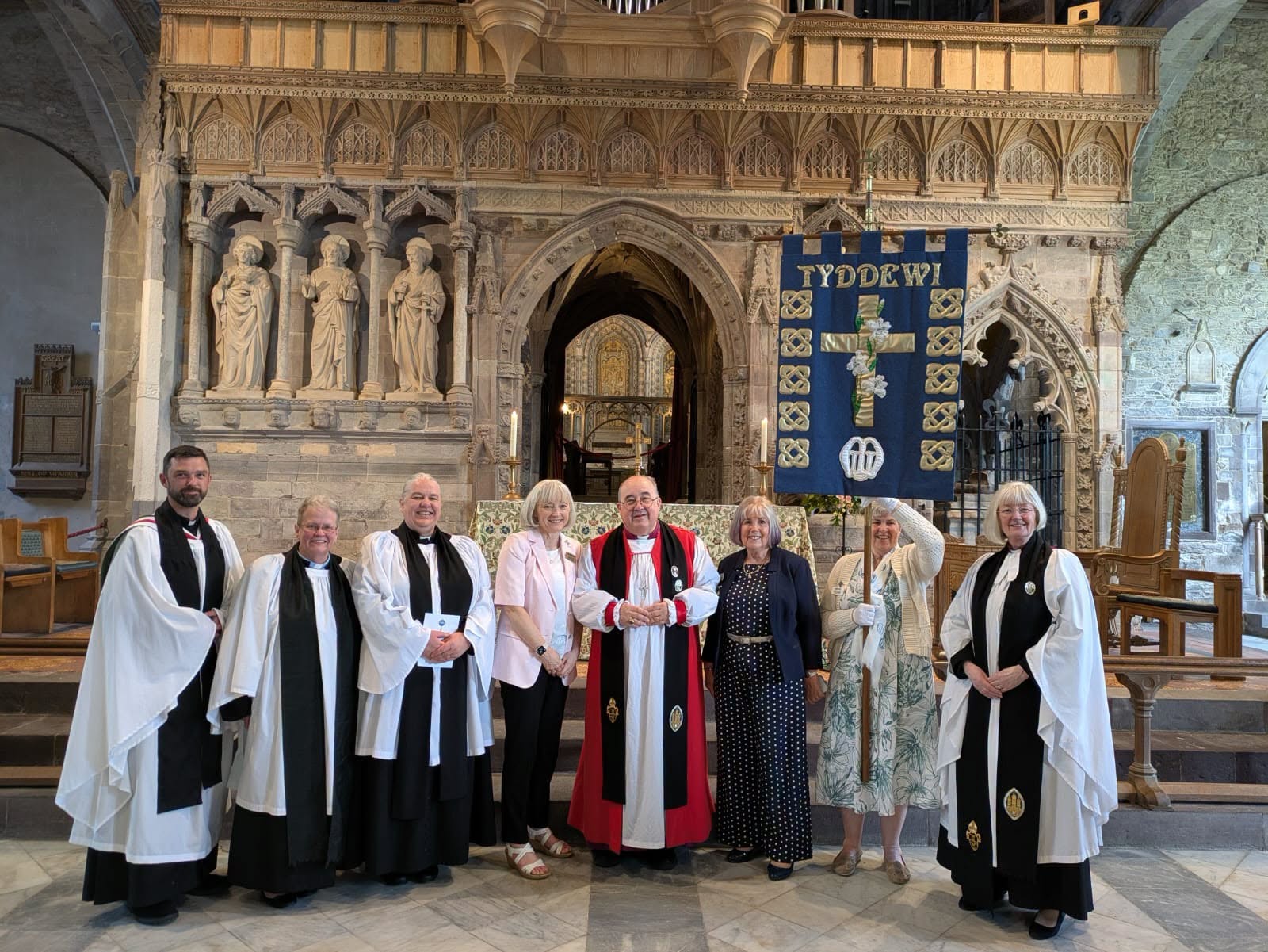
A SPECIAL service has been held at St Davids Cathedral to celebrate 150 years of the Mothers’ Union.
Members and officials gathered for the anniversary celebration on Sunday (Jun 21), where Bishop Dorrien welcomed those attending and spent time speaking with the Provincial Chaplain.
The occasion had particular significance for Bishop Dorrien, who is the third generation of his family to be a member of the Mothers’ Union.
The organisation, founded in 1876, continues to support families, communities and church life across Wales and around the world.
Those attending said the celebration was a fitting tribute to the work of generations of members, with hopes expressed for the next 150 years.
Caption:
Celebration: Members and officials gathered at St Davids Cathedral to mark 150 years of the Mothers’ Union (Pic: Diocese of St Davids).
Free family festival will celebrate Milford Haven’s seafaring history and coastal community
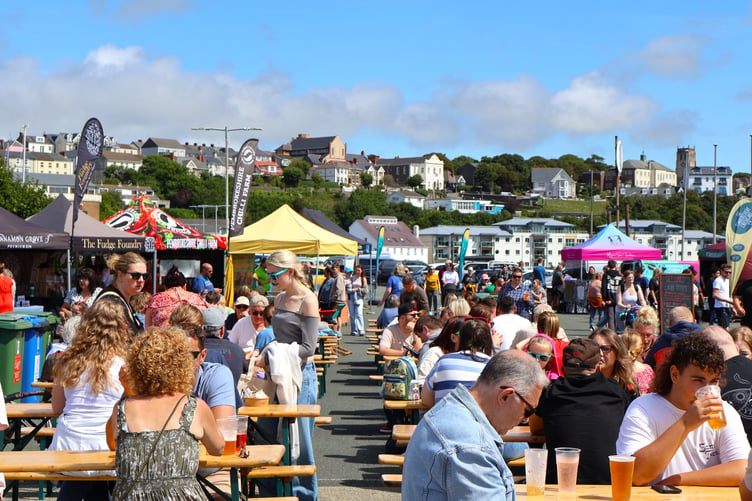
MILFORD WATERFRONT will burst into life on Saturday, June 27, as the first Harbour Fest sails into town for a day of music, food, family fun and maritime celebration.
The free event will run from 10:00am to 6:00pm at Mackerel Quay and across the waterfront, bringing together local traders, live entertainment, coastal organisations and independent businesses for a packed day beside the water.
Organisers say the festival will celebrate everything that makes Milford Haven special, from its seafaring history and working harbour to its growing reputation as a destination for food, shopping, culture and family days out.
Visitors will be able to browse stalls from local makers and producers, enjoy street food and live performances, and explore a Marine Zone featuring organisations involved in sea safety, marine conservation and coastal life.
The Marine Zone will include Seagrass Network Cymru / Project Seagrass, Pembrokeshire Coastal Forum, Mid and West Wales Fire and Rescue Service, Dyfed-Powys Police, NCI Wooltack Point, Rudders Marine Training, RNLI Milford Haven and RNLI Angle Lifeboat.
RNLI Angle Lifeboat is expected to be based on the Mackerel Stage, while the Sea Cadets will be giving rope-tying displays at Milford Haven Museum, where craft activities will also be taking place.
Live entertainment will run throughout the day, with performances from Tom & Abz, Will Scott, Ryan Bristow, Milford Haven Town Band, Kyle Kirkhouse and ShantyJacs Sea Shanties.
Businesses across the waterfront are also joining in. All Pets Vet Care will hold a family-friendly open day with a bouncy castle, treasure hunts, quizzes, craft activities and behind-the-scenes tours. Aurora Artisan Crafts will host vocal performances, Biffy’s Bar & Restaurant will feature solo acoustic music from Laurence Lewis, and Martha’s Vineyard will offer seafood street food with live music from Ryan Bristow and Steve Bartram.
At Tŷ Milford Waterfront’s outdoor plaza there will be face painting, children’s activities, pop-up artists and an afternoon DJ set, while Phoenix Bowl and Pirate Pete’s Adventure Play will have inflatables and glitter tattoos outside.
The Waterfront Gallery will host introduction to felt-making workshops with textile artist Carole Fletcher, giving participants the chance to create a woollen felt flower pin brooch or phone/glasses case. The workshops start at 10:30am, 1:00pm and 3:30pm and cost £5 per person.
A wide range of traders will also be attending, including 5th Flock Spirits Co, Cinnamon Grove Distillery, Cwm Deri Wines & Liqueurs, Ferncraft, Get Loaded, J.J. Pottery, Major Nuts, Orange Garden Design, Pembrokeshire Chilli Farm, Pembrokeshire Gold, Pembrokeshire Lottery, Plumstone Welshcakes and SlateArtSJ.
With music drifting across the marina, food stalls lining the waterfront and lifeboats, sea safety teams and coastal groups adding a strong maritime flavour, Harbour Fest is expected to bring a lively summer atmosphere to one of Pembrokeshire’s best-known waterside destinations.

Organisers say the event is suitable for families, friends and visitors of all ages, with plenty to see and do throughout the day.
Photo caption: Harbour Fest will take place at Milford Waterfront on Saturday, June 27 (Pic: Milford Waterfront).

A NEW exhibition exploring memory, belonging and the changing face of rural life is opening in Cardigan.
West Wales artist Sue Dewhurst will present From the Outside Looking In at Oriel Cardi Bach, with the exhibition running from June 27 to July 30.
The collection brings together several new series of work reflecting on the people, places and traditions that shaped Dewhurst’s childhood in the 1970s.
At the heart of the exhibition are the Chapel Girls, a group of paintings focusing on women who might once have filled the chapels that dominated Welsh village life. In Dewhurst’s work, they are now seen finding new forms of belonging through shopping trips, bingo halls, dating apps, bottomless brunches and everyday rituals, while redundant chapels stand silent around them.
The exhibition also includes A Bit of a Do, a series inspired by weddings, family parties and village hall celebrations.
Among the familiar characters are the mysterious woman in her best hat who appears at every gathering, the accountant calculating buffet logistics, the retired nurse dancing barefoot long after everyone else has gone home, and Harry, a grumpy gent with a mysteriously missing fingertip that nobody dares ask about.
Dewhurst’s Ghost Town series will also feature, exploring the changing landscapes of northern mill towns and communities transformed beyond recognition. These works sit alongside expressive coastal paintings inspired by New Quay and the Ceredigion coast.
A further installation of miniature “party paintings” will be presented like treasured relics rescued from a forgotten village hall or working men’s club. Wrapped with handwritten stories and nostalgic memorabilia, the pieces invite visitors to remember people and moments that might otherwise disappear.
Sue said music also plays an important role in the exhibition.
She said: “Music is so evocative for me and can instantly transport me back to a certain point in time.
“I’ve always been fascinated by the lives we don’t usually celebrate – the women who held communities together, the odd characters who turned up at every family occasion, the places that shaped us and the memories that linger long after buildings and traditions have changed.
“This exhibition is really about looking back with affection and humour, while recognising that we are all, in one way or another, trying to find where we belong.”

Originally from Lancashire and now based near Llandysul, Dewhurst has spent more than thirty years working in the arts. She previously ran Oriel Haywire in Llandysul before its closure around eighteen months ago.
From the Outside Looking In opens at Oriel Cardi Bach, Cardigan, on June 27 and runs until July 30.
Visitors are invited to rediscover familiar faces, forgotten stories and the beauty found in ordinary lives.
.



Charity21 hours ago
Toy Story fans fill charity toy box at Haverfordwest cinema
Donations pour in for SNAP Specialist Play as families embrace Toy Story 5 launch A TOY STORY-themed charity appeal at...


Community1 day ago
Lord Rhys emerges from the mist in St Davids
Giant puppet begins historic journey marking 850 years since the first Eisteddfod MIST swirled around St Davids Cathedral on Friday...


News2 days ago
Tragic tribute paid to Haverfordwest man after A4075 collision
FAMILY REMEMBERS “KIND AND LOVING” CALLUM HANSON THE FAMILY of a 22-year-old man from Haverfordwest who died following a road...


News3 days ago
Motorcyclist, 22, dies in A4075 crash in Pembrokeshire
A 22-year-old woman remains in hospital after two-vehicle collision A MOTORCYCLIST has died following a serious two-vehicle crash on the...

Community3 days ago
Why police will be visiting every home in Pembrokeshire
New operation aims to knock on more than 257,000 doors across Dyfed-Powys over the next three years DYFED-POWYS POLICE has...


Crime3 days ago
Prisons at breaking point: MPs warn Wales is paying the price of a failing system
Frozen healthcare budgets, overcrowded jails, homelessness on release and mounting pressure on staff are undermining rehabilitation across Wales, according to...


News4 days ago
Brexit at 10: How Britain was sold a dream that cost us dearly
A decade after the referendum, the promised benefits remain hard to find while the economic costs are increasingly difficult to...


Crime4 days ago
Worcestershire man jailed after violent attack on woman in Tenby
Defendant was already serving a suspended sentence when serious assault took place A WORCESTERSHIRE man has been jailed for more...


Climate4 days ago
Offshore wind ‘could bring new generation of jobs to Milford Haven’
Pembrokeshire ports and Celtic Sea projects placed at centre of Wales’ green energy ambitions MILFORD HAVEN and Pembroke Dock could...

Community5 days ago
Police officer hailed hero after midnight sea rescue in Milford Haven
PC swam 100 metres offshore to save distressed woman heard calling for help in darkness A DYFED-POWYS POLICE officer has...
-

 Community7 days ago
Pembrokeshire Chess Club crowned Welsh champions
-

 Crime3 days ago
Milford Haven man jailed for breaching domestic violence protection order
-

 Local Government5 days ago
Security privately arranged by Mayor at Beating of the Bounds
-

 News3 days ago
Crash on Freeman’s Way causes school-run chaos across Haverfordwest
-

 Crime5 days ago
Man wanted by court after failing to attend hearing over alleged shop thefts
-
 Crime5 days ago
Man banned from roads after drink-driving offence
-

 Crime5 days ago
Man jailed after admitting strangulation and assaults
-
 Crime5 days ago
Man sentenced over stalking campaign and lock knife offence