


Climate
How Welsh residents can use clean energy in their homes


In the next decade, Wales aims to reach 100% of its internal electricity demands through renewable sources. The climate change minister remains at the forefront of ensuring sustainable energy sources in the country.
One way Welsh residents can join in the effort to use clean energy is by adopting renewable energy sources in their homes. These renewable energy sources provide clean and efficient energy without negatively impacting the environment.
Furthermore, these eco-friendly energy sources save money spent on electricity. It aids Welsh residents living in sustainable homes while saving the environment. Let’s dive deep into finding how to transform your houses into energy-efficient and sustainable homes.
What Is It?
Clean energy is pure energy extracted from nature without any pollutants produced with its usage. This energy is highly beneficial for the environment as it doesn’t leave behind any pollutants. It harnesses nature’s power with sources including:
⦁ Sun energy
⦁ Wind
⦁ Water
⦁ Air
Unlike traditional, clean energy sources don’t release harmful pollutants into the air. Green energy, sourced from natural elements, has a key distinction.
Renewable energy from these clean sources comes from continually replenished resources. Thus, it ensures they never run out, unlike non-renewable sources like fossil fuels.
The essence of clean energy is generating power without any potential harm to the environment for citizens.
Choosing clean energy is good for the environment. It helps protect Wale’s natural resources and lowers the chances of environmental disasters.
Because Wale’s government invests heavily in clean energy sources, they can create stable power supplies, strengthening the country’s energy security.
How to Use Clean Energy Sources in Homes
Welsh residents are quickly adopting clean energy sources in their daily routines. Here is a look at some different clean energy sources for Welsh citizens to incorporate:
- Rooftop Solar Panels
The most common source of renewable energy is solar. It includes mounting solar panels on your rooftop to utilize the sun’s energy that gets converted into power. The more solar panels mounted on your rooftop, the more power it generates.
Additionally, homeowners can invest in lithium batteries as storage backups during nighttime or cloudy days. It ensures a continuous energy supply in your home, enough to power basic home appliances.
Homeowners can contribute the surplus electricity to the grid and earn compensation. It ensures a steady supply of energy in your house. This is the best option for users looking to homestead upcountry. - Tubular Skylights
Sometimes, you need to light up your house during the day. Clustered homes without a sufficient supply of natural light depend on lightning. It leads to increased energy bills and carbon footprint.
A natural way to light up your homes during sunny days is through these innovative tubular skylights. These skylights don’t create electricity but redirect free natural light into your home.
It’s a highly dependable system similar to a reliable paper writing service online since you know what you’re signing up for. It contains a dome of metal tubes running between the dome on the roof, with the diffuser mounted on the ceiling.
The inner tubing has a reflective coating reflecting natural sunlight into your home. These systems are easy to install. Also, they are highly rigid to fit into small spaces. Unfortunately, they tools can’t work during nighttime. - Wind Turbine
Wind turbines are an underrated source of clean energy for homeowners. Especially for ones looking for sustainable living options, harnessing wind power that converts kinetic energy into electricity. Thus, this reduces homeowner’s dependence on fossil fuels.
The market is full of small wind turbines suited for residential applications. Hence, homeowners can choose their preferred wind turbine size depending on their energy needs.
Moreover, most wind turbines occupy a maximum of 10 or 20 square feet of ground space, thus making them viable options for small residential homes. Unlike solar power, these turbines can generate electricity day and night on sunny and cloudy days. - Solar Water Heating
People in Wales are very interested in solar water heating systems because they are easy to use. These systems change the sun’s free energy into hot water. The good thing is that when experts set them up, they don’t need much looking after them.
Solar water heating systems comprise panels and tubes that gather solar energy, converting sunlight into heat.
Installing these systems ensures a steady supply of hot water throughout the year. To cope with winter, adding a boiler or immersion heater is necessary. Moreover, homeowners benefit from lower energy bills since solar energy is free.
Additionally, using solar water heating systems helps reduce one’s carbon footprint by lowering carbon dioxide emissions, contributing to a healthier planet.
Future of Wales’s Energy Consumption
In Wales, the future looks promising for sustainable living. The government is determined to satisfy all electricity needs with renewable sources. People generally agree that completely relying on renewable sources is better than relying on fossil fuels.
As Wales’ population keeps expanding, we see higher energy demand. The solution is turning to renewable sources and clean energy to meet this growing need sustainably.
The change to clean energy is precedented by local authorities crafting policies necessitating the usage of renewable energy. With more areas driving towards becoming energy-sufficient, governments and corporations are leading the way in fighting for renewable power.
Our dependence on fossil fuels for years has significantly impacted the climate. We are experiencing the effects of these practices, with global warming becoming a major talking point on the global stage.
Clean energy guarantees an avenue to alternate fossil fuels. The market has yet to fully explore the possibility of relying on renewable sources for daily demands. However, the conversation is happening at a rapid rate.
Final Takeaway
Wales began utilizing renewable energy to meet its internal electricity demands by 2035. Hence, locals should start opening up to sustainable homes relying on clean energy. These options are sustainable ways homeowners can incorporate their energy sufficiency without any adverse climate impacts.


VISITORS to this year’s Royal Welsh Show are being encouraged to use public transport as organisers look to ease congestion and promote more sustainable travel.
The show takes place at the Royal Welsh Showground in Llanelwedd, Builth Wells, from July 20 to 23, and is expected to attract thousands of people from across Wales and beyond.
The Royal Welsh Agricultural Society said rail and bus services would provide convenient options for showgoers, with free shuttle buses running from Builth Road railway station to the showground, which is just over a mile away.
Discounted admission
Visitors travelling on the Heart of Wales Line with a valid rail ticket will be able to buy discounted show admission tickets from conductors and ticket offices along the route.
The discounted prices are £35 for adults and £11 for children. Children under 16 can travel free by train when accompanied by a fare-paying adult.

Transport for Wales said rail services would connect visitors from across Wales and the borders, including routes from Cardiff through some of Wales’ most scenic countryside. TrawsCymru bus services will also provide another option for those travelling to the event.
Family activities
Transport for Wales and Network Rail will also have an interactive stand at the show, offering family-friendly rail safety activities and entertainment.
Activities will include VR headset experiences, story time sessions, badge-making classes and rail safety performances. Builth Wells Male Voice Choir is also due to visit the stand on the first day of the show.
Children under 16 travelling to the show by train on the Heart of Wales Line will be able to collect a free activity sheet on board and hand in their completed artwork at the Transport for Wales stand for a chance to win a prize.
Visitors are being urged to plan their journeys in advance through the Transport for Wales website and journey planner.
Travel encouraged:
Visitors to the Royal Welsh Show are being urged to consider rail and bus services this year (Pic: RWAS).


CALLS have been made for an immediate moratorium on industrial-scale solar and windfarm developments in Wales amid concern over the loss of productive farmland.
The Welsh Conservatives say the Welsh Government should pause major renewable energy schemes and urgently review the planning rules for Developments of National Significance.
Party leader Darren Millar MS said Future Wales 2040, the national planning framework, gives too much weight to large-scale renewable energy projects and risks allowing solar farms and windfarms to be built at the expense of food production.
Planning row
The row comes as Wales faces pressure to increase renewable energy generation while also protecting agricultural land, rural landscapes and farming communities.
Under the Developments of National Significance process, major infrastructure projects, including some large renewable energy schemes, are decided by Welsh Ministers rather than local councils.
Supporters say the system is needed to deliver clean energy and reduce reliance on fossil fuels, while critics argue it can leave communities feeling that decisions are being taken out of their hands.
Mr Millar said: “In opposition, the now First Minister campaigned against industrial-scale renewable developments in his own constituency for fear of the impact it would have on valuable farming land. Now in government, he needs to act accordingly to protect prime agricultural land.
“The current planning framework is fundamentally flawed. Future Wales 2040 creates an assumption in favour of industrial-scale solar farms and windfarm developments across great swathes of rural Wales, putting productive farmland at risk.
“We support renewable energy and recognise its role in achieving energy security and reducing emissions, but those developments should not be at the expense of Wales’ food security.
“Renewable developments should be appropriate in scale and sensitive to their environment, making better use of the roofs of buildings and car parks.
“The Welsh Government should introduce an immediate moratorium on industrial-scale solar and windfarm developments and undertake an urgent review of the planning framework for Developments of National Significance so Wales can take a more balanced approach to Wales’ energy future.”
Climate targets
The Welsh Government says renewable energy is central to meeting Wales’ climate targets and improving energy security, but that projects must go through the planning system before consent is granted.

Supporters of large-scale renewable schemes argue they are needed to cut emissions, reduce reliance on imported energy and help stabilise electricity supplies. Some farmers and landowners also see renewable projects as a source of income at a time when the agricultural sector is under pressure.
However, opponents say the scale and location of some proposals risk damaging landscapes, reducing food-producing land and leaving rural communities with too little say over major developments.


A PEMBROKESHIRE wind turbine scheme which was recommended to be refused over a lack of information on how it may affect bats, which led to it being previously withdrawn, has gained some breathing space to address the issue.
In December of last year, in an application recommended for refusal at Pembrokeshire County Council’s planning committee, Constantine Wind Energy Ltd sought permission for a 76-metre-high wind turbine at Summerton Farm, Sageston.
Back in 2024, an application to replace a current 60.5m high turbine on the site with one up to 90 metres, or just under 300 foot, at the site was refused on the grounds its height and scale would have a detrimental impact on the visual amenity of the locality, with the additional clause of failing to comply with supplementary guidance.
A report for committee members on the latest application says the smaller turbine than previously proposed, representing a 16-metre increase in height from a previously granted turbine “would not be sufficient for it to become an overbearing feature in the landscape,” with no objections from either the Council Landscape Officer or Natural Resources Wales.
However, concerns were raised by the council ecologist that the applicant’s Preliminary Ecological Appraisal Report was incomplete, with a bat survey not included.
It was recommended for refusal on the grounds that appraisal report, and technical note, “do not adequately address the impact of the proposed wind turbine on bat activity in the area”.
At the December meeting, members heard the scheme had been temporarily withdrawn to deal with issues raised, the application returning to the June meeting, again recommended for refusal on a lack of information on the potential impact on bats.
A report for members ahead of the June meeting says the application was withdrawn from the December agenda to allow the applicant time for consideration of the Council Ecologist’s request for further survey work.
It said the applicant had started a bat survey programme, with further surveys due to take place in July and September, the applicant asking for the matter to be deferred in November.
At the June meeting, Richard Grisk, on behalf of the applicants, referenced the additional surveys, calling for a further deferral, saying it would be far most cost efficient and effective for all parties, the applicants intending to resubmit an expected to be near-identical scheme, other than the bat reports, if it was refused.
After a great deal of deliberation on the matter, Cllr John Cole, who had initially proposed a deferral, moved the scheme be decided by officers under delegated powers.
This would allow them to either approve or refuse after the bat reports have been received.

Members, by 10 votes to four, supported the delegated decision, expected later this year.



Community11 hours ago
Police officer hailed hero after midnight sea rescue in Milford Haven
PC swam 100 metres offshore to save distressed woman heard calling for help in darkness A DYFED-POWYS POLICE officer has...


Local Government17 hours ago
Security privately arranged by Mayor at Beating of the Bounds
HAVERFORDWEST TOWN COUNCIL has confirmed that security personnel seen at this year’s Beating of the Bounds were privately arranged and...


Business2 days ago
Celtic Freeport five-year plan puts Milford Haven at centre of green energy future
Strategy promises investment, skilled jobs and new supply chains, but major barriers remain over grid connections, planning and delivery THE...


Education2 days ago
Closure of Ysgol Clydau approved after emotional council debate
COUNCILLORS WARNED RURAL COMMUNITIES WILL REMEMBER DECISION PEMBROKESHIRE councillors have voted to close Ysgol Clydau following an emotional debate over...


Education2 days ago
Manorbier school closure process to continue after narrow council vote
Questions remain over insurance, rebuilding costs and possible legal action by Diocese PEMBROKESHIRE councillors have voted to press ahead with...

Community2 days ago
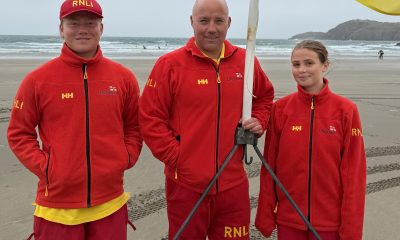
The father, son and daughter lifeguard trio saving lives in Pembrokeshire
A FATHER, son and daughter are preparing to help keep beachgoers safe on the Pembrokeshire coast this summer as part...


Community2 days ago
Beating of the Bounds brings music, boats and tradition to Haverfordwest
CENTURIES-OLD CEREMONY DRAWS FAMILIES TO THE RIVERSIDE HAVERFORDWEST’S historic Beating of the Bounds returned on Sunday (Jun 14), with boats,...


Community3 days ago
Milford Haven School pupil praised after stepping in during real-life emergency
A YEAR 11 pupil at Milford Haven School has been praised after putting his first aid training into action to...


Community3 days ago
River festival brings crowds to Haverfordwest
A CELEBRATION of the River Cleddau brought crowds into Haverfordwest on Saturday (June 13) as the town’s River Festival returned...


Charity3 days ago
Voices at the Castle hailed as unforgettable night after weather setback
Russell Watson headlines spectacular charity concert at Pembroke Castle A SPECTACULAR evening of live music at Pembroke Castle has been...
-

 Community2 days ago
Pembrokeshire Chess Club crowned Welsh champions
-
Local Government17 hours ago
Security privately arranged by Mayor at Beating of the Bounds
-

 Crime6 days ago
Pembroke Dock teenager sentenced over train strangulation attack
-

 Education5 days ago
Diocese threatens legal action as Manorbier school closure battle intensifies
-

 Crime6 days ago
Man accused of six rapes including alleged Haverfordwest offence
-

 Local Government5 days ago
Taxi suspended after county-wide licensing checks
-

 Crime6 days ago
Brothers found guilty of causing death of Welsh dad in ‘reckless’ race
-

 Crime5 days ago
Currys worker denies stealing £2,500 of store stock