


Community
Setting sail into the unknown: Edward’s epic journey from Milford Haven to Auckland

FOR Milford Haven resident Edward Neale, the inspiration to embark on an epic sailing journey across the globe germinated over many years. A seasoned sailor, he harbored dreams of venturing beyond European waters once retired. Little did he know that this desire would blossom into a remarkable voyage, taking him from the tranquil shores of Milford Haven to the vibrant city of Auckland.
Contrary to the trend of charitable sailing expeditions, Neale’s journey wasn’t motivated by a cause. Instead, it was fueled by a deep-seated desire to reunite with his daughter in Auckland, and the aspiration to achieve something profoundly memorable in the process.
Neale’s journey wasn’t his first encounter with the sea. His sailing roots trace back to the 1970s as a member of Milford Haven Sea Cadets, navigating Royal Navy boats and battling seasickness in the English Channel. His maritime journey continued through the merchant navy, sailing a 31ft Westerly Longbow in the 2000s, and culminated in the acquisition of his 38 ft motor sailor Light Symphony, in 2017.
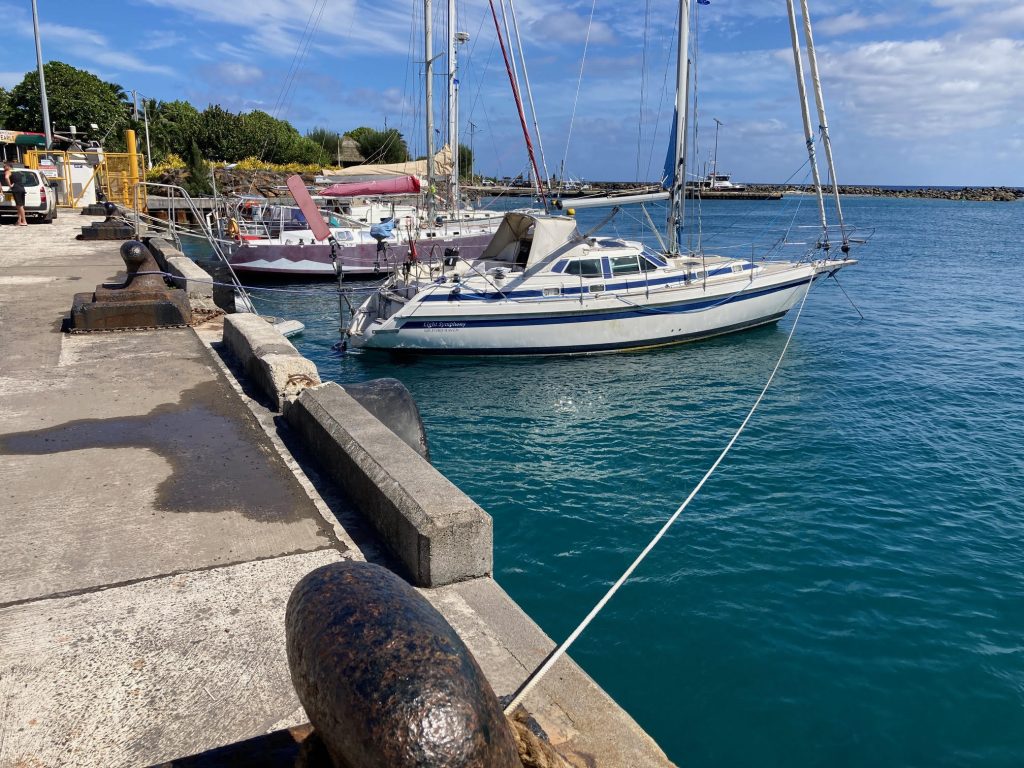
Light Symphony, a 38ft motor sailor built by Austrian company Sunbeam, served as Neale’s steadfast companion. Acquired in 2017, he meticulously outfitted the vessel over two years in Milford Marina, transforming it into a seafaring haven. With two cabins, a well-equipped wheelhouse, and a spacious cockpit, the vessel endured the challenges of the open ocean, a testament to both craftsmanship and Neale’s determination.
Neale’s extensive maritime background, including a four-year deck cadetship, RYA sailing qualification, and experience in the merchant navy, provided him with a solid foundation. Additionally, courses in handling medical emergencies at sea further fortified his readiness for the challenges that lay ahead.

Divided into four stages, the journey commenced in the summer of 2022. Neale’s wife, Janet, joined him for the initial stage to Portugal. Subsequent stages saw the company of friends Phil Jones and Phil Astles, with solo segments navigating the vast expanses of the Atlantic and Pacific.
Unexpected challenges arose, notably encounters with orcas off the coast of Spain. Neale recollects; ” When we reached Gijon in Spain we met a young couple with two small children who had experienced an encounter with orcas. This was a danger I was never expecting to have to deal with. A pod of orcas have taken it upon themselves to “attack” sailing boats by damaging the boat’s rudders, disabling the yachts and forcing them to be towed into port for repairs. There have been many “attacks” over the past few years, with three yachts being sunk when the damage to the rudders caused uncontrolled water ingress.”
Having not anticipated such a threat, Neale adjusted his course, navigating close to the coast to minimize the risk. The Pacific Ocean presented its own trials, with multiple instances of rigging failures requiring innovative repairs, showcasing Neale’s resilience and seamanship.
Choosing to navigate the Panama Canal without a local agent, Neale faced initial difficulties with the canal authority’s web platform. Despite setbacks, he persevered, hiring line handlers and overcoming the unique challenges of providing meals for advisors and crew during the transit.

Low points punctuated the journey during rigging failures, where the imminent collapse of the mast posed a threat to both speed and watertight integrity. Conversely, repairing the rig was a high point, instilling confidence for the remainder of the voyage. The ultimate high was reaching New Zealand, lifting the weight of sailing with a damaged rig.
Gale-force headwinds near New Zealand halted progress for 24 hours, testing both Neale and Light Symphony. The vessel weathered the storm, a testament to its seaworthiness and Neale’s navigational skill.
A failed battery charging system early in the voyage led to the loss of fresh food. Relying on tinned food, Neale made a crucial stop at Rarotonga for fresh supplies during a period of calm weather. The on-board water maker ensured an uninterrupted supply of fresh water.

Fishing attempts varied, with success in the Atlantic but disappointment in the Pacific. Neale’s resourcefulness extended beyond repairs to navigating the challenges of sourcing sustenance on the open sea.
From Milford to Auckland, the journey spanned several stages, totaling months at sea. The Pacific Ocean crossing alone consumed 73 days. While Neale had commitments, the voyage unfolded with a balance between purposeful progression and the unpredictable nature of the open ocean.
A daily blog chronicled Neale’s odyssey, providing a firsthand account of the challenges and triumphs. Expressing interest in its publication, the blog stands as a testament to the highs and lows of his maritime adventure.
Neale expressed gratitude to his former colleague Ian Swales, friend Denzil from Ratsey’s Sailmakers, his daughter Rosie for liaising with New Zealand authorities, and a special thank you to his wife Janet for enduring his prolonged absence and the stresses it entailed.
Having achieved his goals in long-distance sailing, Neale envisions future adventures on two wheels, leaning towards motorcycle touring as his next favored pastime.
In sharing his wisdom, Neale emphasizes the need for comprehensive preparation. From tools and spares to diverse knowledge on mechanics, navigation, and survival, he advocates self-sufficiency and a deep understanding of one’s vessel. Knowing the boat inside out, undertaking maintenance personally and being ready for anything are paramount for those aspiring to undertake similar odysseys.
Reflecting on the Pacific crossing, Neale expressed regret at the limited time to explore island groups, citing the need to stay ahead of cyclone seasons. Acknowledging the impact of seasonal timing on the voyage’s enjoyment, he recognizes the delicate balance between commitment and exploration.”
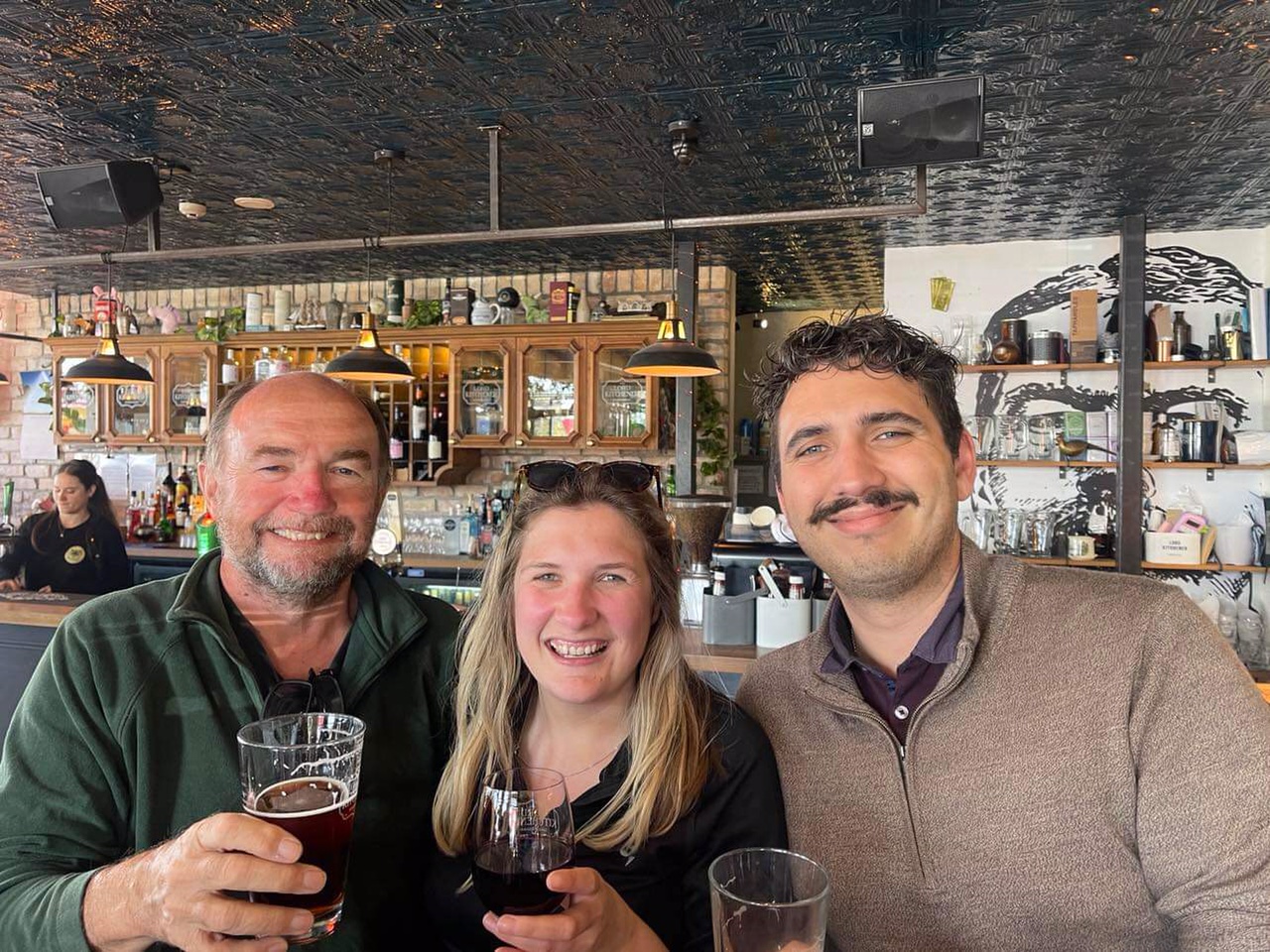
PICTURED ABOVE: Arrival in New Zealand. Edward, Rosie (daughter), Harry (Rosie’s partner)



AN OUTLINE business case to Welsh Government for new schools in Milford Haven, which would be “the most expensive capital project ever undertaken by the council” has been backed by senior councillors.
At the Pembrokeshire County Council Cabinet meeting of May 27, members were asked to approve the submission of an outline business case for the Milford Haven Schools redevelopment to Welsh Government, and to approve the new updated budget for the scheme, in light of completing the outline business case , and make provision within the capital programme.
It was previously reported at the May meeting of full council that the scheme, for both a new English Medium and a Welsh Medium School, won’t be built before 2030 and 2032 respectively.
At that meeting, Cabinet member for education, Cllr Guy Woodham, who had earlier announced he was stepping down from his Cabinet education role, said he felt a personal disappointment to be stepping down before there was “a spade in the ground”.
A report for Cabinet members, presented by Cabinet Member for Residents’ Services, Cllr Rhys Sinnett, said following the Sustainable Communities for Learning Strategic Programme Board considering a report on the draft business case it was recommended a new Welsh Medium 3-11 primary school be built on the existing Milford Haven Community Primary School (junior site) and an English Medium provision combined new primary and secondary school building on the existing secondary school site, with some sharing of services.
The schemes also include a 40-place Flying Start centre, a 36-place secondary learning resource centre and a 24-place primary learning resource centre.
It also includes a leisure centre on site, with Thornton Sports Hall demolished as part of scheme, following a March Cabinet backing to support a new leisure investment programme, the funding for that not forming part of the business plan approved.
The report added: “The estimated cost of the scheme has changed from £141,598,965 to £143,617,659, primarily as a result of a change of Welsh Government requirements, from the Building Bulletin to new Area Guidelines, which has required an increase in the Gross Internal Floor Area (GIFA) of the schools to comply, together with further development of the project towards more accurate costs.”
The scheme would see a funding split of: Welsh Government 67.75 per cent, Pembrokeshire County Council 32.25 per cent, a total contribution from the council of £46,316,467
In the report, Director of Resources Jonathan Haswell the scheme would be “the most expensive capital project ever undertaken by the council”.
Members backed the recommendation, new Leader Cllr Tessa Hodgson reflecting it was the first Cabinet meeting without Cllr Guy Woodham in the education role, having stepped back due to health issues, saying he had “worked so hard for this”.
Members backed the recommendations.

Mike Cavanagh, Head of Culture, Leisure, and School Modernisation stressed the business case was not the last part of the process with a full business case expected by the end of the year, and hopes construction would be complete by 2030 and ’32 respectively.
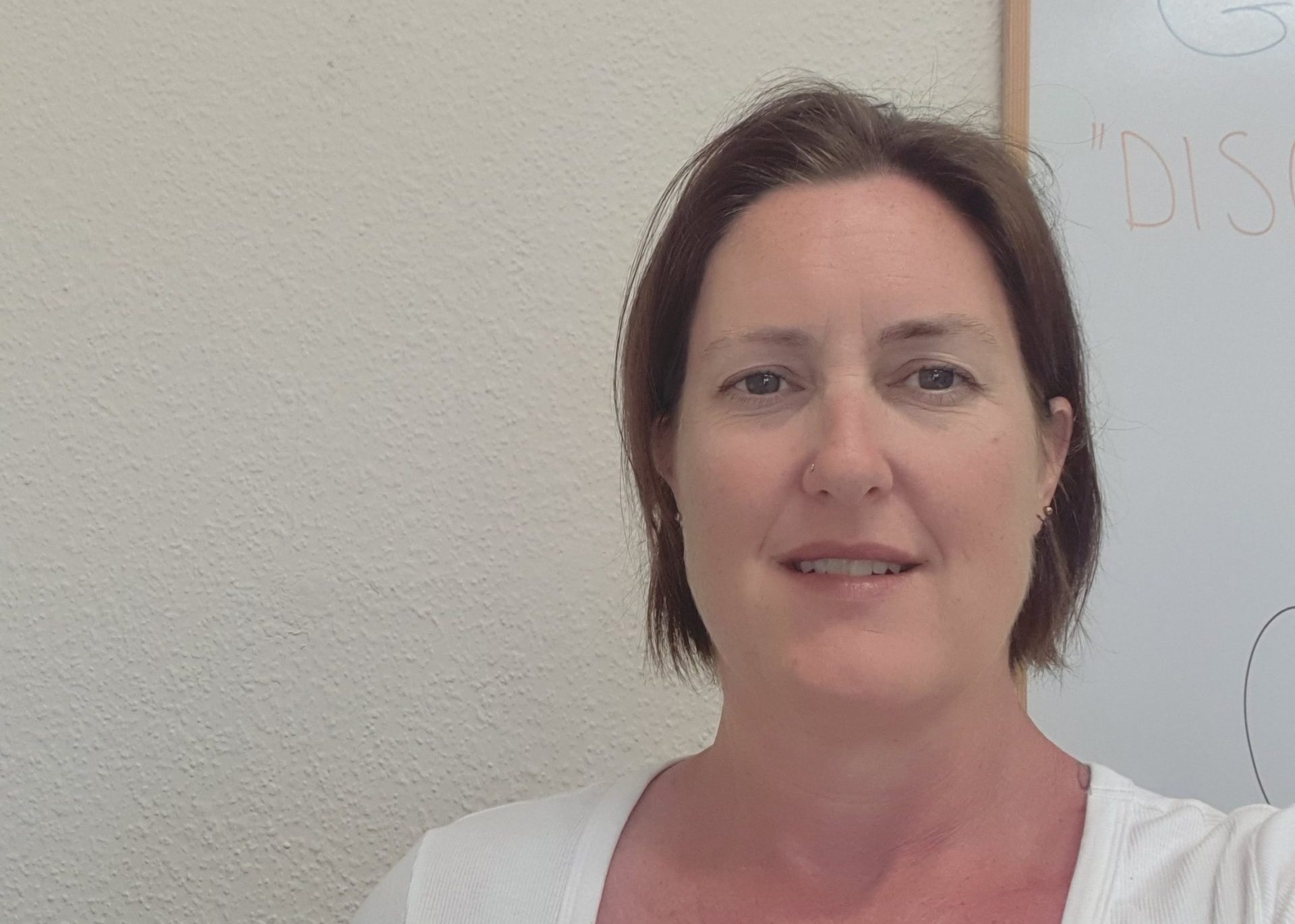
BARCUD Housing Assistant, Amanda Evans, is a brave ‘sole’ as she has agreed to do a Firewalk to help raise funds for Wales Air Ambulance. The charity, which is celebrating its 25th anniversary, relies entirely on public donations to keep both the rapid response vehicles and helicopters running.
The firewalk is a sponsored walk with a difference! It might be the shortest and hottest walk, but it takes strength of mind to complete the challenge of walking five metres, barefoot, over hot coals which reach temperatures of up to 800°C!
Amanda has never done a Firewalk before but last year she changed her mindset and since then the word ‘no’ hasn’t been in her vocabulary. She said, “Doing a Firewalk sounds awesome. I decided it would be a giggle to sign up on behalf of Barcud to raise funds for Wales Air Ambulance. Why not? It would be great to have a crowd at the Firewalk in Aberaeron to show support and cheer me on.”
Day to day Amanda works at Barcud’s office in Glyn Padarn, Aberystwyth. She works as part of a team with housing officers to provide support for tenants.
Barcud is based in mid and west Wales with a 300 strong workforce and 4,500 tenants. This is the group’s first year of fundraising for a specific charity and at the annual colleague conference last winter the majority were in favour of supporting a charity, that, like Barcud, helped and supported those living rurally.
Gail Windley, Wales Air Ambulance’s Events and Partnership Fundraiser said, “We’re delighted to be launching our firewalks this year on our special 25th anniversary year. Fundraisers will take on the ultimate challenge of walking over hot coals to helps save lives across Wales. This is a wonderful challenge aimed at all physical abilities and one that needs some courage.
“Walkers don’t need any previous experience to take part in the firewalk, as all the training will be provided on the day. We want to reiterate that this is not an activity to be tried at home and should only be done during a professionally organised event.
“The Charity relies on donations to continue to keep our helicopters in the air and our rapid response vehicles on the road. Fundraising events, like the firewalks, will help to continue this lifesaving service for the people of Wales. It will be an unforgettable day for the participants and their supporters.”
Amanda will be doing her Firewalk at Moody Meadows in Aberaeron from 6pm on Friday, 10th July 2026. Any donations to support Amanda, and Barcud reach its fundraising target of £5,000 would be very gratefully received. Click here to support Amanda online: https://firewalks.walesairambulance.com/amanda-evans

New research suggests most children in Wales are still falling short of five-a-day
TESCO is expanding its Free Fruit & Veg for Schools programme across Wales after new research found that most children are not eating their recommended five portions a day.
The supermarket said only four out of 37 children in Wales, around 10.8%, eat their recommended five portions of fruit and vegetables on a typical school day.
The research also found that almost a third of Welsh parents said their child refuses fruit and vegetables altogether.
Tesco said it will double the number of schools supported by the programme from September, with an ambition to double it again the following year.
The scheme currently provides funding to more than 500 schools across the UK with higher-than-average free school meal eligibility, allowing them to provide pupils with fruit and vegetables during the school day.
Since launching in 2024, the programme has already reached more than 188,000 children across the UK, with pupils consuming more than 15 million portions of fruit and vegetables in its first year.
This year’s expansion is expected to support more than 388,000 children across the UK.
Tesco said the programme is designed to help children try a wider range of fruit and vegetables, build confidence with healthy food, and encourage better eating habits.
The company said pupils taking part have already sampled more than 100 different varieties of fruit and vegetables.
The research also suggested that choice and presentation can make a difference. More than three quarters of Welsh parents said their child is more likely to eat fruit and vegetables when they can choose them themselves, while many said making food fun or visually creative encouraged children to try more.
Ken Murphy, Tesco Group CEO, said: “We’ve set out an ambition to help one million children get free fruit and veg through our school and community programmes, supporting the development of healthy habits.
“Schools have told us what a positive impact the Tesco Free Fruit & Veg for Schools programme has already made, so we’re delighted to be able to double the number of schools receiving support from September.”

Elaine Hindal, Chief Executive of the British Nutrition Foundation, said: “A significant number of children in the UK are growing up with diets that don’t support their health.
“Early food experiences matter, as they can help to shape children’s confidence, habits and long-term health outcomes.
“By helping children enjoy and regularly eat fruit and vegetables from a young age, programmes like Tesco Free Fruit & Veg for Schools can help to make a lasting difference to diet and health now and in the future.”
Tesco is also inviting children to create fruit and vegetable-packed recipes as part of its Giant Fruit and Veg Challenge, with the winning dish to be served in more than 1,500 schools.
The supermarket has set a target of helping one million school children across the UK access free fruit and vegetables through its school and community programmes by July 2029.



Crime24 hours ago
Haverfordwest sex offender jailed over child abuse material
Registered offender used library computers to hide social media accounts A HAVERFORDWEST sex offender who used public library computers to...


Local Government1 day ago
Milford Haven school redevelopment moves a major step closer
£141.6m scheme could transform education in the town A MAJOR step forward has been taken in the long-awaited Milford Haven...


Crime1 day ago
Castlemorris man spared jail after knife confrontation over council tax debt
A CASTLEMORRIS man has avoided immediate custody after threatening enforcement officers with a knife during an early-morning visit over unpaid...


News2 days ago
Lifeboats and helicopter join search for missing person off Broad Haven
SEARCH teams carried out a major operation at Broad Haven after reports of a missing person. Little and Broad Haven...

News2 days ago
Multi-agency rescue after child falls on rocks while coasteering
Child airlift requested after four-metre fall near Lydstep A CHILD was rescued from rocks near Lydstep after falling around four...


News3 days ago
Police investigate ‘arson’ after vehicle fire spreads to property in Pembroke
A VEHICLE is believed to have been deliberately set alight during an alleged arson in Pembroke in the early hours...

News3 days ago
Four rescued after dinghy deflates off Pendine
FOUR people were rescued off Pendine on Wednesday evening after Tenby’s all-weather lifeboat was launched to reports of an inflatable...


News3 days ago
Hundreds attend major Diocese of St Davids gathering
Churches across West Wales urged to take message of faith back into their communities HUNDREDS of people gathered at Carmarthenshire...


News3 days ago
Vehicle destroyed in early morning fire in Pembroke
POLICE are investigating after a vehicle was destroyed in an early morning fire in Pembroke. The incident happened in the...


Climate4 days ago
Pembrokeshire named among Wales’ green economy hotspots
New analysis says the county’s net zero sector supports 1,600 jobs and accounts for 5.3% of local economic output PEMBROKESHIRE...
-

 Health3 days ago
Paul Davies warns health board over Withybush and Bronglais services
-
 Crime4 days ago
Police tip-off leads to drink-drive ban for Pembrokeshire pensioner
-

 Crime4 days ago
Steynton motorist banned after drink-drive collision
-
Crime3 days ago
Carmarthenshire man sent to Crown accused of 33 historic sexual offences
-

 Crime4 days ago
Warrant issued for man accused of taking wild goldfinches
-
 Crime4 days ago
Dock man given suspended prison sentence for third drink-drive offence
-

 Crime4 days ago
Dock motorist fined £1,600 after four speeding offences
-

 Local Government5 days ago
Dennison code breach raises serious questions over common sense at County Hall