


Crime
How the Post Office Horizon scandal profoundly impacted lives across Wales

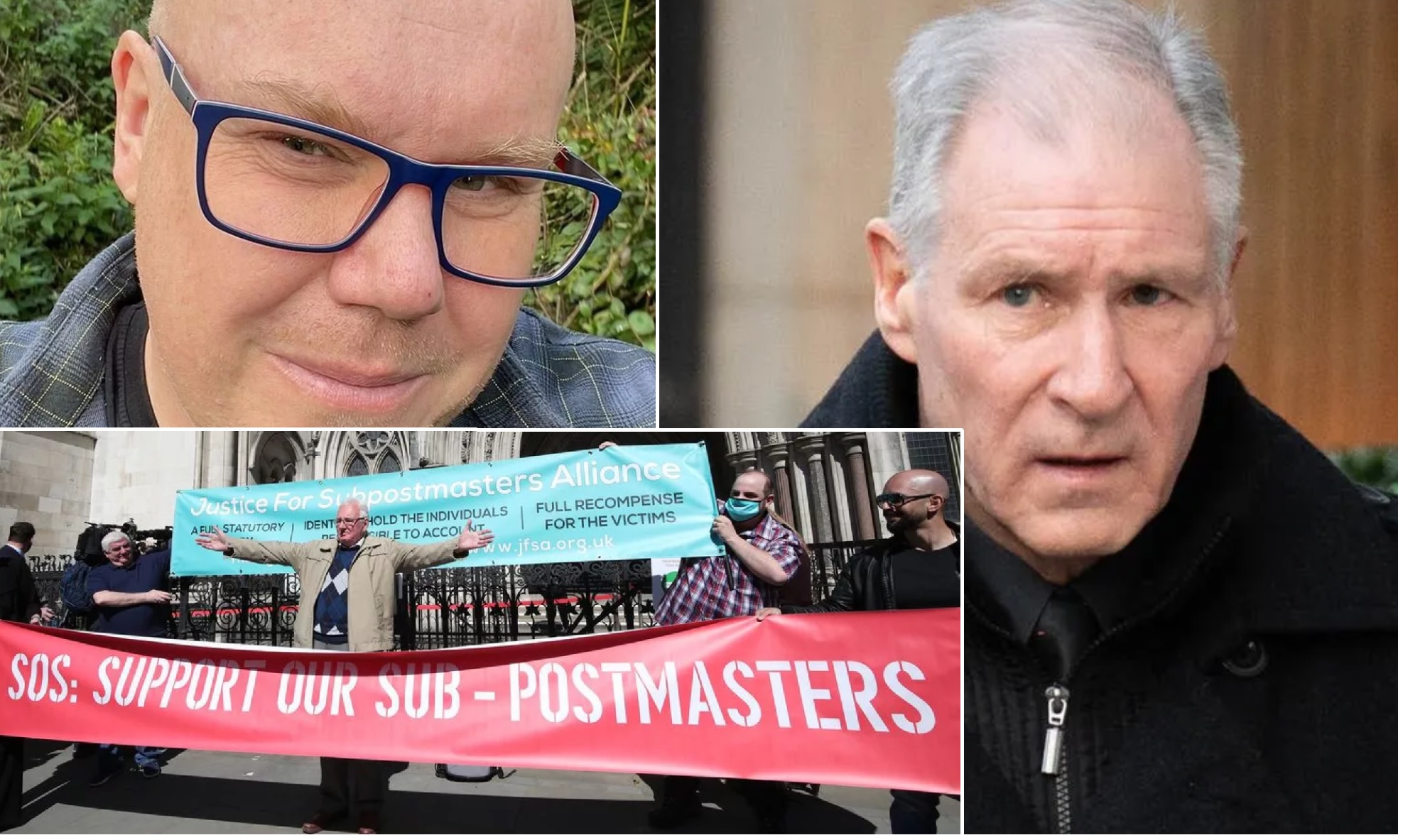
IT’S a story etched by systemic shortcomings and individual resilience. And thanks to the recent ITV drama “Mr Bates vs the Post Office” its one which we all now know. The Post Office Horizon scandal has profoundly impacted lives across Wales and beyond, entangling figures like Tim Brentnall from Pembrokeshire and Lorraine Williams from Llanddaniel, Anglesey. Their experiences, are similar despite taking place on opposite ends of Wales. They are unified by a shared ordeal of injustice and a relentless pursuit for redemption – Tom Sinclair reports.
Tim Brentnall, a young entrepreneur from Roch, Pembrokeshire, saw his aspirations crumble when an audit in 2009 revealed a £22,000 shortfall at his post office branch. This led to a chain of events that upended his life. Despite no evidence of wrongdoing, the pressure to resolve the discrepancy saw Tim’s family take out a loan to cover the supposed shortfall, only for him to be prosecuted and advised to plead guilty. This resulted in an 18-month suspended sentence and 200 hours of community service. The guilt plea, made under distressing circumstances, cast a long shadow over Tim’s life, leading to social ostracization and personal turmoil.
In a parallel ordeal, Lorraine Williams from Llanddaniel, Anglesey, faced a similar plight. A cornerstone of her community, Lorraine’s world was turned upside down when she was wrongly accused of stealing over £14,600. Coerced into pleading guilty to false accounting to avoid more severe charges, she too received an 18-month suspended sentence and 200 hours of community service. Her conviction shattered her standing in the community she had served so selflessly.
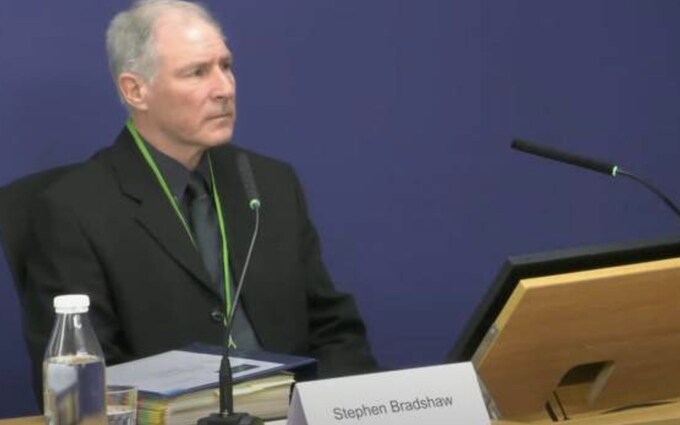
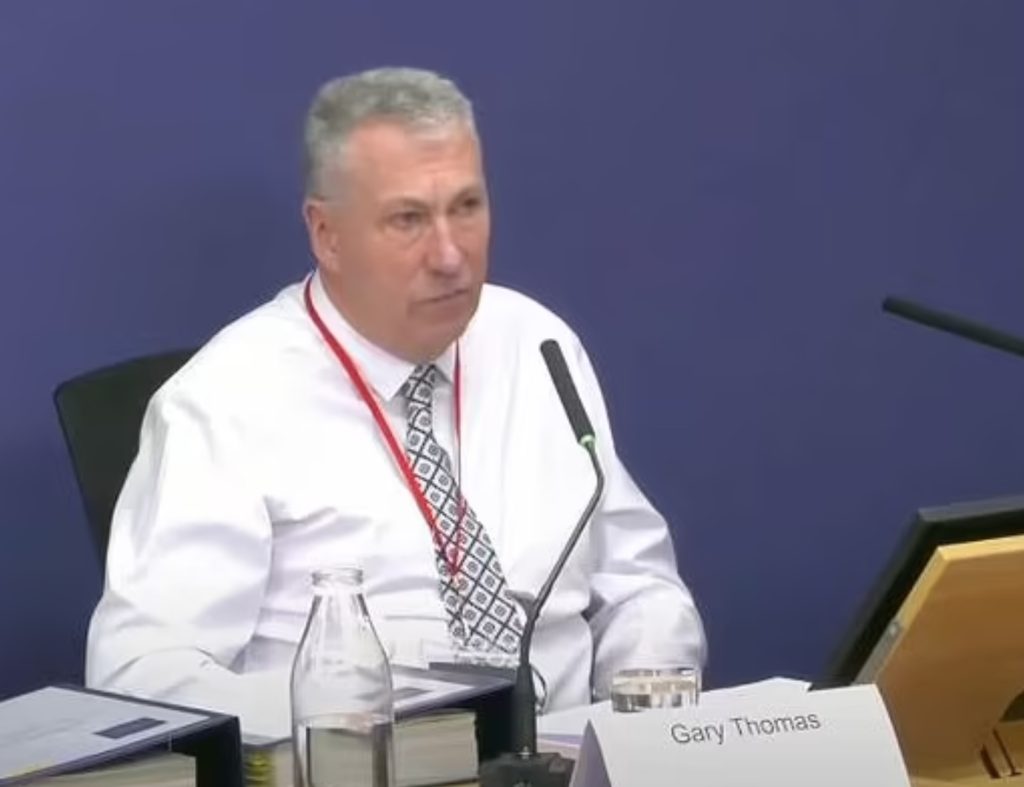
Central to both Tim’s and Lorraine’s stories is the figure of Stephen Bradshaw, the Post Office investigator whose methods in pursuing these cases have been heavily scrutinized. Bradshaw, known for his pugnacious determination, played a pivotal role in the investigation, often refusing to consider the possibility of innocence or the potential flaws in the Horizon system. His appearance during the Post Office scandal inquiry and his portrayal in the TV drama have highlighted his aggressive approach and unwavering stance in these investigations.
In addition to his inability to comprehend the complexities of the Horizon system, he was evasive about his bonus arrangements. This evasiveness further underlines the corrupt practices that have marred the integrity of the Post Office’s management.

Bradshaw’s actions, particularly his single-minded pursuit of convictions and repayment of alleged debts, have drawn comparisons to those of a ‘mafia gangster’, a term used by some to describe his behavior. Despite these accusations, Bradshaw maintained that his investigations were conducted professionally and that he was simply following orders to defend the Horizon system. His lack of technical expertise, as he admitted to not being “technically minded,” raised questions about his ability to fairly assess the situations he was investigating.
The experiences of Tim and Lorraine, along with those of hundreds of other sub-postmasters, culminated in the quashing of their convictions in April 2021, marking a significant step in rectifying this miscarriage of justice. Their stories, part of a wider narrative involving 736 wrongfully prosecuted individuals, underscore the most extensive legal misstep in UK history.
As the independent inquiry into the scandal continues, the focus on Tim’s and Lorraine’s experiences, and the role of figures like Stephen Bradshaw, brings to light the intricate interplay of personal suffering, technological failures, and institutional accountability. This scandal serves as a stark reminder of the necessity for transparency and responsibility in corporate and government systems, and the dire consequences when these are neglected.
In the aftermath of these events, the resilience of Tim Brentnall, Lorraine Williams, and others like them stands as a testament to the human spirit’s capacity to endure and seek justice in the face of overwhelming odds. Their stories, extending beyond Pembrokeshire and Anglesey, highlight the urgent need for vigilance and reform in institutions that are entrusted with public service. As they reclaim their dignity and continue to advocate for accountability, their experiences serve as a poignant reminder of the enduring impact of systemic failings and the importance of upholding justice for all.


A NEW YEAR’S EVE drive has resulted in a 12-month road ban after a motorist was found to be more than twice the legal cannabis limit.
Ridwan Rahman, 20, was stopped by police as he drove his Vauxhall Astra along Steynton Road, Milford Haven, on January 1.
“Police noted the car accelerating away from traffic lights in an erratic manner,” Crown Prosecutor Sian Vaughan told Haverfordwest magistrates this week.
“When officers asked the vehicle to stop, they smelt cannabis coming from inside.”
A blood test later showed Rahman had 5.2mcg of delta-9 tetrahydrocannabinol, the active ingredient in cannabis, in his system. The legal limit is 2mcg.
Rahman, who has no previous convictions, pleaded guilty to drug-driving. He was represented in court by solicitor Alaw Harries, who disputed the prosecution’s claim that he had been driving erratically.
“He does not accept that he was driving in an erratic manner, nor that he accelerated away from the traffic lights,” she said.
“The officers told him he had been stopped because the vehicle’s registration plate light was not working.”
Rahman, of Carbon Close, Newport, was fined £323 and ordered to pay a £129 court surcharge and £85 costs.
He was disqualified from driving for 12 months.

A FISHGUARD man has been jailed after breaching a restraining order which banned him from contacting his mother.
Steven O’Sullivan attended his mother’s home on June 22, despite the order having been imposed in November 2012. It prohibited him from having any direct or indirect contact with her.
“She felt she needed to phone the police because she was frightened of her son,” Crown Prosecutor Sian Vaughan told Haverfordwest magistrates this week.
“He had been dropped off at his mother’s property by a female, and his mother went upstairs to ring the police because he makes her feel vulnerable.”
When officers arrived, they found O’Sullivan inside an outbuilding, crouching beside an outside toilet.
“There have been a number of previous breaches, the most recent being on June 5,” continued Ms Vaughan. “Now we have yet another one on June 22.”
O’Sullivan, of Gwelfor, Fishguard, is currently on remand at Swansea Prison. He is also accused of stealing beer and food worth £45 from the Nisa store in Haverfordwest on June 21.
Representing him in court, solicitor Tom Lloyd said there had been no threats of violence when O’Sullivan went to his mother’s home.
“But the aggravating factor is his previous convictions,” he told the bench.
“He was particularly upset and had nowhere else to go. This was why he went to see his mother.”
Magistrates jailed O’Sullivan for eight weeks. He was also ordered to pay a £154 court surcharge and £85 costs.
He is due to return to Haverfordwest Magistrates’ Court on July 7 to enter a plea in relation to the alleged theft offence.



A PEMBROKE DOCK man has been banned from the roads for more than three years after being caught drug-driving for the third time.
Adam Crayford, 28, was stopped by police shortly after 10pm on January 9 as he drove his Volkswagen Golf through Pembroke Dock.
Blood tests later showed he had 5.8mcg of delta-9 tetrahydrocannabinol, the active ingredient in cannabis, in his system. The legal limit is 2mcg.
He was also found to have 117mcg of benzoylecgonine, a cocaine breakdown product, in his blood. The legal limit is 50mcg.
This week Haverfordwest magistrates were told that Crayford, of Mayfield House, Victoria Road, Pembroke Dock, had previously been convicted of drug-driving in 2019 and of failing to provide a specimen for analysis in 2022.
Crayford pleaded guilty to both drug-driving offences.
“He is disappointed to be back before the courts again and recognises the seriousness of the matter,” said his solicitor, Alaw Harries.
“This is particularly so in light of his previous convictions.”
After considering a probation report, magistrates sentenced Crayford to an 18-month community order. He must complete 100 hours of unpaid work and attend 20 rehabilitation activity requirement days.
He was disqualified from driving for 40 months and ordered to pay a £114 court surcharge and £85 costs.



Health17 hours ago
Wales begins early NHS winter planning after long waits and ambulance pressure
Ministers say health boards and councils must act now to ease pressure on hospitals, ambulances and social care before winter...


Crime2 days ago
Judge calls pensioner a ‘dirty old man’ as he avoids jail for exposing himself to women
Judge says 75-year-old Stewart Laugharne behaved ‘disgracefully’ as he avoids jail but is ordered to sign sex offenders register A...
Health2 days ago
Stroke services consultation reaches halfway point as public urged to have say
HYWEL DDA University Health Board is urging people to take part in its consultation on the future of stroke services,...


Business2 days ago
Welsh firms eye share of £5bn defence drone boom
WELSH defence and aerospace firms could be in line for a share of billions of pounds in new military spending...


Community4 days ago
Thousands line Cardigan streets for Lord Rhys homecoming parade
THOUSANDS of people lined the streets and quayside in Cardigan on Saturday as the town marked 850 years since Lord...


Crime5 days ago
Dyfed-Powys Police rated only ‘Adequate’ in organised crime inspection
A WATCHDOG has rated Dyfed-Powys Police only “Adequate” in its response to serious and organised crime, despite praise for the...


News5 days ago
Two taken to hospital after aircraft ditches in Cardigan Bay
Coastguard helicopter spotted two casualties after light aircraft came down off west Wales coast TWO people were taken to hospital...


Sport6 days ago
Long Course Weekend gets underway in Tenby as thousands head for county
Three days of swimming, cycling and running begin with The Wales Swim at North Beach THOUSANDS of athletes and supporters...


Climate6 days ago
Welsh waters, Westminster profits: Crown Estate row reignited in Wales
PLAID CYMRU has renewed calls for the Crown Estate to be devolved to Wales after figures showed income linked to...
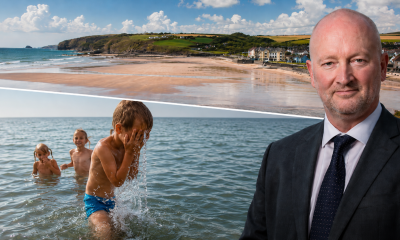

News6 days ago
Reform MS: ‘I felt like shouting get out of the water’
Paul Marr says children playing in streams at Pembrokeshire beaches deserve better protection from pollution risks REFORM UK MS Paul...
-

 Crime7 days ago
Police appeal after reported rape at Young Farmers rally
-
Crime5 days ago
Dyfed-Powys Police rated only ‘Adequate’ in organised crime inspection
-

 Entertainment6 days ago
Torch cuts children’s cinema tickets to £5.25 for summer
-

 News3 days ago
Biker dies and woman seriously injured in Black Mountain crash
-

 Farming7 days ago
Farmers urged to protect themselves as heatwave brings health risks
-
Climate6 days ago
Welsh waters, Westminster profits: Crown Estate row reignited in Wales
-
Health7 days ago
Senedd backs call to rule out hospital downgrades after heated NHS debate
-
News6 days ago
Reform MS: ‘I felt like shouting get out of the water’