


News
MSs warned public notice changes could have ‘catastrophic’ impact on local papers


PLANS to scrap a legal requirement for public notices of council tax changes to be published in newspapers risk damaging local journalism and democracy, a committee heard.
Senedd members took evidence on the Local Government Finance bill which would remove a requirement to publish details of council tax changes in newspapers.
Instead, councils would only be required to publish a notice on their own websites.
Gavin Thompson, regional editor at Newsquest, which owns newspapers such as the South Wales Argus, warned the bill would have catastrophic unintended consequences.
Mr Thompson told MSs the proposals would set a worrying direction of travel for other public notices, such as for planning or licensing.

Emphasising the importance of the revenue, he said six of Newsquest’s ten local newspapers in Wales would have been loss-making last year without public notices.
He warned that the business, which employs around 182 people in Wales, would not be able to continue printing loss-making titles.
Mr Thompson said removing public notice requirements would create a worse climate for local news than in England despite a greater need in Wales
He told the committee: “What we need is the Welsh Government and the Senedd to support local journalism – and to not make it more difficult to produce.”
John Griffiths, who chairs the Senedd’s local government committee, said the annual spend on council tax-related notices has been estimated at about £33,000 across Wales.
Rob Taylor, founder of Wrexham.com, raised the declining reach of local newspapers and stressed that the legal requirement is an indirect subsidy propping up the industry.
He said: “Back in the day, yes, circulations were huge and points of reference for many, many people – but the landscape has changed and it’s a bad law, it’s an out-of-date law.”

Saying public notices are becoming more expensive while circulations dwindle, Mr Taylor argued the requirement to publish public notices is no longer providing value for money.
He asked committee members: “Are we making a law here in Wales for the olden days or are we going to make one for the future?”
Mr Taylor said Wrexham.com does not want to get on the gravy train: “We don’t want the money for statutory notices – it’s a terrible law, a terrible way of communicating.”
He added that the website would be willing to carry such notices for free.
Steffan Rhys, audience and content director for Wales at Reach, which owns the Western Mail as well as WalesOnline, also raised concerns about the proposals.
He warned that the commercial media sector is facing many headwinds that directly impact its revenue, including the dominance of Google and Facebook in advertising markets.
Mr Rhys said: “If you remove the requirement to put public notices in print titles, you are removing that information from a certain part of the public – there’s no two ways about it.
“You’re also removing revenue from publishers, that means publishers are able to do less journalism and that means the public is even less informed, so it’s almost a circular effect.”
He said £33,000 may not be a huge amount but when you add in all other public notices, it becomes a very large sum which is critical to the revenue of publishers.
Mr Rhys warned transparency would vanish if public notices retreated onto council websites as he raised concerns about the so-called democratic deficit in Wales.
He said: “The more challenged revenues of news publishers become, the more difficult they are going to find it to produce that sort of public-interest journalism that Wales really needs.”
Rachel Bowen is director of policy at the office of the older people’s commissioner for Wales, which this week published a report, entitled Access denied, about digital exclusion.
She told the committee meeting on January 31 that the proposals are yet more evidence of a “creep towards digitalisation and increasing exclusion”.
Ms Bowen raised concerns about the “grey, ambiguous” wording of a requirement for councils to make suitable, alternative arrangements.
“There’s just no clarity about what that means,” she said, pointing out that other groups such as disabled people and those on lower incomes can be digitally excluded.
Carolyn Thomas, a Labour MS for North Wales, who has had The Leader delivered for 25 years, said the text of public notices is so small that she could not read them.
Ms Bowen agreed that current arrangements could be more accessible but she criticised a “rush” to as-yet ill-defined alternatives.


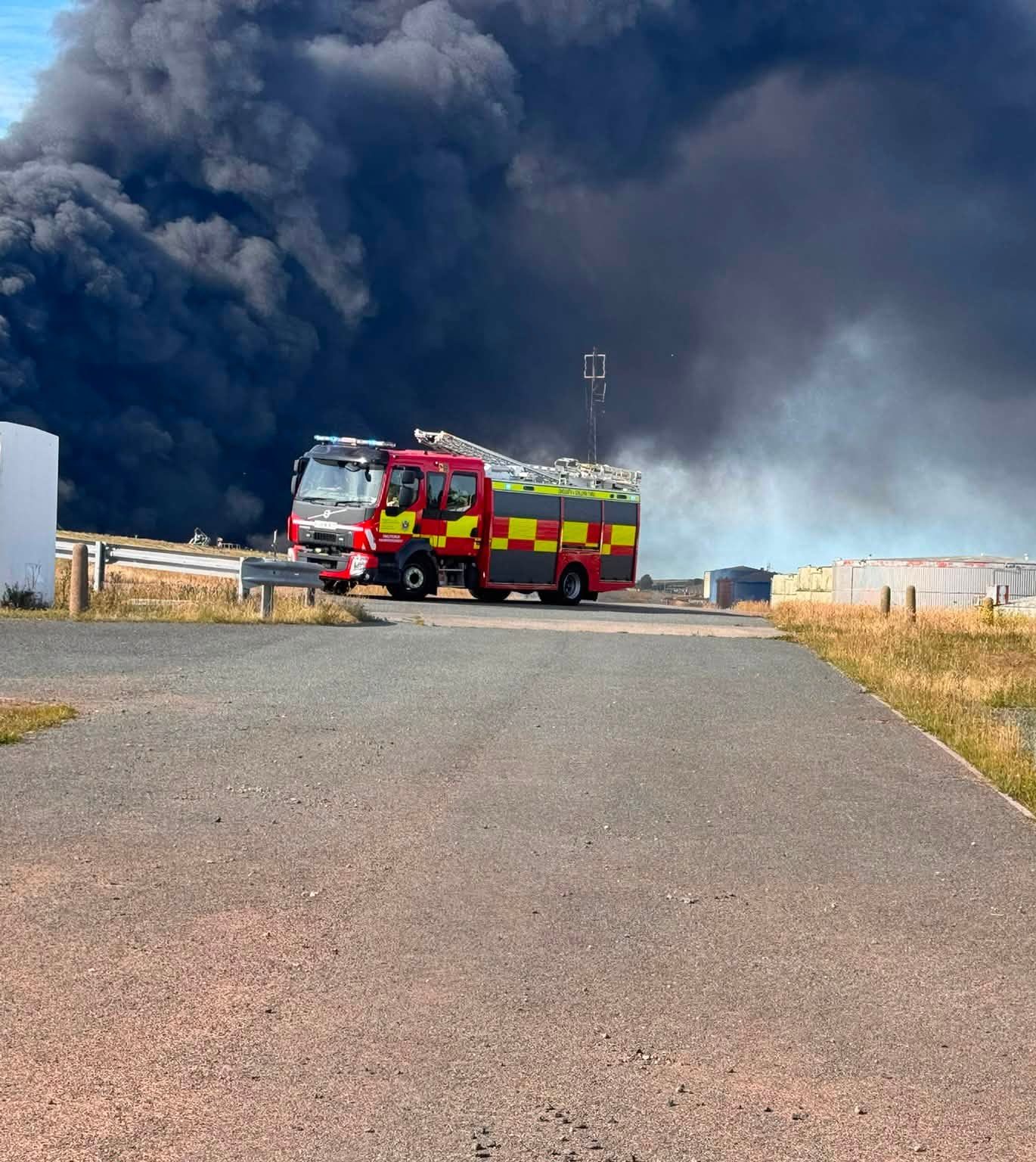
Black smoke seen for miles as emergency services respond to incident at former Puma Energy site
A LARGE fire has broken out at the Impala Terminal in Milford Haven this evening, sending a thick plume of black smoke high above the town and across the Haven waterway.
Multiple fire appliances have been seen heading to the site, with police closing roads in the immediate area while emergency services deal with the incident.
The Herald understands that the fire started in the area of Tank 10, at the rear of the facility, where demolition work was being carried out.
Sources have told The Herald that the tank was in the process of being dismantled and that cutting gear was being used at the time. The tank is understood to have been empty, but there may have been oil residue or sludge beneath or within the structure.
This has not yet been officially confirmed by the fire service, police, or the site operator, and the exact cause of the fire remains unconfirmed.
Pictures and video from the scene show a large column of black smoke rising from the industrial site, visible from Milford Haven, Neyland, Pembroke Dock and other areas around the Haven.
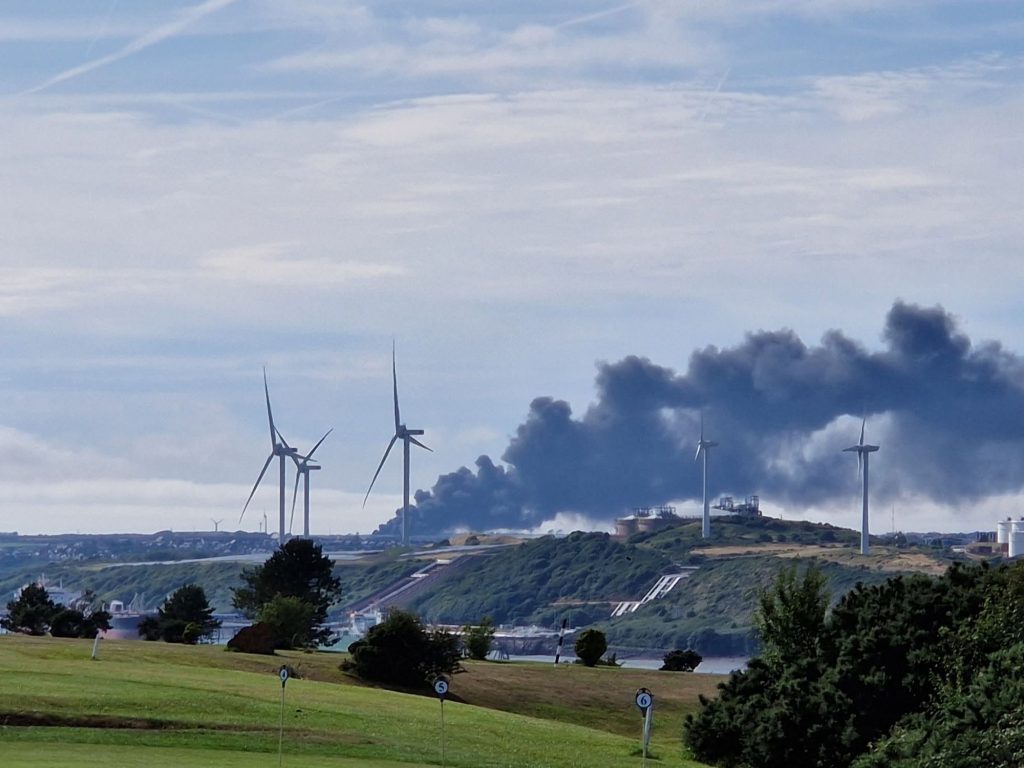
Members of the public are being urged to avoid the area and allow emergency services to work. As a precaution, anyone living nearby should keep windows and doors closed until further guidance is issued.
The site, still widely known locally as Puma Energy, is now operated as the Impala Terminal. It occupies part of the former Milford Haven oil refinery, which ceased refining operations before the site was converted into a fuel storage and distribution terminal.
The terminal has long been associated with the import, storage and distribution of petroleum products, with a large number of tanks, pipeline systems and jetty infrastructure forming part of the wider Milford Haven energy complex.

Milford Haven remains one of the UK’s most important energy ports, with oil, gas and fuel infrastructure playing a major role in the local economy for decades.
The Herald has contacted the emergency services and site operators for an official update.
More to follow.


MID AND WEST WALES FIRE AND RESCUE SERVICE has helped deliver a major convoy of firefighting vehicles and equipment to Ukraine, four years on from the start of the full-scale Russian invasion.
The latest convoy, the ninth of its kind, left the UK on Monday, 29 June and reached the Polish border with Ukraine on Thursday, 2 July, where vehicles and equipment were handed over to Ukrainian partners.
The operation was sponsored by the Ministry of Housing, Communities and Local Government and FIRE AID, and delivered through a national partnership involving National Resilience, the National Fire Chiefs Council, UK International Search and Rescue, and fire and rescue services from across England and Wales.
The convoy delivered 21 fire vehicles, including 17 fire engines, as well as more than 2,300 pieces of essential firefighting equipment. The donations will help replace critical resources lost during the war.
Since 2022, the UK fire and rescue community has donated 169 vehicles and more than 220,000 pieces of equipment to Ukraine.
Mid and West Wales Fire and Rescue Service was represented on the convoy by Watch Manager Robert Kershaw.
He said: “I am incredibly proud of our Service’s commitment to supporting the charity and helping get vital aid to Ukraine.
“This mission holds a very special place in my heart, as my family hosted a Ukrainian family for a year, who we now consider our own.
“Knowing the impact of this conflict first-hand makes me even more grateful to work alongside colleagues who are dedicated to helping Ukrainian emergency services protect lives.”
Previous donations from UK fire and rescue services are already making a significant difference on the ground. Vehicles delivered through earlier convoys have responded to more than 6,000 incidents, while more than 2,500 Ukrainian firefighters have been equipped with fully operational PPE and breathing apparatus.
Ukrainian fire and rescue services continue to face severe pressure. According to the State Emergency Service of Ukraine, 481 fire stations have been destroyed, with a further 106 in occupied territories. A total of 1,792 fire vehicles have also been lost.
Since the full-scale invasion began, 122 firefighters have been killed and 629 injured, with three still in captivity. The figures were correct as of 22 June 2026.

Despite these losses, Ukrainian firefighters continue to work on the frontline, saving lives, protecting infrastructure and responding to emergencies while under constant threat.
Around 80 volunteers from across the UK fire and rescue community took part in the convoy, giving their time to prepare, drive and deliver the appliances and equipment.
Fire and rescue services involved included Derbyshire, Essex, Hampshire, Hereford and Worcester, Kent, Lancashire, London, Merseyside, Mid and West Wales, North Wales, North Yorkshire, South Wales, South Yorkshire, Staffordshire, Surrey, West Midlands and West Yorkshire.
National Fire Chiefs Council Chair Phil Garrigan said: “The UK Fire and Rescue community remains unwavering in its support for colleagues in Ukraine.
“Four years on from the start of the full-scale invasion, Ukrainian firefighters continue to operate in the most challenging and dangerous conditions imaginable.
“This ninth convoy demonstrates the enduring commitment of UK fire and rescue services to stand shoulder to shoulder with our Ukrainian counterparts.
“The equipment being donated will help replace vital resources lost during the conflict and ensure firefighters can continue their life-saving work.
“This is about firefighters supporting firefighters. It is a powerful example of friendship that transcends borders.
“It is crucial we recognise the challenges our colleagues face and that we continue to play our part.”
FIRE AID Ukraine Lead Oksana Romanukha said: “We are once again seeing the extraordinary solidarity of communities right across the UK with Ukraine.
“These vehicles and equipment are lifelines, helping to save lives, protect firefighters and strengthen the resilience of communities under constant threat.
“We are deeply grateful to everyone across the fire and rescue community, and all those involved, who have made this collective effort possible.”
Minister for Building Safety, Fire and Democracy Samantha Dixon said: “Ukraine has faced unimaginable suffering, and we remain unwavering in our support.
“This convoy will deliver the critical equipment needed to help Ukraine’s Fire Service save lives, respond to attacks and protect their communities.
“I’m proud of the brave volunteers from across our Fire and Rescue Service, as well as all the organisations which have played a role in mobilising these vital assets, making sure support reaches those who need it most.”


A CARMARTHENSHIRE man has been remanded in custody after admitting a series of offences including assault occasioning actual bodily harm, affray, and criminal damage to a Dyfed-Powys Police vehicle.
Justin Thomas, 33, of no fixed abode, appeared before Llanelli Magistrates’ Court on Monday, July 6.
Thomas admitted assaulting Kayleigh Marshall in Llanelli on June 27, 2025, causing her actual bodily harm.
He also admitted criminal damage following an incident in Llanelli on June 7, 2026, when a police vehicle belonging to Dyfed-Powys Police was damaged.
On the same date, Thomas was further charged with affray, after using or threatening unlawful violence towards others in conduct which would have caused a person of reasonable firmness present at the scene to fear for their safety.
He also admitted damaging a window and property fixtures belonging to Phillip’s Lane Ltd.
Magistrates committed Thomas to Swansea Crown Court for sentence, ruling that their sentencing powers were insufficient.
He was remanded in custody ahead of his next hearing, which is due to take place at Swansea Crown Court on Monday, July 27.
Court records state that bail was refused due to the nature and seriousness of the offences, his previous record and character, and concerns that he was likely to offend.
The court also noted that Thomas was subject to a conditional discharge for assaulting a police constable at the time the latest offences were committed.



News3 minutes ago
Large fire breaks out at Impala Terminal in Milford Haven
Black smoke seen for miles as emergency services respond to incident at former Puma Energy site A LARGE fire has...


Crime3 hours ago
Prosecution outlines ‘planned attack’ as Milford Haven teacher stabbing trial opens
Jury hears teenager allegedly brought kitchen knife into school before teacher was stabbed in the head THE JURY in the...


Crime6 hours ago
Boy, 15, denies attempted murder of Milford Haven teacher in ‘horrifying’ attack
Swansea Crown Court hears dramatic opening of trial over February stabbing A 15-YEAR-OLD boy from Milford Haven has gone on...


Crime21 hours ago
Fishguard man cleared after five years in prison refused compensation again
Brian Buckle’s case raises fresh questions over justice system that says a man can be cleared by a jury but...


Crime1 day ago
Wales’ police commissioners to face MPs over future of policing
WALES’ four Police and Crime Commissioners are to be questioned by MPs next week as major changes to the way...


Crime2 days ago
Man in critical condition after serious assault in New Quay
A 20-YEAR-OLD man remains in a critical condition in hospital after being seriously assaulted in New Quay. Dyfed-Powys Police said...


Community2 days ago
Kilgetty and Begelly tractor run raises funds for local charities
Around 70 tractors joined the annual charity road run, hosted by the Begelly Arms Hotel THE ANNUAL Kilgetty and Begelly...


Community2 days ago
Milford Haven Carnival brings colour, music and crowds to the town
MILFORD HAVEN was filled with colour, music and community spirit on Saturday as the town’s annual carnival brought crowds onto...


News3 days ago
A40 closed near Llandeilo following collision
A SECTION of the A40 in Carmarthenshire has been closed in both directions following a collision. The road is currently...


Local Government3 days ago
Award-winning Saundersfoot sauna faces refusal over location concerns
PLANS to allow an award-winning outdoor sauna to remain permanently at Saundersfoot Harbour have been recommended for refusal by Pembrokeshire...
-

 Crime6 days ago
Estate agent banned after drug-drive crash in Milford Haven
-

 Crime6 days ago
Eight guilty over ‘industrial scale’ cocaine conspiracy into Pembrokeshire and Carmarthenshire
-

 Crime6 days ago
Men threatened to have prisoner killed in chilling phone call to his father
-
Crime6 days ago
Judge calls pensioner a ‘dirty old man’ as he avoids jail for exposing himself to women
-

 Entertainment4 days ago
Pembrokeshire DJ lands record deal with London dance label
-
 Education5 days ago
Council deputy leader moves to halt Stepaside school closure plan
-

 Education6 days ago
School leaders call for more support after Estyn finds RSE provision varies across Wales
-

 Education7 days ago
Fire safety works for early learning centre approved