


Climate
Cleddau River benefits from two river habitat restoration projects

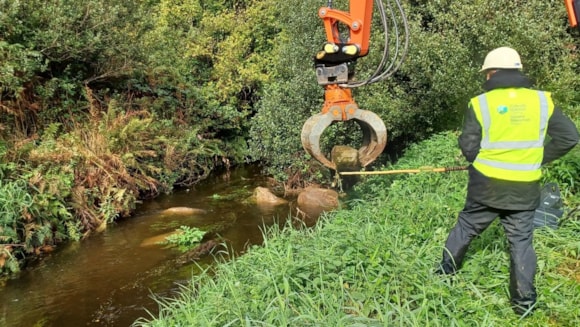
A RESTORATION project with ambitions to make a Pembrokeshire river more resilient to the challenges of the climate and nature emergencies is making great strides.
The Natural Resources Wales’ (NRW) Four Rivers for LIFE project team began work to restore the Western Cleddau River in Pembrokeshire in October 2023, with the goal of creating valuable habitat for important fish and wildlife.
The Western Cleddau is designated a Special Area of Conservation (SAC) and has been heavily modified in the past. Dredging and straightening of some parts of the river has significantly affected the condition and health of the river habitat.
The first project saw the introduction of several pieces of large wood into the river to mimic the natural processes that happen when trees fall into rivers.
Introducing wood narrows the river channel and forces the water around the wood causing localised erosion and creating new meanders.

As material from the erosion deposits in the flow shadow of the wood over time, new gravel, sand and silt bars will be created which will, in turn, create vital habitat and areas for important fish such as lamprey and trout to spawn and raise their young.
The wood also provides shelter for fish from fast flows, shade and cooler water, and cover from predators.
Nathan Walton, Reserves Manager West and Wildlife Trust Officer for Pembrokeshire said: “The installation of a number of woody structures in the river is working well. The root plates are helping to slow water flow and encourage the natural re-meandering of the watercourse.
“Water levels are much higher than before, and areas of the reserve are now becoming wetter. This enhances the open water and fen features of the reserve and the species dependent on them.
“We are extremely grateful to the project for recent works on the upper reaches of the western Cleddau that passes through Llangloffan Fen.”
Llangloffan Fen is a lowland wetland in the upper part of the Western Cleddau river SAC. The fen is a national nature reserve managed in parts by the Wildlife Trust of South and West Wales (WTSWW), Natural Resources Wales (NRW) and some private landowners.
The second project saw the re-introduction of large boulders into a stretch of the Western Cleddau River, near Letterston village.

The boulders are believed to have been removed from the river as part of historic dredging in the late 1960s. This was confirmed by the presence of similar types and sizes of boulders found nearby. These boulders showed clear signs of weathering and erosion as opposed to bank protection boulders, which are quarried and angular in shape.
Introducing the boulders will create more natural flow diversity, as water speeds up on either side of the boulder and slows down upstream and downstream.
These different flow types create perfect conditions for different insects which are part of the food chain that supports species like salmon and otters.
The calm water flows also offer rest areas for fish, as they move up and downstream and swim from boulder to boulder to save energy.
Duncan Dumbreck from the Four Rivers for LIFE project said: “Historic surveys of fish and aquatic insects have found a mix of trout, lamprey, bullhead and stickleback in this part of the river.
“This regenerated habitat will be vital to the survival of species like salmon, which are at risk of becoming extinct in some rivers in Wales.”
Habitat recovery is a very slow process and can take hundreds of years. This work will boost the recovery process by using methods that would naturally occur.
Both projects were funded by the Four Rivers for LIFE Project, an EU LIFE funded programme looking to restore freshwater habitats for rare and important species.
To keep up to date with our work you can follow us on as Facebook, X and Instagram or subscribe to our newsletter here



Pembrokeshire ports and Celtic Sea projects placed at centre of Wales’ green energy ambitions
MILFORD HAVEN and Pembroke Dock could be at the heart of a new offshore wind boom after Wales’ new energy minister said the sector could drive jobs, investment and coastal regeneration.
Adam Price, the Cabinet Minister for Enterprise, Connectivity and Energy, told the Global Offshore Wind 2026 conference that Wales was “open for business” and ready to work with industry, the UK Government and The Crown Estate.

For Pembrokeshire, the announcement is particularly significant. The Milford Haven Waterway is already being positioned as a key base for floating offshore wind in the Celtic Sea, with Pembroke Port earmarked as a major renewables hub. Plans for a dedicated floating offshore wind storage compound at Pembroke Dock have already secured planning permission.
Mr Price said: “I believe that the offshore wind sector has the potential to deliver high quality sustainable career opportunities for people in Wales.
“The offshore wind sector has a key role to play in bringing about the regeneration of coastal communities in both north and south Wales.
“Our role is to remove the blockers faced by the sector — whether in planning, access to finance or infrastructure.”
The Celtic Sea floating wind programme is expected to create major supply chain opportunities for Welsh ports, engineering firms, vessel operators and training providers. Marine Energy Wales has said the first 4.5GW of floating offshore wind in the Celtic Sea could create more than 5,300 jobs during construction.
The Port of Milford Haven has previously said the Haven’s existing energy expertise, heavy engineering base and deep-water port facilities make it well placed to support the industry.
Mr Price also welcomed UK Government support for Port Talbot, but Pembrokeshire businesses will be watching closely to ensure Milford Haven and Pembroke Dock receive a fair share of the investment.
Jessica Hooper, Director of RenewableUK Cymru, said offshore wind was “Wales’ next big industrial opportunity”, adding that it could be worth almost £5bn to Welsh businesses and deliver more than 3,000 long-term secure jobs.
For Milford Haven, long associated with oil, gas and marine industry, floating offshore wind could mark the next chapter in the Haven’s energy story.

VISITORS to this year’s Royal Welsh Show are being encouraged to use public transport as organisers look to ease congestion and promote more sustainable travel.
The show takes place at the Royal Welsh Showground in Llanelwedd, Builth Wells, from July 20 to 23, and is expected to attract thousands of people from across Wales and beyond.
The Royal Welsh Agricultural Society said rail and bus services would provide convenient options for showgoers, with free shuttle buses running from Builth Road railway station to the showground, which is just over a mile away.
Discounted admission
Visitors travelling on the Heart of Wales Line with a valid rail ticket will be able to buy discounted show admission tickets from conductors and ticket offices along the route.
The discounted prices are £35 for adults and £11 for children. Children under 16 can travel free by train when accompanied by a fare-paying adult.
Transport for Wales said rail services would connect visitors from across Wales and the borders, including routes from Cardiff through some of Wales’ most scenic countryside. TrawsCymru bus services will also provide another option for those travelling to the event.
Family activities
Transport for Wales and Network Rail will also have an interactive stand at the show, offering family-friendly rail safety activities and entertainment.
Activities will include VR headset experiences, story time sessions, badge-making classes and rail safety performances. Builth Wells Male Voice Choir is also due to visit the stand on the first day of the show.
Children under 16 travelling to the show by train on the Heart of Wales Line will be able to collect a free activity sheet on board and hand in their completed artwork at the Transport for Wales stand for a chance to win a prize.
Visitors are being urged to plan their journeys in advance through the Transport for Wales website and journey planner.
Travel encouraged:
Visitors to the Royal Welsh Show are being urged to consider rail and bus services this year (Pic: RWAS).

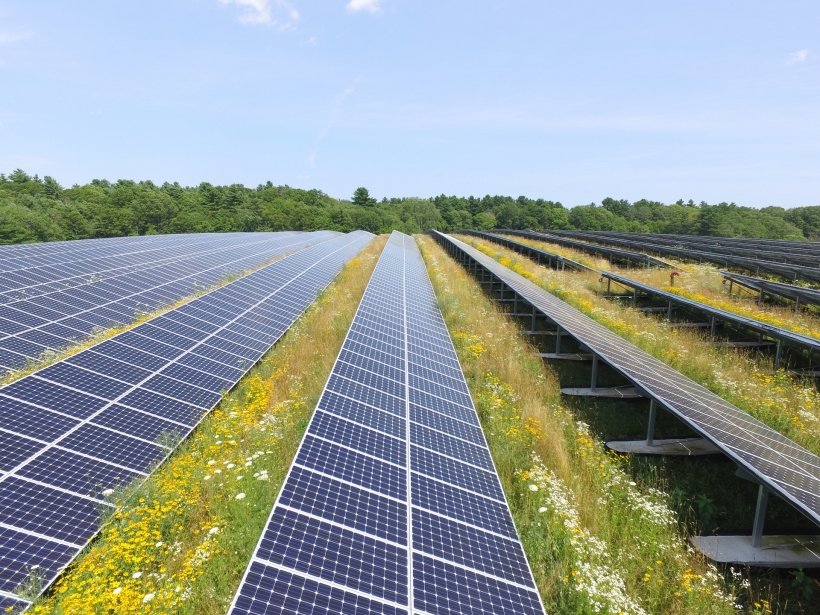
CALLS have been made for an immediate moratorium on industrial-scale solar and windfarm developments in Wales amid concern over the loss of productive farmland.
The Welsh Conservatives say the Welsh Government should pause major renewable energy schemes and urgently review the planning rules for Developments of National Significance.
Party leader Darren Millar MS said Future Wales 2040, the national planning framework, gives too much weight to large-scale renewable energy projects and risks allowing solar farms and windfarms to be built at the expense of food production.
Planning row
The row comes as Wales faces pressure to increase renewable energy generation while also protecting agricultural land, rural landscapes and farming communities.
Under the Developments of National Significance process, major infrastructure projects, including some large renewable energy schemes, are decided by Welsh Ministers rather than local councils.
Supporters say the system is needed to deliver clean energy and reduce reliance on fossil fuels, while critics argue it can leave communities feeling that decisions are being taken out of their hands.
Mr Millar said: “In opposition, the now First Minister campaigned against industrial-scale renewable developments in his own constituency for fear of the impact it would have on valuable farming land. Now in government, he needs to act accordingly to protect prime agricultural land.
“The current planning framework is fundamentally flawed. Future Wales 2040 creates an assumption in favour of industrial-scale solar farms and windfarm developments across great swathes of rural Wales, putting productive farmland at risk.
“We support renewable energy and recognise its role in achieving energy security and reducing emissions, but those developments should not be at the expense of Wales’ food security.
“Renewable developments should be appropriate in scale and sensitive to their environment, making better use of the roofs of buildings and car parks.
“The Welsh Government should introduce an immediate moratorium on industrial-scale solar and windfarm developments and undertake an urgent review of the planning framework for Developments of National Significance so Wales can take a more balanced approach to Wales’ energy future.”
Climate targets
The Welsh Government says renewable energy is central to meeting Wales’ climate targets and improving energy security, but that projects must go through the planning system before consent is granted.
Supporters of large-scale renewable schemes argue they are needed to cut emissions, reduce reliance on imported energy and help stabilise electricity supplies. Some farmers and landowners also see renewable projects as a source of income at a time when the agricultural sector is under pressure.
However, opponents say the scale and location of some proposals risk damaging landscapes, reducing food-producing land and leaving rural communities with too little say over major developments.



News3 hours ago
Motorcyclist, 22, dies in A4075 crash in Pembrokeshire
A 22-year-old woman remains in hospital after two-vehicle collision A MOTORCYCLIST has died following a serious two-vehicle crash on the...


Community4 hours ago
Why police will be visiting every home in Pembrokeshire
New operation aims to knock on more than 257,000 doors across Dyfed-Powys over the next three years DYFED-POWYS POLICE has...


Crime7 hours ago
Prisons at breaking point: MPs warn Wales is paying the price of a failing system
Frozen healthcare budgets, overcrowded jails, homelessness on release and mounting pressure on staff are undermining rehabilitation across Wales, according to...


News21 hours ago
Brexit at 10: How Britain was sold a dream that cost us dearly
A decade after the referendum, the promised benefits remain hard to find while the economic costs are increasingly difficult to...


Crime22 hours ago
Worcestershire man jailed after violent attack on woman in Tenby
Defendant was already serving a suspended sentence when serious assault took place A WORCESTERSHIRE man has been jailed for more...


Climate1 day ago
Offshore wind ‘could bring new generation of jobs to Milford Haven’
Pembrokeshire ports and Celtic Sea projects placed at centre of Wales’ green energy ambitions MILFORD HAVEN and Pembroke Dock could...


Community2 days ago
Police officer hailed hero after midnight sea rescue in Milford Haven
PC swam 100 metres offshore to save distressed woman heard calling for help in darkness A DYFED-POWYS POLICE officer has...


Local Government2 days ago
Security privately arranged by Mayor at Beating of the Bounds
HAVERFORDWEST TOWN COUNCIL has confirmed that security personnel seen at this year’s Beating of the Bounds were privately arranged and...

Business3 days ago
Celtic Freeport five-year plan puts Milford Haven at centre of green energy future
Strategy promises investment, skilled jobs and new supply chains, but major barriers remain over grid connections, planning and delivery THE...


Education3 days ago
Closure of Ysgol Clydau approved after emotional council debate
COUNCILLORS WARNED RURAL COMMUNITIES WILL REMEMBER DECISION PEMBROKESHIRE councillors have voted to close Ysgol Clydau following an emotional debate over...
-

 Community4 days ago
Pembrokeshire Chess Club crowned Welsh champions
-
Local Government2 days ago
Security privately arranged by Mayor at Beating of the Bounds
-

 Crime8 hours ago
Milford Haven man jailed for breaching domestic violence protection order
-

 Education6 days ago
Diocese threatens legal action as Manorbier school closure battle intensifies
-

 Crime2 days ago
Man wanted by court after failing to attend hearing over alleged shop thefts
-

 Local Government6 days ago
Taxi suspended after county-wide licensing checks
-
 Crime2 days ago
Man banned from roads after drink-driving offence
-

 Crime6 days ago
Currys worker denies stealing £2,500 of store stock