

Politics
Corporate greed blamed for rising veterinary costs

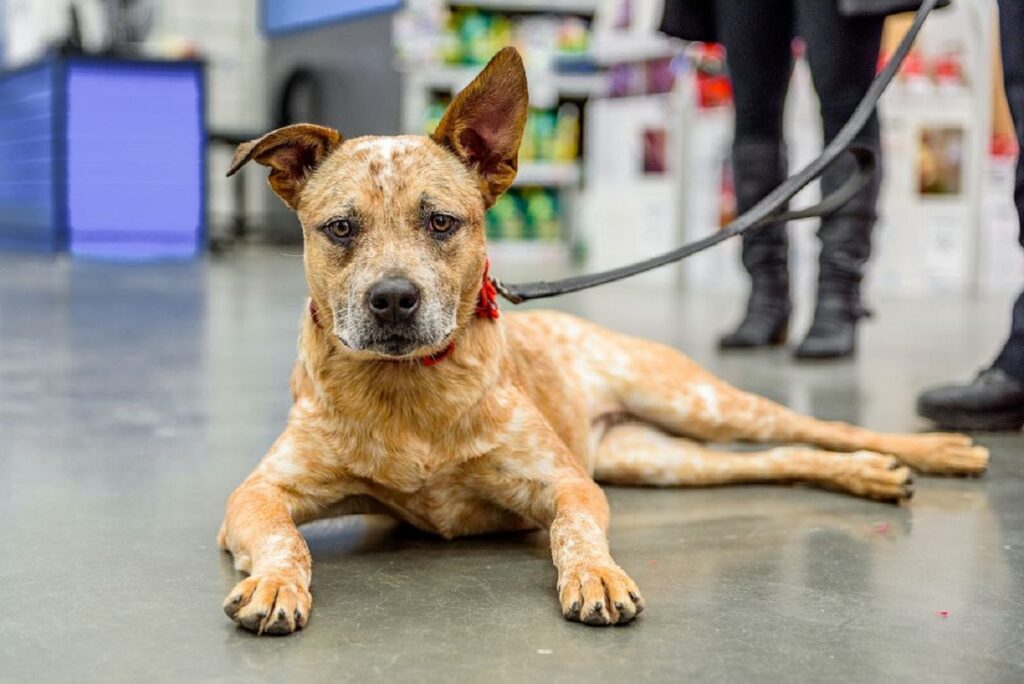
VETERINARY care is unaffordable for many pet owners in Wales due to “ridiculous” price increases fuelled by corporate greed, a committee heard.
Caroline Allen, chief veterinary officer at RSPCA Cymru, said a survey found more than half of Welsh pet owners were worried about being able to afford vet bills.
She told the Senedd’s petitions committee it is a challenging time for the animal rescue sector due to inflation and the wider cost-of-living crisis.
Dr Allen, a practising vet for 20 years before joining the RSPCA, said 78% of pet owners reported an increase in bills and 90% were worried about feeding their pets.
She explained that when she qualified many practices were owned by vets and embedded within the community, but most have since been bought by big businesses.

Calling for reform of the “outdated” Veterinary Surgeons Act 1966, Dr Allen said vets can be held to account under the law but corporate entities cannot.
She said the RSPCA has had to withdraw direct services for the public to focus on its core role of helping animals suffering neglect and cruelty.
Carlie Power, representing the Cats Matter charity, described price increases as ridiculous, hitting out at a “continuous greedy rise in profits”.
Giving evidence to an inquiry on the corporate takeover of the veterinary profession, Ms Power told MSs she had to pay £62 for three days’ worth of eyedrops for her cat.
She said it cost a total of £52 to have one of her cats, Dolly, neutered seven years ago but she recently took another cat, Nix, and was billed £159 – an increase of more than 200%.
Ms Power, who has five cats, warned that responsible owners cannot afford to get their pets neutered, which piles yet more pressure on shelters.
She raised a Daily Mirror article on veterinary practices in Turkey offering cut-price treatment due to rising costs in the UK. Dr Allen warned this could lead to “hideous welfare problems”.

Peredur Owen Griffiths, who has two cats, called Treacle and Marmalade, and once wanted to be a vet, asked witnesses how the profession has changed over the past 25 years.
Sue Paterson, president of the Royal College of Veterinary Surgeons, told the Plaid Cymru politician that practice structure, facilities, workforce and education are the four big changes.
She said 41% of Wales’ 351 practices are corporatised, with around 150 owned by the “big seven”, which is lower than elsewhere in the UK.
Dr Paterson warned the Royal College cannot regulate veterinary practices, saying: “We can only regulate veterinary professionals – that is a huge hole in the regulatory process.”
Julia Mewes, who set up The Mewes Vets as an independent practice 28 years ago, raised concerns about other vets working on commission, saying she does not set financial targets.
She warned this has created anxiety, an unpleasant atmosphere and competition between colleagues, rewarding the best at selling rather than the best at caring.
Jack Sargeant, the Labour committee chair, who has a cavalier king Charles spaniel, named Coco, highlighted the Competition and Markets Authority’s concerns about the sector.
Peter Fox, the Tory MS for Monmouth, who has been a farmer for 30 years, cautioned against demonising the private sector, pointing to positive advances in treatment.
The short inquiry was prompted by a 308-name petition submitted by Linda Joyce-Jones, a campaigner, who warned that corporatisation has had devastating consequences.
Dr Joyce-Jones explained that a change of law in 1999 allowed practices to be owned by not only qualified veterinary surgeons, paving the way for big business.
Describing the profession as barely recognisable now, she wrote: “In many parts of Wales, it is virtually impossible to find an independently run veterinary practice.
Dr Joyce-Jones said corporations also own laboratories, drug companies, and pet crematoriums, as well as shares in many pet food businesses.
She warned: “Such a monopoly makes the few remaining independently run practices’ presence virtually untenable.”


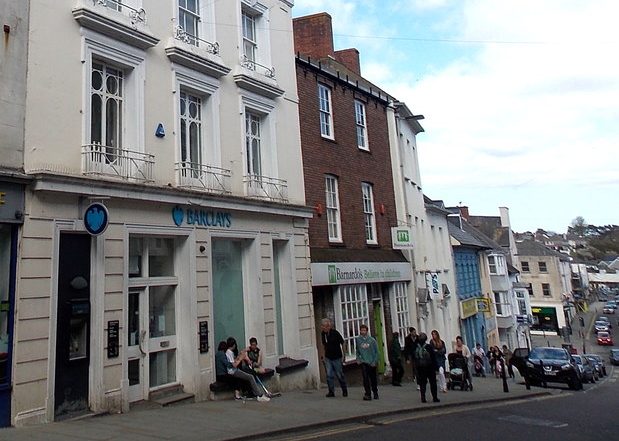
BARCLAYS has been urged to reopen bank branches in west Wales after reports that the banking giant is preparing to rebuild its high street presence.
Paul Davies MS, Senedd Member for Ceredigion Penfro, has written to Vim Maru, Chief Executive of Barclays UK, calling on the bank to restore full branch services in Pembrokeshire and Ceredigion.
Mr Davies said Haverfordwest and Aberystwyth should be treated as priority locations, with Tenby and Cardigan also considered as part of any future review.
The call comes after reports that Barclays is looking again at its high street network, including opening new branches, expanding some existing sites and reviving the traditional role of local bank manager.
Mr Davies said west Wales should not be overlooked if Barclays is serious about returning to communities.
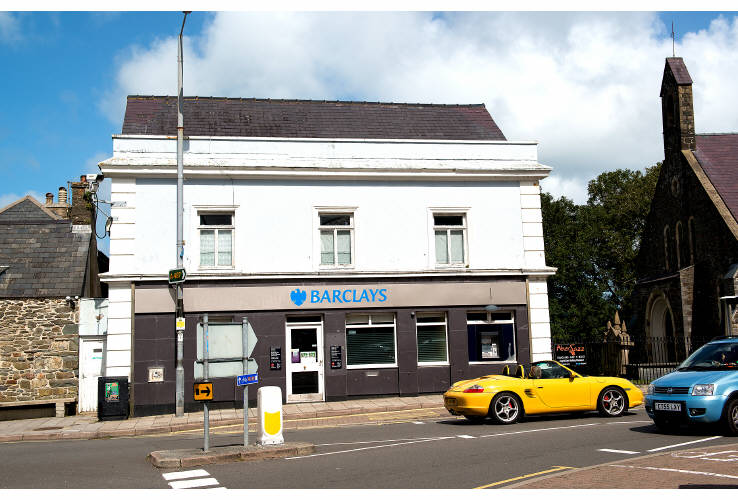
Barclays closed its Haverfordwest branch in May 2024, while branches in Aberystwyth and Cardigan also shut that year. The closures left many customers in Pembrokeshire and Ceredigion without access to a full Barclays branch.
Mr Davies said the loss of face-to-face banking had hit residents, small businesses and community organisations across two largely rural counties.
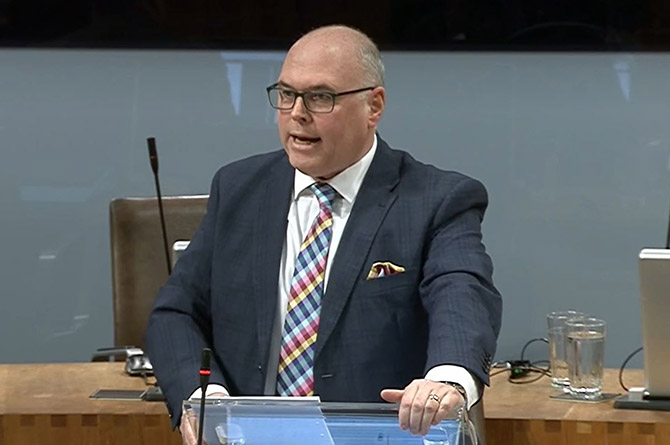
He said: “It’s extremely disappointing that Barclays Bank currently has no branches in either Pembrokeshire or Ceredigion. This represents a significant reduction in service provision for both personal and business customers across the two counties.
“However, I welcome the bank’s recent announcement and have written to the Chief Executive to encourage Barclays to take this opportunity to restore banking services in our area by reopening branches in Pembrokeshire and Ceredigion.
“Access to face-to-face banking services remains vital for many residents, businesses and community organisations, and I hope the bank will give serious consideration to reopening the high street branches in west Wales.”
The withdrawal of bank branches has become a growing concern in towns across Wales, particularly for older residents, people without reliable internet access, rural customers who depend on public transport, and businesses that need to deposit cash.
While some banking services are available through the Post Office, Barclays Local sites and banking hubs, campaigners have argued that these do not always provide the same service as a fully staffed branch.

Mr Davies said Barclays now had an opportunity to show that rural communities would not be left behind.
He is asking the bank to place Haverfordwest and Aberystwyth at the front of the queue if it proceeds with plans to expand its branch network.
The Herald has contacted Barclays for comment.

NIGEL FARAGE has announced he will resign as MP for Clacton and stand again in the by-election he intends to trigger, as pressure grows over questions about his finances.
The Reform UK leader said voters in Clacton should be the ones to judge him following reports about undeclared gifts and financial support linked to cryptocurrency figures.
In a dramatic statement on Tuesday afternoon, Farage denied wrongdoing and said he had “done nothing wrong” and “not broken the law in any way at all”.
He said he would resign from Parliament, forcing a by-election, and would put his name forward again as the Reform UK candidate.
“This will be a people versus the establishment by-election,” he said.
Farage said the final straw had been media coverage involving his daughter, claiming a photograph showing where she lives had been published and accusing journalists of putting his family’s safety at risk.
He said: “I will not tolerate intimidation of my family. I will not tolerate the location of where they live being revealed.”
The announcement comes as Farage faces scrutiny over a £5m gift from cryptocurrency billionaire Christopher Harborne, which he has described as a personal gift and compared to a “lottery win”.
He said the money had been given on an unconditional basis, adding that he needed funds for personal security. Farage claimed he was the “most physically and verbally attacked” politician in modern Britain and said police had failed to properly act on threats against him.
Reports have also focused on alleged support linked to George Cottrell, a crypto entrepreneur and long-time Farage ally who has previously been convicted of fraud in the United States. Farage said he was now facing a further standards investigation as a result of recent reporting.
Farage used the statement to accuse Labour, the media and the wider political establishment of trying to stop Reform UK’s rise.
He also criticised proposed restrictions on political donations from people living abroad, claiming Labour was “coming for our money” and comparing the move to “living in a communist country”.
The Clacton seat was won by Farage at the 2024 general election, when he became an MP at the eighth attempt. He secured a majority of 8,405 over the Conservatives.
The timing of any by-election will depend on the formal parliamentary process. MPs cannot simply resign from the House of Commons and must instead be appointed to a nominal Crown office, such as the Chiltern Hundreds or Manor of Northstead, which disqualifies them from sitting.
Farage said he would fight the contest to win and continue what he called Reform UK’s “political revolution”.
Addressing Clacton voters directly, he said: “If I win, you win, because if I lose, they win.”
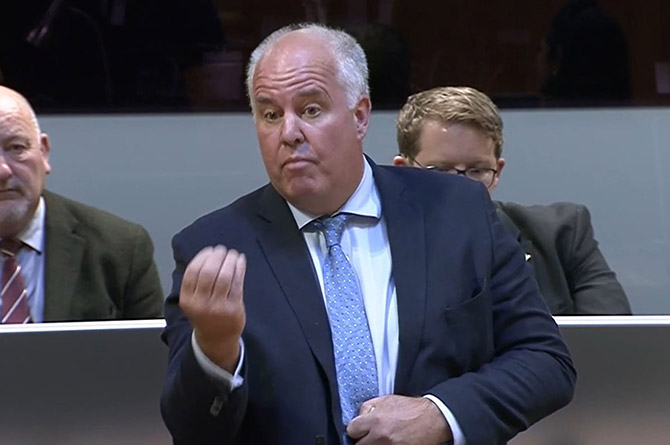
A CONSERVATIVE Senedd Member has criticised a petition calling for Wales to be officially renamed Cymru, warning that the move would risk excluding non-Welsh speakers.
Andrew RT Davies, Member of the Senedd for Pen-y-bont Bro Morgannwg, said the name Wales was part of the nation’s history, identity and culture, and claimed attempts to scrap it should be resisted.
The petition, submitted to the Senedd, calls for “Cymru” to replace “Wales” as the official name of the nation. It also calls for English place names to no longer be used where Welsh names already exist.
It argues that the name Wales was imposed from outside and says the country should present itself internationally through the Welsh language.
The petition states: “Wales is not the name of our nation,” adding that now is the time for the country to assert how it is seen across the world.
Supporters of the proposal say adopting Cymru would strengthen Welsh identity, promote the language and bring Wales into line with other countries that have changed the way they are officially known internationally.
The petition also points to the use of Welsh names by national parks, including Eryri and Bannau Brycheiniog, as examples of Welsh-language names gaining wider recognition.
But Mr Davies said the proposal went too far and would alienate many people in Wales.
He said more than 80 per cent of people in Wales do not speak Welsh, warning that removing the English-language name would leave many people feeling excluded from their own national identity.
Mr Davies said: “I was born and brought up in Wales and have lived here my whole life.
“The name Wales is an important part of our history, identity and culture.
“This attempt to scrap it must be resisted.”

Census 2021 figures showed that 17.8 per cent of people aged three and over in Wales reported being able to speak Welsh, meaning more than four in five did not.
The petition has already passed the 250-signature threshold needed for consideration by the Senedd’s Petitions Committee once it closes.
If it reaches 10,000 signatures, it could be considered for a debate in the Senedd.
The row comes amid continuing debate over the use of Welsh-language names in public life, with some arguing that greater use of Cymraeg is vital to protecting national culture, while others say Wales’ bilingual identity should be preserved.
The petition remains open until December.


Crime2 hours ago
Teacher feared she was dying after Milford Haven classroom stabbing
A TEACHER allegedly stabbed in the head at Milford Haven Comprehensive School told a jury she feared she was dying...


News2 hours ago
Farage to resign as MP and fight Clacton by-election amid finance row
NIGEL FARAGE has announced he will resign as MP for Clacton and stand again in the by-election he intends to...


Crime5 hours ago
Teacher tells jury there were ‘no issues’ with accused pupil hours before ‘stabbing’
Milford Haven teacher gives evidence as trial of 15-year-old continues at Swansea Crown Court A TEACHER allegedly stabbed at Milford...


News19 hours ago
Major incident stood down after fire at Impala Terminal in Milford Haven
Fire involved decommissioned oil tank containing residual crude oil and around 60 cylinders A MAJOR incident declared during a fire...


News22 hours ago
Large fire breaks out at Impala Terminal in Milford Haven
Black smoke seen for miles as emergency services respond to incident at former Puma Energy site A LARGE fire has...
Crime1 day ago
Prosecution outlines ‘planned attack’ as Milford Haven teacher stabbing trial opens
Jury hears teenager allegedly brought kitchen knife into school before teacher was stabbed in the head THE JURY in the...

Crime1 day ago
Boy, 15, denies attempted murder of Milford Haven teacher in ‘horrifying’ attack
Swansea Crown Court hears dramatic opening of trial over February stabbing A 15-YEAR-OLD boy from Milford Haven has gone on...

Crime2 days ago
Fishguard man cleared after five years in prison refused compensation again
Brian Buckle’s case raises fresh questions over justice system that says a man can be cleared by a jury but...


Crime2 days ago
Wales’ police commissioners to face MPs over future of policing
WALES’ four Police and Crime Commissioners are to be questioned by MPs next week as major changes to the way...


Crime3 days ago
Man in critical condition after serious assault in New Quay
A 20-YEAR-OLD man remains in a critical condition in hospital after being seriously assaulted in New Quay. Dyfed-Powys Police said...
-
 Crime7 days ago
Estate agent banned after drug-drive crash in Milford Haven
-

 Entertainment5 days ago
Pembrokeshire DJ lands record deal with London dance label
-
 Education6 days ago
Council deputy leader moves to halt Stepaside school closure plan
-

 News6 days ago
Bridge installation to begin at Tenby station as accessibility upgrade reaches key stage
-
 Community5 days ago
Saundersfoot Harbour regeneration project wins national planning award
-
 Farming6 days ago
Shearing lambs can improve growth and reduce labour, says expert
-
 Health6 days ago
Wales begins early NHS winter planning after long waits and ambulance pressure
-
 Charity6 days ago
Prince of Wales praises Wales Air Ambulance as charity marks 25 years