


News
Unpaid carers could swing election in Mid & South Pembs, says charity


UNPAID carers have the power to swing 185 constituencies at the General Election, charity Carers Trust warns
Analysis from UK charity Carers Trust shows there are enough unpaid carers in 185 constituencies to potentially swing each of those seats at this week’s General Election, including in Mid and South Pembrokeshire.
There are 185 seats in England and Wales where the number of carers is higher than the current MP’s majority. They include many seats held by key figures in all parties. Amon them are the Conservatives’ former leader Iain Duncan Smith and Justice Secretary Alex Chalk, Labour’s Shadow Chancellor Rachel Reeves and Deputy Leader Angela Rayner, and Lib Dems Daisy Cooper and Tim Farron.
In the new Mid & South Pembrokeshire constituency there are 10,222 carers and Stephen Crabb’s majority at the last election in 2019 was 8621, although remember at the last election we had the differently configured seat of Preseli Pembrokeshire.
A total of 96 constituencies currently held by the Conservatives could be swung by carer votes. This includes Chingford and Woodford Green where Iain Duncan Smith has a 1,604 majority in a seat with 8,225 carers. Alex Chalk’s 1,421 majority in Cheltenham could also face a threat from 6,871 carers.

In all, 83 Labour-held constituencies could see their majority overturned by carer votes. Angela Rayner has a 4,689 vote majority in Ashton-under-Lyne, a constituency of 8,517 carers. Meanwhile, Rachel Reeves is contesting the new seat of Leeds West and Pudsey which has 7,783 carers and an estimated 2019 majority of 2,963.
Carers Trust has warned that, although there are an estimated seven million unpaid carers in the UK, they have been largely ignored by most political parties during the election campaign. Many carers are looking after ill or disabled family and friends because of the crisis facing social care. Yet the social care system has also been largely absent from election debates so far. If parties are serious about tackling the social care crisis, they will need support from unpaid carers. In return, those carers need more support themselves.
Dominic Carter, Carers Trust’s Director of Policy and Public Affairs, said: “Many carers have been plunged into pverty because of their caring role and are picking up the pieces left by a social care system that’s been starved of investment. These figures show that, although carers have been largely ignored this election, they have the power to swing huge numbers of seats across the country on July 4.
“At Carers Trust we are calling on all parties to make sure carers are no longer pushed to breaking point and are properly supported, including overhauling Carer’s Allowance – the lowest benefit of its kind. It’s not too late for parliamentary candidates to start listening to those calls. If they don’t, they could be punished at the ballot box.”
The largest majority under threat from carer power is Blackpool North and Fleetwood, where the Conservatives’ 10,119 majority for Paul Maynard could be wiped out by 10,233 carers. Seats with majorities of over 8,500 like Brecon, Radnor and Cwm Tawe, Harrow East, Enfield North and Pontypridd are also at risk if carers vote against the incumbent.
Elsewhere, carer votes could also make the difference in marginals like Burnley, Leigh & Atherton and Wimbledon.
More than 1.5 million people in England and Wales provide at least 50 hours of care a week, with huge implications for their finances, health and future prospects. A survey by Carers Trust last year found just 55% of carers say they get the support they need, while 41% said the time they spent caring has increased. Despite this, there has not been a UK Government plan for carers since 2020 and the last cross-government Carers Strategy expired six years ago.

Carer power: The 10 biggest majorities at risk from carer votes
Seat
2019 majority
Number of carers
Incumbent MP
Party
Blackpool North and Fleetwood
10119
10233
Paul Maynard
Conservative
Brecon, Radnor and Cwm Tawe
9091
9677
Fay Jones (Brecon and Radnorshire)
Conservative
Harrow East
8987
9219
Bob Blackman
Conservative
Enfield North
8853
9258
Feryal Clark
Labour
Pontypridd
8798
9944
Alex Davies-Jones
Labour
Corby and East Northamptonshire
8676
8895
Tom Pursglove (Corby)
Conservative
Mid and South Pembrokeshire
8621
10222
Stephen Crabb (Preseli Pembrokeshire
Conservative
Taunton and Wellington
8536
8763
Rebecca Pow (Taunton Deane)
Conservative
South Ribble
8515
8664
Katherine Fletcher
Conservative
Neath and Swansea East
8451
10961
Christina Rees (Neath)
Labour


Donations pour in for SNAP Specialist Play as families embrace Toy Story 5 launch
A TOY STORY-themed charity appeal at a Haverfordwest cinema has got off to a flying start, with families donating toys to support children with additional needs across Pembrokeshire.
The Palace Cinema has teamed up with local charity SNAP Specialist Play to collect new and pre-loved toys during screenings of the newly released Toy Story 5.
The appeal centres around an “Andy’s Toys” donation box, inspired by the beloved Pixar films, which has already been filled by generous filmgoers.

Cinema manager Hannah Cramp said the response from the community had exceeded expectations.
Families attending opening screenings have arrived carrying bags of toys, with many children keen to share their own treasured items to help others.
The cinema has transformed its foyer into a colourful Toy Story-themed experience, complete with hand-painted decorations, character silhouettes, bunting and famous film slogans including “Reach for the Sky” and “To Infinity and Beyond”.
Many visitors have also embraced the spirit of the occasion by attending in costume as their favourite Toy Story characters.
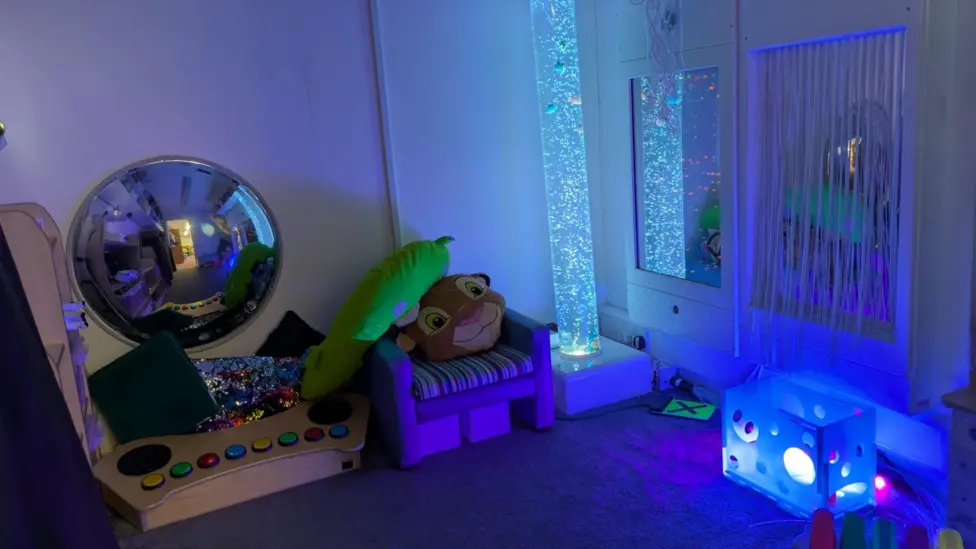
The toys are being donated to SNAP Specialist Play, a charity based within the Child Health Department at Withybush Hospital.
SNAP supports pre-school children with additional and complex needs through specialist play sessions designed to encourage communication, physical development and sensory learning.
Its facilities include sensory rooms, therapeutic play spaces and bespoke equipment used by speech and language therapists, occupational therapists and physiotherapists.
Project manager Cindy Jenkins said the charity was delighted by the partnership and grateful for the generosity shown by local families.

She said every toy donated would be put to good use, either during specialist play sessions, at family events, or through seasonal initiatives such as Christmas gift boxes for children and their siblings.

The appeal will continue until mid-July, with organisers hopeful that even more donations will be received over the coming weeks.
Anyone attending Toy Story 5 at the Palace Cinema is invited to bring along a new or good-quality pre-loved toy to support the appeal.

Cover photo:
Fancy dress fun: Palace Cinema manager Hannah Cramp helping launch the Toy Story charity appeal.

PATIENTS are facing some of the worst medicine shortages ever seen in the UK, with pharmacists warning the situation now poses a serious risk to safety.
The National Pharmacy Association said shortages affecting commonly used medicines are becoming more frequent, lasting longer, and causing increasing disruption for patients, GP surgeries and pharmacies.
The warning comes as Serious Shortage Protocols for Creon, used by people with pancreatic cancer and cystic fibrosis to help digest food, have been in place since May 2024 and have now been extended until July 10, 2026.
HRT treatment Estradot has also been under a Serious Shortage Protocol since December 2024, with the current extension also running until July 10.
Patients travelling between pharmacies
A survey by the National Pharmacy Association found that 98 per cent of pharmacies had encountered patients who had visited several pharmacies in one day to find a prescription.
It also found that 96 per cent of pharmacies believed the current situation posed a serious risk to patient safety, while 89 per cent said they had been unable to dispense a medicine at least once a day because of supply problems.
Some pharmacy teams have also faced anger and abuse from patients unable to obtain medication.
Olivier Picard, Chair of the National Pharmacy Association, said: “Medicine shortages are becoming more frequent, lasting longer and causing increasing disruption for patients.
“These shortages are some of most severe the UK has experienced.
“It is deeply distressing to find patients who have travelled from pharmacy to pharmacy to find the medicines they need without success.”
Calls for urgent taskforce
The NPA is calling on the government to convene an emergency taskforce involving manufacturers, wholesalers, clinicians and pharmacists.
It also wants changes to rules which currently stop pharmacists from making simple substitutions, such as changing a tablet to a capsule or a cream to an ointment, even where a safe alternative is available.
Professor Victoria Tzortziou Brown, President of the Royal College of GPs, said medicine shortages were frustrating for patients, GPs and pharmacists, and added pressure to already stretched services.
She said the College supported pharmacists being able to make limited changes to prescriptions where a medicine is unavailable and a safe alternative exists.
She added: “The most important thing is that patients are able to access the medication they need safely and without delay.”
The Cystic Fibrosis Trust and Pancreatic Cancer UK have also raised concerns about the impact of shortages of pancreatic enzyme replacement therapy, including Creon, on people who rely on the medication to digest food, maintain weight and stay well enough for treatment.


A SPITTAL man is to stand trial accused of assaulting a man and causing actual bodily harm.
Robert Hedley, 41, of Wesley Way, Spittal, Haverfordwest, is charged with assaulting Liam Morley-Trivett at St Clears on August 30, 2025.
The case was before Haverfordwest Magistrates’ Court on Thursday (Jun 18).
Hedley was granted unconditional bail and is due to stand trial at the same court on Monday, June 29.
The trial is listed for 10:00am and has been given a time estimate of twenty minutes.



Charity4 hours ago
Toy Story fans fill charity toy box at Haverfordwest cinema
Donations pour in for SNAP Specialist Play as families embrace Toy Story 5 launch A TOY STORY-themed charity appeal at...


Community9 hours ago
Lord Rhys emerges from the mist in St Davids
Giant puppet begins historic journey marking 850 years since the first Eisteddfod MIST swirled around St Davids Cathedral on Friday...


News1 day ago
Tragic tribute paid to Haverfordwest man after A4075 collision
FAMILY REMEMBERS “KIND AND LOVING” CALLUM HANSON THE FAMILY of a 22-year-old man from Haverfordwest who died following a road...


News2 days ago
Motorcyclist, 22, dies in A4075 crash in Pembrokeshire
A 22-year-old woman remains in hospital after two-vehicle collision A MOTORCYCLIST has died following a serious two-vehicle crash on the...


Community2 days ago
Why police will be visiting every home in Pembrokeshire
New operation aims to knock on more than 257,000 doors across Dyfed-Powys over the next three years DYFED-POWYS POLICE has...


Crime2 days ago
Prisons at breaking point: MPs warn Wales is paying the price of a failing system
Frozen healthcare budgets, overcrowded jails, homelessness on release and mounting pressure on staff are undermining rehabilitation across Wales, according to...


News3 days ago
Brexit at 10: How Britain was sold a dream that cost us dearly
A decade after the referendum, the promised benefits remain hard to find while the economic costs are increasingly difficult to...


Crime3 days ago
Worcestershire man jailed after violent attack on woman in Tenby
Defendant was already serving a suspended sentence when serious assault took place A WORCESTERSHIRE man has been jailed for more...


Climate3 days ago
Offshore wind ‘could bring new generation of jobs to Milford Haven’
Pembrokeshire ports and Celtic Sea projects placed at centre of Wales’ green energy ambitions MILFORD HAVEN and Pembroke Dock could...


Community4 days ago
Police officer hailed hero after midnight sea rescue in Milford Haven
PC swam 100 metres offshore to save distressed woman heard calling for help in darkness A DYFED-POWYS POLICE officer has...
-

 Community6 days ago
Pembrokeshire Chess Club crowned Welsh champions
-

 Crime3 days ago
Milford Haven man jailed for breaching domestic violence protection order
-

 Local Government4 days ago
Security privately arranged by Mayor at Beating of the Bounds
-

 News2 days ago
Crash on Freeman’s Way causes school-run chaos across Haverfordwest
-

 Crime4 days ago
Man wanted by court after failing to attend hearing over alleged shop thefts
-
 Crime4 days ago
Man banned from roads after drink-driving offence
-

 Crime4 days ago
Man jailed after admitting strangulation and assaults
-

 Crime4 days ago
Man sentenced over stalking campaign and lock knife offence