


Education
Research reveals nearly half of children in Wales had additional learning needs


A NEW study has highlighted the prevalence of additional learning needs, formerly known as special educational needs, among under 16-year-olds in Wales. The findings come with a policy briefing, calling for a robust review of processes used to recognise such issues and more inclusive learning support for all children nationally.
The research and policy reports, led by the University of Bristol and funded by the Nuffield Foundation, found nearly half (47.9%) of children born in 2002/2003 were identified with some form of additional learning needs (ALN) at some point during their schooling. This was shown to have the biggest impact on academic achievement across all Key Stages of their education.
Lead author Dr Cathryn Knight, Senior Lecturer in Psychology of Education at the University of Bristol, said: “Our findings clearly challenge the notion that learning needs only affect a minority of learners. Key common factors increasing the likelihood of being identified with SEN also emerged, emphasising the importance of recognising the child’s environment and understanding their individual situation to effectively support their learning needs.”
Researchers from the University’s School of Education and Swansea University analysed data from more than 200,000 children in Wales, born between 2002 and 2009, to understand the levels of SEN and its impact on academic achievement.
Findings revealed that the earlier the additional needs emerged and were recognised, and the longer their education was spent with these known needs, the less likely they were to meet nationally expected levels of attainment.

Dr Knight said: “Our research suggests the former SEN system in Wales was unable to effectively support students to mitigate the negative impact of SEN on their grades. This underscores the substantial toll of SEN on academic achievement. To improve academic attainment levels in Wales, it is crucial to prioritise effective support for this very large group of learners.”
Learners having free school meals (FSM) throughout their education were found to be four times more likely to be identified with SEN compared to those not in receipt of free meals. Those born in the most deprived neighbourhoods were shown to be even more likely (4.6 times) to be identified with SEN.
The study also showed boys were much (5.5 times) more likely to be identified with SEN than girls. Children with higher school attendance had a lower likelihood of SEN identification and learners born in the summer, so younger in their year group, were three times more likely to be identified with SEN than those born in the autumn.
Dr Knight said: “This raises concerns about the effectiveness of SEN identification processes, particularly given the unexpectedly high number of learners identified with SEN. It suggests a potential issue of over- or under-identification of certain children.”
The main policy recommendations in the report were to prioritise inclusive educational initiatives that recognise and support all children. The substantial impact of SEN on children’s grades, raises questions about how children with learning needs can be supported to show progression within the education system. Therefore, consideration of more inclusive assessment practices is recommended. The report also calls for current methods used to identify learning need to be rigorously reviewed, with a new focus on ensuring accuracy, fairness, and inclusivity.
The research mirrors similar national findings. Evidence from the Education Policy Institute in England also found a high level (40.7%) of SEND (Special Educational Needs and Disability) identification. Other research, published in the British Educational Research Journal, has also shown that children with SEND in England are also far less likely to meet expected learning standards than their peers at Key Stage 1.
Dr Knight said: “We also need longer-term evidence within Wales and across the UK in order to develop a fuller understanding of the challenges. This includes possible systematic issues with how learning needs are recognised and their subsequent impact on attainment.”



YOUNG people from Pembrokeshire and Neath Port Talbot will gather in Carmarthen next week for a Welsh education project aimed at tackling what organisers describe as a growing crisis in youth confidence.
Cymbrogi Futures will hold its fourth annual Tomorrow’s Changemakers Hackathon at the University of Wales Trinity Saint David on Friday, July 10, bringing together five finalist teams of 12 and 13-year-olds to pitch ideas linked to tourism, hospitality and the built environment.
The event comes against a stark national backdrop. Latest figures from the Office for National Statistics show more than one million young people aged 16 to 24 across the UK are not in education, employment or training. In Wales, Welsh Government data shows the proportion of 16 to 24-year-olds classed as NEET rose to 17.0% in the year ending December 2025.
A recent report by the Institute for Public Policy Research has also warned that many young people are losing faith in their futures, with only one in four 16 to 29-year-olds believing that people have a fair chance to succeed through talent and hard work.
Cymbrogi Futures says its programme is designed as a practical response to those concerns, giving pupils the chance to work with employers, community organisations and mentors on real-world sustainability challenges.
The Tomorrow’s Changemakers programme is rooted in the Curriculum for Wales and inspired by the Wellbeing of Future Generations Act. It asks learners to act as researchers, designers, communicators and problem-solvers, rather than simply studying climate and economic issues from a distance.
This year’s programme has reached around 1,000 learners across three counties, with five teams making it through to the Carmarthen final. Since 2022, Cymbrogi says the programme has worked with thousands of learners across Wales, with further expansion planned into Swansea, Powys and Bridgend from September 2026 and Bristol in 2027.
Ian Chriswick, Director of Cymbrogi Futures, said Wales already had the foundations for a more hopeful approach to education.
He said: “Wales has a ground-breaking curriculum that asks us to truly teach the future. But at a time when we should be celebrating its successes, we hear instead of record teacher burnout and falling learner morale.
“Tomorrow’s Changemakers is a direct, practical response to that, and to the question of why so many young people are losing faith in their own futures.”
The programme is backed by a range of Welsh and UK partners, including Milford Haven Port Authority, Cwm Environmental, Morgan Sindall Construction, Tai Tarian Housing Association and Admiral Insurance.
Organisers say the aim is not only to inspire pupils, but also to connect them directly with sectors that will need new skills as Wales moves towards a lower-carbon economy.

Milford Haven Port Authority, one of the UK’s major energy hubs, is involved as Pembrokeshire looks to position itself at the centre of floating offshore wind, green hydrogen and future energy infrastructure. Other partners bring links to construction, housing, insurance, the circular economy and community resilience.
Owen Stacey, Senior Social Value Manager, said: “For any business that cares about investing in the skills of the future or demonstrating social impact in their communities, this programme delivers on both counts.
“This is our third year and it’s exactly what the industry needs.”
The event will include a welcome lunch, keynote addresses, team pitches, collaborative judging and an awards ceremony. Organisers describe the format as friendly and informal, with adult participants asked to act as “cheerleaders first, judges second.”
Representatives from the Future Generations Commission, Welsh Government, local education authorities and academic partners are also expected to attend.
The wider policy context is significant. The new Plaid Cymru-led Welsh Government has placed education, skills, climate action and the green economy at the centre of its programme. Cefin Campbell MS, who represents Sir Gaerfyrddin, is now Deputy Minister for Skills and Tertiary Education, while Anna Brychan MS is Cabinet Minister for Education and the Welsh Language.
However, the scale of the challenge remains substantial. A single school programme cannot solve youth unemployment, poor mental health, transport barriers, poverty or the shortage of secure entry-level jobs. Those issues require sustained action from government, councils, colleges, employers and the voluntary sector.
There are also questions about how projects such as Tomorrow’s Changemakers can be scaled up without adding pressure to already stretched schools and teachers.
But supporters argue that the model offers something often missing from the national debate: a route from classroom learning into practical confidence, workplace awareness and civic purpose.
For west Wales, where young people often face limited transport, fewer local opportunities and pressure to leave their communities to build careers, that connection matters.
The Carmarthen hackathon will not by itself reverse the rise in young people falling out of education and work. But it offers a glimpse of a different approach, one where pupils are treated not as a problem to be solved, but as people with ideas, agency and a stake in Wales’s future.

PEMBROKESHIRE COUNTY COUNCIL’S Deputy Leader has launched a major bid to halt controversial plans to close Stepaside School.
Cllr Paul Miller, who took over responsibility for education on May 15, has submitted a motion asking councillors to rescind two previous decisions which authorised officers to begin statutory consultation on closing Saundersfoot and Stepaside schools and replacing them with a single 3-11 primary school on the Saundersfoot site.

The proposal, backed by council in December 2025 and reaffirmed in March 2026, would have seen consultation begin in September.
But in a significant change of direction, Cllr Miller has now told members he no longer believes the proposal to discontinue Stepaside School is “the right one”.
In an email sent to all county councillors, he said he had reviewed the council’s school modernisation and reorganisation plans since taking on the education portfolio.
He said the authority’s work to date had focused mainly on surplus places, which he described as an “interesting estates and facilities metric” but one which “tells us very little about the educational experience of the children inside those buildings”.
Cllr Miller said he accepted that very small schools could become unviable, not only financially but educationally, because of pressures on leadership, staff capacity, mixed-age classes, peer groups and pupil wellbeing.
However, he said Stepaside was in a “materially different position” from schools with exceptionally low pupil numbers.
With around 100 pupils on roll, he said the school was “substantially larger than schools previously deemed unviable”.
He added that decisions affecting larger schools required a broader assessment of educational sustainability, leadership capacity, workforce resilience and pupil experience before closure could be justified.
Cllr Miller also raised the possibility of alternatives, including shared leadership arrangements or formal federation, which he said could strengthen the sustainability of both schools.
He further noted that the planned temporary full decant of Tenby VC School may use a significant proportion of existing surplus places at Saundersfoot School, potentially weakening the case for closing Stepaside as a response to surplus capacity in the Tenby cluster.
His motion asks council to rescind its decisions of December 12, 2025 and March 5, 2026 and to discontinue the proposed statutory consultation process relating to the closure of Saundersfoot and Stepaside schools.
He has asked for the motion to be dealt with at July’s full council meeting, describing it as the final ordinary meeting before the planned September consultation.
The move is likely to be welcomed by campaigners and parents who have opposed the closure of Stepaside School, but it also raises fresh questions about the future of the wider Saundersfoot proposal and the council’s school modernisation programme.
The Herald has previously reported strong local concern over the plans, with parents and residents arguing that Stepaside remains a viable village school and plays an important role in the community.

Pembrokeshire County Council has consistently said school reorganisation must take account of pupil numbers, surplus places, Welsh Government guidance, building condition, long-term sustainability and the need to provide high-quality education.
If accepted onto the agenda, Cllr Miller’s motion could force councillors to revisit one of the most sensitive education decisions currently facing the authority.
South Pembrokeshire MP Henry Tufnell welcomed the development, describing it as “absolutely fantastic news” and “a massive victory for our community”.
He said the council had listened following serious concerns raised by local parents, residents and community representatives.
Mr Tufnell added: “When a community stands together, raises its voice, and refuses to be ignored, this is exactly what can be achieved.”
He also thanked those who attended meetings, backed the campaign and spoke up for the future of local children.

CHEMICAL science contributed £1.9bn to the Welsh economy in 2023, according to a new report which warns that skills shortages and pressure on universities could put future growth at risk.
The Royal Society of Chemistry says the sector is one of Wales’ most productive, generating £99,500 in Gross Value Added per worker. That compares with £73,300 per worker across the wider UK workforce and places Wales among the strongest-performing parts of the UK for chemistry-related economic output.
The findings are contained in The Contribution of Chemistry, a report commissioned by the Royal Society of Chemistry and carried out by Metro Dynamics. It examines the role of chemistry in economic activity, workforce development, research, innovation and regional growth.
The report says chemistry is often “hidden” within wider economic statistics, despite being embedded across major industries such as clean energy, advanced materials, healthcare, food and drink, construction, agriculture and manufacturing.
Across the UK, nearly half of chemistry-using professionals work in government priority growth sectors, compared with just over a quarter of the wider workforce. The RSC says this shows how important chemistry is to industrial strategy, local prosperity and high-value employment.
However, the report also warns that the skills pipeline is under pressure. Universities are described as playing a critical role in supplying graduates, supporting businesses and helping research move into commercial use. The RSC says funding pressures in higher education could make it harder for Wales and the wider UK to maintain access to the talent and facilities needed for future growth.
Helen Pain, Chief Executive of the Royal Society of Chemistry, said the figures showed the “enormous significance” of the sector.
She said: “With chemistry injecting nearly £2bn in GVA contribution to the Welsh economy, our report underlines the enormous significance of our sector to both Wales and the UK.
“As more and more universities across the country face funding cuts, it’s more important than ever that both the Welsh and the UK governments recognise how central chemistry is to the economy within wider innovation and skills strategies and ensure opportunities to study chemistry do not fall away.”
The report also highlights the value of chemistry graduates to the labour market, saying 83% go into high-skilled roles. It says maintaining that pipeline will depend on stronger links between schools, colleges, universities, technical training and employers.
For Wales, the issue is not only about university departments, but also about the businesses and local economies that depend on chemistry skills. The report argues that sectors relying on chemical science can be affected if there are shortages in skilled workers, research capacity, laboratory space or scale-up support.
The Royal Society of Chemistry is calling on local, devolved and UK governments to make chemistry a core part of economic, science, industrial, innovation and skills strategies. It also wants reforms to higher education and research funding to recognise the cost and importance of chemistry teaching and research, including the need for laboratories, equipment, specialist staff and consumables.

The report says chemical sciences GVA across the UK grew by 18% between 2019 and 2023, but warns that growth could be held back without better access to lab space, pilot facilities and support for businesses trying to scale up new products and technologies.
Ms Pain added: “Chemistry is critical to many local growth ambitions, straddling sectors ranging from clean energy and advanced materials to healthcare and manufacturing.
“A sustainable chemicals and materials sector is vital for national resilience and local growth, providing both the everyday products we need and vital supply chains for many more economic sectors.”
Fiona Tuck, Director at Metro Dynamics, said the report showed why leaders needed to look beyond traditional sector labels when planning for growth.
She said: “Now more than ever, leaders need to understand what really underpins growth in places. Too often, the capabilities that matter most are not the easiest to count.
“Chemistry shows why this matters: it is woven through our research base, industrial supply chains and priority sectors, but its contribution can be hidden when we look only through traditional sector lenses, or at technology alone.”
Dr Alexander Reip, Chair of Enterprise Oxfordshire, trustee of the Royal Society of Chemistry and a member of the project steering group, said chemistry should be treated as essential economic infrastructure.
He said: “Chemistry’s contribution to the UK economy is substantial, and this report finally puts hard numbers to what many in the sector have long understood.
“Chemistry-intensive activity runs through the industrial base of communities across the UK, underpinning jobs, supply chains and innovation capacity in ways that rarely get the visibility they deserve.”
He added that local and devolved governments needed to support the education pathways, laboratory facilities and commercialisation support that allow research to become real economic activity.
The report says supporting chemistry-based businesses at the scale-up stage is particularly important, because promising innovations can fail to reach commercial success without the right facilities, finance and skilled workforce.
The Royal Society of Chemistry says the sector has a major role to play in future challenges including clean energy, healthcare, environmental protection, secure food and water supplies, and resilient manufacturing.
The full report can be found on the Royal Society of Chemistry website.



Health9 hours ago
Wales begins early NHS winter planning after long waits and ambulance pressure
Ministers say health boards and councils must act now to ease pressure on hospitals, ambulances and social care before winter...


Crime2 days ago
Judge calls pensioner a ‘dirty old man’ as he avoids jail for exposing himself to women
Judge says 75-year-old Stewart Laugharne behaved ‘disgracefully’ as he avoids jail but is ordered to sign sex offenders register A...
Health2 days ago
Stroke services consultation reaches halfway point as public urged to have say
HYWEL DDA University Health Board is urging people to take part in its consultation on the future of stroke services,...


Business2 days ago
Welsh firms eye share of £5bn defence drone boom
WELSH defence and aerospace firms could be in line for a share of billions of pounds in new military spending...


Community3 days ago
Thousands line Cardigan streets for Lord Rhys homecoming parade
THOUSANDS of people lined the streets and quayside in Cardigan on Saturday as the town marked 850 years since Lord...


Crime4 days ago
Dyfed-Powys Police rated only ‘Adequate’ in organised crime inspection
A WATCHDOG has rated Dyfed-Powys Police only “Adequate” in its response to serious and organised crime, despite praise for the...


News5 days ago
Two taken to hospital after aircraft ditches in Cardigan Bay
Coastguard helicopter spotted two casualties after light aircraft came down off west Wales coast TWO people were taken to hospital...


Sport5 days ago
Long Course Weekend gets underway in Tenby as thousands head for county
Three days of swimming, cycling and running begin with The Wales Swim at North Beach THOUSANDS of athletes and supporters...


Climate5 days ago
Welsh waters, Westminster profits: Crown Estate row reignited in Wales
PLAID CYMRU has renewed calls for the Crown Estate to be devolved to Wales after figures showed income linked to...

News6 days ago
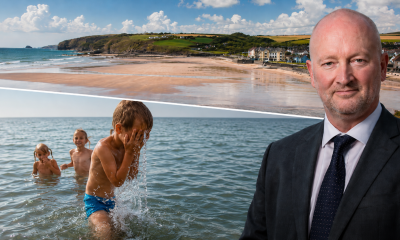
Reform MS: ‘I felt like shouting get out of the water’
Paul Marr says children playing in streams at Pembrokeshire beaches deserve better protection from pollution risks REFORM UK MS Paul...
-

 Crime7 days ago
Police appeal after reported rape at Young Farmers rally
-
Crime4 days ago
Dyfed-Powys Police rated only ‘Adequate’ in organised crime inspection
-

 Entertainment5 days ago
Torch cuts children’s cinema tickets to £5.25 for summer
-

 News3 days ago
Biker dies and woman seriously injured in Black Mountain crash
-

 Farming7 days ago
Farmers urged to protect themselves as heatwave brings health risks
-

 Farming7 days ago
Rural Wales ‘left out’ of net zero debate, warns carbon entrepreneur
-

 Community7 days ago
Council ‘did not request or give direction’ to cancel Tenby Summer Spectacular
-
News6 days ago
Reform MS: ‘I felt like shouting get out of the water’