


Crime
Far-Right influence suspected as violent protests erupt across UK


TWO consecutive nights of violent protests in English towns have highlighted how today’s far-right factions are mobilising within the UK. The unrest follows a knife attack by Cardiff-born teenager in Southport, which has sparked significant activity both on mainstream social media and within smaller public groups.
An analysis of this activity reveals a clear pattern: influencers are driving the call for protests, yet there is no single organising entity. Many protest attendees and online commentators do not hold extremist views or support rioting, nor do they have direct ties to far-right groups. Concerns about violent crime and misinformation linking the attack to illegal immigration have drawn in a diverse array of people.

The initial protests began in Southport and rapidly spread to London, Hartlepool, Manchester, and Aldershot. Merseyside Police have identified the English Defence League (EDL) as a significant influence in these events. Although the EDL no longer exists in a formal sense following the departure of its founder, Stephen Yaxley-Lennon (aka Tommy Robinson), its core ideas—particularly opposition to illegal immigration and racist claims about Muslims—persist and are actively propagated online.
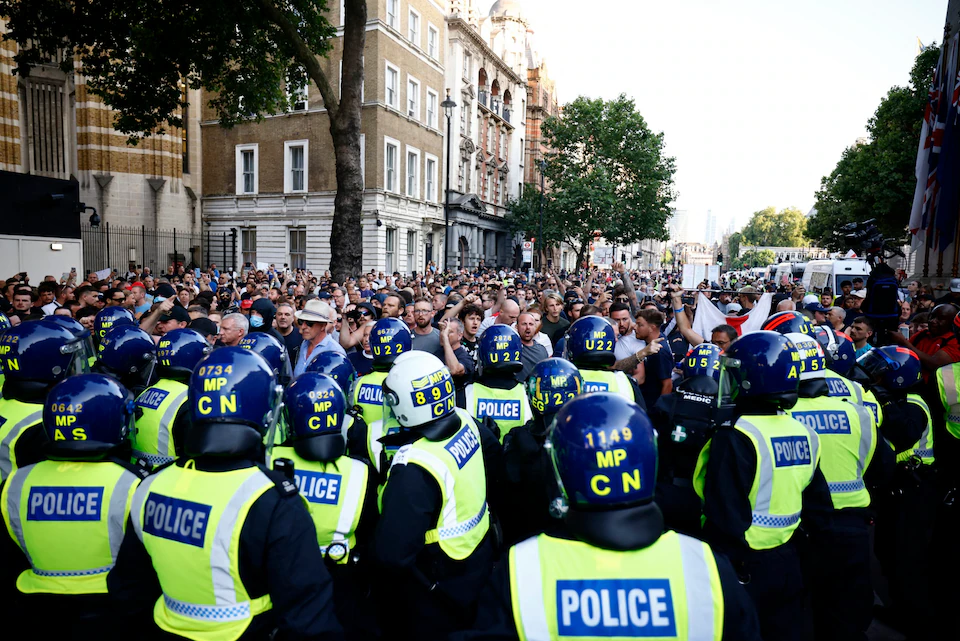
Conspiracy theories suggesting that “elites” are concealing the truth, including alleged abuses of British children, have further fuelled the unrest. “Lord Simon,” an influencer associated with Yaxley-Lennon, was among the first to call for nationwide protests, spreading false claims that the alleged Southport attacker was a recently arrived asylum seeker. His video has been viewed over a million times.

The BBC’s analysis of hundreds of social media posts and Telegram groups has shed light on the motives of those organising and participating in the protests. While it is challenging to pinpoint who initiated the protest calls, a clear pattern emerged: multiple influencers within various circles amplified false claims about the attacker’s identity, which then spread across platforms, reaching a broad audience.


“There’s not been a single driving force,” says Joe Mulhall, head of research at Hope Not Hate, an anti-racism research group. “There are large numbers of people engaging in activity online but there’s no membership structure or badge—there are not even formalised leaders, but they are directed by social media influencers. It’s like a school of fish rather than a traditional organisation.”
One of the earliest signs of brewing protests appeared in a Southport-themed group on Telegram, created about six hours after the attack. Telegram, often used by far-right activists to avoid bans on other platforms, became flooded with misinformation about the attacker’s identity and calls for a protest on St Luke’s Street in Southport, home to the local mosque.

Graphics promoting the protest migrated from Telegram to TikTok, X (formerly Twitter), and Facebook, where they gained significant traction. Messages encouraging demonstrators to hide their identities from the police also circulated widely.
Far-right activists saw an opportunity in the Southport tragedy to amplify their messages on major social media platforms. Matthew Hankinson, a former National Action member, documented the Southport demonstration live on X, describing police actions as “oppression of peaceful protesters.” His videos, viewed thousands of times, have been used to justify extreme violence and spread racist material.
Yaxley-Lennon, who left the UK on Sunday ahead of a major court hearing, has been pivotal in spreading unrest. His X account, restored last year, boasts 800,000 followers. His posts about the Southport tragedy and related disorder have been widely shared.
Prominent supporters like Rikki Doolan and Jesse Clarke have been identified in video footage of the Southport protests, furthering the unrest. Smaller groups, including Patriotic Alternative, have also promoted the protests, using the slogan “Enough is Enough,” which has gained significant attention on X.
According to Mulhall, the language and organisation of these protests are highly organic, with local Facebook groups playing a crucial role in disseminating information from influencers.

The future remains uncertain, with at least 30 additional demonstrations planned across the UK. Some social media posts directly reference the Southport attack, while others focus on broader fears of illegal migration and child protection.
The recent protests underscore the complex and multifaceted nature of far-right mobilisation in the UK. As authorities continue to monitor the situation, the interplay between online influence and on-the-ground action presents a significant challenge for maintaining public order and addressing misinformation.


Phillip Roberts stole cash from USA Chicken and returned the following day with intent to steal
A CARMARTHEN man has admitted a string of burglaries at the same takeaway business on consecutive days.
Phillip Roberts, 44, of Brewery Road, Carmarthen, appeared before Llanelli Magistrates’ Court after pleading guilty to three offences connected to USA Chicken on Blue Street.
The court heard that on June 4, Roberts entered the premises as a trespasser and stole a tip jar containing cash. He also admitted a second burglary at the same business on the same date, during which £50 cash was stolen.
A further offence took place on June 5, when Roberts entered USA Chicken as a trespasser with intent to steal.
Magistrates adjourned sentence for the preparation of a pre-sentence report. The report will consider all sentencing options, including possible committal to the Crown Court.
Roberts was granted conditional bail. He must not enter USA Chicken, Blue Street, and must not contact Mustafa Baksi, either directly or indirectly.
He is due to return to Llanelli Magistrates’ Court on July 1 for sentence.
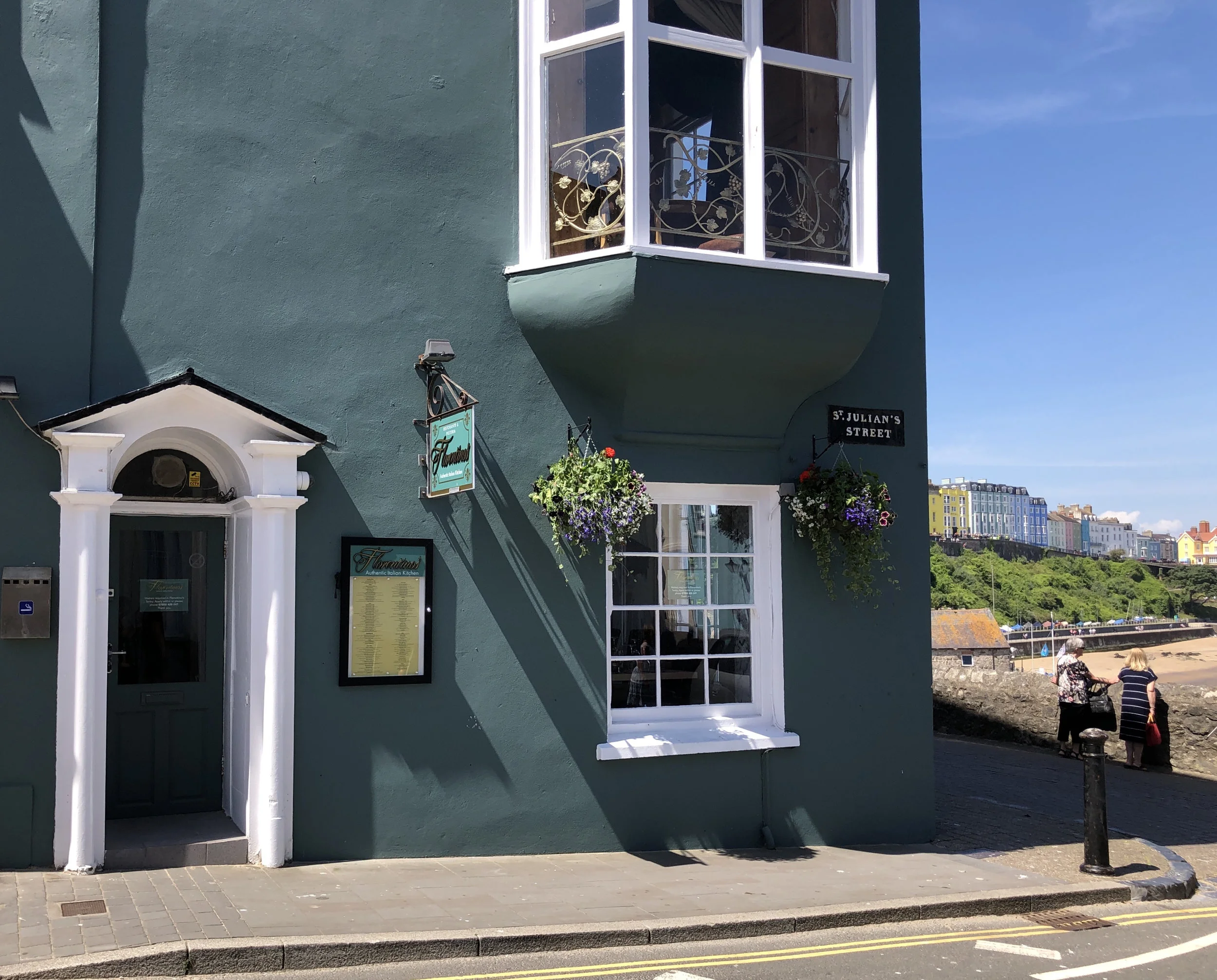
SIX people have been arrested following Immigration Enforcement raids at Florentino’s Italian restaurants in Tenby and Carmarthen.
Officers visited the Tenby branch in St Julian’s Street on June 18, where two Romanian nationals were identified as allegedly having no right to work in the UK. Both were arrested on suspicion of illegal working.
The Tenby operation followed an earlier raid at Florentino’s in Carmarthen in February, where four workers — two Romanian nationals, a Bangladeshi national and a Mongolian national — were also arrested on suspicion of illegal working.
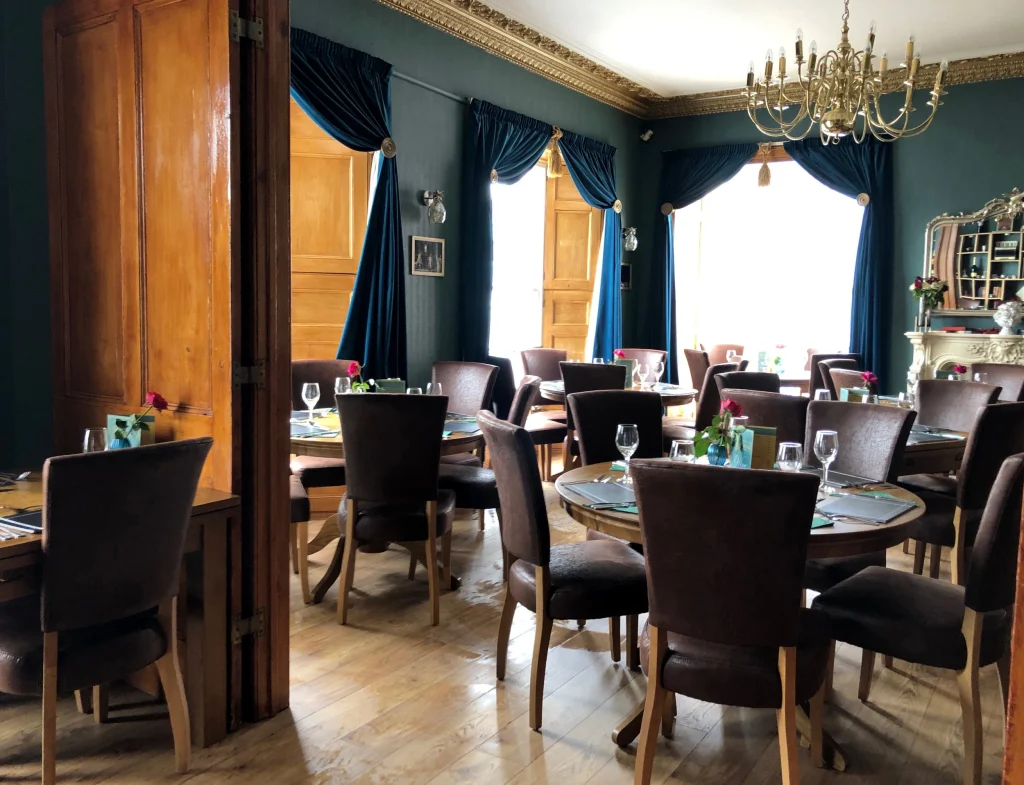
The Herald previously reported in March that the Carmarthen restaurant had been linked to a major HMRC case, after Claudio Cernat Ltd, formerly trading as Florentino’s on Jacksons Lane, was listed over a £278,000 deliberate tax underpayment and a further £186,000 penalty.
Immigration officials say inquiries are now under way to establish who may be liable for employing the individuals. Employers found to have breached illegal working rules can face civil penalties of up to £60,000 per worker.
One of the Tenby workers has already returned, while the other is in the process of returning. Of the Carmarthen workers, two have returned, one was placed on immigration bail and another was de-arrested with a warning.
Immigration Enforcement Lead for Wales, Richard Johnson, said: “I want to thank my officers who showed the highest levels of professionalism under challenging circumstances on these operations.
“Immigration Enforcement teams in Wales continue to work round the clock to ensure businesses play by the rules and those with no right to be in the UK are tracked down and returned at the earliest opportunity.”
The Home Office says illegal working enforcement has increased significantly since July 2024, with raids and arrests rising across the UK and Wales.
No finding has yet been made against the restaurant operators in relation to the latest arrests.
Florentino’s has been approached for comment.

A WATCHDOG has rated Dyfed-Powys Police only “Adequate” in its response to serious and organised crime, despite praise for the wider southern Wales regional crime unit.
HMICFRS inspected the regional response involving Dyfed-Powys Police, South Wales Police, Gwent Police and Tarian, the Regional Organised Crime Unit for southern Wales.
Tarian was graded “Good”, as was South Wales Police. But Dyfed-Powys Police and Gwent Police were both graded “Adequate”.
The finding means the force covering Pembrokeshire, Carmarthenshire, Ceredigion and Powys has been told there is still work to do in how it identifies and tackles organised criminality.
Inspectors said the southern Wales region had recorded just 93 serious and organised crime threats by July last year. The next lowest region in England and Wales had identified 219.
HMICFRS said that gap was “concerning”, even allowing for the smaller size of the region.
The report also found that recorded threats were heavily focused on drugs, raising concerns that other forms of organised crime may not be being identified as effectively.
However, Tarian recorded 2,650 disruptions between June 2024 and June 2025, the second highest total among regional organised crime units in England and Wales. These included arrests, the closure of drugs lines and safeguarding work.
Across 2025, Tarian investigations led to 285 arrests, the safeguarding of 1,488 children and 598 vulnerable adults, and combined prison sentences totalling 320 years.
Inspectors praised strong regional partnership working and highlighted Tarian’s use of technology, including systems capable of reducing some data-review work from weeks to around 30 minutes.
The report also noted that Tarian is the only regional organised crime unit in the network to have a dedicated artificial intelligence coordinator.
But inspectors made clear that improvements are needed. They recommended that Tarian and the three forces improve how serious and organised crime threats are recorded and identified across a wider range of criminality.

They also called for better joined-up procurement of specialist technical equipment.
Assistant Chief Constable Gemma Morris, who leads Tarian ROCU, said serious and organised crime causes “significant harm” to communities and that much of the work carried out by the unit is “necessarily covert and often unseen by the public”.
She said the report recognised the strength of regional partnerships and innovation, while acknowledging that improvements were already being taken forward.
For Dyfed-Powys Police, the “Adequate” grading will raise questions about whether organised crime threats in rural and coastal communities are being properly identified.
The force area includes some of the most geographically dispersed communities in Wales, with long transport routes, isolated properties, ports, tourist economies and vulnerable young people all potentially attractive to organised criminals.
The inspection’s central warning is not that police are inactive. It is that the full picture of organised crime may still not be clear enough.
The report says work is now underway across the region to address the recommendations.



Crime4 hours ago
Dyfed-Powys Police rated only ‘Adequate’ in organised crime inspection
A WATCHDOG has rated Dyfed-Powys Police only “Adequate” in its response to serious and organised crime, despite praise for the...


News8 hours ago
Two taken to hospital after aircraft ditches in Cardigan Bay
Coastguard helicopter spotted two casualties after light aircraft came down off west Wales coast TWO people were taken to hospital...


Sport1 day ago
Long Course Weekend gets underway in Tenby as thousands head for county
Three days of swimming, cycling and running begin with The Wales Swim at North Beach THOUSANDS of athletes and supporters...


Climate1 day ago
Welsh waters, Westminster profits: Crown Estate row reignited in Wales
PLAID CYMRU has renewed calls for the Crown Estate to be devolved to Wales after figures showed income linked to...

News1 day ago
Reform MS: ‘I felt like shouting get out of the water’
Paul Marr says children playing in streams at Pembrokeshire beaches deserve better protection from pollution risks REFORM UK MS Paul...


Health2 days ago
Senedd backs call to rule out hospital downgrades after heated NHS debate
Reform UK amendment passes as West Wales hospital fears remain central political issue THE SENEDD has backed a call for...

News2 days ago
Coastguard callout payments axe sparks fears for coastal communities
VOLUNTEER coastguards across the UK are set to lose callout payments, prompting concern over the future resilience of emergency cover...


Farming3 days ago
Rural Wales ‘left out’ of net zero debate, warns carbon entrepreneur
A WELSH carbon entrepreneur has warned that rural Wales risks being left behind in the national conversation about net zero....


Local Government3 days ago
Tenby Spectacular row continues as organisers say key question remains unanswered
Round Table says legal clarity over pedestrian access is still holding up event plan TENBY ROUND TABLE has welcomed Pembrokeshire...


Community4 days ago
Manorbier fire scandal: Council’s payout just £63,777 after school destroyed
PEMBROKESHIRE COUNTY COUNCIL has accepted an insurance settlement which leaves it with just £63,777.07 after the catastrophic fire which destroyed...
-

 Crime2 days ago
Police appeal after reported rape at Young Farmers rally
-

 Community6 days ago
The gentle giant behind the tattoos
-
 Entertainment6 days ago
Harbour Fest to bring music, food and maritime magic to Milford Waterfront
-
Health6 days ago
Welsh Government refuses to halt Withybush and Bronglais service review
-

 News6 days ago
Long Course Weekend set to bring thousands to Pembrokeshire
-

 Charity5 days ago
Sea shanties and street food bring crowds to Cardigan RNLI festival
-

 News5 days ago
Rhun ap Iorwerth urges new deal for Wales after Starmer quits
-

 Charity6 days ago
Voices at the Castle hailed a huge success for Paul Sartori Foundation