

Farming
Pembrokeshire sanctuary for ex-battery hens can keep running

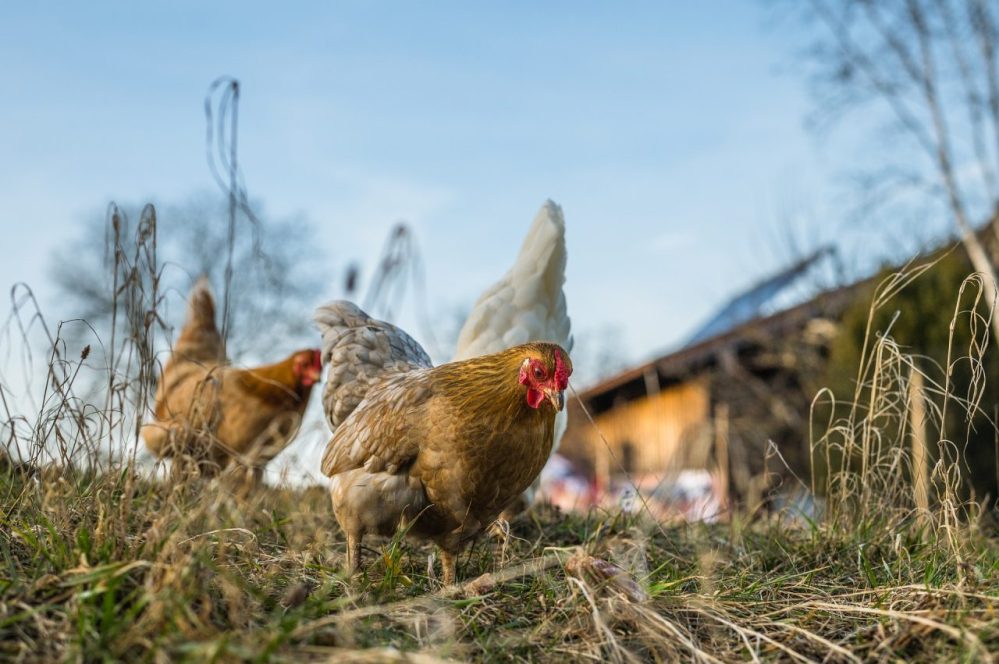
A PEMBROKESHIRE animal sanctuary for disabled animals and ex-battery hens has been allowed to keep its doors open by county planners.
Aaron Player sought retrospective permission to keep the sanctuary, at Brynhaul, near Tegryn, Llanfyrnach, running through a change of use of the land from agricultural to the animal sanctuary.
Work on the change to sanctuary, which has two full-time and two part-time workers, took place in late 2023, the application states.
No objections to the proposal were received from statutory consultees.
A report for planners stated: “The development is for the retrospective change of use of two of the outbuildings to provide accommodation as an animal sanctuary.

“The larger of the two buildings will be used as holding areas of disabled animals and for ex battery hens. The smaller outbuilding will be used as a medical and isolation area for animals with a garden area attached.”
It added: “The change of use of the barns from an agricultural use to an animal sanctuary would have had positive economic benefits from the re fit of the barns with social impacts in relation to the rehoming of animals in need, with minimal environmental impact.
“The change use of would not require any external alterations therefore the proposal would not have a significant visual impact on the countryside location.
“The housing of animals is a use that is considered compatible and appropriate in a countryside location. The change of use of the barns is considered acceptable in principle
“The change of use of the barns to an animal sanctuary would include the keeping, holding and care of animals, therefore a rural location is considered appropriate and the use in keeping with the surrounding area.
“To ensure the use of the barns is controlled due to the rural nature of the site, a condition for the use to be for the keeping of animals will be imposed.”
The application was conditionally approved by Pembrokeshire County Council planning officers.



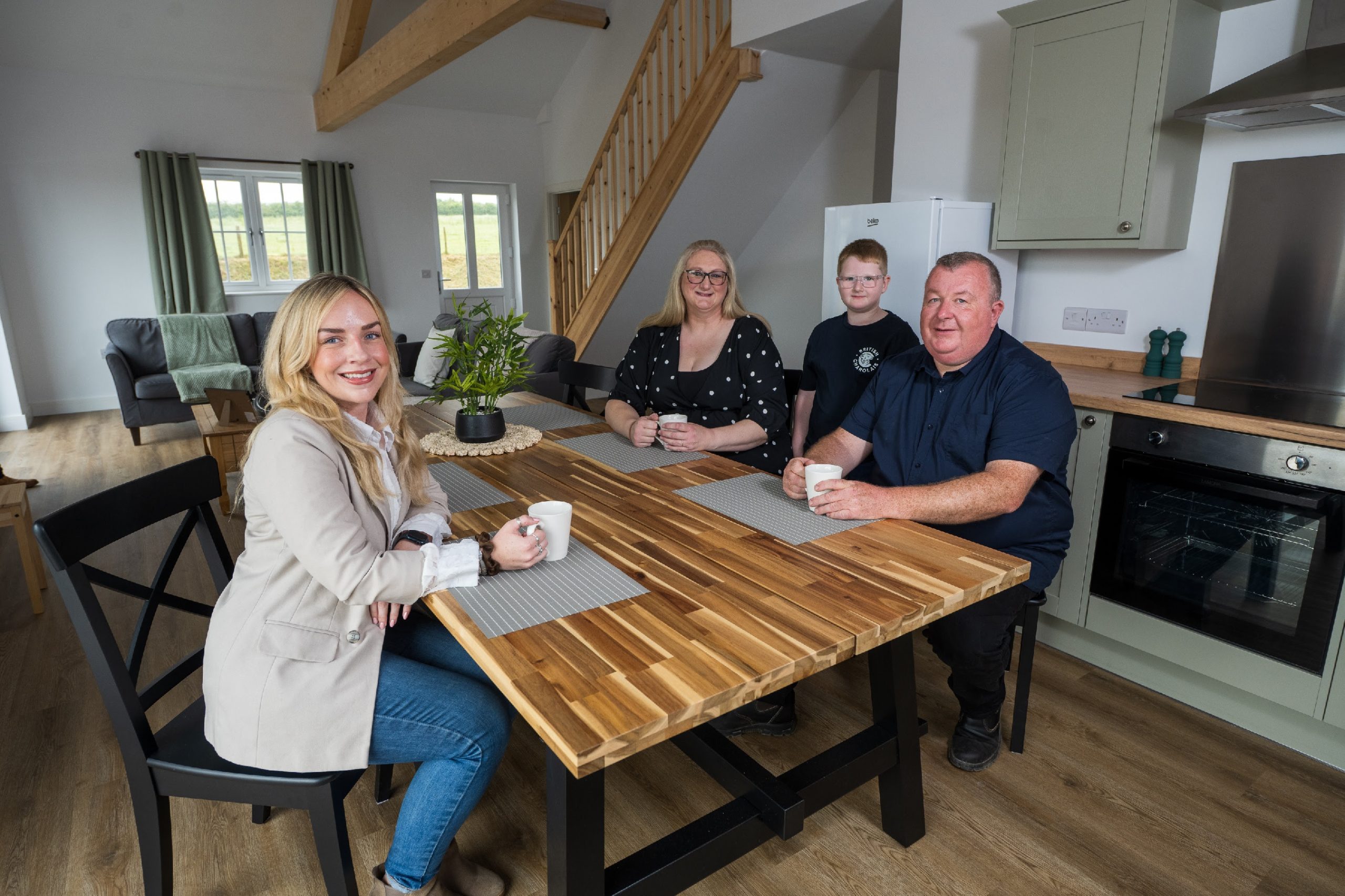
Family-run cattle farm diversifies into rural tourism with support from £150,000 Development Bank loan
A FAMILY-run cattle farm in Carmarthenshire has opened its gates to visitors for the first time after launching a new holiday cottage business offering guests a hands-on taste of rural life.
Carnau Mawr Holiday Cottages, based at Brynawelon, has created two high-quality three-bedroom holiday lets alongside its existing beef farming operation.
The project was supported by a £150,000 loan from the Development Bank of Wales through the Wales Flexible Investment Fund.
Owned by Robert and Emily Currell, the farm now combines traditional livestock production with a growing rural tourism venture. The cottages give visitors the chance to stay on a working farm and learn more about day-to-day agricultural life.
The investment was led by David Knight, Investment Executive at the Development Bank of Wales.
Robert and Emily said: “Diversifying into holiday accommodation has been an enjoyable experience for us. It has given us a way to bring in additional income alongside the farm, while making full use of the land we already have.
“Neither of us had a background in hospitality before this, but we have found that we really enjoy welcoming people here.
“One of the most rewarding aspects has been giving visitors a chance to see how a working farm operates. For many children especially, it is their first real insight into farming, and that educational side has been incredibly positive.
“The Development Bank of Wales was excellent to work with. The team were approachable, supportive and made the whole process feel very personal. It really felt like dealing with people who understood what we were trying to achieve.”
The investment comes amid growing demand for high-quality rural accommodation in west Wales, while also highlighting how farming businesses are looking at new ways to diversify and strengthen their long-term future.
Nakeja Howell, Portfolio Executive at the Development Bank of Wales, said: “Carnau Mawr is a strong example of how farms across Wales are adapting and evolving.
“By diversifying into tourism, Robert and Emily have created a business that not only strengthens their own income but also contributes to the wider rural economy.

“Projects like this highlight the value of flexible finance that works alongside the realities of running a farm. By taking a relationship-led approach, we aim to provide funding that is practical, accessible and tailored to individual businesses.
“We are pleased to support Carnau Mawr as they establish their holiday accommodation offering and open up their farm to visitors, creating new opportunities for both the business and the local area.”
The £150,000 loan came from the Wales Flexible Investment Fund, which is financed by Welsh Government.
The £500m fund supports Welsh businesses with terms of up to 15 years. Loans, mezzanine finance and equity investments are available from £25,000 to £10m.
Renowned craftsman David Broadbent hopes to end his show career on a high at Llanelwedd
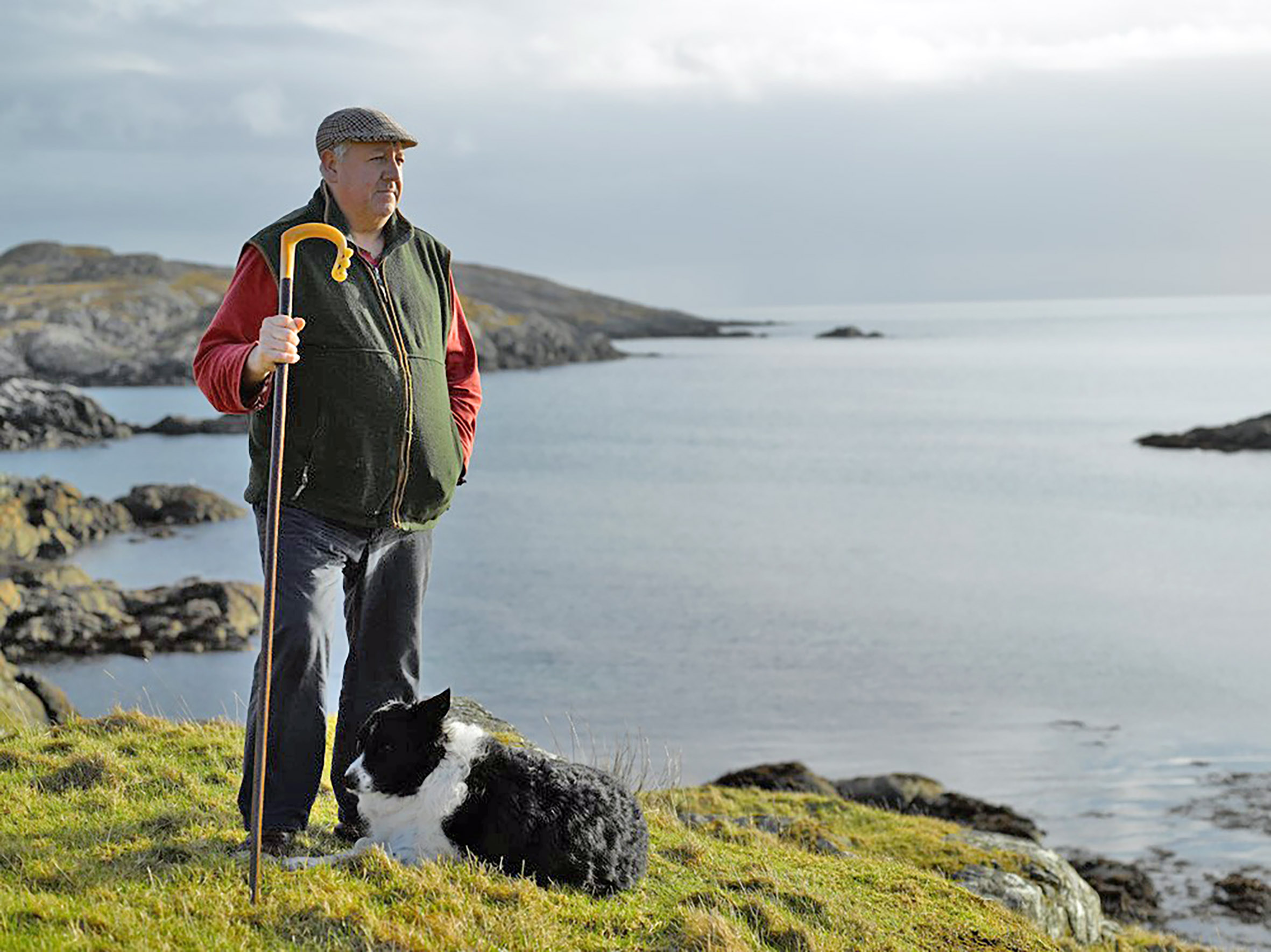
A RENOWNED stickmaker from the Isle of Harris in the Outer Hebrides is preparing to make one final journey to the Royal Welsh Show later this month, as he competes in what he expects to be his last season on the agricultural show circuit.
David Broadbent, known as The Harris Stickmaker, has spent almost half a century perfecting the traditional rural craft, winning numerous championship titles and awards at agricultural shows across the UK.
Originally from Halifax in West Yorkshire, David moved to the Isle of Harris in 1972 while working as a carpenter. It was there that he met his wife. After several years living on the mainland, the couple eventually returned to the family croft where she was born.
His passion for stickmaking began in 1976, when he bought a handcrafted stick from a local crofter for £5. Captivated by its decorative handle, he decided to try making one himself.
Nearly 50 years later, David is regarded as one of the UK’s most respected stickmakers.
His success has also brought him into contact with members of the Royal family. During celebrations marking the 100th anniversary of the Harris Tweed Orb trademark, he presented the then Prince of Wales and Duchess of Cornwall, now King Charles III and Queen Camilla, with handcrafted walking sticks. He has also met The Princess Royal through the International Sheep Dog Trials.
David’s distinctive sticks are made from materials including ram’s horn, Highland cow horn and buffalo horn, combined with native woods such as hazel, blackthorn and cherry. Each piece is individually shaped and finished by hand.
For many years, David had dreamed of competing at the Royal Welsh Show, but felt the 600-mile journey from the Hebrides was simply too far. That changed when his granddaughter became engaged to a hill farmer near Oswestry, giving him a base from which to travel to Mid Wales.
He finally fulfilled his long-held ambition by competing at the Royal Welsh in 2023.
Now 74 and facing deteriorating health, David has decided that 2026 will likely be his final year in competition. He is entering the Royal Welsh, the Royal Highland and the Great Yorkshire, which he describes as the three top shows in the country.
David is also keen to pass the craft on to the next generation. He teaches youngsters on the island, as well as his granddaughter when she visits.
In recent years, much of his stickmaking has focused on charity work, with sticks donated to fundraising auctions in support of Prostate Cancer UK and the British Heart Foundation.

Among the classes David will enter at this year’s Royal Welsh Show is the unique Lady’s and Gentleman’s class, which requires competitors to produce a matching pair of intricately crafted sticks.
For the class, David has created a pair from Shetland sheep horns, decorated in striking black and gold.
He said: “Stickmaking is not an easy craft to take on and the judging can be extra critical. However, it is a true passion of mine and something I find incredibly satisfying.
“I can whittle away the hours in my shed, surrounded by vices, presses and a clutter of tools, and it brings me immense joy.
“I’ve been making sticks for nearly 50 years and I’ve met wonderful people through the craft. I want to go out with a bang and, if I could finish by winning at the Royal Welsh, that would be something very special.”
The stickmaking competition remains a popular feature of the Royal Welsh Show, attracting skilled craftsmen from across the UK and helping to preserve a traditional rural craft.
The classes will be judged on the opening day of this year’s show, which takes place from July 20 to 23 at Llanelwedd, Builth Wells.
Picture caption: The Harris Stickmaker, David Broadbent.
Official data shows major and critical non-compliances at Welsh meat plants, as Animal Aid claims the figures expose serious welfare and hygiene concerns
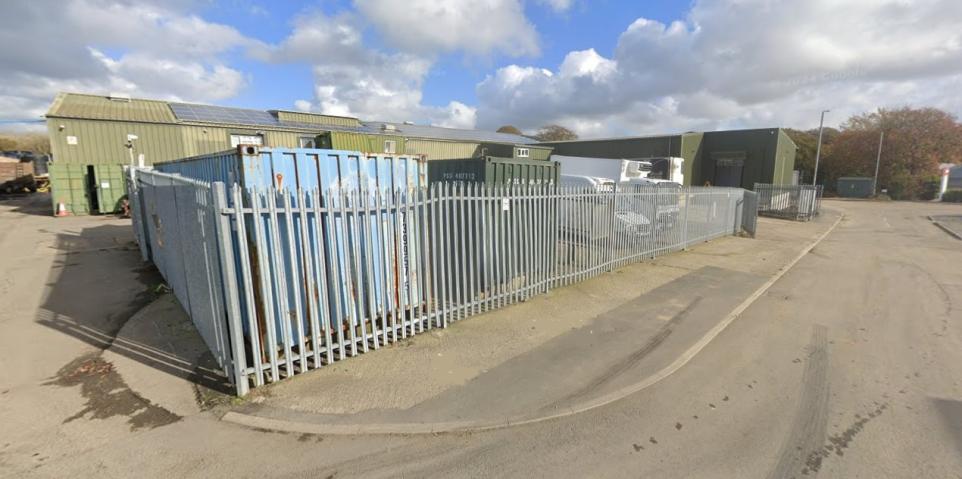
A PEMBROKESHIRE slaughterhouse was given the Food Standards Agency’s most serious audit rating after inspectors recorded major and critical non-compliances, official data shows.
The latest FSA meat establishment audit data, published as of July 1, 2026, lists Euro Farm Wales, Haverfordwest, as requiring “urgent improvement necessary”.
The audit data records 16 minor, four major and five critical non-compliances at the site.
Critical non-compliances are the most serious category used in FSA audits and can involve immediate risks to animal welfare, public health or hygienic production.
The figures come after animal rights group Animal Aid analysed FSA slaughterhouse audit records and claimed that almost every operational UK slaughterhouse had recorded at least one non-compliance.
Animal Aid said its analysis of June 2026 data found 3,716 failures across 246 operational UK slaughterhouses, with only one site having a completely clean record. It said more than 40 per cent of sites had at least one major non-compliance.
The group said the figures challenged claims that the UK meat industry operates to consistently high welfare standards.
Alex Harman, Campaign Manager at Animal Aid, said: “The British public has been fed a marketing myth that UK slaughterhouses are gold standard of animal welfare. This data proves that ‘humane slaughter’ is a bureaucratic lie.
“When the government’s highest rating allows for hundreds of systemic violations, and high-risk facilities are left to operate in the dark without required audits, the system isn’t just failing, it is working exactly as intended to keep the assembly line of death moving at all costs.”
Animal Aid said the answer was not simply tougher rules, but a move away from animal agriculture and towards plant-based food systems.
The FSA data also lists other Pembrokeshire-linked slaughterhouses with recorded non-compliances.
Capestone Organic Poultry Ltd, Haverfordwest, is listed as “generally satisfactory”, with 15 minor and two major non-compliances.

Lloyd West Ltd, Pembrokeshire, is also listed as “generally satisfactory”, with 14 minor and one major non-compliance.
Across Wales, the July dataset lists 18 slaughterhouses with 261 total non-compliances, including 26 major and five critical non-compliances.
The FSA audit system covers approved meat establishments, including slaughterhouses, cutting plants and game handling establishments. Audits examine areas including hygiene, animal welfare, food safety systems, maintenance, cleaning, handling, traceability and the management of animal by-products.
The agency grades audit outcomes using categories including “good”, “generally satisfactory”, “improvement necessary” and “urgent improvement necessary”.
Animal Aid said one of the concerns raised by the data was that sites could still receive positive or mid-level ratings despite recording numerous non-compliances.
The campaign group pointed to examples elsewhere in the UK where slaughterhouses were rated “good” or “generally satisfactory” despite having multiple recorded failures.
However, the FSA has previously said overall animal welfare compliance in abattoirs is very high. In a June 2026 Food Standards Agency blog post, the agency said there were 542 animal welfare breaches in abattoirs in England and Wales during 2025/26, affecting 33,679 animals out of more than one billion animals processed.
The agency said this meant 0.0032 per cent of animals were affected.
Animal Aid argues that the audit data still shows systemic problems, particularly because breaches were recorded at sites subject to official checks, veterinary oversight and CCTV requirements.
David Magna, a former slaughterhouse inspector quoted by Animal Aid, said: “After years working as a slaughterhouse inspector, I came to understand that the failures I witnessed were not isolated incidents, they were the predictable consequences. Success is measured by production.”
The FSA dataset does not, in its headline table, provide detailed narrative descriptions of each individual non-compliance at each site.
Further clarification would be needed from the FSA and the operators involved to establish the exact nature of the major and critical findings, whether enforcement action followed, and whether the issues have since been addressed.



Crime2 hours ago
Teacher stabbing trial: The first week of evidence
Jury hears accounts of alleged planned classroom attack, teacher’s fear she was dying, and boy’s words after leaving school A...


Community5 hours ago
Haverfordwest Castle refurbishment reaches new heights as roof goes on
Major milestone reached in project to transform historic gaol building into flagship visitor attraction A MAJOR milestone has been reached...


Business1 day ago
Pembrokeshire lands £98m share of Wales marine energy boom
New industry report says county has received the second highest level of marine energy investment in Wales, supporting more than...
Crime1 day ago
First aider tells jury teacher was “crying, shaking” after classroom stabbing
A SCHOOL first aider has told a jury that teacher Vicki Williams was “crying, shaking” and in “complete shock” after...

Crime2 days ago
Teacher feared she was dying after Milford Haven classroom stabbing
A TEACHER allegedly stabbed in the head at Milford Haven Comprehensive School told a jury she feared she was dying...


News2 days ago
Farage to resign as MP and fight Clacton by-election amid finance row
NIGEL FARAGE has announced he will resign as MP for Clacton and stand again in the by-election he intends to...
Crime2 days ago
Teacher tells jury there were ‘no issues’ with accused pupil hours before ‘stabbing’
Milford Haven teacher gives evidence as trial of 15-year-old continues at Swansea Crown Court A TEACHER allegedly stabbed at Milford...


News3 days ago
Major incident stood down after fire at Impala Terminal in Milford Haven
Fire involved decommissioned oil tank containing residual crude oil and around 60 cylinders A MAJOR incident declared during a fire...

News3 days ago
Large fire breaks out at Impala Terminal in Milford Haven
Black smoke seen for miles as emergency services respond to incident at former Puma Energy site A LARGE fire has...
Crime3 days ago
Prosecution outlines ‘planned attack’ as Milford Haven teacher stabbing trial opens
Jury hears teenager allegedly brought kitchen knife into school before teacher was stabbed in the head THE JURY in the...
-
 Community6 days ago
Closure-threatened Stepaside school expected to remain open
-
 Education6 days ago
First Minister pressed on biological sex, additional learning needs, and NHS jobs
-
 Education6 days ago
Education secretary vows to tackle ‘root causes’ of antisocial behaviour in schools
-

 Community7 days ago
Saundersfoot Harbour regeneration project wins national planning award
-

 Education6 days ago
Ysgol Glannau Gwaun celebrates prestigious Gold Active Travel award
-
News3 days ago
Large fire breaks out at Impala Terminal in Milford Haven
-

 Health6 days ago
NHS at 78: A moment to give back to the service Wales helped create
-
 Crime7 days ago
Family’s anguish as politicians raise fears over killer driver’s possible early release