


News
Pembrokeshire on the big screen: A backdrop for Hollywood and beyond

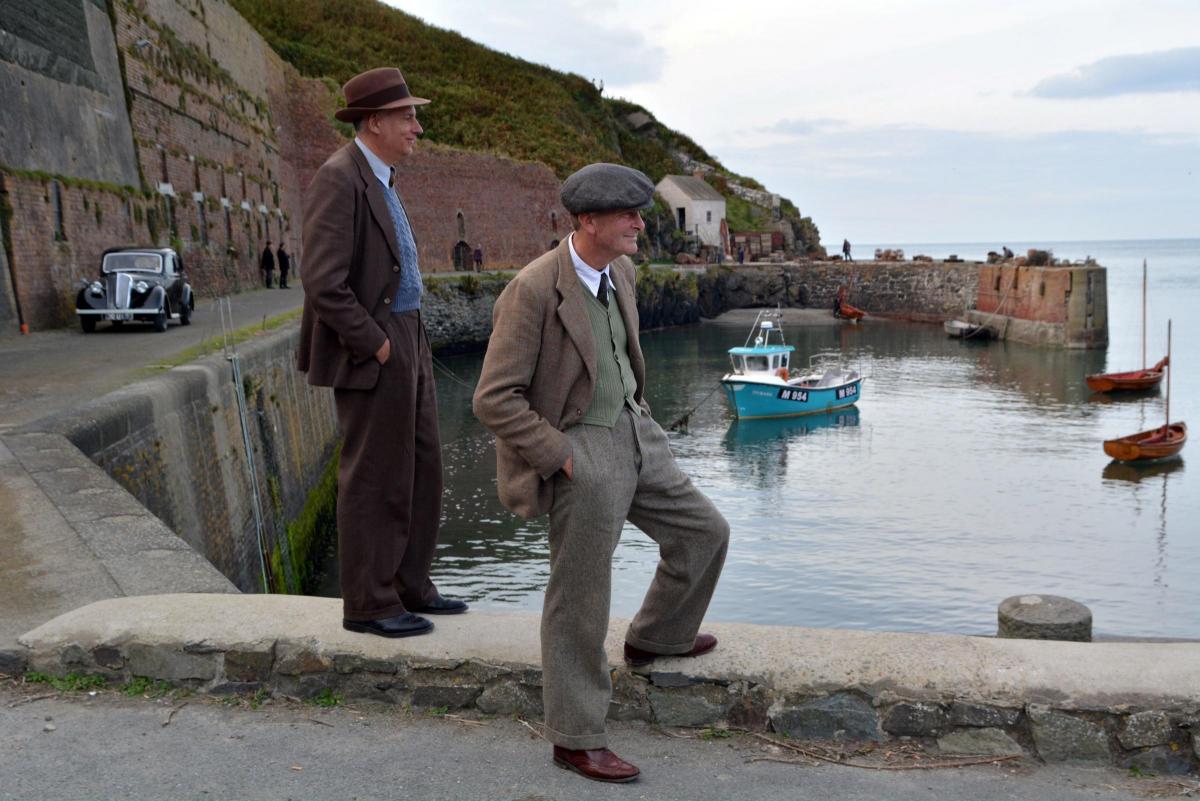
WHEN it comes to breathtaking scenery, rugged coastlines, and untouched natural beauty, few places can rival Pembrokeshire. Nestled in Wales, this county offers an idyllic setting that has caught the eye of filmmakers from Hollywood blockbusters to indie productions. With its sweeping beaches, historical sites, and dramatic cliffs, Pembrokeshire has become a favourite filming location for some of the most notable films in recent years. Let’s take a journey through some of the big movies that have featured Pembrokeshire as their backdrop.
“Havoc” (2024) – An action-packed affair

Set to be one of the year’s most anticipated films, “Havoc” brings the allure of Pembrokeshire to the big screen. Directed by Gareth Evans and starring Tom Hardy, the action thriller needed a dramatic and intense setting – something Pembrokeshire was more than capable of providing. Though details about the exact filming locations have been kept under wraps, it is known that Pembrokeshire’s rugged terrains were used to create an atmospheric and gripping environment for this high-octane film. As “Havoc” unfolds on screens, audiences will catch glimpses of the county’s unspoilt beauty adding depth to the storyline. There were also scenes filmed in Swansea city centre.
“The Edge of Love” (2008) – A romantic drama in the Welsh heartland
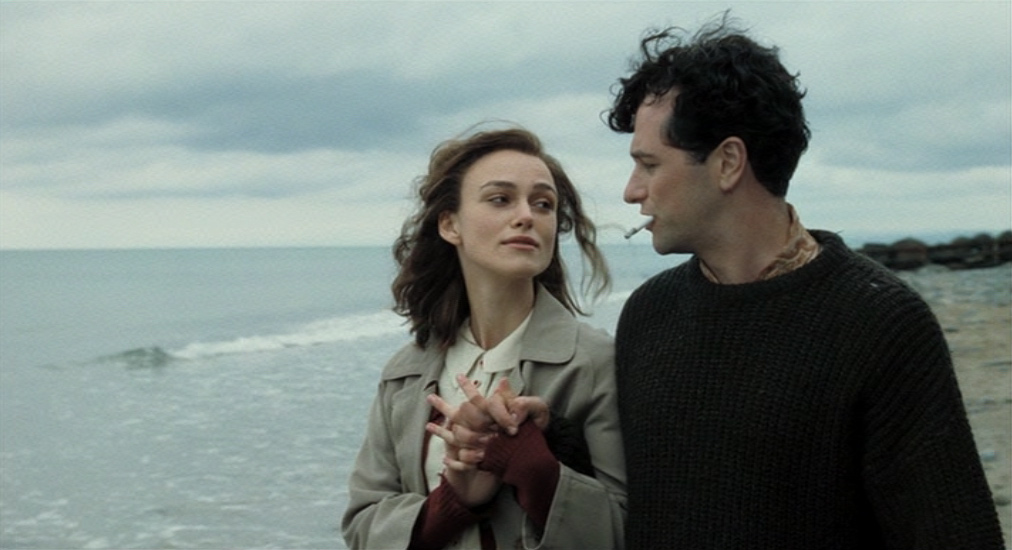
Pembrokeshire served as an atmospheric backdrop for this film, which explores the turbulent life of poet Dylan Thomas. Starring Keira Knightley and Sienna Miller, “The Edge of Love” captured the rugged charm of Pembrokeshire’s coastline, particularly around the town of New Quay. The coastal scenes provided an authentic feel to the historical narrative, transporting viewers to a time when life was as unpredictable as the weather on the Welsh coast. The town’s quaint buildings and panoramic views were seamlessly woven into the film, showcasing Pembrokeshire’s quieter, more serene side.
“Snow White and the Huntsman” (2012) – A fantasy world by the sea

Hollywood met the Welsh coastline in “Snow White and the Huntsman.” This fantasy epic, starring Kristen Stewart and Chris Hemsworth, turned Pembrokeshire’s Marloes Sands into a magical battleground. The beach’s vast, wild stretches of sand, framed by dramatic cliffs, provided a mystical landscape that perfectly complemented the movie’s dark and enchanting atmosphere. Marloes Sands, with its remote beauty, brought an otherworldly quality to the film’s intense battle scenes, creating a setting that was both awe-inspiring and haunting.
“Robin Hood” (2010) – Epic battles on Pembrokeshire’s shores
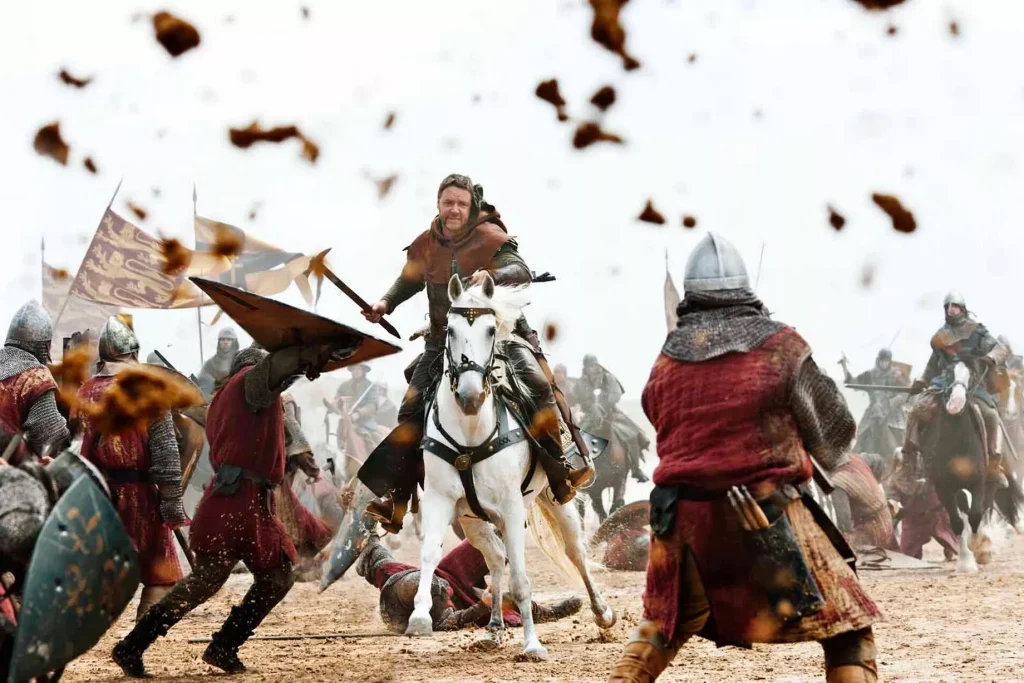
Ridley Scott’s reimagining of the legendary outlaw’s tale found its perfect medieval canvas in Pembrokeshire. Starring Russell Crowe as Robin Hood, the film’s spectacular battle scenes were filmed at Freshwater West.

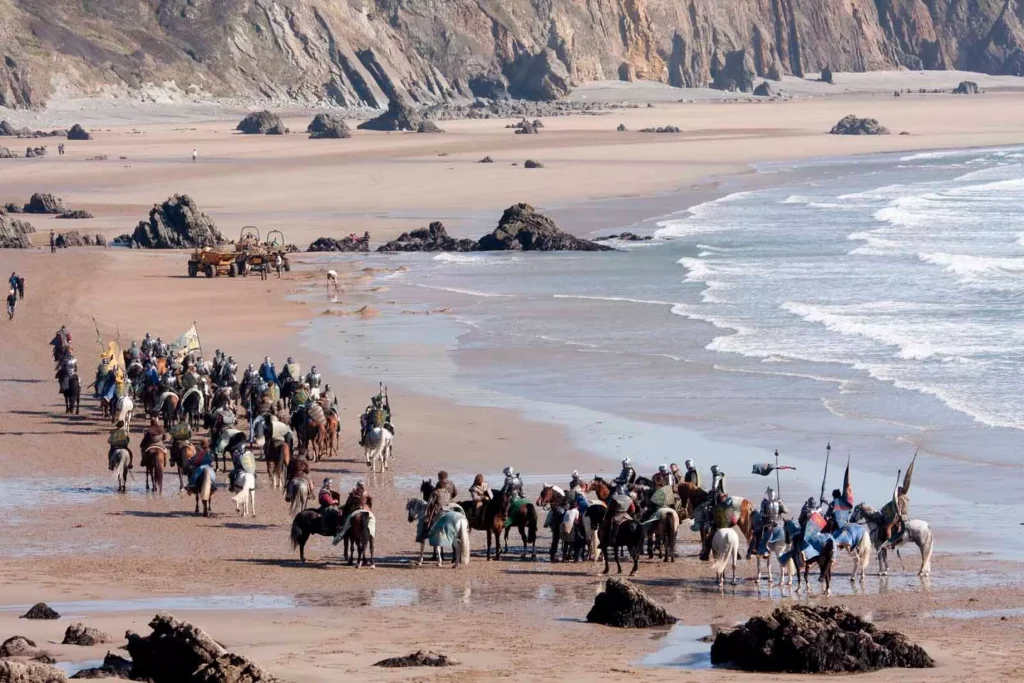
With its rolling dunes and vast stretch of sand, the beach embodied the raw, untamed feel of medieval England. Freshwater West’s authenticity and natural grandeur made it a standout location in the movie, and since then, it has become a pilgrimage site for film enthusiasts who wish to relive the action in real life.
“Harry Potter and the Deathly Hallows: Part 1” (2010) – Magic on the Pembrokeshire coast
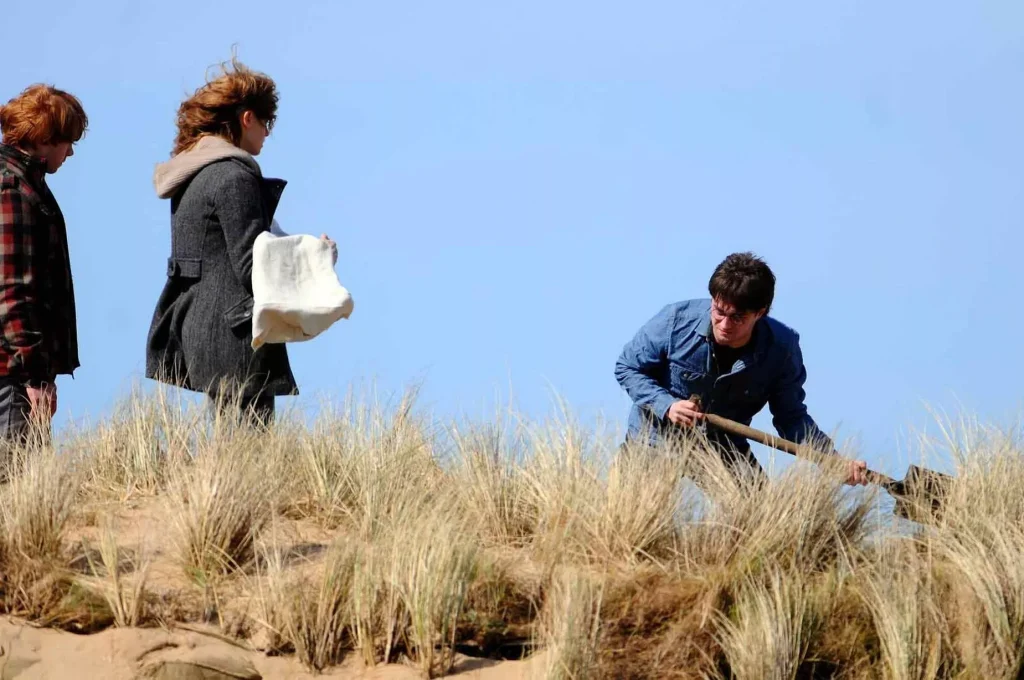
Few film franchises have captured imaginations quite like “Harry Potter,” and Pembrokeshire had the honour of becoming part of this magical world. Freshwater West was chosen as the location for Shell Cottage, the seaside home of Bill Weasley and Fleur Delacour. This iconic location played a key role in some of the series’ most poignant scenes.
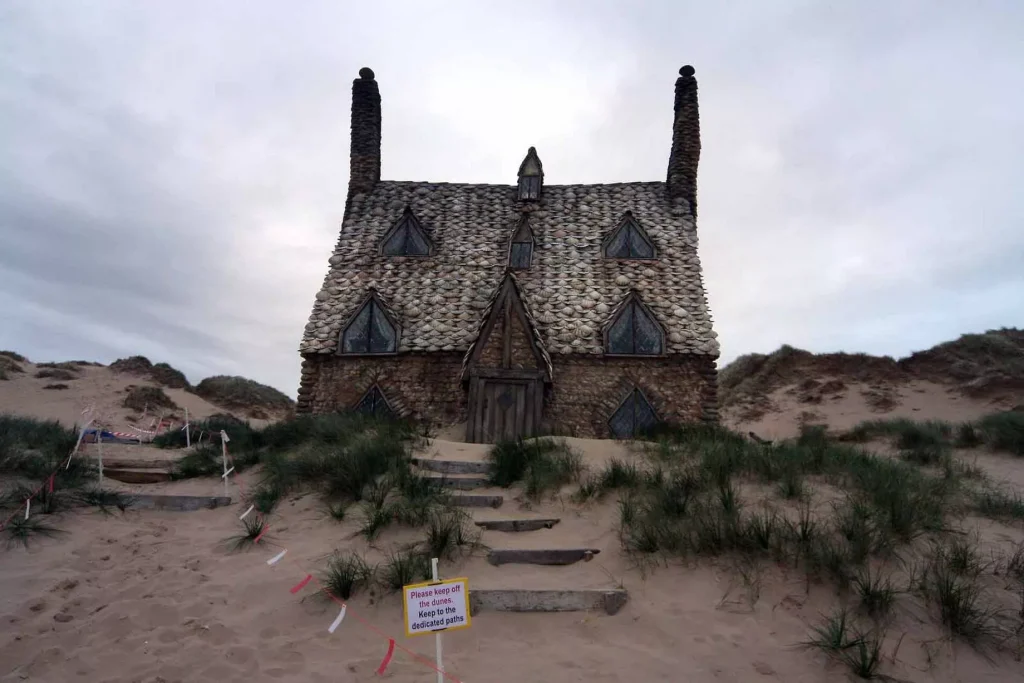
The rugged coastline, with its endless horizon and dramatic waves, brought an ethereal quality to the film’s portrayal of a place both remote and comforting, perfectly fitting the tone of the wizarding world during its darkest hours.
“Their Finest” (2016) – Capturing wartime Britain
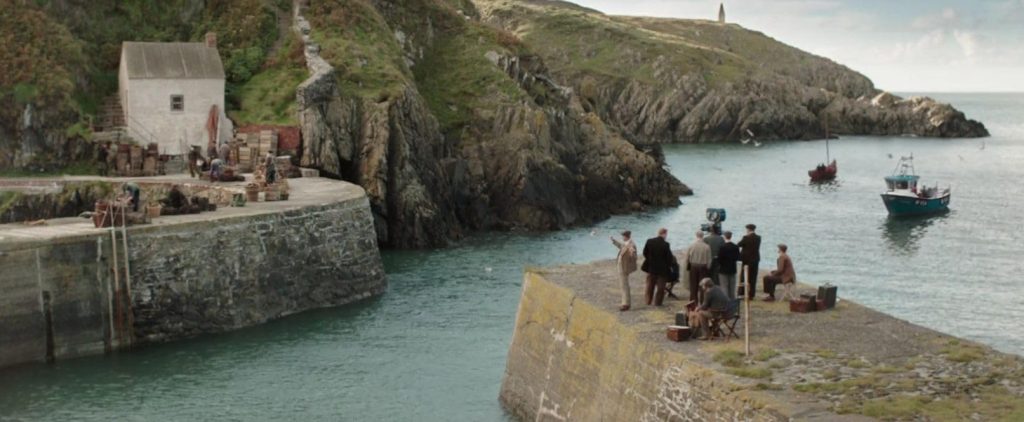
Pembrokeshire once again provided a historical backdrop in “Their Finest,” a romantic comedy-drama set during World War II. Starring Gemma Arterton and Sam Claflin, the film needed authentic settings to reflect the wartime spirit of Britain. Pembrokeshire’s coastal villages and sweeping shorelines added a sense of nostalgia and timelessness, complementing the story’s themes of resilience and hope. The film made use of the county’s old-world charm to recreate the look and feel of 1940s Britain, showcasing Pembrokeshire’s versatility as a filming location.
Pembrokeshire – Hollywood’s favourite hidden gem
Pembrokeshire has firmly established itself as a location where the magic of film meets the grandeur of nature. Whether providing the setting for sweeping historical epics, fantasy adventures, or poignant dramas, this corner of Wales offers an endless array of landscapes that can transform into virtually any world a story requires. It’s no wonder that both Hollywood blockbusters and independent films continue to be drawn to its shores. As the credits roll on these films, Pembrokeshire stands out as a star in its own right, capturing hearts and imaginations with its timeless beauty.

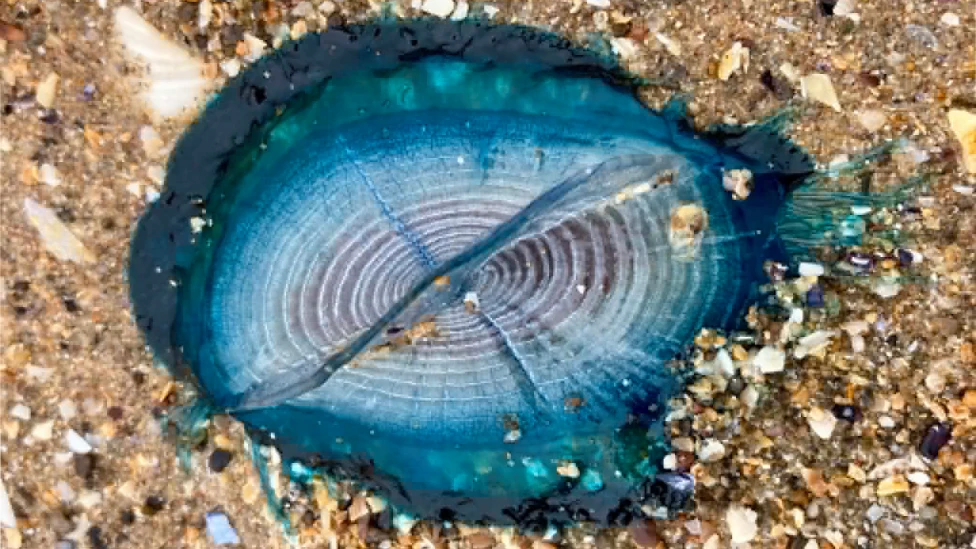
VISITORS to Welsh beaches have been warned not to touch unusual blue sea creatures which have washed ashore along parts of the coastline.
Hundreds of velella velella, commonly known as by-the-wind sailors, have been reported on beaches in Anglesey, Gwynedd and Tenby.
The small, bright blue marine creatures are free-floating hydrozoans and are related to Portuguese man o’ war, sea anemones and corals.
They get their name from a small sail-like structure on their body, which catches the wind and carries them across the surface of the sea.
One was spotted on Tenby South Beach on Tuesday (Jun 16), where beachgoer Maxine Allinson described it as “fantastic” and “like a crystal”.
Marine experts say the creatures are often seen after changes in currents or stormy weather, which can push large numbers ashore at the same time.
Although they are much smaller and less dangerous than Portuguese man o’ war, they do have stinging cells.
Their sting is usually mild, but people are being advised not to pick them up, especially as contact with the face, lips or sensitive skin could cause pain or tingling.
Experts also warn that the stinging cells can remain active even after the creatures appear to be dead on the beach.
The advice is to admire them from a safe distance and leave them where they are.
Caption: Maxine Allinson spotted a velella velella on Tenby South beach Tuesday

HAVERFORDWEST residents will have the chance to raise ideas, concerns and local issues directly with the town’s mayor this week.
Cllr Randell Izaiah Thomas-Turner will hold a Talk to Your Mayor session on Thursday, from 12:00pm until 2:00pm.
The initiative is aimed at giving residents an opportunity to speak directly with the mayor about matters affecting the town and wider community.
Cllr Thomas-Turner said communication and engagement were “vital”, adding that the session was about listening to local people, working together, and ensuring every voice had the opportunity to be heard.
Anyone wishing to book an appointment is asked to contact the Haverfordwest Town Council town clerk.
The mayor said: “Together, we can continue building a stronger and more connected community. Together we can make Haverfordwest the best in the west.”


THE SENEDD has rejected a Reform UK motion calling for an end to all Welsh Government international spending, after a heated debate which saw several Members walk out of the chamber.
The motion, tabled by Reform MS Llŷr Powell, was defeated by 48 votes to 37 on Wednesday (Jun 17).

An amended motion, backing Wales’ reputation as an “internationalist, tolerant and outward-looking nation”, was then passed by the same margin.
The debate followed warnings from Hub Cymru Africa and other campaigners that ending international spending would damage Wales’ global reputation and undermine projects linking Welsh communities with partners overseas.
Reform argued that Welsh Government money should be focused on domestic pressures, including the NHS, schools, transport and the cost of living.
Welsh Conservative leader Darren Millar backed the Reform motion, saying foreign relations and international development were matters for the UK Government rather than Cardiff Bay.
But Plaid Cymru and Welsh Government speakers rejected that argument, saying Wales’ international work supported trade, public services, education, health partnerships and the country’s reputation abroad.

The debate became heated after comments by Reform MS Joe Martin, who criticised overseas schemes including beekeeping and tree-planting projects in Uganda.
Several MSs left the Siambr during his contribution, with the Llywydd later urging Members to reflect on the tone of the debate.
Hub Cymru Africa had said before the vote that Wales’ international solidarity budget represented a tiny fraction of overall spending and helped deliver work in public health, climate action, women’s empowerment and sustainable development.
The organisation said the vote was an opportunity for the Senedd to reaffirm Wales’ place in the world.



News3 hours ago
Long Course Weekend set to bring thousands to Pembrokeshire
Three days of swimming, cycling and running will once again transform Tenby into one of the UK’s biggest endurance sporting...


Community9 hours ago
The gentle giant behind the tattoos
Pembrokeshire security worker Josh Davies praised for professionalism, kindness and proving first impressions can be wrong JOSH Davies is hard...


Charity1 day ago
Toy Story fans fill charity toy box at Haverfordwest cinema
Donations pour in for SNAP Specialist Play as families embrace Toy Story 5 launch A TOY STORY-themed charity appeal at...


Community2 days ago
Lord Rhys emerges from the mist in St Davids
Giant puppet begins historic journey marking 850 years since the first Eisteddfod MIST swirled around St Davids Cathedral on Friday...


News2 days ago
Tragic tribute paid to Haverfordwest man after A4075 collision
FAMILY REMEMBERS “KIND AND LOVING” CALLUM HANSON THE FAMILY of a 22-year-old man from Haverfordwest who died following a road...


News3 days ago
Motorcyclist, 22, dies in A4075 crash in Pembrokeshire
A 22-year-old woman remains in hospital after two-vehicle collision A MOTORCYCLIST has died following a serious two-vehicle crash on the...


Community4 days ago
Why police will be visiting every home in Pembrokeshire
New operation aims to knock on more than 257,000 doors across Dyfed-Powys over the next three years DYFED-POWYS POLICE has...


Crime4 days ago
Prisons at breaking point: MPs warn Wales is paying the price of a failing system
Frozen healthcare budgets, overcrowded jails, homelessness on release and mounting pressure on staff are undermining rehabilitation across Wales, according to...


News4 days ago
Brexit at 10: How Britain was sold a dream that cost us dearly
A decade after the referendum, the promised benefits remain hard to find while the economic costs are increasingly difficult to...


Crime4 days ago
Worcestershire man jailed after violent attack on woman in Tenby
Defendant was already serving a suspended sentence when serious assault took place A WORCESTERSHIRE man has been jailed for more...
-

 Crime4 days ago
Milford Haven man jailed for breaching domestic violence protection order
-

 Local Government5 days ago
Security privately arranged by Mayor at Beating of the Bounds
-

 News3 days ago
Crash on Freeman’s Way causes school-run chaos across Haverfordwest
-

 Crime5 days ago
Man wanted by court after failing to attend hearing over alleged shop thefts
-
 Crime5 days ago
Man banned from roads after drink-driving offence
-

 Crime5 days ago
Man jailed after admitting strangulation and assaults
-

 Crime5 days ago
Drug trafficker must repay £33,000 after court rules he made nearly £500,000
-

 Crime5 days ago
Man sentenced over stalking campaign and lock knife offence