


Health
Welsh charity calls for live-saving prostate cancer screening


PROSTATE CYMRU is calling for routine prostate cancer testing as the UK Government prepares to make a final decision on whether to introduce a national screening programme.
The Welsh charity says too many men are still being diagnosed late, despite prostate cancer affecting one in eight men, one in four Black men, and one in three men with a family history of the disease.
Last year, the National Screening Committee opened a public consultation after issuing a draft recommendation against screening all men. It also did not support a targeted screening programme for Black men or those with a family history, despite their higher risk.
A final decision is expected this month.
‘Early diagnosis is key’
Andy Thomas, chair of Prostate Cymru and a recently retired consultant urological surgeon, said early diagnosis remained crucial.

He said: “Early diagnosis is key. In Wales, the impact of prostate cancer is significant, affecting one in eight men, and one in three with a family history. Often, it doesn’t present with any symptoms, so it is essential that men get tested.
“Currently, you only get tested if you request it, or if you have a proactive GP that recommends it. But we constantly hear of men who have difficulties in getting a GP appointment, and in some cases even being refused a test.
“And what about the men who don’t think to ask for a test? We need a screening programme.”
Because of concerns about access through GP surgeries, Prostate Cymru has been running its own PSA testing events with support from commercial sponsors.

In 2025, 200 men who attended the charity’s events received a “red alert”, advising them to seek urgent medical advice. That represented almost 6% of all those tested.
Mr Thomas added: “We do what we can. But we are a charity and we simply cannot test everyone.
“The government needs to be more proactive in raising awareness among those most at risk and it needs to educate and advise GPs so that men aren’t refused tests or feel dissuaded.”

‘This can’t come down to luck’
Among those now calling for change is Cardiff man Kervin Julien, a Black Caribbean man who was told two days before Christmas that he had prostate cancer.
Kervin, a Radio Cardiff presenter and Justice for Cardiff Five campaigner, has since undergone surgery and is using his experience to raise awareness, particularly among Black men.
He said: “The government is lingering on a decision that could save lives. With one in eight men getting prostate cancer, we need screening. And with one in four Black men getting it, we definitely need screening.
“Many men make excuses for certain symptoms that they might be going through, and we don’t talk about these things. And lots of men don’t even have any symptoms but still have prostate cancer.
“A screening programme would mean it wouldn’t rely on men being proactive and having to ask for a test.”
Kervin said he now wanted to campaign for screening and create greater awareness among younger Black men.
He added: “What if I hadn’t gone to the doctor? What if I hadn’t had a PSA test?”
‘Without the test, I would not have known’
James Roberts, 59, from Abergele, was diagnosed with stage three prostate cancer after attending a Prostate Cymru PSA testing event in Colwyn Bay last summer.
He said he had previously approached his GP practice about a PSA test but felt dissuaded from having one.
James said: “I am stage three, so that means the cancer has spread outside the prostate but it hasn’t gone into my bones or the lymph nodes. It’s what they call advanced. Had they caught it earlier, I could have had surgery to remove it.
“Women routinely have smears and mammograms, so why are we getting left behind?
“Policy makers are arguing that it isn’t reliable, but this blood test takes five minutes and it’s a marker. It indicates whether you need further tests.
“Without Prostate Cymru and the PSA test, I wouldn’t have known anything about this and it would have ended up being stage four.”
‘It was just luck’
Swansea man Dean Hopkins, also 59, was first tested by his GP in 2017 and was advised to return in three years.
But when the Covid pandemic hit, Dean struggled to get an appointment and, with no obvious symptoms, let it slide.
He later spotted an advert for a Prostate Cymru testing event while watching football in Swansea. After attending, he received a red alert and was later diagnosed with stage three prostate cancer.
Dean has undergone radiotherapy and is now receiving hormone therapy and steroid medication. He will continue to be monitored for the rest of his life.
He said: “We need a national screening programme because it was just luck that I saw an advert for the Prostate Cymru event.
“This can’t just come down to luck or whether you have a GP that takes it seriously. We all need to be screened.
“If I’d been tested in 2020, this would have been caught earlier. I feel I missed out on six or seven years, in which time my cancer was growing.”
Prostate Cymru is continuing to run testing events this summer while urging men, particularly those at higher risk, to speak to their GP about a PSA test.



HEALTH BOARD members are to be quizzed by Pembrokeshire councillors next month over changes to services at Withybush Hospital.
At the March meeting of Pembrokeshire County Council, an emergency notice of motion by the council’s 11-strong Conservative Party group demanded that the Welsh Government immediately reverses the decision to cease emergency general surgery at Withybush Hospital.
Last year, Hywel Dda University Health Board consulted with its communities on options for change in critical care, dermatology, emergency general surgery, endoscopy, ophthalmology, orthopaedics, stroke, radiology and urology.
At a two-day meeting earlier this year, the board, amongst its many other decisions, backed changes into emergency general surgery which will see no emergency general surgery operations taking place at Withybush, but a strengthening of the same-day emergency care (SDEC).
At the March council meeting, the Conservative council group, led by Cllr Di Clements, proposed a motion which read: “This council requests that the Labour Welsh Government intervenes in Hywel Dda University Health Board’s recent decision to cease emergency general surgery at Withybush hospital and immediately reverses their decision.
“We believe removing this service critically undermines the sustainability of Withybush hospital’s A&E department.
“Also, the decision by the Health Board does not take into account the impact and potential serious risks it will have on Pembrokeshire residents.”
Cllr Clements’ supporting statement, which included a call for the-then Leader Cllr Jon Harvery to write to the First Minister and Welsh Government, said Pembrokeshire residents “have seen continual downgrading of services over the years, and this has been detrimental to all residents,” adding: “We believe this recent decision is life threatening to those who need emergency surgery and a matter of resident’s safety.”
At the meeting, Cllr Michael John said “there had been an erosion of services for many years,” supporting Cllr Clements’ call, but proposing the addition of calling on the health board to meet with councillors.
Following the request by Cllr Clements, Leader Cllr Jon Harvey agreed to any letter writing, saying he had “fought long and hard to return services to Withybush”.
Members backed Cllr Clements’ call, with Cllr John’s amendment added.
Since then an update was received at the May 14 meeting of Pembrokeshire County Council.

A report for members said, following the March meeting, Cllr Harvey, wrote to the-then First Minister Eluned Morgan on March 10, with Chief Executive Will Bramble also writing to the chief executive of Hywel Dda University Health Board advising him of council’s decision on the same date, requesting his and the Board chair’s attendance at the May council meeting.
It said, since then, Health Board Chair Dr Neil Wooding and Chief Executive Professor Phil Kloer have agreed to attend an Extraordinary Meeting of the council on June 15 to brief the council on service changes and specifically the issue of emergency general surgery, with members having the opportunity to ask questions on the presentation.
Members agreed to note the report ahead of the special June meeting.

RCN says patients are at growing risk as nurses report unsafe staffing levels
NURSING leaders have warned that collapsing growth in the registered nurse workforce, combined with increasingly complex patient needs, is creating a “deadly mix” for patients.
The Royal College of Nursing said staff across hospital and community settings are being left struggling to keep people safe, with more than a quarter saying nurse numbers on their last shift were so far below what was needed that there was a high risk of harm.
The warning comes from the RCN’s latest Last Shift survey, which gathered responses from more than 13,000 nursing staff across the UK.
Professor Nicola Ranger, the RCN’s General Secretary and Chief Executive, is expected to tell more than 3,000 frontline nursing staff at the union’s annual Congress in Liverpool that governments are failing in their duty to keep patients safe.
She will say that widespread registered nurse vacancies are always unsafe, but that the risk is now being made worse by an ageing and sicker population with more complex needs.
Four in five nursing staff said clinical complexity had increased over the past two years, while only one in ten said staffing was at the right level to meet all patient needs. More than two thirds said they were being forced to make difficult decisions about which care to prioritise.
In Wales, nurses and health care support workers described growing pressure across wards and community services.
A nurse working on an older people’s ward in the NHS in Wales said: “We need to increase the agreed establishment; nurse to patient ratio due to increasing acuity, dependency and complexity of patients’ condition and presentation.
“More and more patients are now presenting with worsening cognitive function and often display challenging behaviour.”
A health care support worker from an inpatient mental health unit in Wales said: “Our ward has been bombarded with high acuity for around a year now and staffing levels have barely seen an increase.”
The RCN said the findings also show the toll on staff wellbeing. More than three quarters of respondents said they felt emotionally exhausted on their last shift, with exhaustion highest among those who said their shift was understaffed.
RCN Wales Executive Director Nicola Williams said: “Nursing staff across Wales are telling us clearly that staffing levels are not matching the complexity and intensity of care patients now need.

“Too many shifts are operating without enough registered nurses to deliver safe and effective care.
“When more than a quarter of nursing staff describe staffing levels as unsafe and nearly half report compromised care, we need to listen and take action to address it.”
She said members were “going above and beyond every day” but were demoralised, missing breaks and having training time cancelled.
Ms Williams added: “They cannot continue carrying the burden of workforce shortages indefinitely. Emotional exhaustion is becoming normalised across the profession and that is dangerous for staff, patients and the future sustainability of services.
“The newly elected Welsh Government must urgently invest in growing and retaining the nursing workforce, ensure they have the training they require, alongside delivering safe staffing levels that are properly planned and enforced.
“Without action, patient safety risks will continue to grow.”
The RCN said the survey showed an urgent need for workforce investment, robust nurse staffing plans based on patient need, and action to improve recruitment and retention across Wales.

More than 300 professionals sign open letter calling for prevention-focused care and urgent reform
OCCUPATIONAL therapists across Wales are urging the new Welsh Government to act before pressure on the NHS and social care system deepens further.
More than 300 members of the Royal College of Occupational Therapists in Wales have signed an open letter calling for a major shift towards prevention, early intervention and care closer to home.
They say too much support is currently arriving only after people have reached crisis point.
The therapists argue that earlier help in the community could reduce hospital admissions, ease pressure on overstretched services and improve lives across Wales.
Occupational therapists work across the health and care system, supporting premature babies and families in neonatal care, helping children take part in school, enabling adults to stay in or return to work, and helping older people live safely in their own homes.
The Royal College says the profession is often overlooked, despite playing a vital role in keeping people independent and reducing demand on hospitals.
Its members are calling for five key changes, including embedding occupational therapists in every community healthcare cluster, improving workforce planning, putting prevention at the heart of health policy, ending inconsistencies in provision, and opening leadership roles to occupational therapists.
Paul Smith, RCOT Policy and Public Affairs Lead for Wales, said: “Wales can’t afford to keep waiting for a crisis to happen.
“Occupational therapists are already preventing hospital admissions, easing pressure on stretched services and supporting people to do the occupations they want and need to do.
“But they need to be positioned to provide the right support at the right time to make maximum impact.”
The call comes amid continued concern over waiting times, delayed discharges and pressure on hospitals, including in rural parts of Wales where patients often face long journeys for care.
RCOT says ministers, health boards, councils and sector leaders must now work with the profession to ensure people receive the right support earlier, closer to home, and before problems spiral into crisis.




Health22 hours ago
Occupational therapists urge Welsh Government to act before NHS crisis deepens
More than 300 professionals sign open letter calling for prevention-focused care and urgent reform OCCUPATIONAL therapists across Wales are urging...


Community2 days ago
Surfers take sewage protest to Broad Haven beach
CAMPAIGNERS took to the sea at Broad Haven today in a colourful protest demanding urgent action over sewage pollution in...

Health2 days ago
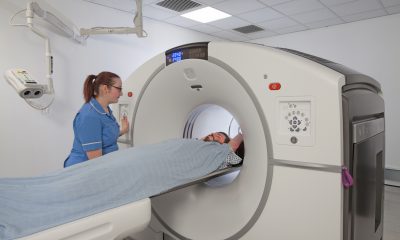
New NHS regional body raises questions over future hospital services in Pembrokeshire
Health bosses promise better joined-up care — but patients will want assurances over Withybush and travel distances PEMBROKESHIRE patients are...

Local Government3 days ago
Pembrokeshire County Council welcomes new chairman
CLLR DELME HARRIES has been elected chairman of Pembrokeshire County Council for the coming municipal year. Cllr Harries, who was...

News3 days ago
From Milford Mercury to County Hall for Pembrokeshire’s first female leader
Late councillor Mike Stoddart helped hold power to account for decades — now his daughter Tessa Hodgson leads the council...


Business3 days ago
Port reports record turnover, but debt, emissions and senior pay also rise
Annual report shows strong growth and major investment, but underlying figures reveal a more complex picture THE PORT OF MILFORD...


Community3 days ago
DARC radar: Campaigners ask Welsh Government to call in planning application
PARC AGAINST DARC has submitted an official request asking the new Welsh Government to call in the planning application for...


News5 days ago
State Opening overshadowed by Starmer leadership crisis
KING CHARLES has arrived at Parliament for the State Opening as Sir Keir Starmer faces the most serious crisis of...


News6 days ago
Rhun ap Iorwerth becomes Wales’ new First Minister
PLAID CYMRU TAKES POWER AFTER HISTORIC SENEDD VOTE PLAID CYMRU leader Rhun ap Iorwerth has become Wales’ new First Minister...


News6 days ago
Hotel was hit during a Luftwaffe bombing raid
THE COMMEMORATION, held on Tuesday (May 12), marked the anniversary of the wartime attack, with members of the community gathering...
-

 News3 days ago
Palestine pledge backed by 36 new Senedd Members
-

 Crime5 days ago
Teenager banned from roads after being caught six times over drug-drive limit
-
Community2 days ago
Surfers take sewage protest to Broad Haven beach
-

 Crime5 days ago
Man threatens to torch Silverdale Lodge through ‘demon drink’, court hears
-

 Crime5 days ago
Man sentenced for stalking women and threatening to torch home
-

 Crime5 days ago
Violent man jailed after ‘Banksy’ claims and campaign of domestic abuse
-
 Local Government7 days ago
Council leadership hopeful responds after anti-Tory rally photos surface
-

 Crime5 days ago
Man denies exposure in Pembrokeshire town