


News
Extensive historical child sexual abuse and institutional failings at Caldey Abbey

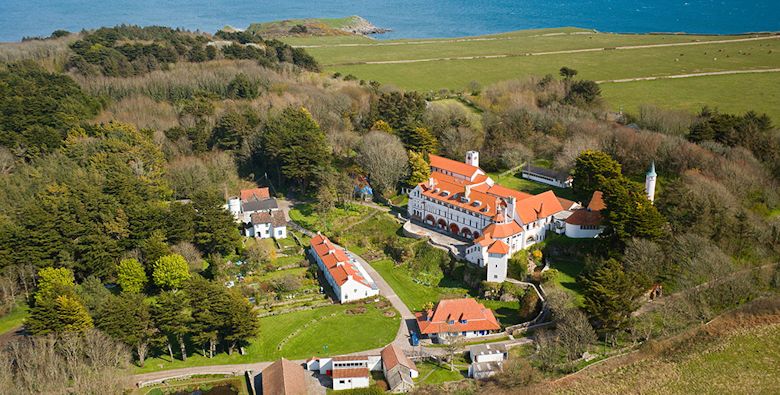
AN INDEPENDENT REVIEW into historical child sexual abuse at Caldey Abbey, situated on Caldey Island, Pembrokeshire, has uncovered extensive abuse by members of the monastic community and critical institutional failures in safeguarding vulnerable individuals.
The report, led by safeguarding expert Jan Pickles OBE, was commissioned in April 2024 by Father Jan Rossey, the Abbot of Caldey Abbey, to address longstanding allegations and promote transparency and healing within the community.
The comprehensive review examined allegations of child sexual abuse spanning several decades, focusing on the actions of specific monks and the abbey’s responses to these allegations. It incorporated survivor testimonies, historical records, and an evaluation of the abbey’s safeguarding policies and practices.
Key findings
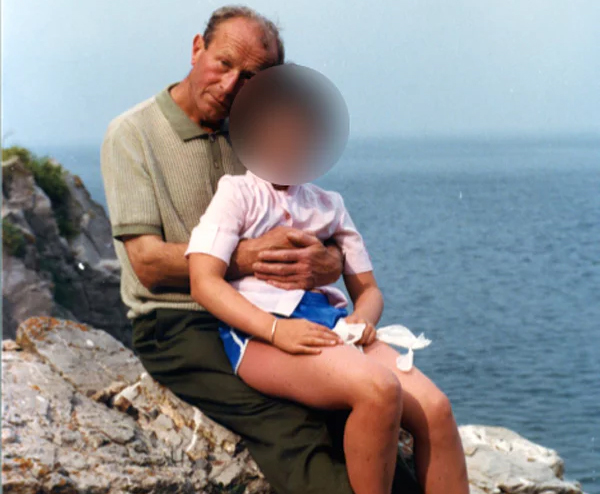
The review highlighted multiple monks involved in child sexual abuse, with significant attention on Father Thaddeus Kotik, who lived at the abbey from 1947 until his death in 1992. Kotik is alleged to have abused numerous children between 1972 and 1987.
The abbey failed to act on abuse allegations, allowing perpetrators to continue unchecked. Safeguarding policies were inadequate, and reports of abuse were ignored or mishandled.

Survivors have endured long-term trauma, worsened by the abbey’s failure to acknowledge their suffering or provide meaningful support.
The report outlined several key recommendations:
- Public Apology: Acknowledge the abuse and institutional failures.
- Support for Survivors: Establish accessible counseling services and avenues for redress.
- Policy Reforms: Implement robust safeguarding policies, ensuring all staff are trained to report abuse.
- Collaboration with Authorities: Establish clear protocols for reporting allegations to law enforcement and child protection agencies.
- Ongoing Monitoring: Engage independent bodies to review safeguarding practices regularly.
- Carl Harris, Assistant Director at NSPCC Cymru, said: “It is deeply troubling to read that child sexual abuse occurred ‘in plain sight’ on Caldey Island and the voices of children were not heard.
“This independent review identifies clear missed opportunities to prevent further abuse and bring Kotik to justice.
“It is particularly distressing to hear that children were not listened to and supported when they spoke up to raise concerns, and no action was taken.

“The report further highlights the importance of The Independent Inquiry into Child Sexual Abuse’s (IICSA) recommendation on the need for religious organisations to have robust safeguarding processes in place.
“Child sexual abuse can have a devastating effect on victims, which is why it is so important that survivors can be confident that if they speak out they will be listened to and supported.
“We can all look out for children’s welfare, and anyone concerned about a child can call the NSPCC Helpline on 0808 800 5000, or email [email protected].”

Response from Caldey Abbey
Father Jan Rossey expressed deep regret for the abbey’s historical failures and committed to implementing all recommendations. He emphasized the abbey’s dedication to creating a safe environment and supporting survivors.
The findings at Caldey Abbey underscore a broader issue of child sexual abuse within religious institutions, emphasizing the need for transparency, accountability, and rigorous safeguarding measures.
The abbey plans to collaborate with survivors, safeguarding experts, and authorities to ensure the effective implementation of the recommendations. Survivors and advocates stress the importance of sustained vigilance to prevent future abuse.
Statement from Abbot Father Jan Rossey

“It is with deep sorrow and regret that I have read in the review of the great suffering of children who were abused by Father Thaddeus Kotik and the culture of secrecy and cover-up that kept this hidden.
Opportunities were missed to stop the abuse of children. It is particularly heartbreaking to hear children spoke up to adults, and no action was taken.
Children and their families were failed when they should have been supported and listened to. The abuses should have been reported to statutory authorities.
On behalf of the monastic community, I sincerely apologise to all those who have been hurt and have suffered because of the abuse of Thaddeus Kotik and past failures to protect children.
It is a matter of great shame that this abuse was allowed to happen.
We are committed to implementing all the recommendations in the review and to ensuring that safeguarding is at the heart of our mission.
We will do all that we can to support those who have been harmed and to ensure that Caldey Island is a safe place for all.”

Safeguarding overhaul: Caldey implements comprehensive reforms
CALDEY ISLAND has undertaken a major overhaul of its safeguarding protocols and governance structures under the leadership of Father Jan Rossey. Initially appointed as acting Abbot in January 2023, Father Jan was confirmed in the role in April 2024 and has since spearheaded a series of reforms to enhance the safety and well-being of residents and visitors to the island.
Leadership and governance
One of the key developments has been a reshaping of the abbey’s leadership framework. In June 2023, Caldey appointed a new Island Manager alongside a volunteer Safeguarding Lead to focus on ensuring the highest standards of safety. By July 2023, a revised Board of Directors and Trustees was established, including lay members with legal and financial expertise. Safeguarding now features as a standing agenda item in the Board’s bi-monthly meetings, ensuring it remains a priority.
Further governance changes have made the Island Manager directly accountable to the Board, supported by newly agreed Terms of Reference and other governance structures.
Strengthening safeguarding practices
Caldey Abbey has conducted a thorough review of its safeguarding files, completed in December 2023, and commissioned an external review into historical abuse allegations. Initially launched in March 2024, this review was expanded in June 2024 to include all allegations, both historical and recent.
Training and enhanced policies
Ahead of the 2024 tourist season, the abbey provided safeguarding training to all monks, employees, volunteers, and islanders to bolster awareness and improve reporting mechanisms. Disclosure and Barring Service (DBS) checks were also expanded to include all individuals working or residing on the island. The monastic community underwent DBS checks as early as January 2023.
New policies have been introduced to address safeguarding concerns comprehensively. These include a code titled Caring Safely for Others, which monks must read and agree to, and updated processes for tenant and visiting priest applications that require rigorous vetting.
In collaboration with local authorities, the abbey has also adopted missing child forms and emergency planning measures. Safeguarding posters and dedicated reporting channels via phone and email have been implemented, making it easier for concerns to be raised.
Expertise and collaboration
A key milestone in 2024 was the appointment of a part-time Professional Safeguarding Lead, a qualified social worker, to oversee the abbey’s safeguarding practices. Additionally, a Safeguarding Subcommittee comprising independent professionals in health, education, and human resources now provides oversight.
The introduction of a GDPR-compliant system, My Concern, has further enhanced the secure storage and analysis of safeguarding concerns.
Caldey Abbey has also strengthened its partnerships with Pembrokeshire County Council and Dyfed-Powys Police, ensuring appropriate safeguarding referrals are made when necessary. The abbey benefits from guidance provided by Religious Life Safeguarding Services (RLSS) and is preparing for an audit by the Catholic Safeguarding Standards Agency (CSSA) in 2025.
A safer future
Looking ahead, Caldey Abbey has advertised for a permanent part-time Safeguarding Lead and continues to expand its safeguarding culture. These reforms are part of a wider commitment to transparency, accountability, and the protection of vulnerable individuals.
The Herald says: The publication of this report is a significant step toward justice and healing for the victims. It serves as a poignant reminder of the critical importance of safeguarding vulnerable individuals in all communities. The measures now in place mark a significant step forward for Caldey Abbey, signaling a new chapter that prioritizes the safety and well-being of all who live on or visit the island.










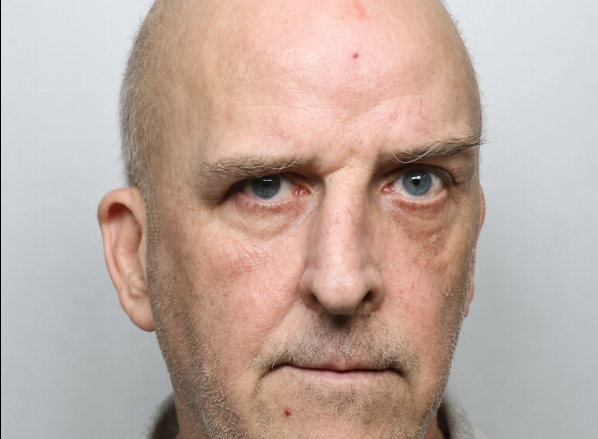
A HAVERFORDWEST man has been jailed for seven years after being convicted of raping and indecently assaulting a girl during the 1980s.
Alan Pyart, aged 60, of North Court, Haverfordwest, was found guilty following a trial at Swansea Crown Court earlier this year.
Pyart had denied raping and indecently assaulting the victim, who was under the age of 16 at the time of the offences.
The case returned to court for sentencing after being adjourned for more than two months so that a further psychiatric report could be prepared.
Judge Geraint Walters sentenced Pyart to seven years in prison for rape and four years for indecent assault. The sentences will run concurrently, meaning he will serve an overall custodial term of seven years.
Pyart was also made subject to an indefinite restraining order and will remain on the sex offenders register for life.
He had previously been remanded in custody while awaiting sentence.
Reporting restrictions are in place which legally protect the identity of the victim.
Detective Inspector Sarah Totterdale, of Pembrokeshire CID, praised the victim for coming forward many years after the abuse took place.
She said the case demonstrated the lasting effect sexual abuse can have on victims and their families, adding that it was never too late to seek justice.
DI Totterdale said: “I would like to commend the victim for the immense courage she has shown in coming forward and speaking about what happened to her all those years ago.
“Abuse of this nature can leave deep and long-lasting scars, but it is never too late to seek justice.

“We hope this conviction and sentence sends a clear message that Dyfed-Powys Police will pursue offenders, no matter how much time has passed.”
She encouraged anyone who has experienced sexual abuse, either recently or in the past, to contact police, saying they would be listened to, supported and taken seriously.
Information about reporting rape and sexual assault, as well as details of available support services, can be found through the Dyfed-Powys Police website.

GOODWICK Sea Scout Group has praised its young members, leaders and volunteers after they helped brighten up the area outside the group’s headquarters.
The team rolled up their sleeves ahead of the town’s recent Wales in Bloom judging, clearing overgrown vegetation and transforming an old boat into an eye-catching flower bed filled with colourful plants.
The group said the work had made a real difference to the front of the hall and thanked everyone who gave their time to help.
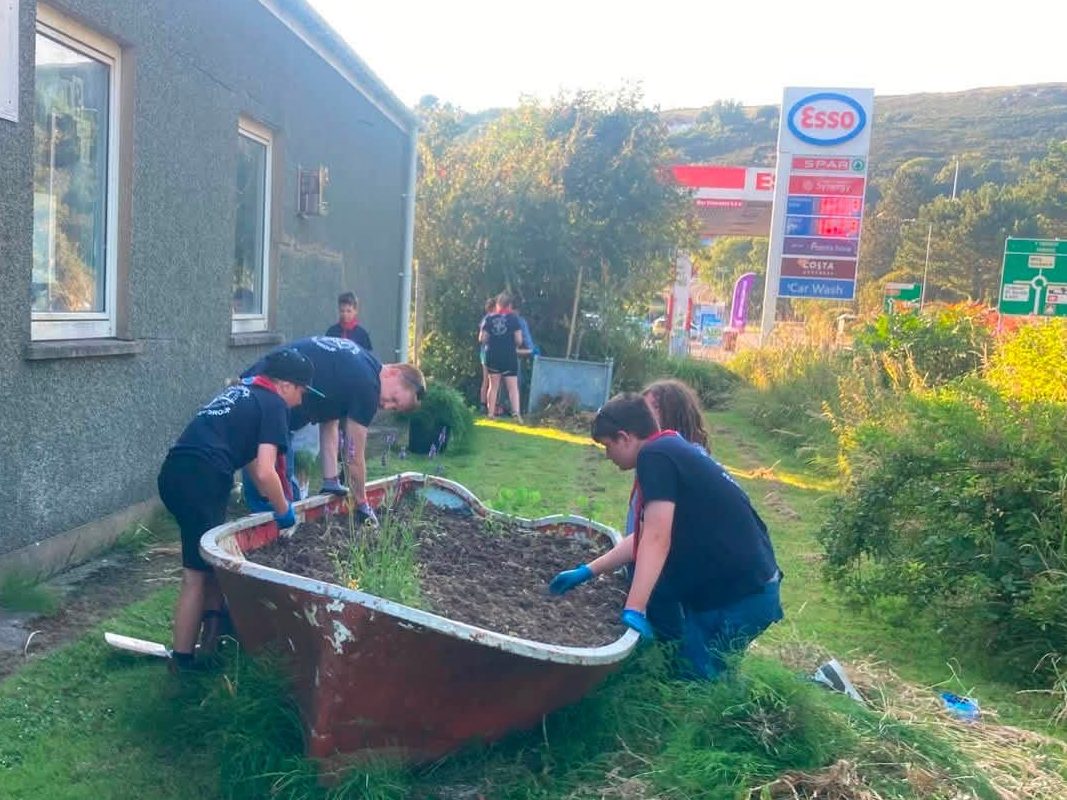
A spokesperson said: “Our Scout group worked hard to tidy up the front of our hall in time for the town’s Wales in Bloom judging.
“Well done to all the young people, leaders and volunteers who helped.”
The group is now hoping to build on the improvements and would like to hear from anyone with gardening experience who could volunteer to help care for the land surrounding the hall.
Anyone interested in lending a hand is encouraged to contact Goodwick Sea Scout Group directly.

Rhun ap Iorwerth says he will press the new Prime Minister for powers over policing, railways and Wales’ natural resources when the two leaders meet.
FIRST MINISTER Rhun ap Iorwerth has said he believes Andy Burnham is more willing to listen to Wales’ demands for further devolution than his predecessor, Sir Keir Starmer.
The Plaid Cymru leader is expected to hold an introductory meeting with the new Prime Minister on Thursday, following a telephone conversation between the pair earlier this week.
Mr ap Iorwerth said he hoped the change in leadership at Westminster would provide an opportunity to take Welsh devolution to the “next level”.
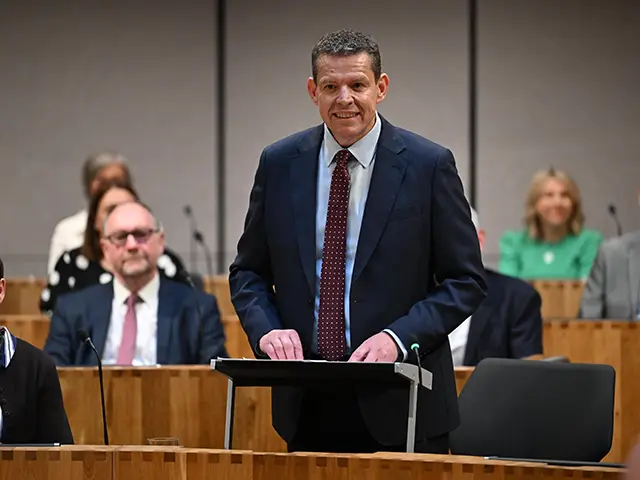
Speaking to BBC Radio 4’s Today programme on Wednesday, he said: “I had a conversation with Andy Burnham yesterday, congratulated him on becoming Prime Minister, and we both made it clear to each other that we wanted to have a positive relationship, a constructive relationship.
“I know that he understands devolution for Manchester. I want to help him understand what devolution means in Wales and what tools we need to make it work better.”
The First Minister said his government had been elected with a mandate to seek greater control over policing and justice, rail services and funding, as well as Wales’ natural resources.
He said: “There is a list, if you like, of things that we need to devolve now in order to move the story of Wales, the story of devolution, on to the next level.
“It’s clear that we now have a Prime Minister who is open to listening, perhaps in a way that Keir Starmer wasn’t, and I’m eager to do everything that I can to make the case for Wales.”
A planned meeting between Mr ap Iorwerth and Sir Keir failed to take place before the former Prime Minister left office, with the First Minister previously blaming “chaos in Westminster”.
Plaid Cymru formed the Welsh Government in May after ending more than two decades of Welsh Labour rule at the Senedd election.
Mr Burnham has extensive experience of devolved government after serving as Mayor of Greater Manchester, where he repeatedly called for greater powers and funding to be transferred away from Westminster.
However, the new Prime Minister has sought to play down the prospect of major constitutional reform.

During conversations with the leaders of Wales, Scotland and Northern Ireland on Tuesday, Mr Burnham said his immediate focus would be on “practical measures” rather than constitutional changes or further independence referendums.
Mr ap Iorwerth supports Welsh independence but has said his government will not seek to hold an independence referendum during its first term.
Thursday’s meeting is expected to focus on the working relationship between the Welsh and UK governments, as well as funding, transport and the future balance of devolved powers.


Crime5 hours ago
Haverfordwest man jailed for seven years for historic rape and sexual assault of girl
A HAVERFORDWEST man has been jailed for seven years after being convicted of raping and indecently assaulting a girl during...


News10 hours ago
Burnham more willing to listen on Welsh devolution, says First Minister
Rhun ap Iorwerth says he will press the new Prime Minister for powers over policing, railways and Wales’ natural resources...


Crime14 hours ago
Women jailed after man chased through Milford home and attacked with knives
Kelly Rees receives further 27-month sentence while already serving prison term for notorious taxi robbery TWO women have been jailed...


Crime15 hours ago
Mother headbutted and clawed police officers after threatening social worker
Court shown body-worn footage of violent confrontation at Goodwick property A COURT has been shown police body-worn footage capturing the...


Crime1 day ago
Man, 37, found dead following major police response in Pembroke Dock
Death not being treated as suspicious as police make statutory referral to IOPC following active investigation A 37-YEAR-OLD man has...


Community2 days ago
Household Cavalry drum horse returns home to Pembrokeshire for final farewell
Dyfed Willa Rose, who became Major Juno and the first mare to serve as a Household Cavalry Drum Horse, was...

News2 days ago
Jo Stevens out as Welsh Secretary as Burnham reshapes government
Cardiff East MP repeatedly visited Pembrokeshire to champion clean energy jobs, but her successor inherits unresolved questions over Milford Haven’s...


Crime2 days ago
Teen cleared of attempted murder but guilty of GBH after Milford teacher stabbed
Jury returns 11-1 majority verdict on charge of causing grievous bodily harm with intent, with sentencing set for September 3...


Community3 days ago
French troops march through Fishguard as Britain’s last invasion returns to life
Battle scenes, cavalry displays and a surrender procession brought one of Pembrokeshire’s most extraordinary stories back to the streets MUSKET...
News3 days ago
Andy Burnham promises new politics as he enters Downing Street
New Prime Minister admits politicians have “not been good enough” as he sets out a ten-year plan for Britain and...
-

 Crime15 hours ago
Drunken rail passenger tried to headbutt police after being refused travel
-

 featured1 day ago
From a father-and-son project to an award-winning campervan business
-
Crime14 hours ago
Women jailed after man chased through Milford home and attacked with knives
-
Community2 days ago
Household Cavalry drum horse returns home to Pembrokeshire for final farewell
-
News10 hours ago
Burnham more willing to listen on Welsh devolution, says First Minister
-

 Entertainment1 day ago
Robin Hood: A magical show by young talent at The Torch Theatre
-
Crime15 hours ago
Mother headbutted and clawed police officers after threatening social worker
-
 Local Government1 day ago
Consultation over electoral changes to eight Pembrokeshire community councils