


Community
Milford Haven mum gives birth to triplets amid medical emergency

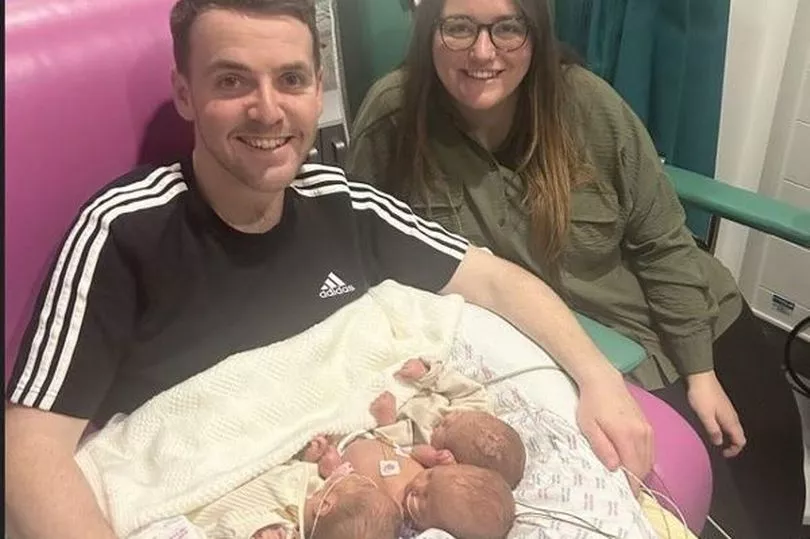
PREGNANCY is often a challenging experience, but for Ellie Davies from Milford Haven, it became even more stressful when she found herself facing a 140-mile round trip away from home during labour.
Ellie was initially admitted to Carmarthen’s Glangwili Hospital with pre-eclampsia, a condition causing dangerously high blood pressure. However, due to a lack of available neonatal intensive care unit (NICU) beds, staff arranged her transfer to Singleton Hospital in Swansea, nearly 30 miles away. Thankfully, accommodation was also provided onsite for her fiancé, Craig Butland.

RENAL FAILURE COMPLICATIONS
Ellie explained: “I had pre-eclampsia and was taken to Glangwili. My blood pressure was going up and down, and they had to ring around hospitals with a NICU to see if they had any spare beds – Singleton was the only one with space.”
On November 12, Ellie was transferred to Swansea, where she remained on the antenatal ward. However, her condition worsened. “On Sunday 17, my kidneys became affected by the pre-eclampsia, and I was going into renal failure,” she said.
In the early hours of Monday, November 18, Ellie underwent an emergency C-section, delivering triplets Mia, Isla, and Elsie two months prematurely.

BRIEF FIRST MEETING
“I only met Isla, the middle triplet, for around two minutes before she was taken to neonatal to be with her sisters,” Ellie shared.
Mia was born weighing 2lb 9oz, Isla at 2lb 10oz, and Elsie at 2lb 8oz. All three girls initially required breathing support and spent nine days in the NICU. Now, over three pounds each, they are receiving care at Glangwili’s special care unit and are reportedly “doing really well.”
SUPPORT FROM NHS STAFF
Reflecting on their experience, Ellie praised the hospital staff: “The midwives Louise and Emily were amazing, answering every question we had and supporting us through everything. Dr Sree Nittur, who was there during the delivery, followed up daily. The neonatal nurses were absolutely fantastic, and we can’t thank them enough for their care and dedication.”
A PLACE TO STAY
For Craig, the availability of accommodation at Cwtsh Clos, a row of five houses on the Singleton Hospital site, was a significant relief. Without it, he would have faced daily commutes between Milford Haven and Swansea.

“Craig spent a week in Cwtsh Clos, and I joined him for the final night,” Ellie said. “It was a huge help having Craig so close. It’s one problem you don’t have to think about, and it gives you a space to gather your thoughts.”
The couple is now supporting Swansea Bay Health Charity’s Cwtsh Clos appeal, which aims to raise £160,000 to refurbish the homes for future families in similar situations.
‘TRIPLETS ARE A RARITY’
Lisa Harris, interim matron for neonatal services, said: “We are delighted to hear the girls are doing well. Cwtsh Clos allows parents to stay close to their babies, which is so important during such critical times.”

NICU consultant Kate Burke added: “Triplets are a rarity for us. We serve families across south central and south west Wales, and often, we’re the unit they turn to when pregnancies are more complicated. It’s wonderful to see families like Ellie and Craig’s returning home with their babies healthy and thriving.”
The family recently celebrated their first Christmas together with Mia, Isla, and Elsie, expressing heartfelt gratitude to all who supported them through their journey.
Support the Cwtsh Clos Appeal: Donations can be made via the Swansea Bay Health Charity website.

(Pic: Swansea Bay University Health Board)











A local beauty therapist earns recognition in prestigious UK competition
A MILFORD HAVEN beauty therapist has been shortlisted for a major national award celebrating excellence in the hair and beauty industry.
Charlotte Mitchell-Johns, of The Attic Hair & Beauty, has been named a finalist in the Hair Extensions Specialist category at the UK Hair and Beauty Awards 2026.
Ms Mitchell-Johns, who is a Level four beauty therapist, also works as a hair extensions specialist and beauty educator with HB Training.
Speaking about the recognition, she said she was “truly honoured” to be named among the finalists.
She added that she believes the industry thrives on collaboration rather than competition, and that supporting others is key to long-term success.
Ms Mitchell-Johns has been recognised for her technical skill, commitment to clients, and efforts to maintain high standards within the beauty sector.
The UK Hair and Beauty Awards highlight leading professionals from across the country, celebrating talent, creativity and dedication within the industry.


THE FINAL sign-off for a pilot scheme for foster carers in Pembrokeshire to be exempt from council tax payments, has been backed by senior councillors.
Last July, Pembrokeshire County Council Cabinet members backed a pilot scheme, giving 100 per cent exemptions for those meeting the criteria, running from April 1 of this year, up to March 31, 2029.
In a report presented by Cabinet Member for Young Persons, Community, Well-being and Future Generations Cllr Marc Tierney, members heard the average yearly cost of a young person being supported by an in-house foster carer per year is £22,770, while the cost for those in in residential care per year is £409,812, a variance of £387,042 per year.
“It is evident that if we can support more people to foster through a council tax discretionary discount scheme, this will benefit the Local Authority by reducing reliance on far more expensive residential care placements, or independent fostering agency arrangements, whilst enabling children to remain in their own communities,” the report said.
It added: “Based on the 25/26 Council Tax (Band D) equivalent rate of £2,059.82 per annum, the cost of implementing a 100 per cent discount per year for current mainstream foster carers would be £133,888.30. It is noted that there may be some households within this cohort who are already receiving some sort of discount, however £133,888.30 should be the maximum impact.”

Offset against that, current costs for Independent Fostering Agencies placements are some £1,956,500; the spend for the same number of children placed with in-house foster carers based on average placement costs would £796,920 per annum, an annual variance of £1,159,580 less per year compared to IFA placement costs.
“Introducing this discount on a pilot basis would be with a view to identifying if additional costs incurred by implementing this scheme would be offset by reducing the number of children and young people placed with Independent Fostering Agencies and increasing the number of children being cared for via in-house foster carers,” the report said.
It added: “This proposal will also have the added benefit of creating capacity for more young people looked after to remain close to their families, their homes, their schools, and communities thus retaining crucial local links and support networks.”
At the March meeting of Cabinet, members were asked to again back the scheme, with minor amendments to eligibility, which was supported by Cabinet.

Animal seen galloping through residential streets and towards main road
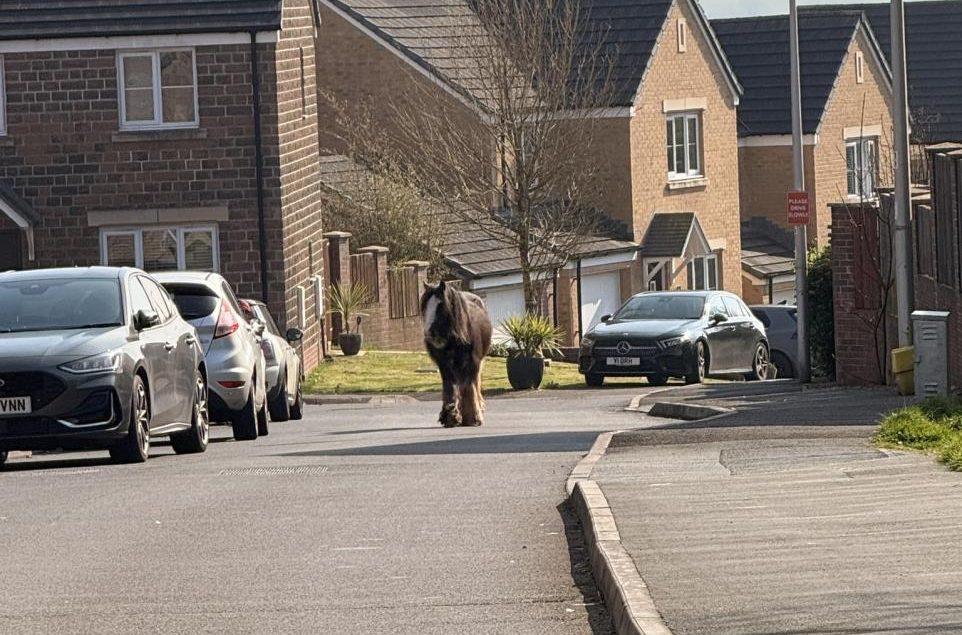
POLICE are reportedly tracking a loose horse which strayed into a residential area of Pembroke.
The animal was first spotted in Gatehouse View before making its way onto a nearby main road.
A post on the Pembroke and Pembroke Dock Citizens’ Forum said the horse had left Gatehouse View and was seen heading towards the road by Pembroke Leisure Centre.
The resident wrote: “Anyone recognise it? Police following it.”
The horse was later reported to be galloping down Buttermilk Lane in the direction of Martha’s.
Stray horses are not uncommon in the area. In January, several animals were reported loose around Pembroke and along the A477, particularly near Buttermilk Close and the Cleddau Bridge.
Those incidents created a hazard for motorists, prompting Pembrokeshire County Council to step in and return the animals. Drivers were advised to take extra care and avoid startling them.



Entertainment21 hours ago
Tenby steams up in spectacular style as crowds flock to festival
Colourful parade, towering creations and Victorian flair bring town centre to life TENBY was transformed into a vibrant Victorian fantasy...

Crime2 days ago
Publican jailed for six years for supplying cocaine and cannabis
Milford Haven man sentenced at Swansea Crown Court following drug dealing operation A MILFORD HAVEN publican has been jailed for...

Local Government2 days ago
Poverty summit highlights support efforts across Pembrokeshire
A SUMMIT bringing together key organisations from across Pembrokeshire has highlighted both the scale of local poverty and the work...

Education3 days ago
Milford Haven school plans unveiled but funding not yet secured
PLANS for a new £100 million school in Milford Haven have been unveiled, but the project has not yet secured...


News3 days ago
Council unveils plans for new state-of-the-art secondary school in Milford Haven
PEMBROKESHIRE COUNTY COUNCIL has revealed plans for a new state-of-the-art school in Milford Haven, promising modern, inspiring learning spaces for...


Health3 days ago
NHS waiting list falls — but cancer delays and diagnostic backlog worsen
Record progress claimed by Welsh Government as critics warn key targets are still being missed THE NHS in Wales has...


Crime4 days ago
Rapist jailed after ‘abhorrent’ attacks on woman and children
Haverfordwest man told police “women won’t have sex without force” A HAVERFORDWEST man who raped a woman and a young...


News4 days ago
Reform secures first Pembrokeshire councillor in Hakin by-election win
Late Reform candidate takes seat as independent surge and Labour withdrawal shape contest REFORM UK candidate Scott Thorley has won...


News5 days ago
Scott Thorley elected as Pembrokeshire’s first Reform councillor
REFORM UK candidate Scott Thorley has won the Hakin by-election after securing 179 votes. The full result is as follows:...


News5 days ago
Police confirm man has died after being recovered from River Cleddau
Major emergency response in town centre after concerns raised for man in water A MAN has died after being recovered...
-

 News5 days ago
Emergency services flood Haverfordwest after reports of person in river
-

 Crime4 days ago
Mother given community order after admitting child cruelty offence
-
 Crime7 days ago
Man cleared of sexual assault allegation after magistrates rule no case to answer
-
Health3 days ago
NHS waiting list falls — but cancer delays and diagnostic backlog worsen
-
 News5 days ago
Senedd vote to ban greyhound racing hailed as ‘landmark moment’ by charities
-
 News5 days ago
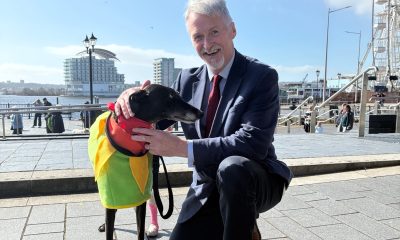
Senedd votes to ban Greyhound racing in Wales to protect animal welfare
-
News4 days ago
Reform secures first Pembrokeshire councillor in Hakin by-election win
-

 Sport7 days ago
France crowned Six Nations champions after extraordinary final-day drama