


News
‘Greater scrutiny’ needed for council budget


County Hall
THE PAIN of the council’s budget settlement has been the subject of a press briefing, seminars for council members and public consultation. The headline figures are stark and staggering. Pembrokeshire County Council has to find savings amounting to a quarter of its overall budget over the next few years. With education and social care budgets ‘protected’, the way in which our local authority will deliver future services is bound to change. Services cut previously to the bone, will be sliced to the marrow. All of these cuts are also scheduled to take place against the background of threatened forced reorganization of local government and the end of local democracy in Pembrokeshire. In a time of deep and savage cuts to their budgets, the Welsh Government is expecting local authorities to fund the tens of millions of pounds it will cost to merge authorities out of their own resources.
Cardiff Bay claims there will be great savings to be made but has not produced one single shred of evidence to support that contention. Indeed, earlier this year this newspaper interviewed Kevin Madge, Leader of Carmarthenshire County Council, who told us: “Any new structure will take five to eight years to ‘bed in’ and it could take eight to ten years for a new authority to fully get to grips with things. Things won’t improve overnight. Reorganization is not a magic wand.” With budgets squeezed and pressure being applied from Cardiff to stifle local democracy it is imperative that councillors take every step to scrutinise what Pembrokeshire County Council is doing with the money under its control.
Only in that way can it be shown that our councillors are fit for purpose and have a clear grasp of the council’s finances. The Pembrokeshire Herald has been looking at the systems the council has in place in relation to its finances and how spending priorities are set. That investigation has shown that figures produced by officers are being approved without interrogating the data or assumptions that underpin the financial forecasts produced and routinely approved without query or inquiry by the Cabinet and the majority of councillors. For example, the public and the council are routinely told that the council’s annual budget is around £200m. But that is only the nett figure. The gross council budget is significantly higher.
Assumptions made about income and expenditure are often adjusted before figures are present for democratic scrutiny, so that members are always presented with a balanced budget, even when forecasts are wrong or overtaken by events. For example, the budget approved at the beginning of the coming municipal year contained assumptions about the closure of Narberth Pool and income to be derived from charging for day services for the elderly. Both of those assumptions were overtaken by events. However, such is the opaque nature of local government finance that councillors have practically no way of properly interrogating the information given to them by officers and reaching a balanced and informed conclusion on the authority’s true financial position and future plans. This summer Pembrokeshire County Council organised a series of budget seminars for councillors to try and tackle this knowledge gap and address concerns that councillors were being asked to make uninformed judgements on future service provision.
At a media briefing in October, Jamie Adams told journalists: “We are at a tipping point in local government finances.” Speaking subsequently about the council’s public consultation on the budget, Jamie Adams told Jon Coles, this newspaper’s deputy editor: “Matters which councillors think are important to the public are not always those that people find important. By and large what has come across clearly are concerns about senior officers’ pay and councillors’ remuneration. There is a commitment to look at the whole cost of senior management. In terms of where we go, the opportunities to trim around the edges is no longer there, we are going to have to look more dispassionately at the services we provide and what communities can provide.”

With a six-month review of the council’s financial performance due to be discussed in the near future, we asked Pembrokeshire Alliance leader Bob Kilmister, whose party is engaged in drawing up an alternative budget, for his view on the challenges councillors face in trying to make sense of complex financial information. He told us: “My experience is that Local Government finance is made extremely complicated and much more difficult to understand than it needs to be. I like to think that I can follow balance sheets especially those of stock market listed companies but trying to work out the complexities of my local Council often leaves me totally bemused. “Councillors have been given very little training in this area and most take very little interest at all.
In my experience very few questions if any are asked when scrutiny is supposed to take place in cabinet or on committees. I have the greatest respect for the Officers and the Authority always appears to be on track financially despite Councillors taking such little interest. Government lays down the way this is carried out and I think it is time they took a long hard look at this and urgently brought in reforms to simplify matters. I am sure this would result in savings but more importantly it could lead to greater scrutiny by elected representatives.”

Plaid Cymru projected to emerge as largest party, with Reform UK close behind as Labour risks falling to third place
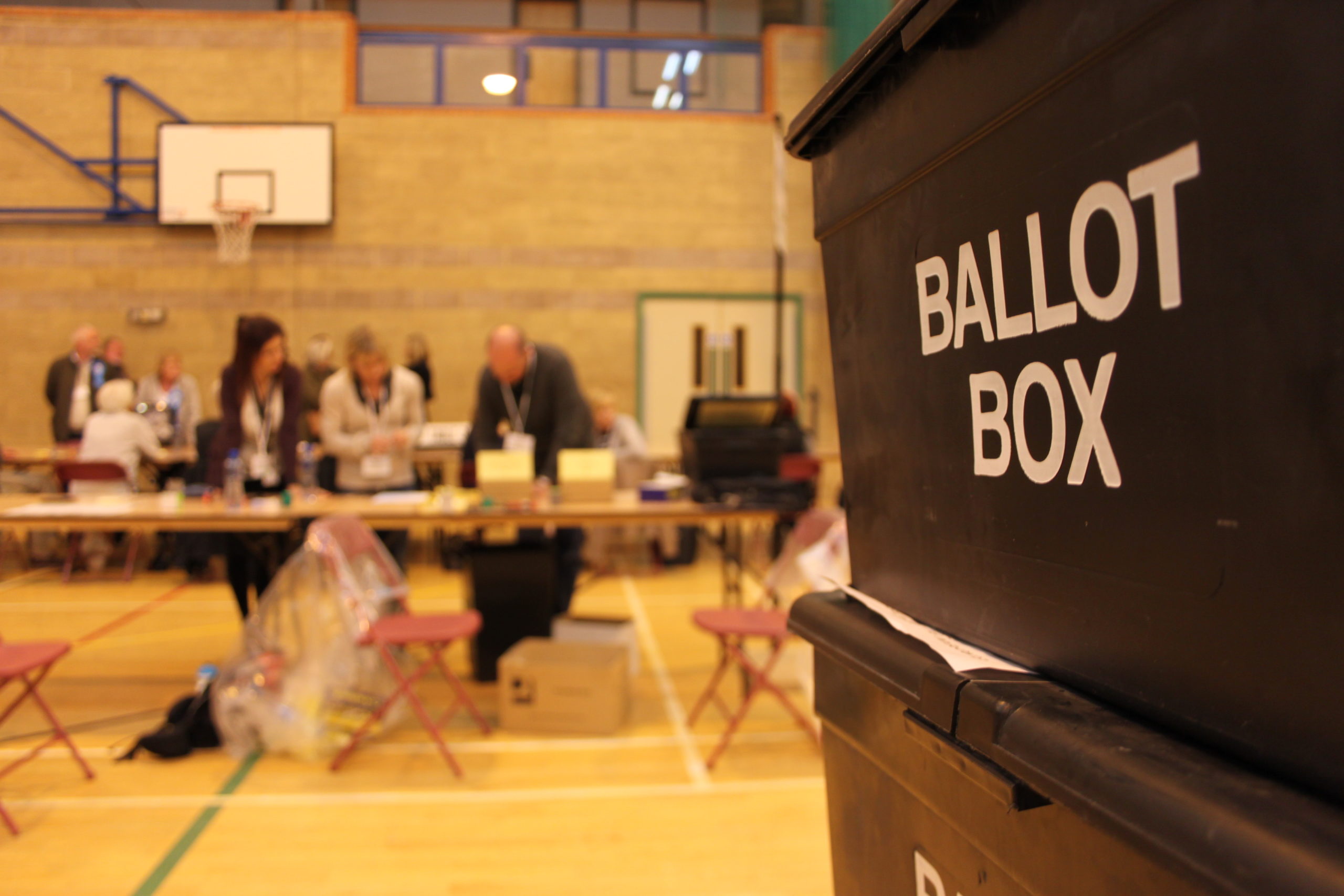
A MAJOR new opinion poll has sent fresh tremors through Welsh politics, suggesting Welsh Labour could lose its grip on Cardiff Bay for the first time since devolution began in 1999.
The survey, carried out by JL Partners for The Telegraph, projects Plaid Cymru as the largest party in the next Senedd, with Reform UK in second and Labour pushed into third. According to the poll, Plaid is on 28.8% of the vote and projected to win 33 seats, Reform UK is on 24.8% and 29 seats, while Labour trails on 15.9% and 17 seats.
If that result were repeated on polling day, it would mark one of the biggest political upheavals in modern Welsh political history. Labour has led every Welsh administration since the Assembly was created in 1999, but this poll suggests that dominance may now be under serious threat.
The election on May 7 will itself be a landmark one. For the first time, the Senedd will have 96 members rather than 60, with Wales divided into 16 larger constituencies, each electing six Members of the Senedd under the new proportional closed-list system. Voters will cast a single vote for a party or independent candidate, replacing the previous system.
Under the JL Partners projection, Labour is forecast to lead in only one of the new super-constituencies: Brycheiniog Tawe Nedd. Elsewhere, the battle for first place is expected to be dominated by Plaid Cymru and Reform UK.

For west Wales, that will be watched especially closely. Pembrokeshire is now split between the new Preseli Sir Benfro and Ceredigion Penfro constituencies, meaning local voters will be part of two much larger electoral contests than before. Under the reformed system, party performance across a wider area will carry much greater weight.
The projected national vote shares in the poll are:
Plaid Cymru: 28.8%
Reform UK: 24.8%
Labour: 15.9%
Conservatives: 12.3%
Greens: 9.2%
Liberal Democrats: 5.6%
Others: 3.5%
The findings broadly follow the direction of another recent MRP poll, which also placed Plaid Cymru in first place, Reform UK second and Labour third, although with different seat estimates. Taken together, the polling suggests a growing appetite for change among Welsh voters.

Even so, the picture remains fluid. With no party anywhere near the 49 seats needed for a majority in the new 96-member Senedd, any administration formed after May 7 is likely to depend on coalition talks or some form of agreement between parties.
James Johnson, co-founder of JL Partners, described the Welsh findings as potentially seismic, warning they would represent a political earthquake if borne out on election day.
For Pembrokeshire voters, the implications are significant. The coming weeks are likely to see fierce debate over farming, rural transport, NHS waiting times, the 20mph policy, energy costs, education and the value-for-money argument surrounding the larger Senedd. Those issues are already shaping campaign messages across west Wales.

Plaid Cymru leader Rhun ap Iorwerth has presented his party as ready to lead the next Welsh Government, while Labour under First Minister Eluned Morgan faces what may be its most difficult Senedd campaign in a generation. Reform UK, meanwhile, is seeking to turn growing discontent with the political establishment into a major breakthrough.
Polls are snapshots rather than forecasts, and much can still change before voters go to the ballot box. But with the campaign entering its closing weeks, this latest survey suggests Wales may be heading towards the most dramatic Senedd election since devolution began.
Police appeal for information following incident on South Road between March 11 and March 15
POLICE are investigating a report of criminal damage to a vehicle in Pembroke.
The damage is believed to have occurred on South Road sometime between Wednesday, March 11 and Sunday, March 15, 2026.
Officers are appealing for anyone who may have seen anything suspicious, or who has information that could assist the investigation, to come forward.
Anyone with information is asked to contact Dyfed-Powys Police online, by email at [email protected], or by calling 101, quoting reference number 26000209990.
Memorial hall opened to help those affected after blaze in Station Road area
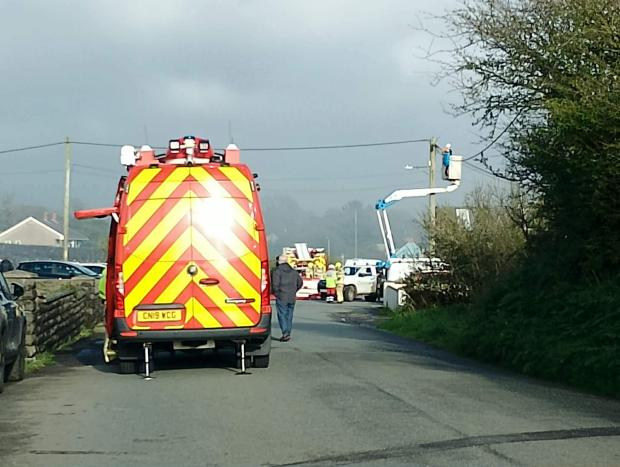
A FAMILY escaped without injury after a major house fire in the Station Road area of Letterston, according to local residents.
The blaze prompted a major emergency response on Wednesday (Apr 15), with fire engines seen at the scene and the road closed while crews tackled the incident.
People posting in the Letterston community group said the family was safe, although one kitten was sadly lost in the fire.
One resident wrote: “They lost a kitten, but the family were ok. Nothing worse than a fire. There were 4 fire engines here at one time.”
Others described hearing multiple sirens and seeing smoke rising from the area, with one local woman saying her partner could see the fire engines from nearby fields.
As news of the fire spread, the local community quickly rallied round. The memorial hall was opened for anyone affected, while residents offered practical help and support to the family.
Messages posted online described the loss of the home as heartbreaking, with one resident writing that while the house had gone, the family were “alive and well to make more new memories”.
The Herald has approached the emergency services for official confirmation on the cause of the fire and the full extent of the damage.


Community14 hours ago
Family safe after major house fire in Letterston, community told
Memorial hall opened to help those affected after blaze in Station Road area A FAMILY escaped without injury after a...


News17 hours ago
Haverfordwest County AFC escapes winding-up order but ordered to pay costs
Club avoided liquidation in case remained live until it came before a judge at the High Court in London A...


News18 hours ago
Seal pup’s 120km swim ends in rescue and release
Young grey seal found weak at St Brides Bay after remarkable journey from Cornwall is now back in the wild...


Crime19 hours ago
Woman who called for help spared jail over blade offence
Court hears Haverfordwest defendant was in severe mental distress and carrying razors to harm herself A HAVERFORDWEST woman who contacted...


Community22 hours ago
Spitfire latest: Pembrokeshire flypast looks more likely this afternoon
THE LATEST public updates suggest the iconic Spitfire is now expected to leave RAF Valley at around 2:00pm today (Apr...


Crime2 days ago
Romino’s licence revoked after illegal workers found and fire risks exposed
Takeaway in Cardigan ordered to shut by 11:00pm after council hearing backed by immigration officials, police and fire service A...

Crime2 days ago
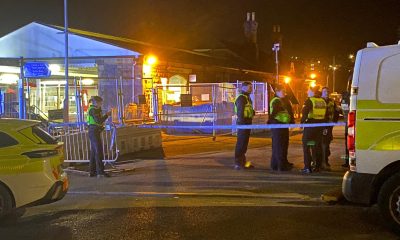
British Transport Police widens Tenby stabbing inquiry as five arrested
Extra patrols in town as police continue hunt for answers after shocking railway station violence BRITISH TRANSPORT POLICE say their...


News3 days ago
Person taken to hospital after emergency response in Milford Haven
Police say incident began in Hakin before multi-agency search at marina A PERSON was taken to hospital after a major...


Charity3 days ago
Greenacres warns it may have to shut doors to new animals over £24,000 vet bill
Pembrokeshire sanctuary says it is at breaking point and fears devastating consequences if urgent public appeal fails GREENACRES RESCUE has...


News4 days ago
Reform attacks Plaid on spending and immigration ahead of Senedd poll
Party claims Plaid’s plans would strain public finances and increase pressure on services, while rivals insist Wales needs a different...
-
 Business2 days ago
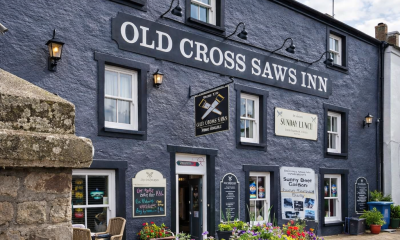
A proper Pembroke local: Inside the warm welcome of The Old Cross Saws Inn
-

 Community7 days ago
Police intervene after post raises fears of planned Pembroke Dock fight
-
 Crime7 days ago
Man arrested after alleged child sexual assault in Haverfordwest
-

 News7 days ago
Party leaders on the spot in BBC programme live from Pembrokeshire College
-

 Crime4 days ago
Over 500 arrests at latest Palestine Action protest in London
-

 Sport3 days ago
Grand Slam win for Pembrokeshire rugby ace
-

 Charity7 days ago
Drive care forward: Help keep end-of-life care moving in Pembrokeshire
-

 News7 days ago
BBC brings election debate to Pembrokeshire College