


Politics
Three different council tax choices on table in Pembrokeshire


PEMBROKESHIRE council taxpayers are expected to be facing a 9.85 per cent increase in their bills later this week, taking the average annual bill to well over £2,000, but alternative proposals could see that rise by just 7.5 per cent.
Last month, Pembrokeshire County Council’s Cabinet backed recommending a council tax increase of 9.85 per cent, with a special meeting due to decide that on February 20.
That meeting was deferred to March 6, in part awaiting the final Welsh government local government settlement, which saw the county gain a small amount of extra money, worth roughly an extra £500,000, reducing its funding gap to £26.9m.
“Although an improvement on previous budget assumptions, £26.9m is a very significant funding gap that will need to be met through a combination of budget savings, an increase in Council Tax, use of Council Tax premiums and use of reserves, albeit this is not recommended as a financially sustainable option,” a report for members recommending the 9.85 per cent increase says.
The extra money has been used to reduce budget saving requirements of the Individual Schools Budget, while neighbouring council Ceredigion has used a similar settlement to lower its council tax increase by 0.6 per cent.

Pressures faced by Pembrokeshire include an assumed additional £4.9m pressure relating to the increase in ‘direct’ employers’ national insurance contributions and the national insurance element of the increase in Mid and West Wales Fire and Rescue Authority levy.
The most significant pressure for the 2025-26 budget is demand for Social Care across both Adult and Children’s Services, with a projected total increase in pressure of £25.6m (most likely scenario) for Social Care for 2025-26 representing 58.9 per cent of the total council service pressures for 2025-26.
This increase sees the Social Care budget surpassing the Education budget for the first time.
With the council budget D-day looming, opposition groups the Independent group and the Conservative group have submitted their own proposals for the March 6 meeting.

As well as other changes, in simple council tax terms the Independent Group is proposing a 9.35 per cent increase and the Conservative group a 7.5 per cent one, achieved in part using a higher proportion of the second homes council tax premium for certain parts of the budget.
For many years Pembrokeshire has had the lowest Band D Council Tax in Wales.
Following the 12.5 per cent increase in 2024-25 Pembrokeshire moved to the fourth lowest council tax in Wales with a base Band D Council Tax of £1,510.72 per year, before town and community council and police precepts were added.

For the average Band D property, a 9.85 per cent rise adds £148.81 to that bill.
For this coming year, the Dyfed-Powys Police precept part of the overall council tax bill is rising by 8.6 per cent, bringing the rate for a Band D property to £360.68.
That means, if the 9.85 per cent rate is backed, the average Band D council tax bill, before individual town or community council precepts are added, would be £2,020.21.
The Independent and Conservative figures would see the council tax bill rise by £141.25 and £113.30 respectively; meaning the Conservative proposal would save the average taxpayer £35.51 this year.
Ceredigion County Council has backed a 9.3 per cent increase.
In that county, the average Band D property, before adding town and community council precepts, is £2,247.25.

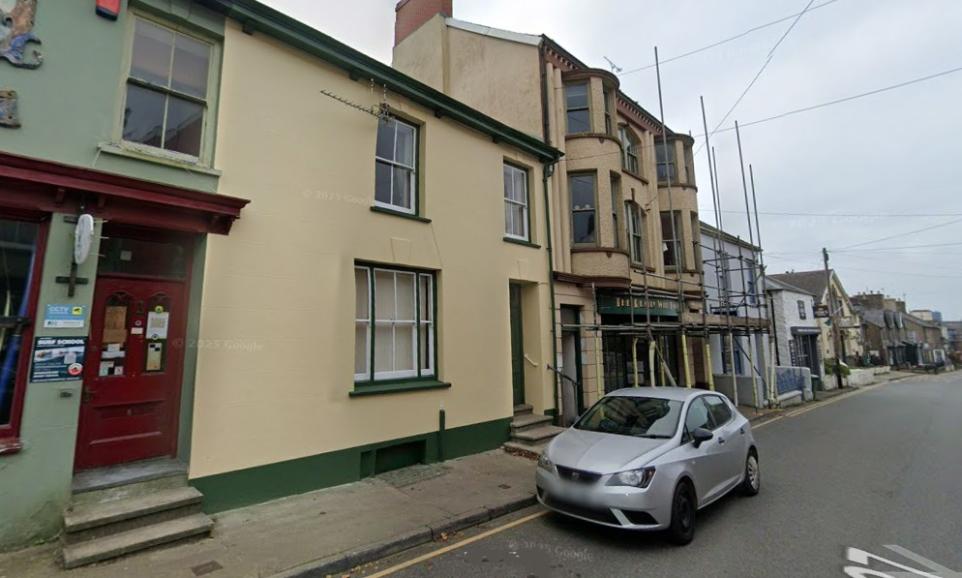
PLANS to change a former hairdressing salon in Pembrokeshire’s only city to a family-friendly coffee bar have been submitted to the national park.
In an application to Pembrokeshire Coast National Park, Gerallt Nash seeks permission for a change of use of 26 High Street, St Davids from a hairdressing salon to a family friendly coffee bar and children’s playroom.
The First floor, formerly used as accommodation of a tenant, would be used as an office and storage of business.
A supporting statement says: “It is proposed to open a family-friendly coffee bar with a children’s playroom on ground floor. It is not intended to cook food on the premises, therefore there will be no requirement for an extractor system.
“ Other than small scale repairs to part of one floor, and the installation of a sink and serving counter in the inner room (plumbing and electrics are already in place since its last use as a salon) the main work will be the redecoration of surfaces and ceilings, the provision of new light fittings and laying of new floor coverings.

“This part of High Street has been identified as a ‘commercial’ zone by PCNPA. Existing businesses close to No 26 include outdoor and surfing outlets; restaurants; clothes shops; holiday accommodation; ice cream parlour; fish and chips outlet; delicatessen and craft shops.
“The current proposal would fill a gap in the market, as most food outlets do not open until after 11am or 12pm, or only during the evenings in some cases. It would also provide somewhere for [young] families to go to unwind whilst their children can relax in the playroom.”
It says No 26, also known as ‘Preswylfa,’ was “part of a row of three shops (with dwelling accommodation above), built and owned by Thomas Evans of Solva probably during the late 1870s,” one “leased, and later purchased, by the applicant’s great grandfather, David Evans, who owned the local windmill”.
Detailing No 26’s history, it says: “Over the years, it has served as a grocery shop, veterinary surgery (before the current building at the rear of the property), café, and hairdressing salon (on at least three different occasions).
“Mrs Susan Bennett, who ran ‘Susan’s Hairdresser’ at No. 26, retired on 1 November 2024. Since then, the exterior of the property has been repainted. A new tenant, Keeley Rose, took over the lease on December 1, 2025.”
The application will be considered by park planners at a later date.

A CALL for a £75,000 grant to support the coastal bus network in Pembrokeshire has been backed by the national park.
At the March meeting of Pembrokeshire Coast National Park, members were recommended to authorise payment of approximately £75,000 to Pembrokeshire County Council as a contribution towards the coastal bus network and the Integrated Transport Unit Strategy Manager post for the financial year 2026/2027.
A report for members said: “The Authority has contributed financially towards the provision of the coastal bus services and the Integrated Transport Unit Strategy Manager post and seeks agreement for financial contributions to be made over the financial year 2026/27. The financial contribution of approximately £75,000 is considered to be manageable for the Authority.”
It added: “Continued funding during the next financial year is critical during a period of transport reform and will help secure the future of the coastal bus provision when services are franchised across the region.
“If Pembrokeshire County Council were to introduce a tourism levy in the future, it is anticipated that revenue generated through such a scheme could be used to support sustainable transport infrastructure, including the coastal bus network.

“The Authority has made longstanding payments towards the operation of the coastal bus network and support services provided by a transport officer post. In the financial year 2025/2026 the National Park Authority’s contribution was: – £55,989 contribution to the Coastal bus services – £16,400 towards the Integrated Transport Unit Strategy Manager post which provides the Secretariat for Pembrokeshire Greenways and coordinates the Coastal Bus provision. The Authority also contributes £7,000 towards the Tenby Park and Ride Service, however, this is under a separate agreement.”
This year, a contribution for the coastal bus services of £58,117, together with an identical £16,400 towards the Integrated Transport Unit Strategy Manager post was sought, bringing the total amount to £74,517.75.
It said the 2025-’26 total cost of running the coastal bus network, covering the 400 Puffin Shuttle, the 404 Strumble Shuttle, the 403 Celtic Coaster, and the 387/388 Coastal Cruiser amounted to £316,755.95; the park’s financial contribution equating to 17.6 per cent of the total cost against a historic contribution of approximately a third, the remainder council funded through the Bus Network and Bus Service Support Grants.
The report added: “The services operate almost entirely within the National Park, providing access to the majority of the coast for visitors and also provides a service for residents. The Authority’s contribution enables the provision of enhanced services to the Pembrokeshire coast, running daily, seven days per week through the summer.”
Members backed the £75,000 contribution recommended.

Six-hour London to Dublin service proposed in £32bn project ahead of Senedd election
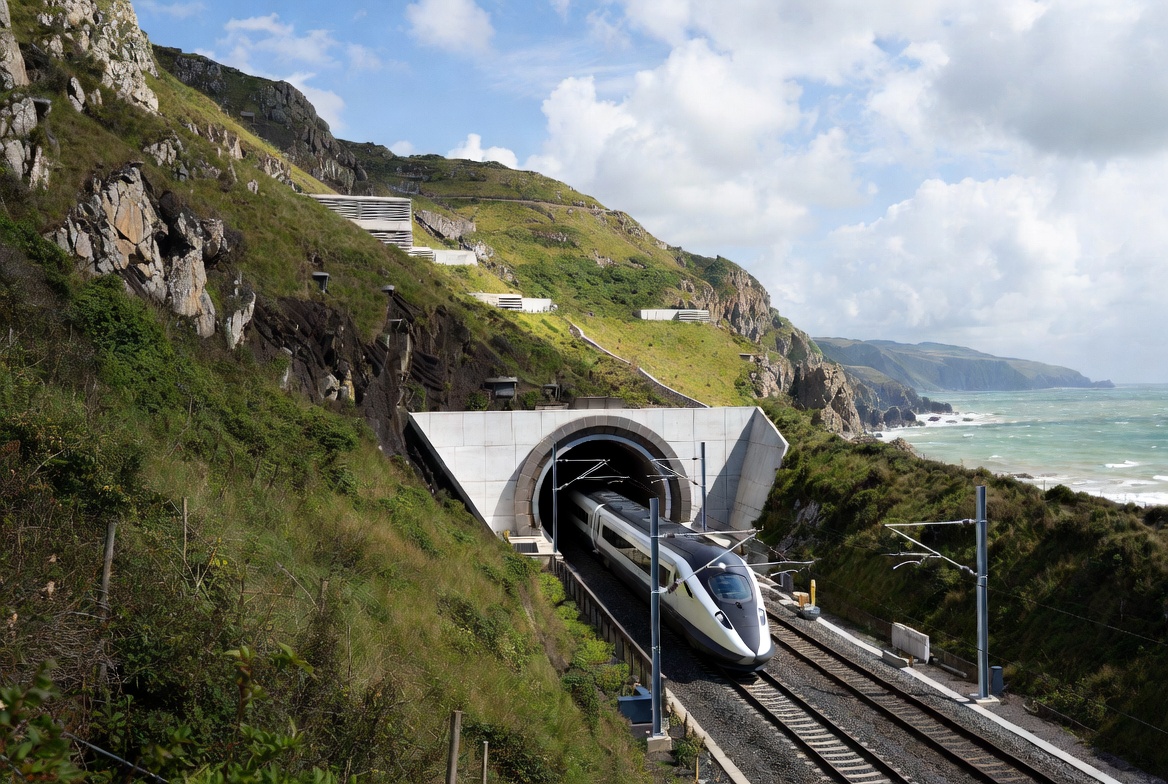
PLANS for a rail tunnel linking west Wales directly to Ireland have emerged, with a company owned by tech billionaire Elon Musk said to be involved in early-stage discussions.
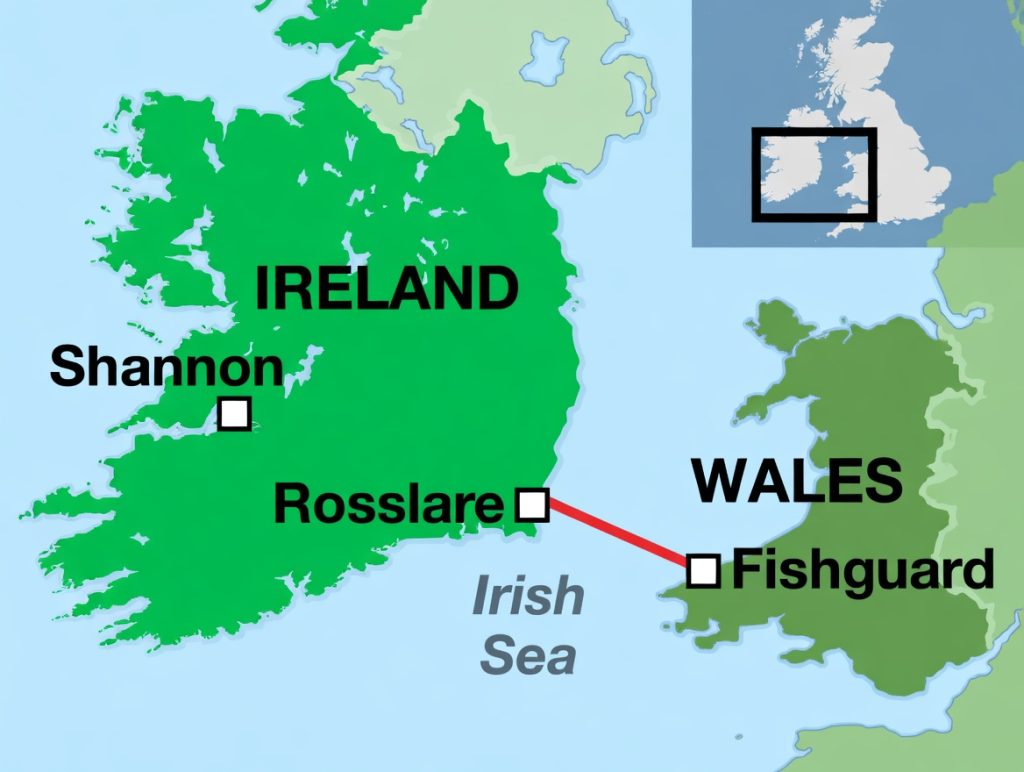
The proposed fixed link would connect Fishguard with Wexford, creating the first direct rail connection between the UK and Ireland.
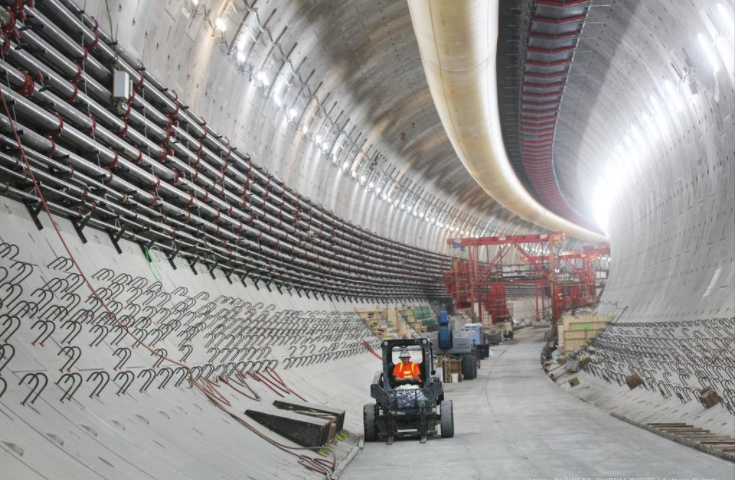
Sources indicate that The Boring Company has been exploring the feasibility of constructing the tunnel, which could form part of a wider transport corridor linking London and Dublin.
Six-hour London to Dublin service
Under the plans, an express rail service could run directly from London to Dublin in around six hours, significantly reducing current journey times and removing the need for ferry crossings.
Passengers would travel via south Wales before entering the tunnel beneath the Irish Sea, with vehicles transported on specialised rail carriers similar to those used on the Channel Tunnel.
One source familiar with the discussions said: “This would be a game-changer for connectivity between Britain and Ireland. It’s being looked at very seriously.”
£32bn project backed by private investment
The project is expected to cost in the region of £32 billion, with the bulk of funding understood to come from private sector investors.
Sources suggest that both the Welsh Government and Irish authorities would support the scheme through planning, facilitation and long-term guarantees, but that no direct funding has been committed by Westminster.
Insiders say the decision reflects ongoing pressure on UK public finances following the spiralling cost of High Speed 2.

HS2 ‘owes Wales’ debate reignited
The proposal is also expected to reignite debate over whether Wales should have received additional funding as a result of HS2.
Critics have long argued that the classification of the project as an “England and Wales” scheme has denied Wales billions of pounds in consequential funding through the Barnett formula.
One political source told The Herald: “There is a growing view that HS2 effectively owes Wales a major infrastructure investment of its own.”

Election timing questioned
It is understood that the Welsh Government has brought forward the proposal just weeks ahead of the Senedd elections, in what some insiders believe is an attempt to boost support.
With First Minister Eluned Morgan facing a challenging political landscape, sources suggest the announcement of a bold, high-profile infrastructure project could help shift momentum ahead of polling day.
One insider said: “This is exactly the kind of big, attention-grabbing policy that can change the narrative during an election campaign.”
However, the concept of a fixed link between south Wales and Ireland is not new. A 2004 report by the Institution of Engineers of Ireland outlined a “Tuskar route” linking Fishguard and Rosslare via a tunnel beneath the Irish Sea. The proposal, which formed part of a wider long-term transport vision for Ireland, suggested a crossing of around 45 miles (72km) — broadly comparable in scale to the current plans under discussion.
Ferry firms raise concerns
Operators running services from Fishguard Harbour have reacted with concern, warning the plans could have a major impact on existing ferry routes.
An industry source said: “If this goes ahead, it would fundamentally change travel patterns. Ferry services could struggle to compete.”
Questions over Cardiff Airport links
The proposal is also likely to raise questions about the future of existing air routes between Wales and Ireland, particularly those operating from Cardiff Airport to Dublin.
With the Welsh Government owning and subsidising the airport, critics say a high-speed rail alternative could put pressure on passenger numbers.
One observer said: “If you suddenly have a direct six-hour rail service city-to-city, it inevitably puts pressure on short-haul flights.”
Economic boost for west Wales
Supporters of the scheme argue that, if delivered, the project could provide a major long-term economic boost to west Wales, improving connectivity, increasing tourism, and strengthening trade links.
The Herald understands that early projections suggest the scheme could bring significant investment and job creation to Pembrokeshire during both construction and operation.
However, key details — including environmental impact, construction timelines and final funding arrangements — have yet to be confirmed.
A fixed link between south Wales and Ireland has been discussed in various forms for decades, but has never progressed beyond early-stage proposals.
Some within government are said to view the scheme as a way of finally delivering Wales’ share of major infrastructure investment following HS2.


Business11 hours ago
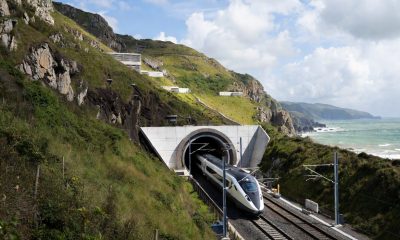
Fishguard to Wexford rail tunnel plan backed by Elon Musk firm
Six-hour London to Dublin service proposed in £32bn project ahead of Senedd election PLANS for a rail tunnel linking west...


Charity24 hours ago
Milford Haven charity honoured with King’s Award for voluntary service
A PEMBROKESHIRE charity supporting vulnerable young people has received one of the highest honours in the UK for voluntary work....


News2 days ago
Plaid Cymru launches bid to lead next Welsh Government
Party positions itself as ‘government-in-waiting’ ahead of May election PLAID CYMRU has formally launched its campaign for the 2026 Senedd...


Crime2 days ago
Police appeal after attempted child abduction in Haverfordwest
DYFED-POWYS POLICE has launched an appeal for witnesses following a reported attempted abduction of a 12-year-old girl in Haverfordwest. The...


Crime3 days ago
Gunshot fired by police during incident in Milford Haven
A POLICE officer discharged a firearm during an incident in Milford Haven on Saturday evening (March 28), prompting an investigation...


Community4 days ago
Three Amigos Easter Run roars through Pembrokeshire
MOTORCYCLE enthusiasts turned out in force today (Saturday, March 28) as the popular Three Amigos Easter Run returned to the...


Education5 days ago
Ysgol Henry Tudor reassures parents over Sikh ceremonial kirpan
School says religious item worn by pupil is secured, symbolic and non-functional YSGOL HENRY TUDOR has moved to reassure parents...


Crime6 days ago
Teen jailed after starting fire while others slept
Fire set in shared home left sleeping residents at risk and caused £130,000 damage A TEENAGER who started a fire...


Health6 days ago
GP crisis driving NHS pressure in Wales, Senedd report warns
Falling GP numbers and funding gaps blamed for worsening hospital delays THE NHS crisis highlighted earlier this week is being...


News7 days ago
Reform reveals west Wales candidates for Senedd battle
Monkton councillor tops Pembrokeshire list as party confirms Carmarthenshire names and includes Haverfordwest councillor in unwinnable Swansea spot REFORM UK...
-

 News7 days ago
Welsh Government outlines progress on flood resilience plans
-

 Community6 days ago
Hero female officer keeps job after sexual touching finding
-
Education5 days ago
Ysgol Henry Tudor reassures parents over Sikh ceremonial kirpan
-

 Business6 days ago
Popular Italian restaurant hit with £278,000 tax bill plus £186,000 fine
-

 Crime7 days ago
Hakin motorist banned after drink-drive crash
-

 Sport7 days ago
Record-breaking disability swim gala celebrates success in Fishguard
-

 Health7 days ago
Doctors say Wales is failing to value NHS staff over new pay award
-

 Entertainment7 days ago
Duffy to tell her story in new Disney+ documentary