


Politics
St Thomas A Becket Chapel renovation refused by council


A SCHEME for works at one of a Pembrokeshire town’s surviving medieval churches by its neighbouring owner has been refused by county planners.
In an application before Pembrokeshire County Council, Stefan Smart sought permission for a change of use of the disused Grade-II-listed St Thomas A Becket Chapel, The Rath, Milford Haven to provide an ancillary use for an adjacent dwelling.
It included the installation of suspended floor over original flagstone flooring to preserve and protect it, a drainage connection for the provision of a toilet, and the addition of a first floor to be bolted to the existing stone walls.
A supporting statement by agent Heath Coombe Architecture details the history of The Church of St Thomas A, originally built in 1180 and dedicated to St Thomas Becket, which was also utilised as a Beacon Chapel or lighthouse to sailors.
It says the chapel was closely linked to the nearby Pill Priory, and fell into ruin by the 17th century, and was occupied by parliamentarian forces in 1644.

By the 20th century it had fallen to use as a pigsty and stable, before £1,000 was raised in 1930 for its restoration, completed in 1938 when it was reinstated as an Anglican chapel of ease.
In 2012 the property, set back behind The Rath, was privately purchased, with the owner continuing to maintain the building, to ensure its continued survival, the statement says.
It added: “The Church of St Thomas Becket remains medieval in style, and is the last of the three medieval churches to have survived in Milford Haven. It retains the original rubble two stone external finishes which have been renovated to match the original style over when fallen into disrepair. This character single storey building is an excellent example of a stone built medieval Chapel within the locality.”
It finished: “The proposal has been subject to consultation to ensure it not only meets the owner’s future needs but also, by involving the local authority conservation officer through the design process, the proposal should not detract from the listed building status. The proposed scheme requires little alteration to the existing building.”
The listed building application was supported by Milford Haven Town Council, but county planners refused the scheme on the basis of “The design and scale of the proposed first floor structure and suspended ground floor structure being harmful to the character of the interior of the listed building.”

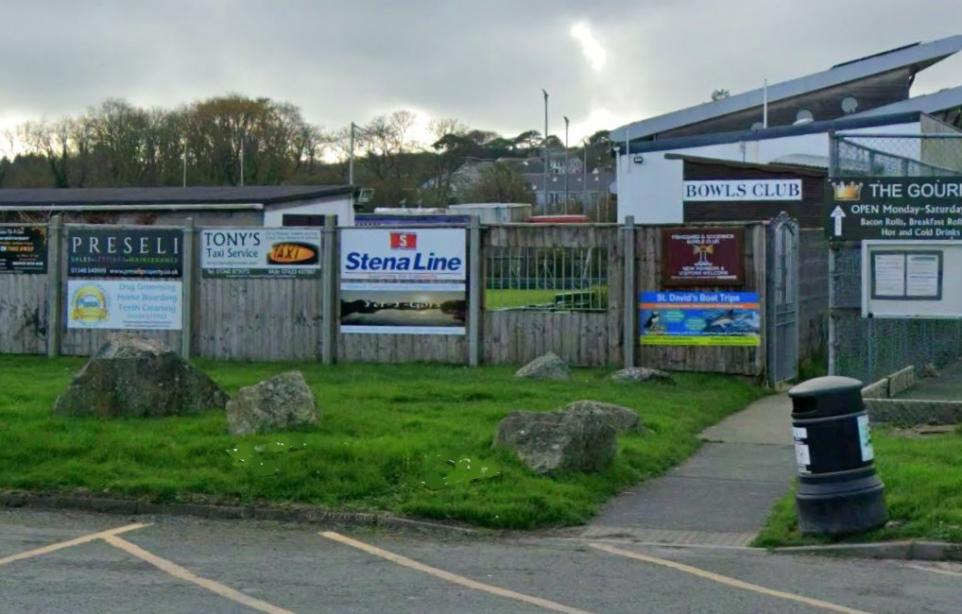
A Pembrokeshire sports club, which was recently refused permission by the council to keep advertising signs which support its activities, is looking to fight that decision.
Earlier this month, in an application refused by Pembrokeshire County Council on the grounds of visual impact, Fishguard & Goodwick Bowls Club sought retrospective permission for up to 36 signs on land close to the town’s Phoenix Centre.
The signs, which the applicants said provide “an important source of revenue for the Fishguard and Goodwick Bowls Club, supporting the ongoing operation and maintenance of local community sporting facilities,” had been in place for some 18 months, being removed ahead of the formal planning application.
Speaking after the refusal, Richard Brind, club captain of Fishguard & Goodwick Bowls Club, said the club had discussed challenging the decision, and had been taking advice from local county councillors about the best potential route, with options including a direct appeal through the Welsh Government’s PEDW (Planning and Environment Decisions Wales).
“We acted in good faith as we believed we had permission from a PCC department to install the signs.
“The irony in all of this is we actually paid PCC to have the signs made by their sign making department (who were the department that told us it would be OK to install the signs on our fence).
“The landlord of the grounds which is PCC have told us that they had no objection to us installing the signs, providing planning is granted.”
Mr Brind added: “I’m disappointed with the way the planning department have handled the process, not the decision, but I do think that was wrong; other sports clubs have signs up in the area, it doesn’t seem right.”
On the financial implication, he said: “Unfortunately, the costs of everything goes up, the costs to maintain the green are not covered by our membership, this year we’re probably going to spend £5,000. The money from the signs was certainly helping to keep the club viable, if we don’t get that money from somewhere, maybe through increased fees; membership would have to go up by a half, from £80 to £120.
“The funding we receive from the ads, it’s not vital but it’s a definite help, losing it would be ‘death from 1,000 cuts,’ money slowly trickling out.”
He finished: “I could understand it if it was an area of outstanding natural beauty rather than a car park, where we are we’ve got Jewsons and a petrol station.”
A spokesman for Pembrokeshire County Council said: “The Local Planning Authority has considered the application in accordance with the Town and Country Planning (Control of Advertisements) Regulations 1992 (as amended), which require due consideration of the impact signage would have on visual amenity and public safety.

“While comments regarding advice the applicant received from other council departments and landowner consent are noted, each application must be determined on its own merits with regard to relevant policy and legislation.
“The Authority recognises the club’s valuable role in the community; however, financial considerations are not material to the assessment of advertisement consent.
“Whilst there is a right of appeal to Planning and Environment Decisions Wales (PEDW), the Local Planning Authority remains willing to engage with the applicant regarding any revised proposals they may wish to present.”


CONCERNS over the future of skilled industrial jobs in Pembrokeshire have been raised following a meeting between two Senedd Members and Valero.
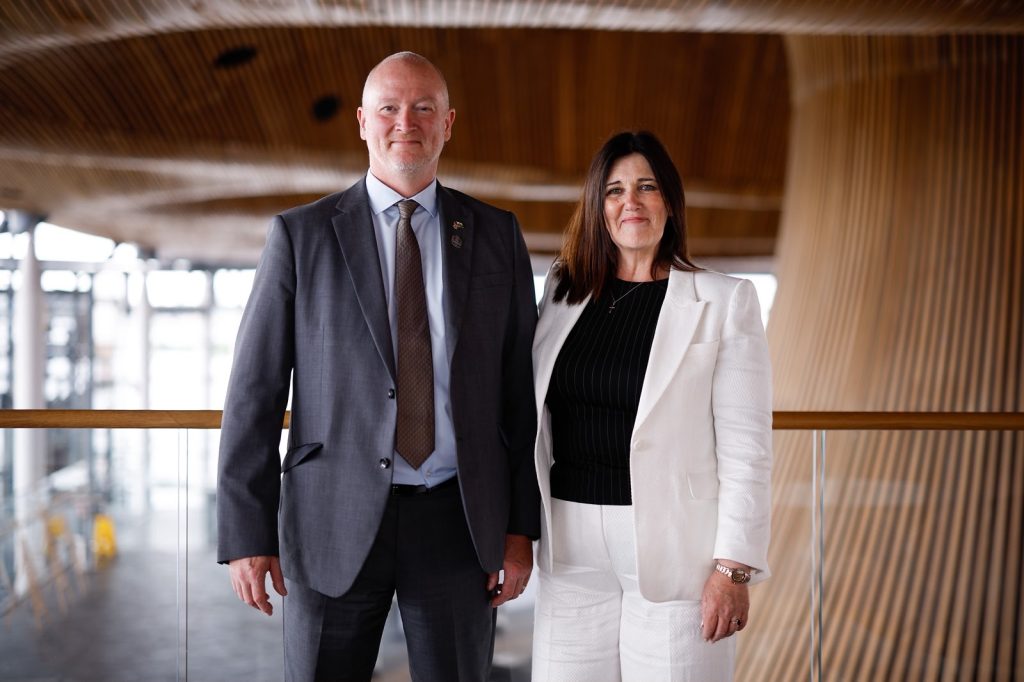
Claire Archibald MS and Paul Marr MS met with a senior representative from Valero to discuss the future of Pembroke Refinery, apprenticeships, and the pressures facing the UK refining industry.
Pembroke Refinery is one of the most important industrial sites in Wales, supporting hundreds of direct jobs as well as many more through contractors, suppliers and local businesses.
Speaking after the meeting, Claire Archibald MS said the refinery was “hugely important” to Pembrokeshire.

She said: “It supports skilled jobs, apprenticeships, contractors, local businesses, and families across the county. These are exactly the kind of well-paid, long-term jobs we should be protecting in west Wales.
“Valero raised serious concerns about the pressure being placed on UK refining, particularly through carbon costs and the UK Emissions Trading Scheme.
“If we make it too expensive to produce fuel here, we risk pushing jobs, investment, and production overseas. That would be bad for Pembrokeshire, bad for UK fuel security, and would not help the environment if the same fuel is simply imported from elsewhere.”
Ms Archibald said the Welsh Government had a role to play in supporting major industrial employers.
She added: “Ministers cannot just stand back and say this is nothing to do with them. They have responsibilities around economic development, skills, planning, regulation and infrastructure, and they are also part of the UK ETS framework.
“I will be pressing the Welsh Government to engage properly with Valero, listen to the concerns being raised, and treat Pembroke Refinery as the strategically important site it is.
“Pembrokeshire has already lost too much industry over the years. We should be doing everything sensible to protect skilled jobs, support apprenticeships and keep major employers investing here for the long term.”
Paul Marr MS said Pembroke Refinery remained a vital part of the local economy.

He said: “The message from Valero was clear: if we want to keep major industry in Wales, we have to make sure the policy environment allows businesses to invest, compete and plan for the future.
“We cannot afford to take sites like Pembroke Refinery for granted.”
Ms Archibald said she will now raise the concerns with the Welsh Government and ask what action ministers are taking to support Pembroke Refinery, protect skilled jobs and secure future investment in Pembrokeshire.
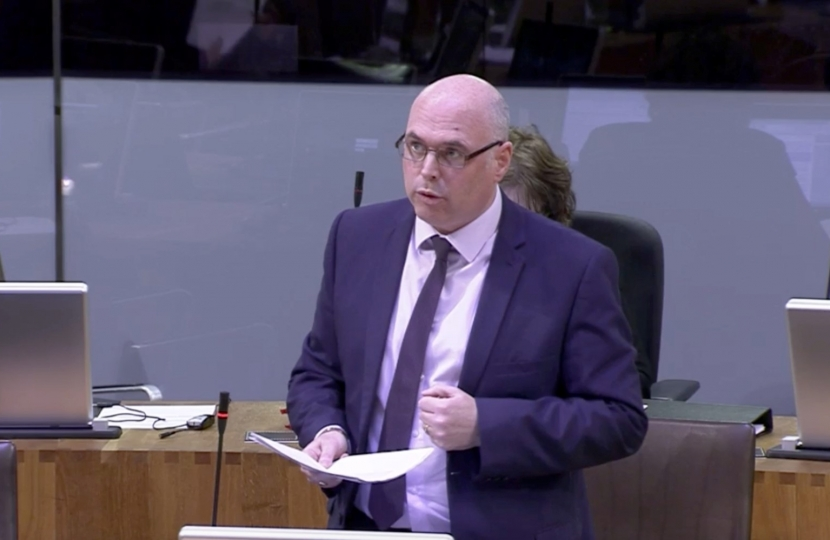
PAUL DAVIES MS has called on the Welsh Government to set out whether it will consider introducing a national screening programme for prostate cancer in Wales.
Mr Davies said he had requested a formal statement from ministers on prostate cancer services, including whether screening could be introduced to help improve early diagnosis.
He has also asked for an update on whether Stereotactic Ablative Radiotherapy, known as SABR, will be made available to patients in Wales. The treatment is already available to some patients in England.
Mr Davies said: “Prostate cancer is the most common cancer in men in Wales, and it is vital that patients have access to the very best treatments to improve outcomes.
“We need to understand whether the Welsh Government will consider a national screening programme, and whether Welsh patients will be given access to treatments that are already available across the border.”
The call comes amid continuing concern about cancer waiting times and access to specialist treatment in Wales.



Community11 hours ago
Manorbier fire scandal: Council’s payout just £63,777 after school destroyed
PEMBROKESHIRE COUNTY COUNCIL has accepted an insurance settlement which leaves it with just £63,777.07 after the catastrophic fire which destroyed...


News20 hours ago
Bus overturns in major incident near Kidwelly
All passengers rescued as emergency services remain at scene A BUS overturned on the A484 between Kidwelly and Ferryside on...


Community2 days ago
Tenby Summer Spectacular cancelled amid council row over harbour access
Organisers say popular charity events cannot safely go ahead without clear powers to control crowds TENBY ROUND TABLE has announced...


News2 days ago
Motorcyclist dies after four-vehicle crash on A40 in Carmarthenshire
A MOTORCYCLIST has died following a four-vehicle collision on the A40 between St Clears and Whitland. Dyfed-Powys Police said the...


News2 days ago
Rhun ap Iorwerth urges new deal for Wales after Starmer quits
First Minister says next Prime Minister must focus on greater powers, fair funding and respect for Wales’ democratic mandate FIRST...


News2 days ago
How Labour’s landslide victory unravelled in just two years
Prime Minister announces resignation after losing support within his own party as Andy Burnham emerges as overwhelming favourite to take...


News2 days ago
Long Course Weekend set to bring thousands to Pembrokeshire
Three days of swimming, cycling and running will once again transform Tenby into one of the UK’s biggest endurance sporting...


Community3 days ago
The gentle giant behind the tattoos
Pembrokeshire security worker Josh Davies praised for professionalism, kindness and proving first impressions can be wrong JOSH Davies is hard...


Charity4 days ago
Toy Story fans fill charity toy box at Haverfordwest cinema
Donations pour in for SNAP Specialist Play as families embrace Toy Story 5 launch A TOY STORY-themed charity appeal at...


Community4 days ago
Lord Rhys emerges from the mist in St Davids
Giant puppet begins historic journey marking 850 years since the first Eisteddfod MIST swirled around St Davids Cathedral on Friday...
-

 Crime6 days ago
Milford Haven man jailed for breaching domestic violence protection order
-

 News6 days ago
Crash on Freeman’s Way causes school-run chaos across Haverfordwest
-

 Health4 days ago
Woman jailed assaults on police, harassment and XL Bully possession
-

 Crime4 days ago
Milford Haven woman spared jail despite string of shop thefts
-

 Crime6 days ago
Portfield Gate man faces careless driving allegation after Tufton crash
-
Community3 days ago
The gentle giant behind the tattoos
-

 Local Government6 days ago
Pembrokeshire faces accessible housing shortage as 403 people wait for homes
-

 News7 days ago
Brexit at 10: How Britain was sold a dream that cost us dearly