


Business
Holiday let crackdown puts ‘thousands of Welsh jobs at risk’


PASC warns tourism sector could buckle under 182-day rule
HOLIDAY let owners across Pembrokeshire and the wider Welsh tourism industry say they are being pushed to breaking point by “brutal” tax changes that could cost thousands of jobs, force businesses to close, and lead to mental health crises among struggling operators.
The Professional Association of Self Caterers (PASC UK) says Welsh Government reforms introduced in 2023—intended to free up housing stock for local people—are having unintended and damaging consequences.
Under the new system, self-catering properties must be made available to let for at least 252 days a year and actually let for 182 days in order to qualify for business rates. Failing that, they are classed as second homes and liable for full council tax—often with steep premiums of up to 300% applied by local authorities.
The Herald understands that many operators, particularly in rural Pembrokeshire and west Wales, are simply unable to meet those targets during the quieter winter months, and are now receiving council tax bills running into tens of thousands of pounds.
One such case, cited by PASC, involved a farming family—previously encouraged by Welsh Government policy to diversify into tourism—who were hit with a £37,000 bill after falling short of the 182-day threshold.

Nicky Williamson, chair of PASC Wales, said: “Without this bed stock, we simply won’t have the capacity to house tourists. And if the tourists stop coming, the pubs, the cafés, the shops—everyone suffers. This is a domino effect that could be catastrophic for our communities.”
She added: “The mental health strain is immense. Operators are telling us they’re lying awake at night worrying about unexpected council tax demands. The uncertainty is brutal.”
A recent PASC survey found that 94% of respondents reported increased stress levels, with 60% saying they did not expect to meet the 182-day requirement this year.
DISCOUNTS, PANIC AND EMPTY HOMES

Karen Jones, who operates a holiday cottage business in Conwy county, said she and her husband had resorted to offering 20% discounts during February and March to lure back regulars. “If a booking cancels, panic sets in. We delay maintenance work, we scramble to fill gaps—it’s unsustainable.”
Frankie Hobro, who owns Anglesey Sea Zoo, said visitor numbers had fallen more than 20% since 2023. She directly linked the drop to the 182-day rule and fears the knock-on effects could be devastating.
“We’re seeing huge numbers of empty homes up for sale—but they’re not being bought by local families. They’re being snapped up by corporate buyers who can afford to keep running them commercially. That doesn’t help communities—it does the opposite.”

The closure of Oakwood Theme Park in Pembrokeshire last month has already sent shockwaves through the sector, and Hobro warned that more businesses could follow unless action is taken. “We’re sleepwalking into a tourism crisis,” she said.
‘TOO FAR, TOO FAST’
William Matthews, who runs Oyster Holiday Cottages in north Wales, told The Herald: “We understand the principle—these homes shouldn’t just sit empty all year. But the bar has been set too high, too fast. There needs to be more flexibility.”
Matthews said his agency had always tried to extend the season into the so-called ‘shoulder months’, but the weather and school term patterns often made it impossible to reach 182 days of bookings. “This rule may have tipped the balance too far,” he warned.
BALANCING HOMES AND JOBS
Welsh language campaign group Cymdeithas yr Iaith has supported the changes, arguing they help reduce the dominance of second homes and rebalance the housing market. Spokesperson Jeff Smith said: “We need to prioritise local people who are being priced out of their own communities. This policy helps make housing more accessible.”
The Welsh Government defended the move, saying: “We recognise the importance of tourism to the Welsh economy, but must balance that with the needs of our communities. Everyone has the right to a decent, affordable home.
“Our package of measures is designed to ensure that second home owners and holiday let operators are contributing fairly to local services and infrastructure.”
Figures show around 159,000 people are currently employed in tourism across Wales, many in coastal and rural communities like Pembrokeshire. PASC has warned that without a rethink, a significant proportion of those jobs could be at risk in the coming years.


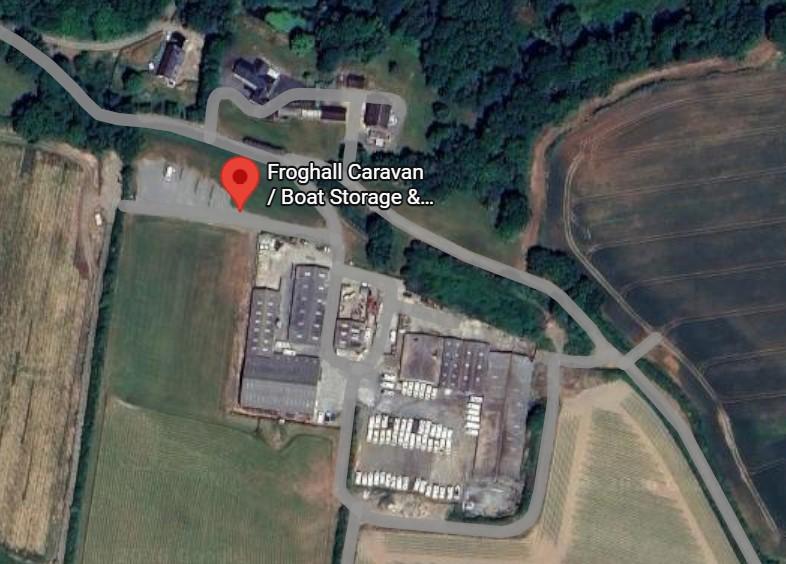
A CALL to allow a Pembrokeshire farm to keep a storage facility for more than 200 caravans, boats, cars and farm machines as a form of diversification has been submitted to county planners.
In an application to Pembrokeshire County Council, Mr & Mrs Davies, through agent A.D Architectural Design Consultants Ltd, seek retrospective permission for a farm diversification scheme to accommodate the storage of caravans, boats, cars and farm machinery in four of eight agricultural sheds and on hard-standing concrete courtyards at Froghall Farm, Spittal.
The works were completed back in 2019.
A supporting statement accompanying the application said: “At present, four of the eight shed structures on the site form part of the caravan and boat storage scheme, with additional touring caravans stored externally on the concrete courtyards.”
It said the storage provision was split as follows: Shed 1 – farm workshop, and 30 caravans, motorhomes, boats & cars; shed 2 – 16 caravans; shed 3 – 28 caravans, motorhomes, boats & cars – 28; shed 8 – cubicle shed, 11 units of farm machines, motorhomes & caravans; courtyard storage of 120 touring caravans, for an overall storage of 205 units.
The statement added: “It would take place in an accessible location, would incorporate sustainable transport and accessibility principles and would not result in a detrimental impact on highway safety or in traffic exceeding the capacity of the highway network; access road is a no-through road with no increase in traffic due to the nature of development.
“There won’t be a constant stream/flow of traffic as the site’s used for storage. Our client offers a towing service to sites in and around Pembrokeshire, which is used by 45 per cent of their customers, who are unable or prefer not to tow themselves. This gives our client control over the flow of traffic.”
The application will be considered by county planners at a later date.

WOLFSCASTLE COUNTRY HOTEL and Spa in Pembrokeshire is celebrating national recognition after its luxury spa was included in the prestigious AA Recommended Spa Awards.
The accolade highlights the hotel’s commitment to delivering high-quality wellbeing experiences, exceptional service, and first-class facilities.
The AA Recommended Spa status is awarded to venues that provide an outstanding guest experience, combining professional expertise, premium treatments, and a relaxing environment. The recognition places Wolfscastle among a select group of leading spa destinations across the UK.

Hot stone massage in the Wolfscastle Country Hotel & Spa treatment room.
The spa, which has been open for nine years, has established itself as one of Pembrokeshire’s top wellness destinations, welcoming both hotel guests and day visitors seeking relaxation in a tranquil countryside setting.
Facilities include hydrotherapy experiences, thermal suites, and dedicated relaxation areas, alongside a wide range of luxury treatments designed to help guests unwind and recharge.

Bethan, Spa Manager at Wolfscastle Country Hotel & Spa, said: “We’re absolutely delighted to be recognised by the AA as a Recommended Spa. The team here work really hard to make sure every guest feels relaxed, welcomed and properly looked after from the moment they arrive.
“To receive this recognition is very special for us and reflects the care and effort our therapists put into every treatment.”
The award further strengthens the hotel’s reputation as one of West Wales’ leading hospitality destinations, offering award-winning dining, boutique accommodation, and premium wellness experiences.
Guests can enjoy spa days, overnight breaks, and tailored treatments throughout the year.

For more information or to book, visit www.wolfscastle.com.
The hotel is also marking a significant milestone this year, with owner Andrew Stirling celebrating 50 years at the helm.

A PADDLEBOARDING and canoeing company’s call for an extension to a boat shed at Pembroke’s South Quay, below its historic castle, has been submitted to county planners.
In an application to Pembrokeshire County Council, G Booth of Paddle West CIC, through agent James Dwyer Associates, seeks permission for an extension to the stone-built boathouse, adjacent to the cliff on South Quay fronting the Mill Pond, Pembroke.
A supporting statement says: “It is intended to erect a single storey ‘lean-to’ building, or ‘shed’ for the storage of boats, such as canoes and kayaks, and related equipment, on a vacant space adjacent to the existing stone-built boathouse.”
It adds: “The boathouse and the intended adjacent boat storage shed is located, as is to be expected, in close proximity to water, the Mill Pond. The Mill Pond is the main area of activity for Paddle West, a Community Interest Company, providing boating activities, kayaking, canoeing and paddle boarding, frequently for young people and families.”
It goes on to say: “It is intended that the structure would be lightweight, erected on the exiting hard standing. The ‘shed’ would be used for the storage of boats and related equipment.”

With regard to the historic setting, it adds: “Although the stone-built boathouse appears not to be listed, it is recognised that the walls above are listed and together they are a piece.
“Accordingly, through form and external materials proposed, timber cladding and profile sheet roofing, the aim is to ensure that the structure would be subservient and muted and not detract or compete with the visual aesthetic of the boathouse or historic walls. In effect the addition would blend into the background.”
The application will be considered by county planners at a later date.
The boathouse is sited near to the new Henry Tudor Centre in South Quay, which is due to open in Spring 2027.
The centre, expected to receive around 30,000 visitors a year, will tell the story of Henry Tudor, son of Pembroke, his Welsh ancestry and his impact on our national story, Welsh culture and our wider British heritage.
The restored derelict South Quay buildings will also house a new library and community café, and a healthcare, social services and supported employment facility in the adjoining premises.



Community17 hours ago
Broad Haven volunteers secure ‘national asset’ status for nature reserve
A SMALL stretch of woodland and former opencast coal mine has been transformed into a nationally recognised biodiversity site, in...


Entertainment2 days ago
Tenby steams up in spectacular style as crowds flock to festival
Colourful parade, towering creations and Victorian flair bring town centre to life TENBY was transformed into a vibrant Victorian fantasy...


Crime3 days ago
Publican jailed for six years for supplying cocaine and cannabis
Milford Haven man sentenced at Swansea Crown Court following drug dealing operation A MILFORD HAVEN publican has been jailed for...


Local Government3 days ago
Poverty summit highlights support efforts across Pembrokeshire
A SUMMIT bringing together key organisations from across Pembrokeshire has highlighted both the scale of local poverty and the work...


Education4 days ago
Milford Haven school plans unveiled but funding not yet secured
PLANS for a new £100 million school in Milford Haven have been unveiled, but the project has not yet secured...


News4 days ago
Council unveils plans for new state-of-the-art secondary school in Milford Haven
PEMBROKESHIRE COUNTY COUNCIL has revealed plans for a new state-of-the-art school in Milford Haven, promising modern, inspiring learning spaces for...


Health4 days ago
NHS waiting list falls — but cancer delays and diagnostic backlog worsen
Record progress claimed by Welsh Government as critics warn key targets are still being missed THE NHS in Wales has...


Crime5 days ago
Rapist jailed after ‘abhorrent’ attacks on woman and children
Haverfordwest man told police “women won’t have sex without force” A HAVERFORDWEST man who raped a woman and a young...


News5 days ago
Reform secures first Pembrokeshire councillor in Hakin by-election win
Late Reform candidate takes seat as independent surge and Labour withdrawal shape contest REFORM UK candidate Scott Thorley has won...


News6 days ago
Scott Thorley elected as Pembrokeshire’s first Reform councillor
REFORM UK candidate Scott Thorley has won the Hakin by-election after securing 179 votes. The full result is as follows:...
-

 News6 days ago
Emergency services flood Haverfordwest after reports of person in river
-

 Crime5 days ago
Mother given community order after admitting child cruelty offence
-
Health4 days ago
NHS waiting list falls — but cancer delays and diagnostic backlog worsen
-

 News6 days ago
Senedd votes to ban Greyhound racing in Wales to protect animal welfare
-

 News6 days ago
Senedd vote to ban greyhound racing hailed as ‘landmark moment’ by charities
-
News5 days ago
Reform secures first Pembrokeshire councillor in Hakin by-election win
-

 News7 days ago
£3.8m to help Welsh families struggling with soaring heating oil costs
-

 Crime5 days ago
Woman stole from pharmacy despite ban, court hears