


News
Elderly care crisis: Councils warned over ‘second class citizen’ treatment


Underfunding in Carmarthenshire and Pembrokeshire fuels hospital chaos, family hardship, and looming care home closures
VULNERABLE older people in West Wales are being forced to pay for their care—or go without it—due to a worsening funding crisis that experts say is placing them at risk and driving up NHS costs.
A growing “postcode lottery” in council funding has created stark inequalities between local authorities, with Carmarthenshire and Pembrokeshire among the worst hit. Care providers warn that the current situation is not only financially unsustainable but morally indefensible, as elderly people are left stranded in hospitals or charged extra just to receive basic care.
£8,500 less per patient
In Carmarthenshire, research has shown that the local authority pays around £8,500 less per year per person for nursing care than neighbouring Ceredigion. The shortfall is so severe that some care homes have begun charging families extra, or risk closure.
One care home owner, who asked not to be named, told The Herald: “It’s heartbreaking to tell a family: ‘If you can’t pay this, we’ll have to give notice.’ But we can’t make ends meet on Carmarthenshire’s fees. Meanwhile, just over the border in Ceredigion, they pay enough to cover the cost. Why are our residents treated like second class citizens?”
They added that some care homes avoid charging extra and are therefore more likely to receive referrals from the council—but may be located far from a resident’s home town, increasing isolation and hardship for families.

“The system punishes compassion. Homes are closing. And we’re losing places for our most vulnerable citizens.”
Pembrokeshire: NHS under pressure, families stretched
In Pembrokeshire, the situation is no better. While weekly rates are slightly higher than in Carmarthenshire—£908 for nursing care and £986 for EMI—they still fall far short of the actual cost of delivery.
The result? Bed-blocking at Withybush Hospital has reached critical levels.
Elderly patients medically fit for discharge are being kept in hospital, sometimes for weeks, due to a shortage of care home placements.
According to estimates, the cost of keeping an elderly patient in hospital is around £500 per day, compared to less than £200 per day in a care home—making the system not just inefficient but unsustainable.
‘12 months of instability’ ahead
One care group operating six homes in Pembrokeshire says they are facing a £150,000 annual hit due to increased National Insurance contributions and a rise in the Real Living Wage. They’ve warned of “12 months of instability”, with growing pressure on families to pay third-party top-up fees—and a risk that smaller care homes could fold altogether.
Care Forum Wales has estimated the total shortfall across the sector in Wales to be £150 million, describing the situation as an “existential threat” to elderly care.

Council and government response

Pembrokeshire County Council is already grappling with a projected £34.1 million funding gap for 2025–26, with adult social care listed as one of the most significant pressure points. Meanwhile, Carmarthenshire County Council has not issued a public statement on the care home funding disparity, despite repeated concerns from local providers.
The Welsh Government has announced a small uplift in care home fees, from £235.88 to £254.06 per week from April 2025, but providers say it’s nowhere near enough to prevent closures or redundancies.
Some initiatives—such as improved NHS discharge planning and tech-based bed tracking—are being piloted, but sector experts say they will not resolve the crisis without urgent and significant funding increases.
‘Rotten boroughs’ of care?
Mario Kreft MBE, chair of Care Forum Wales, has slammed the disparity between councils as a form of “institutional prejudice” against the private care sector, which provides the majority of services across Wales.
“It’s a race to the bottom, and elderly people are paying the price. In South West Wales, with the exception of Ceredigion, fee levels are appalling. These councils are like rotten boroughs, offering the least to the most vulnerable.”
“Wales was supposed to be built on equality. But you’d never know it when you look at how care is funded.”
He called on councils and government to rethink their approach, warning:
“Those making these decisions should consider their positions. They are causing harm to families and risking the collapse of care in their communities.”
What happens next?
If no action is taken, providers warn, more care homes will close, families will be left without support, and hospitals will continue to suffer.
“Either we fight to save our homes,” the anonymous care home owner told The Herald, “or we walk away. And then what becomes of the residents?”
The Herald has contacted Carmarthenshire and Pembrokeshire County Councils for comment. This article will be updated if and when responses are received.


VISITORS to Welsh beaches have been warned not to touch unusual blue sea creatures which have washed ashore along parts of the coastline.
Hundreds of velella velella, commonly known as by-the-wind sailors, have been reported on beaches in Anglesey, Gwynedd and Tenby.
The small, bright blue marine creatures are free-floating hydrozoans and are related to Portuguese man o’ war, sea anemones and corals.
They get their name from a small sail-like structure on their body, which catches the wind and carries them across the surface of the sea.
One was spotted on Tenby South Beach on Tuesday (Jun 16), where beachgoer Maxine Allinson described it as “fantastic” and “like a crystal”.
Marine experts say the creatures are often seen after changes in currents or stormy weather, which can push large numbers ashore at the same time.
Although they are much smaller and less dangerous than Portuguese man o’ war, they do have stinging cells.
Their sting is usually mild, but people are being advised not to pick them up, especially as contact with the face, lips or sensitive skin could cause pain or tingling.
Experts also warn that the stinging cells can remain active even after the creatures appear to be dead on the beach.
The advice is to admire them from a safe distance and leave them where they are.
Caption: Maxine Allinson spotted a velella velella on Tenby South beach Tuesday

HAVERFORDWEST residents will have the chance to raise ideas, concerns and local issues directly with the town’s mayor this week.
Cllr Randell Izaiah Thomas-Turner will hold a Talk to Your Mayor session on Thursday, from 12:00pm until 2:00pm.
The initiative is aimed at giving residents an opportunity to speak directly with the mayor about matters affecting the town and wider community.
Cllr Thomas-Turner said communication and engagement were “vital”, adding that the session was about listening to local people, working together, and ensuring every voice had the opportunity to be heard.
Anyone wishing to book an appointment is asked to contact the Haverfordwest Town Council town clerk.
The mayor said: “Together, we can continue building a stronger and more connected community. Together we can make Haverfordwest the best in the west.”


THE SENEDD has rejected a Reform UK motion calling for an end to all Welsh Government international spending, after a heated debate which saw several Members walk out of the chamber.
The motion, tabled by Reform MS Llŷr Powell, was defeated by 48 votes to 37 on Wednesday (Jun 17).

An amended motion, backing Wales’ reputation as an “internationalist, tolerant and outward-looking nation”, was then passed by the same margin.
The debate followed warnings from Hub Cymru Africa and other campaigners that ending international spending would damage Wales’ global reputation and undermine projects linking Welsh communities with partners overseas.
Reform argued that Welsh Government money should be focused on domestic pressures, including the NHS, schools, transport and the cost of living.
Welsh Conservative leader Darren Millar backed the Reform motion, saying foreign relations and international development were matters for the UK Government rather than Cardiff Bay.
But Plaid Cymru and Welsh Government speakers rejected that argument, saying Wales’ international work supported trade, public services, education, health partnerships and the country’s reputation abroad.

The debate became heated after comments by Reform MS Joe Martin, who criticised overseas schemes including beekeeping and tree-planting projects in Uganda.
Several MSs left the Siambr during his contribution, with the Llywydd later urging Members to reflect on the tone of the debate.
Hub Cymru Africa had said before the vote that Wales’ international solidarity budget represented a tiny fraction of overall spending and helped deliver work in public health, climate action, women’s empowerment and sustainable development.
The organisation said the vote was an opportunity for the Senedd to reaffirm Wales’ place in the world.



News11 hours ago
Long Course Weekend set to bring thousands to Pembrokeshire
Three days of swimming, cycling and running will once again transform Tenby into one of the UK’s biggest endurance sporting...


Community18 hours ago
The gentle giant behind the tattoos
Pembrokeshire security worker Josh Davies praised for professionalism, kindness and proving first impressions can be wrong JOSH Davies is hard...


Charity2 days ago
Toy Story fans fill charity toy box at Haverfordwest cinema
Donations pour in for SNAP Specialist Play as families embrace Toy Story 5 launch A TOY STORY-themed charity appeal at...


Community2 days ago
Lord Rhys emerges from the mist in St Davids
Giant puppet begins historic journey marking 850 years since the first Eisteddfod MIST swirled around St Davids Cathedral on Friday...


News3 days ago
Tragic tribute paid to Haverfordwest man after A4075 collision
FAMILY REMEMBERS “KIND AND LOVING” CALLUM HANSON THE FAMILY of a 22-year-old man from Haverfordwest who died following a road...

News4 days ago
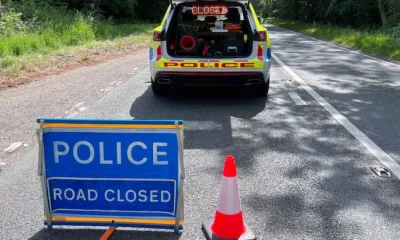
Motorcyclist, 22, dies in A4075 crash in Pembrokeshire
A 22-year-old woman remains in hospital after two-vehicle collision A MOTORCYCLIST has died following a serious two-vehicle crash on the...

Community4 days ago
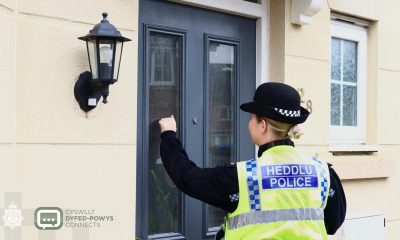
Why police will be visiting every home in Pembrokeshire
New operation aims to knock on more than 257,000 doors across Dyfed-Powys over the next three years DYFED-POWYS POLICE has...


Crime4 days ago
Prisons at breaking point: MPs warn Wales is paying the price of a failing system
Frozen healthcare budgets, overcrowded jails, homelessness on release and mounting pressure on staff are undermining rehabilitation across Wales, according to...


News5 days ago
Brexit at 10: How Britain was sold a dream that cost us dearly
A decade after the referendum, the promised benefits remain hard to find while the economic costs are increasingly difficult to...


Crime5 days ago
Worcestershire man jailed after violent attack on woman in Tenby
Defendant was already serving a suspended sentence when serious assault took place A WORCESTERSHIRE man has been jailed for more...
-

 Crime4 days ago
Milford Haven man jailed for breaching domestic violence protection order
-

 Local Government6 days ago
Security privately arranged by Mayor at Beating of the Bounds
-

 News4 days ago
Crash on Freeman’s Way causes school-run chaos across Haverfordwest
-

 Crime6 days ago
Man wanted by court after failing to attend hearing over alleged shop thefts
-
 Crime6 days ago
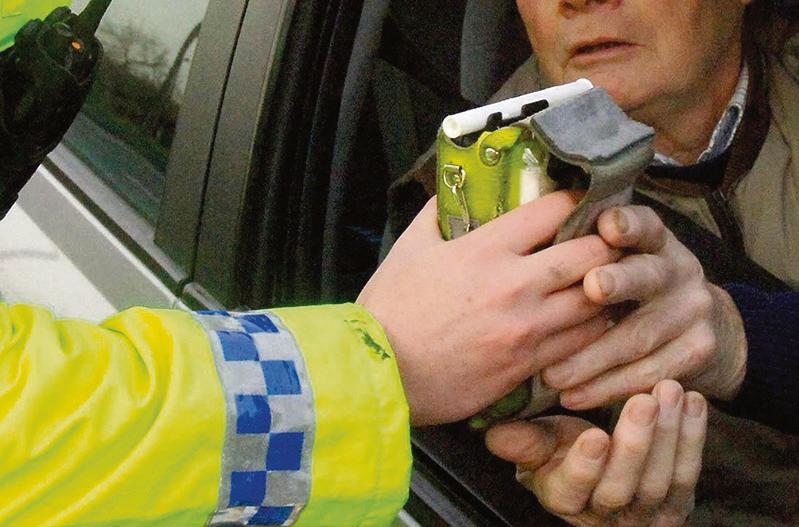
Man banned from roads after drink-driving offence
-

 Crime6 days ago
Man jailed after admitting strangulation and assaults
-

 Crime5 days ago
Drug trafficker must repay £33,000 after court rules he made nearly £500,000
-
 Crime6 days ago
Man sentenced over stalking campaign and lock knife offence