


News
Milford Haven flat scheme under fire as unit cost tops £270,000

£6.7m council project draws criticism amid questions over value for money
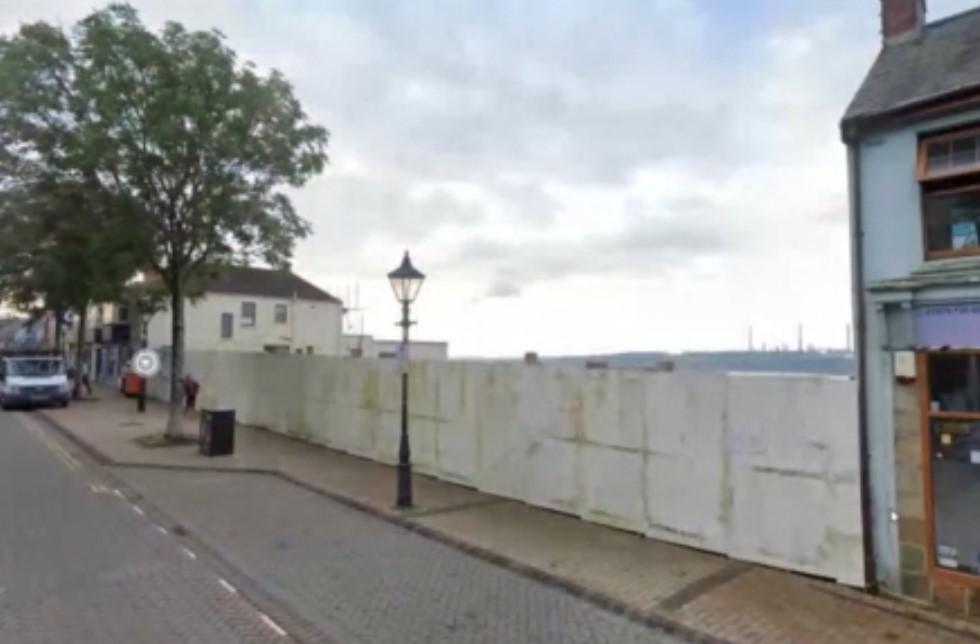
A £6.7 MILLION scheme to build 24 mostly one-bedroom flats for over-55s on Charles Street, Milford Haven, is facing mounting scrutiny — with each unit costing more than many three-bedroom houses in the area.

The development, led by Pembrokeshire County Council and earmarked for social housing, is being built on the former Motor World site. At an average of £270,000 per flat, critics say the price tag is out of step with both local property values and national building cost benchmarks.
Rising costs and delays
The project was first approved in 2020 with a plan for 15 flats. However, it stalled when the original contractor, WRW Construction, collapsed into administration in 2021. The scheme was later re-tendered and expanded to 24 units. In April 2025, the council awarded the new £6.7 million contract to W B Griffiths & Sons Ltd.
Each flat measures around 51 square metres. While ground-level parking is included, there are fewer spaces than units — meaning not all residents will have access to a bay.
“You could get a house for that”

County councillor Mike Stoddart welcomed the long-delayed scheme finally moving forward, but raised serious concerns about its cost.
“I’m pleased that, after more than ten years of delays, this development is finally going ahead,” he told The Herald. “But £270,000 per small flat is eye-watering — you could get a three-bedroom house for that. Persimmon Homes would build you one, including the land, roads, and a profit.”

A resident on nearby Hamilton Terrace added: “My house was recently valued at £249,000. It’s a large, property — far bigger than any of these flats.”
Part of the cost increase is linked to stricter building regulations introduced by the Welsh Government. Under the Welsh Development Quality Requirements 2021 (WDQR), all publicly funded housing must meet enhanced standards for energy efficiency, accessibility, and space. These include banning gas boilers, ensuring digital connectivity, and making homes adaptable for future needs — all of which add to construction costs. Audit Wales estimates these standards could increase build costs by around 13%. But taking this into account would still put the cost per unit at around £240,000 before the estimated cost of the project meeting the new Welsh Government standards for publicly funded housing developments.

Benchmark costs tell a stark story
The average build cost for a three-bedroom house in Wales in 2024 is £276,478, with construction-only estimates ranging from £253,439 (low benchmark) to £299,518 (high benchmark).
By contrast, the Charles Street flats come in at approximately £5,300 per square metre — more than double the Welsh mid-benchmark of £2,513/m².
Property analyst Tom Rees and others have raised concerns over the failure to consider alternative solutions. More than 750 long-term empty homes sit unused in Pembrokeshire — many of which could potentially be refurbished for a fraction of the Charles Street cost.
Council defends project
Pembrokeshire County Council says the high cost reflects several factors:
- Inflation in the construction sector
- Complexities of building on a constrained brownfield site
- Requirements to meet high environmental and energy standards
The council also cites urgent housing need: over 4,500 people are currently on the county’s housing waiting list, with an annual shortfall of 475 affordable homes.

According to the “Pembrokeshire in Context” report, part of the Corporate Strategy 2025–2030, as of October 2024, there were 4,515 individuals on the Choice Homes @ Pembrokeshire housing waiting list.
While the need for more affordable housing is not in dispute, the cost of delivering it is.
With unit prices outstripping local values and national averages, and with hundreds of empty homes lying idle across the county, questions are being asked about whether the Charles Street development offers value — or a costly lesson in council procurement.














VISITORS to Welsh beaches have been warned not to touch unusual blue sea creatures which have washed ashore along parts of the coastline.
Hundreds of velella velella, commonly known as by-the-wind sailors, have been reported on beaches in Anglesey, Gwynedd and Tenby.
The small, bright blue marine creatures are free-floating hydrozoans and are related to Portuguese man o’ war, sea anemones and corals.
They get their name from a small sail-like structure on their body, which catches the wind and carries them across the surface of the sea.
One was spotted on Tenby South Beach on Tuesday (Jun 16), where beachgoer Maxine Allinson described it as “fantastic” and “like a crystal”.
Marine experts say the creatures are often seen after changes in currents or stormy weather, which can push large numbers ashore at the same time.
Although they are much smaller and less dangerous than Portuguese man o’ war, they do have stinging cells.
Their sting is usually mild, but people are being advised not to pick them up, especially as contact with the face, lips or sensitive skin could cause pain or tingling.
Experts also warn that the stinging cells can remain active even after the creatures appear to be dead on the beach.
The advice is to admire them from a safe distance and leave them where they are.
Caption: Maxine Allinson spotted a velella velella on Tenby South beach Tuesday

HAVERFORDWEST residents will have the chance to raise ideas, concerns and local issues directly with the town’s mayor this week.
Cllr Randell Izaiah Thomas-Turner will hold a Talk to Your Mayor session on Thursday, from 12:00pm until 2:00pm.
The initiative is aimed at giving residents an opportunity to speak directly with the mayor about matters affecting the town and wider community.
Cllr Thomas-Turner said communication and engagement were “vital”, adding that the session was about listening to local people, working together, and ensuring every voice had the opportunity to be heard.
Anyone wishing to book an appointment is asked to contact the Haverfordwest Town Council town clerk.
The mayor said: “Together, we can continue building a stronger and more connected community. Together we can make Haverfordwest the best in the west.”


THE SENEDD has rejected a Reform UK motion calling for an end to all Welsh Government international spending, after a heated debate which saw several Members walk out of the chamber.
The motion, tabled by Reform MS Llŷr Powell, was defeated by 48 votes to 37 on Wednesday (Jun 17).

An amended motion, backing Wales’ reputation as an “internationalist, tolerant and outward-looking nation”, was then passed by the same margin.
The debate followed warnings from Hub Cymru Africa and other campaigners that ending international spending would damage Wales’ global reputation and undermine projects linking Welsh communities with partners overseas.
Reform argued that Welsh Government money should be focused on domestic pressures, including the NHS, schools, transport and the cost of living.
Welsh Conservative leader Darren Millar backed the Reform motion, saying foreign relations and international development were matters for the UK Government rather than Cardiff Bay.
But Plaid Cymru and Welsh Government speakers rejected that argument, saying Wales’ international work supported trade, public services, education, health partnerships and the country’s reputation abroad.

The debate became heated after comments by Reform MS Joe Martin, who criticised overseas schemes including beekeeping and tree-planting projects in Uganda.
Several MSs left the Siambr during his contribution, with the Llywydd later urging Members to reflect on the tone of the debate.
Hub Cymru Africa had said before the vote that Wales’ international solidarity budget represented a tiny fraction of overall spending and helped deliver work in public health, climate action, women’s empowerment and sustainable development.
The organisation said the vote was an opportunity for the Senedd to reaffirm Wales’ place in the world.



News10 hours ago
Long Course Weekend set to bring thousands to Pembrokeshire
Three days of swimming, cycling and running will once again transform Tenby into one of the UK’s biggest endurance sporting...


Community16 hours ago
The gentle giant behind the tattoos
Pembrokeshire security worker Josh Davies praised for professionalism, kindness and proving first impressions can be wrong JOSH Davies is hard...


Charity2 days ago
Toy Story fans fill charity toy box at Haverfordwest cinema
Donations pour in for SNAP Specialist Play as families embrace Toy Story 5 launch A TOY STORY-themed charity appeal at...


Community2 days ago
Lord Rhys emerges from the mist in St Davids
Giant puppet begins historic journey marking 850 years since the first Eisteddfod MIST swirled around St Davids Cathedral on Friday...


News3 days ago
Tragic tribute paid to Haverfordwest man after A4075 collision
FAMILY REMEMBERS “KIND AND LOVING” CALLUM HANSON THE FAMILY of a 22-year-old man from Haverfordwest who died following a road...

News4 days ago
Motorcyclist, 22, dies in A4075 crash in Pembrokeshire
A 22-year-old woman remains in hospital after two-vehicle collision A MOTORCYCLIST has died following a serious two-vehicle crash on the...

Community4 days ago
Why police will be visiting every home in Pembrokeshire
New operation aims to knock on more than 257,000 doors across Dyfed-Powys over the next three years DYFED-POWYS POLICE has...


Crime4 days ago
Prisons at breaking point: MPs warn Wales is paying the price of a failing system
Frozen healthcare budgets, overcrowded jails, homelessness on release and mounting pressure on staff are undermining rehabilitation across Wales, according to...


News4 days ago
Brexit at 10: How Britain was sold a dream that cost us dearly
A decade after the referendum, the promised benefits remain hard to find while the economic costs are increasingly difficult to...


Crime5 days ago
Worcestershire man jailed after violent attack on woman in Tenby
Defendant was already serving a suspended sentence when serious assault took place A WORCESTERSHIRE man has been jailed for more...
-

 Crime4 days ago
Milford Haven man jailed for breaching domestic violence protection order
-

 Local Government6 days ago
Security privately arranged by Mayor at Beating of the Bounds
-

 News4 days ago
Crash on Freeman’s Way causes school-run chaos across Haverfordwest
-

 Crime5 days ago
Man wanted by court after failing to attend hearing over alleged shop thefts
-
 Crime5 days ago
Man banned from roads after drink-driving offence
-

 Crime5 days ago
Man jailed after admitting strangulation and assaults
-

 Crime5 days ago
Drug trafficker must repay £33,000 after court rules he made nearly £500,000
-

 Crime5 days ago
Man sentenced over stalking campaign and lock knife offence