


Politics
Dead in the water: Tory call for yacht tourism tax exemption sinks


SENEDD Members torpedoed Conservative calls to exempt yachts and other boats from plans for a £1.30 a night tourism tax in Wales.
Sam Rowlands, the Tory shadow finance secretary, introduced an amendment to the tourism tax bill to remove powers for ministers to extend the levy to berths and moorings in future.
He argued extending the bill to marinas would be unnecessarily complicated and burdensome, adding that boating is a leisure and sporting activity.
He said: “To be clear, those that provide berths and moorings are not providing visitor accommodation in any real sense. By their nature, those vessels… move around.”
Mr Rowlands told Senedd Members: “It’s quite clear that boaters have a minimal… impact on local services because they are self-contained within the berth or mooring area.”

But Senedd Members voted 3-1 against the Conservative’s proposal as the finance committee considered nearly 160 amendments to the bill.
Mike Hedges, who represents Swansea East, said: “As I tell people quite regularly, we’ve got a marina there and I can tell you now – when people come in by boat into that marina, they don’t stay in the marina… they go into the city centre and they use the services there.”

Mr Hedges said: “The council taxpayer of Swansea is covering those costs,” as he argued marinas should have been included in the bill from the outset.
His Labour colleague Mark Drakeford agreed: “It is right that [for] a yacht arriving at Swansea or Cardiff marina… the yacht owner should pay the levy just as somebody staying in a nearby hotel or the Cardiff council campsite in Pontcanna will be.”
The First Minister-turned-finance secretary said: “I can see no case in principle why those visiting in boats and yachts should find themselves not captured by the levy.”
Prof Drakeford explained: “The bill, as the [Welsh] Government presents it, doesn’t have a worked-up scheme for berths and moorings as Mike Hedges would have wished.
“But the complexity of it is real and was beyond our ability to resolve all that complexity in the bill itself. So, what the bill provides is a power to return to this issue in future when some of those practical challenges can have been more fully discussed.”


Mr Rowlands responded: “It does feel like an afterthought… for me, without the proper revision and understanding of this in the first instance, it shouldn’t be in here at all.”
If the bill completes its passage through the Welsh Parliament, £1.30 a person before VAT could be charged on overnight stays in hotels, B&Bs and self-catering accommodation.
A lower rate of 80p would apply to hostels and campsites, with the 22 Welsh councils given powers to decide whether to introduce a local levy from 2027 at the earliest.
The committee also rejected Tory calls for a ten-night cap on the levy as well as exemptions for educational trips, charities, members of the armed forces and veterans. A Plaid Cymru amendment to exempt all under 16s was also defeated.
But Senedd Members were able to agree other amendments, including an exemption for under-18s from the lower rate, during the “stage-two” meeting on May 15.
Prof Drakeford described the Welsh Government’s approach as more progressive and targeted, removing a large proportion of educational stays from the levy.
He said: “If you’re going to narrow the [tax] base, the only way to compensate in terms of revenue… is by raising the levy charge on those who remain within the scope.”
Members voted to raise the lower and higher rates by 5p to 80p and £1.30 respectively.
The bill now moves to the third step: consideration of amendments by the whole Senedd: before a crunch vote on the final version at stage four.



Students trained at public expense urged to take lower-grade jobs as anger grows over NHS workforce planning
NEWLY qualified paramedics in Wales have been told there are no jobs available for them this year, with the Welsh Ambulance Service instead urging graduates to consider applying for technician roles or seeking work elsewhere.
The development marks a major escalation in a row already exposed by The Herald, which revealed that final-year student paramedics had been told there would be no newly qualified paramedic posts available in Wales during the 2026-27 financial year. A second Herald report then disclosed an internal email sent after a board meeting on Wednesday, March 26, confirming that the trust “does not require any NQPs” this year.
That internal message, seen by The Herald, said employing newly qualified paramedics in 2026 was “simply not affordable” and stated that the service currently had “more paramedics than required” and enough lead practitioners to cover short and medium-term vacancies.
Now, in an on-the-record statement, Carl Kneeshaw, Director of People at the Welsh Ambulance Service, has publicly confirmed the same position.

He said the service was navigating a “difficult financial and operational landscape” and that recruitment decisions had to be based on current staffing levels, service demand, workforce skill mix and affordability.
Mr Kneeshaw said: “Regrettably, as things stand, we are not in a position to employ newly qualified paramedics this year.”
He said graduates wanting to build a career with the Welsh Ambulance Service should explore other opportunities, including Emergency Medical Technician roles, and also consider positions with other ambulance services and organisations across health and social care.
For many students, that will be a bitter blow. They have spent three years training specifically to qualify as paramedics, often on publicly supported courses, only to now be told they may need to take lower-grade frontline roles or look beyond Wales for work.
The row has now triggered political backlash.

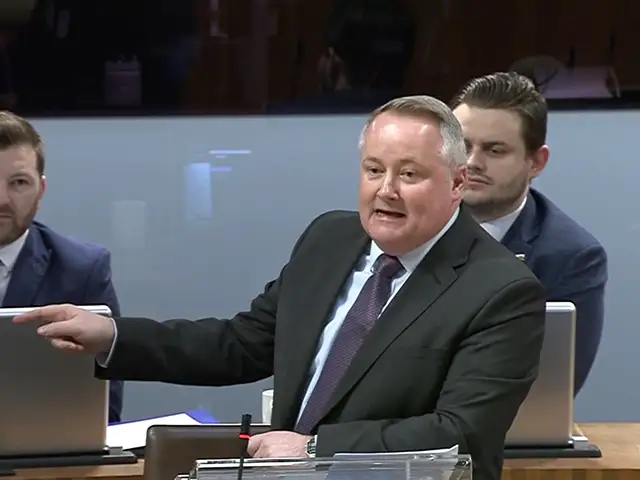
Welsh Conservative leader Darren Millar described the situation as “staggering and deeply frustrating”.
He said: “We are training paramedics at public expense, only to tell them there are no jobs for them in Wales and they should consider going abroad.
“At a time when ambulance response times are still far too long and patients are coming to harm and waiting in pain, this simply makes no sense.”

Mr Millar said the development showed a serious failure in NHS workforce planning and accused the Welsh Labour Government of mishandling the situation.
The controversy also revives wider questions about how NHS staffing is being planned in Wales.
The Herald previously reported that opportunities for newly qualified paramedics had already been shrinking, with only around a third of 2025 graduates initially securing paramedic posts, while others were instead offered technician roles.
For critics, the contradiction is obvious: Wales is helping fund the training of future paramedics, but the ambulance service is now telling at least some of those graduates to take lower-grade roles, apply elsewhere, or even seek work overseas.
The Welsh Ambulance Service, however, is likely to argue that the decision reflects financial pressures and the current make-up of its workforce, rather than any lack of respect for newly qualified staff.
With the Senedd election due on Thursday, May 7, the issue is fast becoming more than an employment dispute. It is shaping up as a test of whether ministers can justify spending public money training frontline NHS staff while the national ambulance service says it cannot afford to hire them.
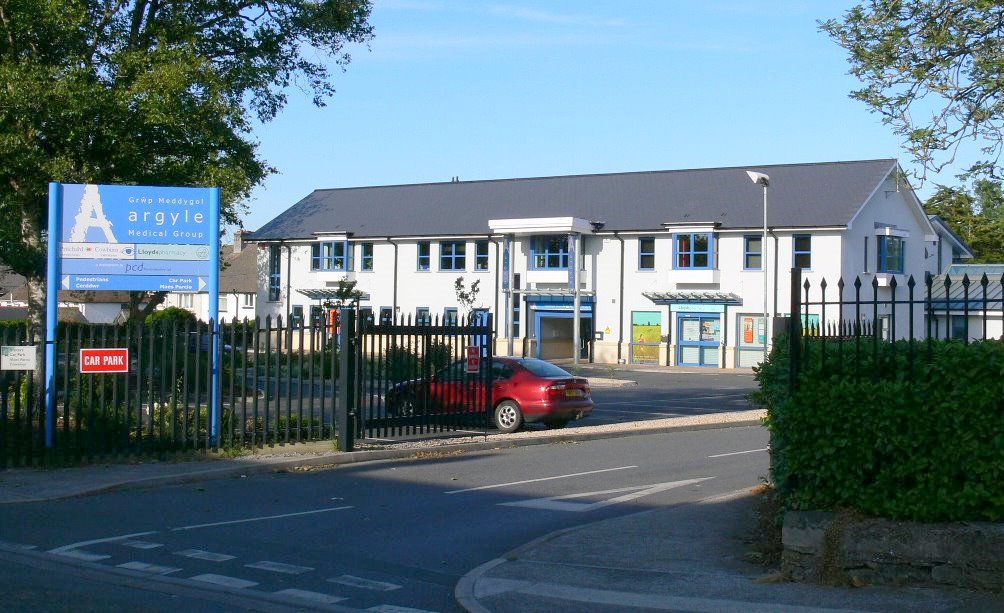
ACCESS to GP services at Argyle Medical Group must become a top priority for the next Senedd, Samuel Kurtz MS has said, as concern continues to grow over pressures facing one of the largest surgeries in Wales.
The Pembroke Dock-based practice serves more than 22,000 patients with just nine GPs, a figure which has repeatedly been highlighted as showing the scale of pressure facing primary care in south Pembrokeshire.
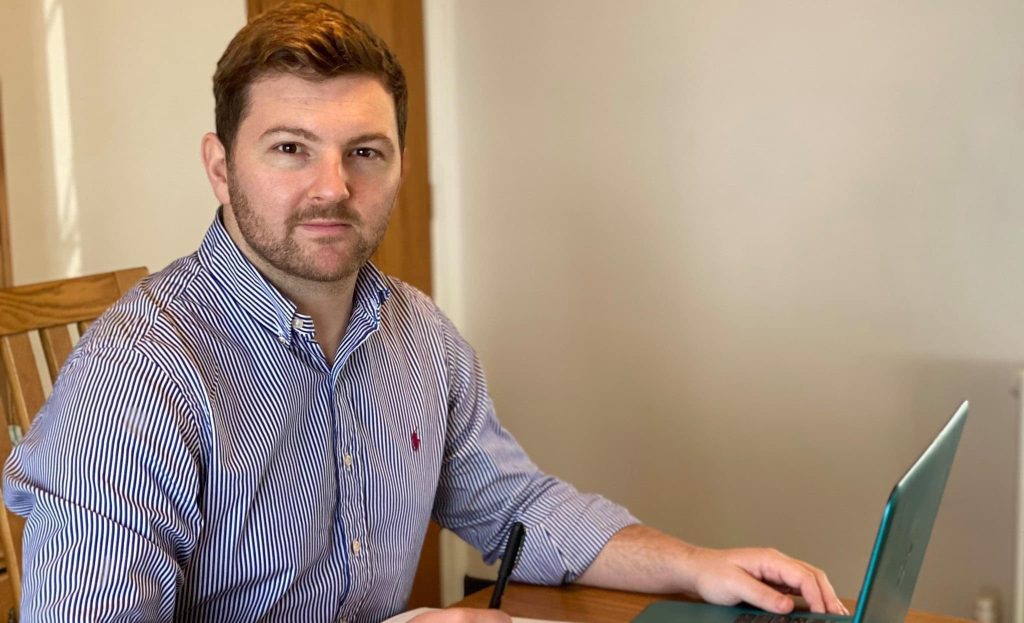
Mr Kurtz said he had spent the past year engaging with patients, healthcare professionals and local residents through community pop-up advice surgeries, research and meetings with representatives from the Royal College of General Practitioners.
Residents, he said, had repeatedly raised concerns about long waits for appointments, limited availability and the difficulty of getting through to the surgery.
He said: “Access to a GP is one of the most basic services people rely on, yet far too many residents are struggling to be seen when they need care.

“Through my community advice surgeries and discussions with patients and Argyle Medical Group staff, I’ve heard first-hand just how difficult it has become to access care and the pressures the Argyle team is under. When a single surgery is responsible for more than 22,000 patients with just nine GPs, it’s clear the system is under enormous strain.”
The issue is not a new one.
Argyle Medical Group has faced pressure for years, with recruitment and retention problems in general practice long affecting services in the area. Concerns about access to appointments and the burden on staff have been raised repeatedly, both locally and nationally, as demand for primary care continues to rise.
The surgery has previously been at the centre of controversy over service changes, with patients in south Pembrokeshire voicing fears about access being stretched even further. The continuing pressure at Argyle reflects wider problems across Wales, where GP services have been struggling with rising patient demand, workforce shortages and increasing pressure on frontline teams.

Mr Kurtz said he had challenged both Hywel Dda University Health Board and the Welsh Government over the issue and would continue to press for action.
He said: “We need fair funding for GP services and urgent action to recruit more doctors and healthcare professionals into our community. Without that, pressures will only continue to grow.
“Staff are doing their absolute best, but they are being stretched too far. We need a clear plan to improve access, whether that means increasing staffing levels, improving appointment systems, and making better use of technology.”
With the Senedd election approaching in May, healthcare is expected to be one of the major battlegrounds across Wales, with GP access, hospital waiting lists and local NHS services likely to feature heavily in the campaign.
Mr Kurtz said access to GP services at Argyle and across the wider area would be one of his top priorities if elected to the next Senedd.
He is calling for fairer funding for GP services, urgent action to recruit and retain more GPs and healthcare staff, a clear plan to improve appointment availability, greater support for frontline teams and stronger local accountability.
He added: “Our community deserves better. People should not have to wait weeks to speak to a GP or struggle endlessly to get through on the phone. I will continue to hold decision-makers to account and fight for the fair funding and recruitment our area needs.”
“If elected, I will make improving access to GP services at Argyle and across the wider area one of my top priorities in the Senedd.”


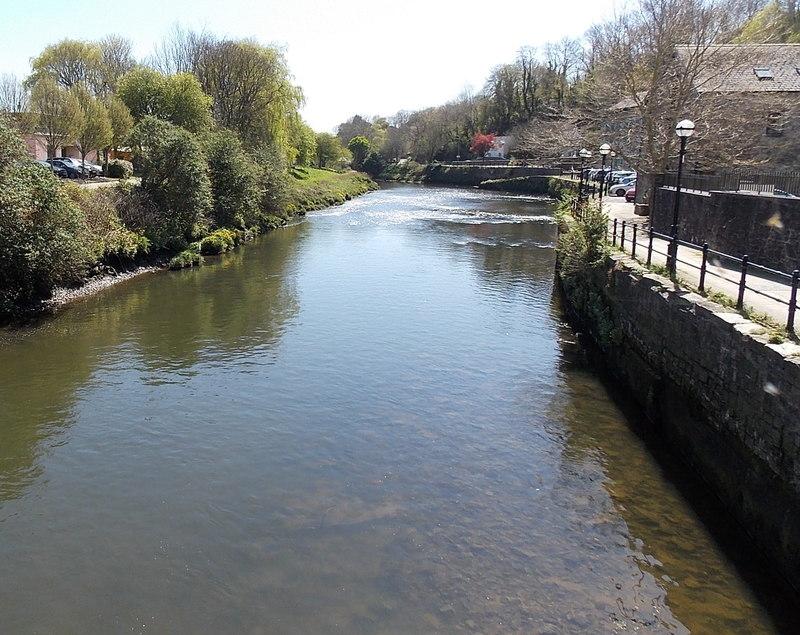
A PETITION call for a public commitment to save Pembrokeshire’s River Cleddau which has attracted more than 2,200 signatures, has been backed by councillors.
The e-petition on Pembrokeshire County Council’s own website, started by James Harrison-Allen, said: “We call on Pembrokeshire County Council to create and enact a Clean Rivers Policy to restore the Cleddau to good health after decades of neglect and degradation.
“The Cleddau flows through the heart of Pembrokeshire, including our county town, and is the foundation for Pembrokeshire’s prosperity. The river is failing, and we need to act now to save it from irreversible decline.
“What’s the problem? The Cleddau rivers and estuary are the worst (and worsening) polluted SAC (Special Area of Conservation) designated rivers in Wales; worse even than the Wye and the Usk (NRW Water Assessment Report 2024), and considerably worse than the neighbouring Towy and Teifi.
“Damaging impacts on Pembrokeshire’s economy, public health and the natural environment. Ineffective regulation; monitoring, responding, policing, enforcement and prosecutions. What should PCC be doing to address this? Make a formal, public commitment to cleaning up the Cleddau. Make the health of the Cleddau central.”

The now closed e-petition attracted 2,238 signatures; any petition of more than 500 being heard at full council, with members of the March meeting hearing the call from Mr Harrison-Allen.
Deputy Leader Cllr Paul Miller said he was happy to support “the principal ask to make a public commitment to cleaning up the river,” stressing that while primary responsibility lay with Natural Resources Wales, the council still had an important part to play, adding that measures at improving its quality were already underway.
Moving the petition be referred to the Services Overview and Scrutiny Committee, Cllr Di Clements stressed its “special place” quality.
Members unanimously agreed the petition be referred to the Services Overview and Scrutiny Committee for adding to its forward work programme for the June meeting.

Last year, Henry Tufnell, MP for Mid and South Pembrokeshire, called for “urgent” action to tackle the poor state of the River Cleddau when he chaired a discussion bringing together key stakeholders, environmental experts, and community voices to address the issues surrounding water quality and pollution.
The panel event, organised by local river action group The Cleddau Project, covered topics including pollution sources, enforcement failures, and potential solutions to improve the river’s health.



Health14 minutes ago
No jobs for new paramedics in Wales as graduates told to apply for technician roles
Students trained at public expense urged to take lower-grade jobs as anger grows over NHS workforce planning NEWLY qualified paramedics...


News20 hours ago
Health minister refuses to act on Withybush despite 15,000-signature petition
Senedd pressure grows as Welsh Government declines to intervene over surgery fears THE WELSH GOVERNMENT has refused to step in...

Business1 day ago
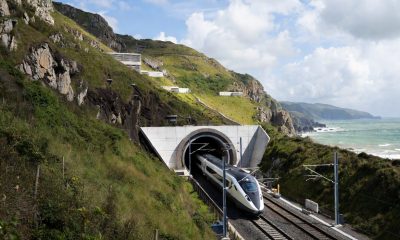
Fishguard to Wexford rail tunnel plan backed by Elon Musk firm
Six-hour London to Dublin service proposed in £32bn project ahead of Senedd election PLANS for a rail tunnel linking west...

Charity2 days ago
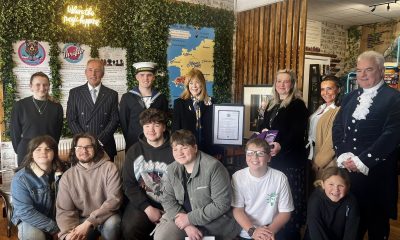
Milford Haven charity honoured with King’s Award for voluntary service
A PEMBROKESHIRE charity supporting vulnerable young people has received one of the highest honours in the UK for voluntary work....


News3 days ago
Plaid Cymru launches bid to lead next Welsh Government
Party positions itself as ‘government-in-waiting’ ahead of May election PLAID CYMRU has formally launched its campaign for the 2026 Senedd...


Crime3 days ago
Police appeal after attempted child abduction in Haverfordwest
DYFED-POWYS POLICE has launched an appeal for witnesses following a reported attempted abduction of a 12-year-old girl in Haverfordwest. The...

Crime4 days ago
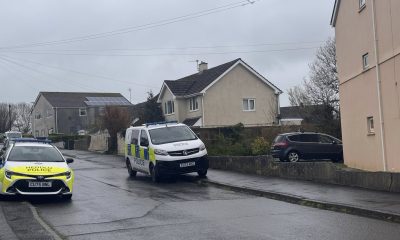
Gunshot fired by police during incident in Milford Haven
A POLICE officer discharged a firearm during an incident in Milford Haven on Saturday evening (March 28), prompting an investigation...


Community5 days ago
Three Amigos Easter Run roars through Pembrokeshire
MOTORCYCLE enthusiasts turned out in force today (Saturday, March 28) as the popular Three Amigos Easter Run returned to the...


Education6 days ago
Ysgol Henry Tudor reassures parents over Sikh ceremonial kirpan
School says religious item worn by pupil is secured, symbolic and non-functional YSGOL HENRY TUDOR has moved to reassure parents...


Crime7 days ago
Teen jailed after starting fire while others slept
Fire set in shared home left sleeping residents at risk and caused £130,000 damage A TEENAGER who started a fire...
-

 Community7 days ago
Hero female officer keeps job after sexual touching finding
-
Education6 days ago
Ysgol Henry Tudor reassures parents over Sikh ceremonial kirpan
-

 Business7 days ago
Popular Italian restaurant hit with £278,000 tax bill plus £186,000 fine
-
 Climate7 days ago
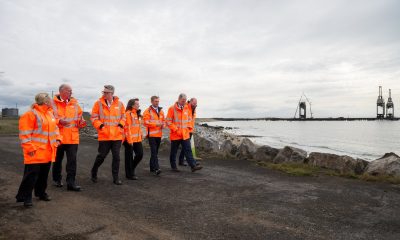
Port Talbot confirmed as ‘cornerstone’ for wind — questions remain for Milford Haven
-
 Crime6 days ago
Taylor wins appeal as Crown Court quashes ‘no insurance’ conviction
-
 Health7 days ago
GP crisis driving NHS pressure in Wales, Senedd report warns
-

 News7 days ago
Tenby waterman riding high in global hydrofoil rankings
-

 Crime6 days ago
Appeal dismissed in blood sample case after court rejects PTSD defence