


News
Holiday development plans for Pembrokeshire zorbing centre


PLANS for a Pembrokeshire holiday development at the site of a former pony trekking and zorbing activity centre, which had to stop due to the impact of the Covid pandemic, have been lodged with the national park.
Zorbing is a sports activity rolling downhill inside an orb, usually made of see-through plastic.
In an application to Pembrokeshire Coast National Park, Lawson and Penny Owen, through agent Hayston Developments & Planning Ltd, seek a partly-retrospective permission for nine self-contained holiday units and a twin-unit shepherd’s hut, along with associated works, on land south of Nolton Stables, Nolton, Haverfordwest.
A supporting statement says: “There are two distinct elements to the proposal with the larger being the provision of five pods and four lodges which will be accessed by a farm track which leads south towards a former quarry and thence to the shoreline,” adding: “The second and smaller element involves contains a virtually flat area with a separate but adjacent access from the local highway on which a 12 space car park is proposed together with the retention of a Shepherd’s Hut (a unit of holiday accommodation) and its separate garden and parking area.”
The retrospective element refers to a park enforcement officer informing the applicant of a breach in planning control for the shepherd’s hut.

The statement says the Shepherd’s Hut is the most suitable for those with limited mobility as it does not require use of the unpaved track to a pod or lodge.
The total development amounts to only a small proportion of the circa 400 acres across four farms all of which are in the ownership of a partnership comprising two brothers (of which Mr Lawson Owen is one) and their respective families.
The statement adds: “The income from the proposed holiday accommodation will form a smaller proportion than that derived from the agricultural activities undertaken across the four farms – an example of farm diversification where the agricultural activities remain the major element.
“In previous years the applicants operated a pony trekking enterprise and a Zorbing activity as part of a farm diversification strategy.

“Unfortunately, Covid required the cessation of both activities and therefore both a loss of income for the Partnership as well local jobs for those in the Nolton community.”
It says the applicants have previously operated a 2.3 acre campsite which has been managed as an exempted site under license from the Camping and Caravanning Club for over five years, an outside cinema for up to 28 days per year for a period in excess of five years, and the Zorbing experience, and the applicants are considering modifying an existing building within the Nolton Stables complex as a wedding venue.
It concluded: “It should also be noted that this proposal is in substitution for the operation of a successful pony trekking enterprise and a smaller scale Zorbing activity both of which had to be abandoned because of Covid-19 and the associated requirements to minimise personal contact.

“The applicants have a history of diversification of their farming activities in and around Nolton. It is anticipated that this new enterprise will restore those jobs lost due to Covid and hopefully increase opportunities both in the construction industry and in hospitality.”
The application will be considered by park planners at a later date.


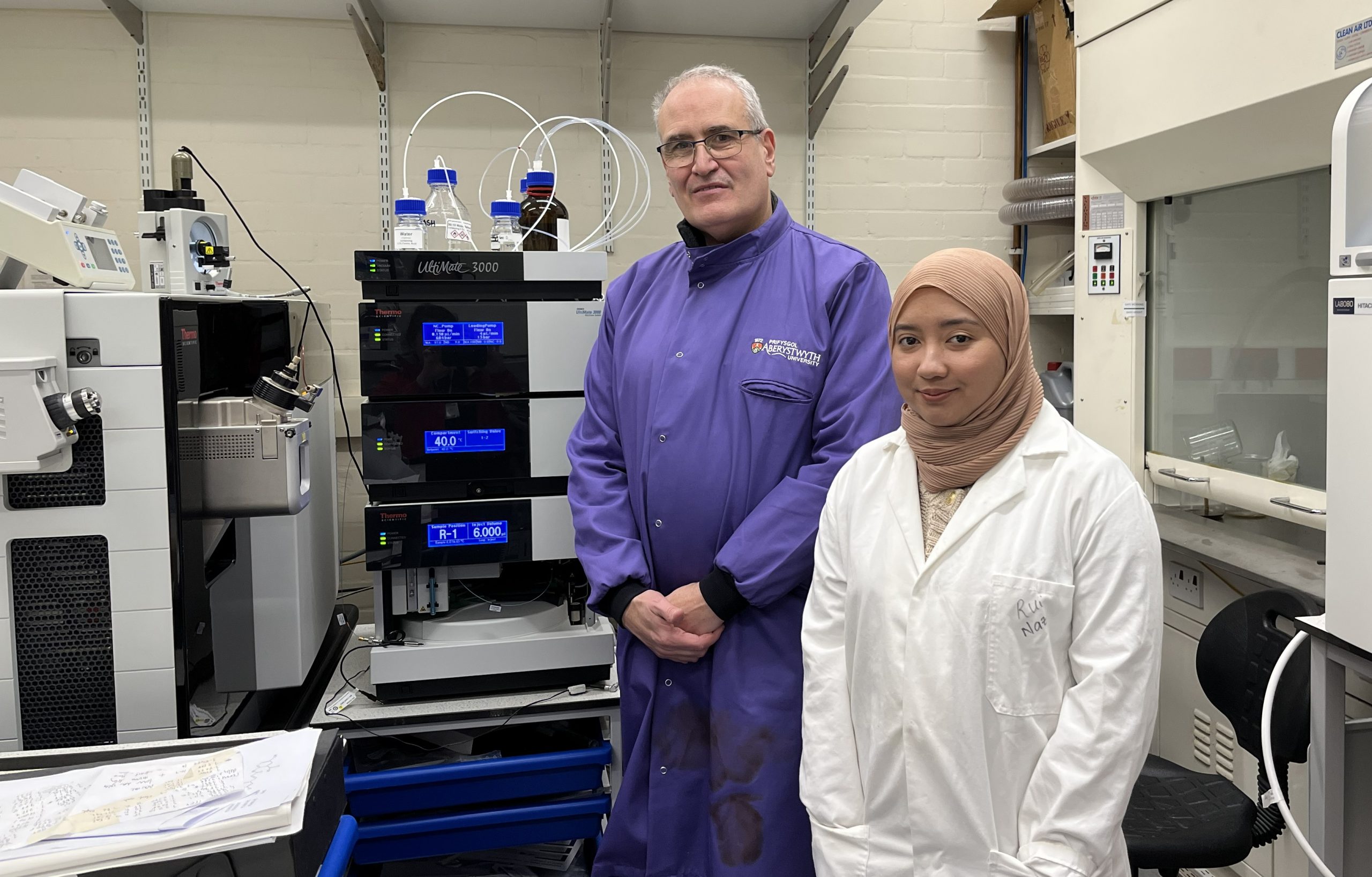
Simple home urine test being developed at Aberystwyth University with NHS backing
A GROUNDBREAKING new home test for early breast cancer detection is being developed in Wales, with scientists at Aberystwyth University leading research that could transform diagnosis for women across rural communities including Pembrokeshire and Carmarthenshire.
Backed by Welsh Government funding and supported by Hywel Dda University Health Board, the pioneering work aims to deliver a simple urine-based test that could ease pressure on NHS Wales services while improving early detection rates in areas where access to specialist diagnostics remains a challenge.
The prototype test, currently under development, is designed as a lateral flow device—similar to a pregnancy or COVID-19 test—that could detect early biochemical signs of breast cancer from a single urine sample.
Researchers say the innovation could support faster diagnosis, reduce reliance on invasive procedures, and ultimately improve survival rates by identifying the disease at its earliest and most treatable stage.
Breast cancer remains the most commonly diagnosed cancer among women globally and is a leading cause of cancer-related deaths in more than 100 countries. While mammograms, MRI scans and biopsies are essential tools, there is growing demand for simpler, more accessible methods of detection.
Rural impact significant
For patients in West Wales, where travel to major hospitals can be time-consuming and access to specialist services limited, the development could prove particularly significant.
A reliable home testing kit could reduce the need for repeated hospital visits and help identify cases earlier, easing pressure on already stretched NHS diagnostic services.
The Herald understands that improved early detection could also play a role in reducing waiting times across NHS Wales, where diagnostic backlogs remain a persistent concern.
Welsh research leading the way

The study at Aberystwyth University is focusing on identifying metabolic changes linked to breast cancer that are excreted in urine, enabling earlier and less invasive detection.
Professor Luis Mur, who is leading the research, said: “Our work is revealing a distinct biochemical ‘signature’ associated with the earliest stages of breast cancer—one that can be detected in a simple urine sample.
“By translating these findings into a lateral flow test, we hope to create a diagnostic tool that is affordable, easy to use at home, and capable of detecting cancer earlier than many current methods.
“Early diagnosis saves lives, and our aim is to make that crucial first step accessible to as many women as possible.”
Professor Mur and breast cancer study manager Dr Aimi Zainurin are working closely with NHS colleagues to ensure the research can move quickly from laboratory discovery to real-world clinical use.
This approach is designed to shorten the time it takes for new medical innovations to reach patients—currently estimated at around 17 years.
Backed by Welsh Government
The project is supported through the Welsh Government’s SMART Award programme, which aims to accelerate innovation and strengthen collaboration between academia and industry in Wales.
It is also co-sponsored by Dynamic Extractions Ltd, whose expertise in separation technologies supports the development of the diagnostic tool.
Dr Helen Munro, National Clinical Lead for Women’s Health based at Hywel Dda University Health Board, said: “This funding has the potential to significantly shorten the time it takes for vital women’s health research to reach real-world clinical practice.
“We’re working closely with our academic partners and health boards to close that gap and ensure innovations—such as the work underway at Aberystwyth University—benefit patients far more quickly.”
Wider women’s health benefits
Alongside breast cancer, the research team is also exploring urine-based diagnostics for conditions including endometriosis and polycystic ovary syndrome (PCOS), both of which are often under-diagnosed.
Scientists hope the wider programme could help tackle long-standing delays in women’s healthcare by providing faster, more accessible diagnostic tools.
If successful, the Welsh-led innovation could place the country at the forefront of a new generation of non-invasive cancer screening—offering hope to thousands of women across Wales and beyond.
Caption:
Top team: Professor Luis Mur and Dr Aimi Zainurin, Aberystwyth University

Haverfordwest student among those recognised as Wales celebrates rising talent
TALENTED learners from across Wales have been recognised for their skills and dedication at this year’s Skills Competition Wales awards – with Pembrokeshire among those celebrating success.
The awards ceremony, held at Rhyl Pavilion on Wednesday (Mar 18), saw 287 competitors honoured following months of regional contests. In total, 97 gold, 94 silver and 95 bronze medals were awarded, highlighting the strength of technical education across the country.
More than 1,100 learners took part in this year’s competition programme, which continues to expand in line with the needs of the Welsh economy. A total of 65 competitions were held – six more than last year – including new categories focused on sustainability, enterprise and inclusive skills development.
Participation also increased, with 1,168 learners competing overall. This included 223 learners in inclusive competitions – an 11.5% rise – alongside a 7% increase in mainstream entrants.
Among those recognised was Bethany Price, 17, from Haverfordwest (pictured), who achieved a Highly Commended award in Metal Fabrication (Lead Work).

Bethany, who studies at Pembrokeshire College, said the experience had boosted both her skills and confidence.
She said: “Taking part in skills competitions has given me so many skills I wouldn’t have gained otherwise – from the overall experience to the tips and techniques I’ve learned from my tutors.
“I’m already using those skills in my day-to-day work, and it’s helped me feel more confident when speaking to new people and working under pressure.
“Just taking part has been amazing and has given me a real edge on my CV. I’m really proud to have achieved a Highly Commended medal, especially as a full-time learner competing against apprentices.”

The competition is delivered through the Inspiring Skills Excellence in Wales project and funded by the Welsh Government. It provides a pathway for learners to progress to national and international stages, including WorldSkills UK, EuroSkills and WorldSkills International.
Paul Evans, Project Director, said the standard this year reflected growing strength across multiple sectors.
He said: “The depth of talent continues to grow year on year. From first-time competitors to those progressing to international pathways, learners across Wales are demonstrating real excellence.
“We’ve expanded the programme to include new categories and more inclusive formats, ensuring learners of all abilities have the opportunity to showcase what they can achieve.”
Welsh Government Minister for Culture, Skills and Social Partnership, Jack Sargeant, added: “These competitions highlight the strength of Wales’ skills system and its close links with industry.
“They help learners develop not only technical ability, but also teamwork, confidence and problem-solving skills – all of which are essential for the workplace.”
Applications for WorldSkills UK 2026 close on Thursday (Mar 27), with Welsh competitors also in contention to represent the UK at the international finals in Shanghai later this year.
For more information, visit inspiringskills.gov.wales.

THE VICTIMS’ Commissioner for England and Wales has welcomed plans to expand electronic tagging of offenders but warned that technology alone will not keep victims safe.
The UK Government has announced new measures to widen the use of electronic monitoring, including mandatory tagging for all prison leavers and real-time GPS tracking for high-risk offenders such as domestic abusers and burglars.
The plans also include a pilot scheme for “proximity monitoring”, designed to alert authorities if an offender approaches a victim, alongside a shift in probation resources to focus on those posing the greatest risk to the public.
Responding to the announcement, Victims’ Commissioner Claire Waxman said the move was a “necessary step” towards strengthening a probation system that has faced years of pressure.
She said: “I welcome the Government’s investment in expanding electronic tagging and increasing the number of probation officers managing dangerous offenders. This is a necessary step in helping to rebuild a probation service that has been under immense pressure for years.”
However, she cautioned that monitoring technology must be backed by swift enforcement.
“For many victims — particularly survivors of domestic abuse and stalking — the knowledge that an offender is being monitored can provide a vital sense of reassurance,” she said.
“But technology and innovation are only as effective as the system that supports them. Tagging must be backed by swift, robust enforcement the moment a breach occurs.”
Waxman warned that without immediate action when rules are broken, victims could be left at risk.
“Without this, there is a real risk of creating a false sense of security for victims at a time of already heightened concern,” she added.
She also stressed that while prioritising high-risk offenders is practical, lower-risk individuals should not be overlooked.
“While prioritising high-risk offenders is a pragmatic necessity, it is essential that ‘lower-risk’ is never treated as ‘no-risk’,” she said.

“Ultimately, victim safety must remain the priority.”
The Commissioner said this requires not only investment in new monitoring tools, but also ensuring the Probation Service has the capacity and expertise to act quickly when warning signs emerge.



Health2 hours ago
NHS waiting list falls — but cancer delays and diagnostic backlog worsen
Record progress claimed by Welsh Government as critics warn key targets are still being missed THE NHS in Wales has...


Crime1 day ago
Rapist jailed after ‘abhorrent’ attacks on woman and children
Haverfordwest man told police “women won’t have sex without force” A HAVERFORDWEST man who raped a woman and a young...


News1 day ago
Reform secures first Pembrokeshire councillor in Hakin by-election win
Late Reform candidate takes seat as independent surge and Labour withdrawal shape contest REFORM UK candidate Scott Thorley has won...


News2 days ago
Scott Thorley elected as Pembrokeshire’s first Reform councillor
REFORM UK candidate Scott Thorley has won the Hakin by-election after securing 179 votes. The full result is as follows:...


News2 days ago
Police confirm man has died after being recovered from River Cleddau
Major emergency response in town centre after concerns raised for man in water A MAN has died after being recovered...


Community2 days ago
Davies and Kurtz urge groups to seek employability funding
Community organisations in Pembrokeshire encouraged to apply for new grants supporting skills and job access LOCAL Senedd Members Samuel Kurtz...


News2 days ago
Emergency services flood Haverfordwest after reports of person in river
Town centre sealed off as multi-agency response continues A MAJOR emergency response is underway in the centre of Haverfordwest after...


News2 days ago
Detectives receive surge of new information in bid to identify man found at Powys reservoir
Public response follows release of facial image as officers pursue fresh lines of enquiry DETECTIVES investigating the identity of a...


News2 days ago
Senedd committee urges next Welsh Government to prioritise Wales–Ireland links
A SENEDD committee has called on the next Welsh Government to continue prioritising Wales’s relationship with Ireland, describing it as...


Education3 days ago
New facilities open at Portfield School as redevelopment reaches key milestone
THE FIRST phase of a major redevelopment programme at Portfield School in Haverfordwest has been completed, marking a significant step...
-

 Health6 days ago
Welsh Ambulance Service to host bi-monthly Board meeting
-

 News5 days ago
Rayner and Lammy visit Wales to discuss justice and community safety
-

 News4 days ago
Fishguard linked to allegations in Many Tears Animal Rescue investigation
-
News2 days ago
Emergency services flood Haverfordwest after reports of person in river
-

 Charity7 days ago
Many Tears Animal Rescue visited by inspectors as police attend in support role
-

 Crime7 days ago
New rural and wildlife crime strategy aims to boost patrols and community engagement
-

 Local Government5 days ago
Investigation confirmed after inspectors visit Many Tears Animal Rescue
-

 Farming6 days ago
Plea to remove decades old ‘unviable’ planning conditions from property