


News
Reform shatters Labour hold in key Carmarthenshire council seat


Faith-led campaigner Michelle Beer becomes county’s first Reform councillor
REFORM has pulled off a major political upset in Carmarthenshire, winning the Lliedi by election with over 42 percent of the vote and unseating Labour in one of its long-held strongholds.
Michelle Beer, a graduate of the Bible College of Wales and an active figure in local faith communities, was elected on Thursday (May 29) as the new councillor for Lliedi, becoming the first Reform UK member on Carmarthenshire County Council. Her victory represents not just a significant local result, but a potential shift in Welsh political sentiment.
The final result was:
- Reform UK (Michelle Beer): 42.6 percent (568 votes)
- Labour (Andrew Bragoli): 23.4 percent (312 votes)
- Independent (Sharon Burdess): 8.7 percent
- Plaid Cymru (Taylor Reynolds): 8.0 percent
- Conservative (Richard Williams): 7.0 percent
- Independent (Alison Leyshon): 6.5 percent
- Liberal Democrat (Jonathan Burree): 3.1 percent
- Gwlad (Wayne Erasmus): 0.7 percent
The Labour vote collapsed by nearly 35 percentage points compared with the 2022 election. The Conservatives also saw their share fall by almost 9 points. Reform UK had not stood in the previous contest and surged straight to the top of the poll. No Independent candidate from the previous election stood again.

Michelle Beer, who campaigned actively with the Llanelli branch of Reform UK, focused her message on localism, accountability, and traditional values. Her campaign, described by supporters as energetic and community-driven, included regular doorstep conversations, local prayer gatherings, and public expressions of faith.

She is married to Gareth Beer, a Kidwelly Town councillor and former Reform UK general election candidate in Llanelli. Michelle served as his campaign manager and has been closely involved in the party’s regional growth.

During the campaign, she reflected on her time at the Bible College of Wales and her continued involvement in local worship meetings in Kidwelly. Her social media posts frequently referenced prayer, unity, and a desire to bring moral clarity to politics.
The significance of the result is considerable. Lliedi is a historically Labour-voting ward in an area where the party has traditionally been dominant. Reform UK’s breakthrough will raise concern within Welsh Labour ranks, particularly as dissatisfaction with the Welsh Government grows over issues such as NHS performance, the economy, and transport policy.
The result also points to a broader trend. With Reform gaining support across working-class communities in both England and Wales, the party is beginning to challenge the old political order in parts of the country once considered safe territory for Labour.

This by-election result may not alter the overall balance of power in Carmarthenshire, but it has clearly altered the political conversation. For Reform UK, it is a toehold in rural west Wales. For Labour, it is a wake-up call.
The question now is whether the shock result in Lliedi is a one-off—or the first sign of a larger realignment.


Employment down by 124 year-on-year with further monthly decline recorded in February
EMPLOYMENT in Pembrokeshire has fallen over the past year, with new figures showing a drop of 124 jobs compared with the same period in 2025.
Data for February 2026 reveals that 47,801 people were on payroll across the county, representing a 0.3% decrease year-on-year.
The latest monthly figures also show continued pressure on local businesses, with payroll numbers falling by 82 compared to January — a 0.2% drop.
The data, based on analysis of Office for National Statistics payroll figures by employment app WageSight, paints a mixed picture for the county’s labour market.
Compared with other Welsh local authorities, Pembrokeshire ranks 12th out of 22 for employment change, placing it in the lower half of performers.
The Herald understands that while some parts of Wales have seen modest job growth, others — including Pembrokeshire — continue to experience a squeeze on employment levels.
Paul Hebden, Director at WageSight said: “The latest figures underline the continued pressure on employment in Pembrokeshire. Payroll remains down compared with last year, and recent month-on-month data suggests employers are still cutting back.”
Nationally, employment trends remain uncertain, with fluctuations across different regions and sectors creating an unpredictable backdrop for businesses.
It remains unclear whether the recent decline marks the beginning of a longer-term trend or simply a short-term dip, but the figures suggest that employers in Pembrokeshire are continuing to act cautiously in the current economic climate.


Local pharmacy reports MenB vaccine shortage amid rising concern
PARENTS and carers across west Wales are being urged to check their children’s vaccination status following recent meningitis cases in the UK.
The warning comes as a local pharmacy has confirmed a shortage of the Meningitis B (MenB) vaccine, highlighting growing pressure on supplies.
Mendus Pharmacy said it currently has no availability of the vaccine due to what it described as a nationwide supply issue.

In a statement, the pharmacy said: “We would like to inform our patients that, due to ongoing supply issues, we currently have no availability of the Meningitis B vaccine.
“Unfortunately, this is a nationwide shortage and all stock is currently unavailable.

“We understand this may be particularly concerning given the recent outbreak reported in Kent, and we completely appreciate the importance of timely vaccination.”
The pharmacy confirmed it is operating a waiting list and will contact patients once supplies return.
Health officials say keeping vaccinations up to date remains one of the most effective ways to prevent serious illness and reduce pressure on NHS services.
Dr Ardiana Gjini, Executive Director of Public Health at Hywel Dda University Health Board, urged parents to act.
She said: “Vaccination is one of the most effective ways we can protect children and young people from serious illness.
“Ensuring your child is fully vaccinated not only safeguards their health but also helps prevent the spread of infections within our communities.
“I strongly encourage all parents and carers to check their child’s vaccination status. If you are concerned that your child may have missed routine vaccinations, please speak to your GP.”

Meningococcal disease is a serious and potentially life-threatening infection that can lead to meningitis or septicaemia. While many people recover, some are left with long-term physical, neurological or psychological complications. Around one in ten cases can be fatal.
Although the disease can affect anyone, babies, young children, teenagers and young adults are at greatest risk.
In Wales, vaccines protecting against meningococcal strains A, B, C, W and Y are offered as part of the NHS immunisation programme. Infants receive the MenB vaccine, while teenagers are offered the MenACWY vaccine.
Latest figures from the Health Board show that uptake among 16-year-olds for the MenACWY vaccine stands at 76.4%, meaning a significant number of young people remain unprotected as they approach adulthood.
For younger children, uptake of the MenB vaccine is higher but still below the recommended 95% target. Around 92.8% of infants are vaccinated by their first birthday, rising slightly to 91.8% by their second.
Health officials say these figures reflect strong engagement from families and primary care teams but stress that continued vigilance is needed.
Families are being advised to check their child’s vaccination record with their GP or by contacting the Health Board directly. Parents should also ensure babies receive their scheduled MenB doses and that teenagers receive their MenACWY and 3-in-1 booster vaccines, which are currently being delivered in schools.
Parents are also urged to remain alert to the symptoms of meningitis and septicaemia and to seek urgent medical advice if they have concerns.
Further information on symptoms is available via NHS 111 Wales.

Energy price shocks could delay cuts and raise prospect of further hikes
THE BANK OF ENGLAND has held interest rates at 3.75%, as rising tensions in the Middle East push up global energy prices and increase the risk of further inflation.
The decision by the Monetary Policy Committee reflects growing caution among policymakers, despite recent signs that inflation in the UK had been easing.
However, the escalating crisis in the Middle East has unsettled financial markets, with oil and gas prices climbing amid fears of supply disruption and instability along key shipping routes. Economists warn that sustained increases could quickly filter through to higher fuel, transport and manufacturing costs, as well as rising household energy bills.
Emeritus Professor Joe Nellis, economic adviser at accountancy firm MHA, said the latest developments have significantly reduced the likelihood of interest rate cuts in the near future.
He warned that policymakers are mindful of past criticism that central banks reacted too slowly to rising inflation in 2021 and 2022, when price pressures were initially dismissed as temporary.

“The Bank will want to stay ahead of inflation this time,” he said, adding that while current pressures may not yet be structural, officials are likely to act quickly if risks intensify.
The prospect of prolonged high interest rates presents challenges for businesses already grappling with increased operating costs. Higher borrowing costs are expected to weigh on investment, particularly in hiring, potentially weakening the labour market further.
Economists say that while holding rates steady avoids an immediate squeeze on borrowers, the wider outlook remains uncertain. Any sustained rise in energy costs could force the Bank to tighten monetary policy further in order to keep inflation under control.
For households and businesses hoping for a return to lower interest rates, expectations have now shifted, with rates likely to remain higher for longer — and the possibility of further increases still on the table.




Health1 hour ago
NHS waiting list falls — but cancer delays and diagnostic backlog worsen
Record progress claimed by Welsh Government as critics warn key targets are still being missed THE NHS in Wales has...


Crime1 day ago
Rapist jailed after ‘abhorrent’ attacks on woman and children
Haverfordwest man told police “women won’t have sex without force” A HAVERFORDWEST man who raped a woman and a young...


News1 day ago
Reform secures first Pembrokeshire councillor in Hakin by-election win
Late Reform candidate takes seat as independent surge and Labour withdrawal shape contest REFORM UK candidate Scott Thorley has won...


News2 days ago
Scott Thorley elected as Pembrokeshire’s first Reform councillor
REFORM UK candidate Scott Thorley has won the Hakin by-election after securing 179 votes. The full result is as follows:...


News2 days ago
Police confirm man has died after being recovered from River Cleddau
Major emergency response in town centre after concerns raised for man in water A MAN has died after being recovered...


Community2 days ago
Davies and Kurtz urge groups to seek employability funding
Community organisations in Pembrokeshire encouraged to apply for new grants supporting skills and job access LOCAL Senedd Members Samuel Kurtz...


News2 days ago
Emergency services flood Haverfordwest after reports of person in river
Town centre sealed off as multi-agency response continues A MAJOR emergency response is underway in the centre of Haverfordwest after...


News2 days ago
Detectives receive surge of new information in bid to identify man found at Powys reservoir
Public response follows release of facial image as officers pursue fresh lines of enquiry DETECTIVES investigating the identity of a...


News2 days ago
Senedd committee urges next Welsh Government to prioritise Wales–Ireland links
A SENEDD committee has called on the next Welsh Government to continue prioritising Wales’s relationship with Ireland, describing it as...

Education3 days ago
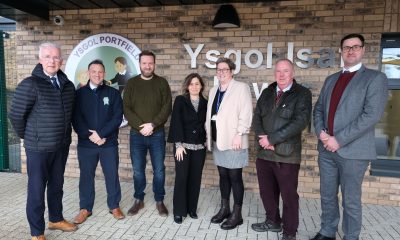
New facilities open at Portfield School as redevelopment reaches key milestone
THE FIRST phase of a major redevelopment programme at Portfield School in Haverfordwest has been completed, marking a significant step...
-

 Health6 days ago
Welsh Ambulance Service to host bi-monthly Board meeting
-

 News5 days ago
Rayner and Lammy visit Wales to discuss justice and community safety
-

 News4 days ago
Fishguard linked to allegations in Many Tears Animal Rescue investigation
-
News2 days ago
Emergency services flood Haverfordwest after reports of person in river
-

 Charity7 days ago
Many Tears Animal Rescue visited by inspectors as police attend in support role
-

 Local Government5 days ago
Investigation confirmed after inspectors visit Many Tears Animal Rescue
-

 Crime7 days ago
New rural and wildlife crime strategy aims to boost patrols and community engagement
-

 Community7 days ago
Choir performs for residents at Kensington Court