


News
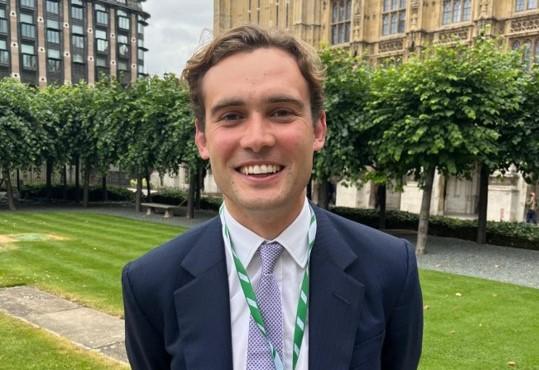
Henry Tufnell among MPs approve assisted dying bill in landmark vote

24 Welsh MPs support change in end-of-life law
A CONTROVERSIAL bill to legalise assisted dying for terminally ill adults has passed through the House of Commons, setting in motion one of the most profound changes to UK law in decades.
The Assisted Dying Bill, introduced by Labour MP Kim Leadbeater, was approved on Friday (June 20) by 314 votes to 291—a narrow majority of 23. It gives terminally ill adults in England and Wales, with a prognosis of six months or less, the legal right to request medical help to end their lives.
The measure now heads to the House of Lords, where peers will scrutinise the legislation. If passed, it could receive royal assent by the end of the year, with implementation expected within four years.
Welsh MPs back change
Of the 32 MPs representing Wales, 24 voted in favour, 7 voted against, and 1 was absent. Among those supporting the bill was Henry Tufnell, the Labour MP for Mid and South Pembrokeshire.
Mr Tufnell had signalled his support for the bill as early as November 2024, stating that he believed in offering people “a compassionate choice” at the end of life, provided robust safeguards were in place.

He voted in favour at Third Reading on Friday, telling The Herald: “This is a deeply personal and moral issue. I believe it is possible to offer people choice while still protecting the most vulnerable. The safeguards in this bill are strong, and I was proud to support it.”
The majority of Welsh Labour MPs supported the legislation, as did Liberal Democrat MP David Chadwick and Plaid Cymru’s Ben Lake.
What the law proposes
If the law passes all stages, it will allow eligible adults in England and Wales to request an assisted death, subject to strict conditions:
They must be aged 18 or over, resident in the UK, and diagnosed with a terminal illness with a life expectancy of six months or less.

They must be of sound mind and acting voluntarily.
Approval must be given by two independent doctors, and a multi-disciplinary panel including a psychiatrist, a social worker, and a senior lawyer.
Patients would be required to self-administer the life-ending medication. Criminal sanctions would apply to anyone found coercing a vulnerable individual into ending their life.

Emotional debate in the Commons
The Commons debate on the bill was described by many MPs as one of the most emotional in years. Members from all parties shared deeply personal accounts of family members suffering through painful and undignified deaths.
Labour’s David Burton-Sampson said he was initially opposed to assisted dying because of his Christian beliefs, but had changed his mind after hearing from constituents.
“My faith teaches compassion,” he said. “For some, this law will bring peace and dignity. That is not something to be feared.”
Conversely, Labour MP Diane Abbott spoke out against the bill, saying: “I came to this House to be a voice for the voiceless. Who could be more voiceless than someone dying in pain and poverty, who feels like a burden?”
The Bishop of London, Sarah Mullally, warned that the new law could risk normalising death as a solution in a health and social care system already under pressure.
Concerns from disabled groups
Outside Parliament, disabled people’s organisations staged protests warning that the bill could place pressure on the vulnerable to end their lives prematurely. Some MPs echoed those concerns, saying the focus should instead be on properly funded palliative care.
Labour MP Vicky Foxcroft, who resigned the whip earlier in the week in protest over disability cuts, voted against the bill. “Disabled people want help to live, not to die,” she said.
Opponents had hoped to delay the bill’s progress but failed to secure enough support. Several last-minute amendments were passed, including a requirement for a government review of palliative care provision.
Implementation timeline
If the House of Lords approves the bill, it will receive royal assent later this year. However, the law will not come into effect immediately. The government and NHS will have up to four years to set up the new system, including professional training, guidance, and infrastructure.
It remains unclear whether the service will be delivered by the NHS, private providers, or a combination of both—and whether it will be free at the point of use.
UK joins global shift
If implemented, England and Wales will join a growing list of jurisdictions where assisted dying is legal under strict conditions. These include Canada, Belgium, the Netherlands, Switzerland, and several US states including Oregon and California.
Polling suggests widespread public support for reform. A recent YouGov survey found eight in ten UK adults support assisted dying for those with terminal illnesses, though support tends to drop when mental health or non-terminal conditions are included.
Reaction from campaigners
Dame Esther Rantzen, who has terminal lung cancer and has long campaigned for the right to die with dignity, said: “I won’t live to see the law come into effect, but I’m so relieved that future generations will have a choice I never did.”
The campaign group Dignity in Dying called it a “historic moment where compassion and evidence prevailed over fear.”









Senior Conservative MS says he has the experience and procedural knowledge needed for the role
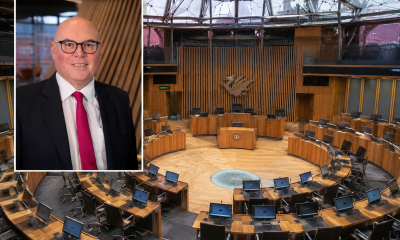
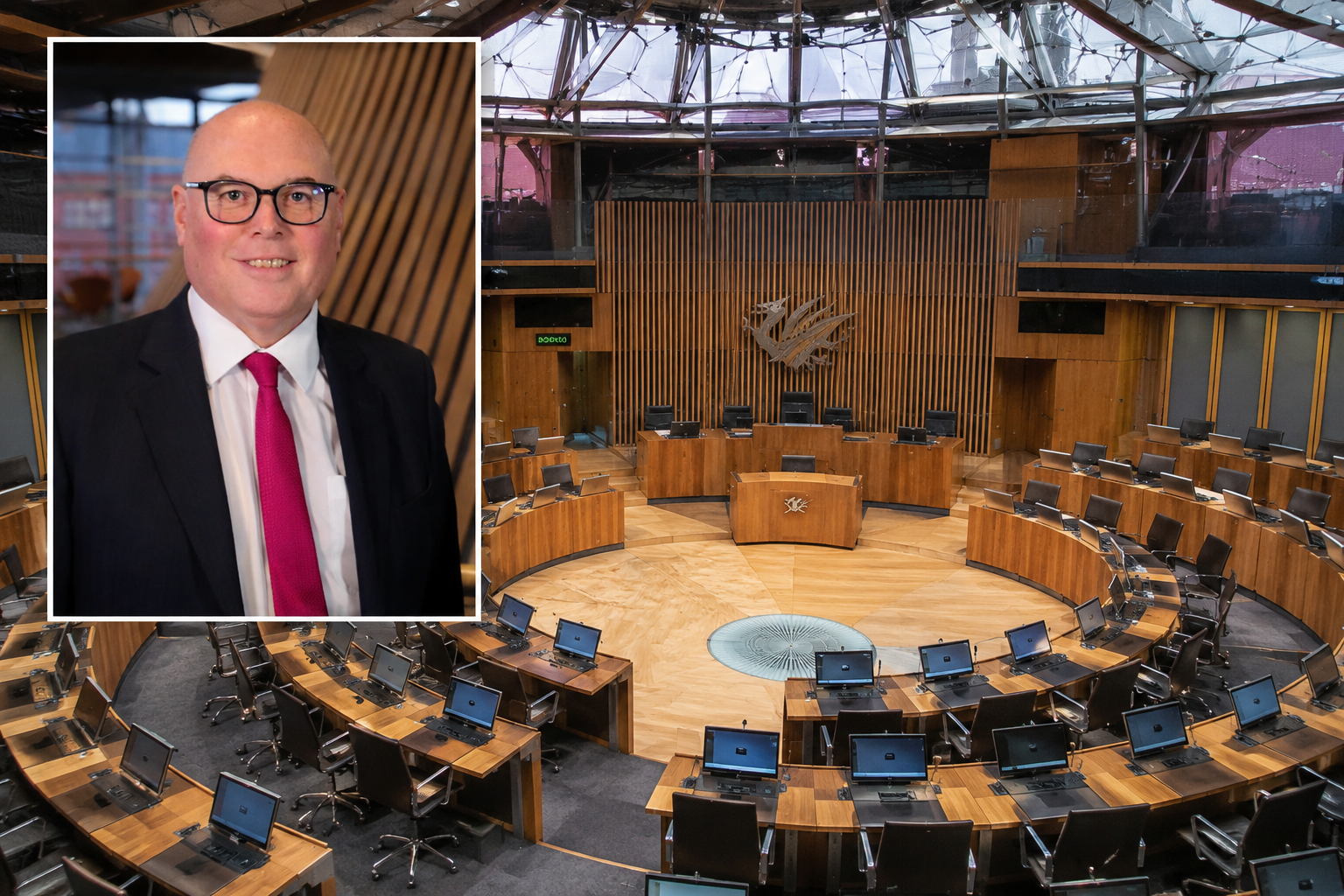
PAUL DAVIES has confirmed that he will put his name forward to become the next Llywydd of the Senedd following growing speculation after the Welsh election.
The former leader of the Welsh Conservatives and long-serving Member of the Senedd said he had decided to stand after discussions with colleagues and encouragement from others.
In a statement issued on Sunday (May 10), Davies said he believed he had the experience needed to champion the Welsh Parliament and oversee proceedings fairly.
He said: “There has been much speculation since the election about who will take on the role of the next Llywydd in the Senedd.
“I want make it clear that, after consultation with colleagues and having been urged to do so by others, I will be putting my name forward to be the next Presiding Officer.
“I have the experience to champion the Welsh Parliament and have a clear understanding of its Standing Orders and procedures.
“As the Temporary Presiding Officer in the previous Senedd, and as a former Committee Chair and Business Manager in the Welsh Parliament, I have the necessary skills to take on this important role.”
The role of Llywydd is one of the most senior positions in the Senedd, with responsibility for chairing debates, maintaining order in the chamber and ensuring parliamentary rules are followed.
Davies, who represents Ceredigion Penfro, has been a prominent figure in Welsh politics for many years and previously served as leader of the Welsh Conservatives.
Sam Kurtz disappointment
Davies’ announcement also comes against the backdrop of disappointment within Welsh Conservative circles after Sam Kurtz failed to win a seat.
Kurtz, the former Carmarthen West and South Pembrokeshire MS, had been placed second on the Conservative list in Ceredigion Penfro behind Davies.

That decision was controversial locally, with many party supporters believing Kurtz had built a stronger personal following in Pembrokeshire and was one of the party’s most visible and energetic campaigners in west Wales.
His failure to return to the Senedd is likely to be seen as one of the most significant Conservative casualties of the new electoral system, particularly given his profile in rural affairs, farming, tourism and local campaigning.
There is already speculation about Kurtz’s next move, including rumours that he could seek to stand for Parliament in the future.
However, speaking to The Herald at the declaration, Kurtz was tight-lipped about his plans and even suggested he may return to journalism.
Before entering politics, Kurtz worked in local journalism, including at The Pembrokeshire Herald and the Western Telegraph.
Davies said he was saddened that Kurtz had not been returned, describing him as a hard-working colleague who had given strong service to Pembrokeshire and west Wales.
The announcement comes as parties continue discussions following the historic 2026 Senedd election, which resulted in no overall majority and a dramatically reshaped Welsh political landscape.

PLAID CYMRU leader Rhun ap Iorwerth has signalled he is ready for confrontation with Prime Minister Keir Starmer after the biggest political earthquake in Welsh devolution history.
Following Plaid’s dramatic Senedd election victory, which saw the party emerge as the largest force in the Welsh Parliament for the first time, ap Iorwerth has made it clear he intends to push aggressively for more powers and funding for Wales — including reopening rows over HS2 funding, policing, justice, and control of natural resources.
Speaking during a series of high-profile interviews on Sunday, the likely next First Minister said the UK Labour government now faced a choice: work with Wales or risk being seen as punishing Welsh voters for rejecting Labour dominance.
The comments are likely to raise tensions between Cardiff Bay and Westminster just days after Welsh Labour suffered a historic collapse at the polls.
Plaid plans minority government
Plaid Cymru won 43 seats in the expanded 96-member Senedd, leaving the party short of an outright majority but comfortably ahead of rivals.
With support expected from the two Green MSs, and the Liberal Democrats indicating they will abstain rather than oppose him, ap Iorwerth now appears on course to become Wales’ next First Minister as early as Tuesday.
The result marks the end of more than a century of Labour electoral dominance in Wales and the first time Labour has failed to emerge as the largest party since devolution began in 1999.
Ap Iorwerth has insisted he wants Plaid to govern alone rather than form a coalition, although he acknowledged cross-party cooperation would be necessary.
Fresh pressure over HS2 and funding
One of the clearest signals from the Plaid leader was his intention to revive demands over the HS2 rail project.
Welsh politicians have long argued Wales was unfairly denied billions of pounds in consequential funding after HS2 was classified as an England-and-Wales project despite no track entering Wales.
Ap Iorwerth suggested a future “Wales Bill” at Westminster could include demands on fairer funding, policing and criminal justice powers, and greater Welsh control over natural resources.
The remarks are likely to concern Labour strategists in London already facing growing pressure after heavy losses in Wales.

Labour admits “catastrophic defeat”
Interim Welsh Labour leader Ken Skates described the election result as a “catastrophic defeat” and confirmed the party would carry out what he called a “forensic” review into what went wrong.
Skates is also expected to enter the race to become permanent Welsh Labour leader following the shock loss of former First Minister Eluned Morgan, who lost her own seat during the election.
Meanwhile, Reform UK, which surged to 34 seats, said it intended to become an aggressive opposition force inside the Senedd.
Tensions with Reform
Ap Iorwerth also appeared to take a swipe at Reform leader Dan Thomas after claiming he had been unable to arrange a courtesy call following the election.
Reform denied the allegation, insisting contact details had been provided and that Plaid had been told to communicate through Thomas’s staff.
Despite the row, Reform MS Llŷr Powell suggested the party would not simply oppose everything brought forward by Plaid, saying Reform would judge proposals individually and focus heavily on government spending and scrutiny.
“A new era” for Wales
The weekend celebrations outside the Senedd increasingly resembled the atmosphere of a government-in-waiting, with Plaid supporters openly speaking of a “new era” in Welsh politics.
For the first time since the Senedd was created, Wales now faces the prospect of a nationalist-led government prepared to challenge Westminster far more openly than previous Labour administrations.
Whether that leads to meaningful constitutional change, or confrontation with London, could define the next chapter of Welsh politics.

TWO WOMEN were arrested following a disturbance at the Mount Estate in Milford Haven on Saturday night (May 9).
The Herald understands the arrests followed an altercation involving four people.
Video circulating on social media shows two women lying face down on the ground outside while handcuffed and restrained by police officers.
In the footage, officers can be heard telling one woman that she is being arrested on suspicion of assaulting police.
Both women were then taken away, each flanked by officers.
Other women can be seen speaking to those detained while they remain on the ground.
The Herald has contacted Dyfed-Powys Police for further details, including confirmation of the number of arrests, the nature of the incident, and whether anyone was injured.



News43 minutes ago
Rhun prepares for clash with Starmer as Plaid eyes power in Cardiff Bay
PLAID CYMRU leader Rhun ap Iorwerth has signalled he is ready for confrontation with Prime Minister Keir Starmer after the...


News1 day ago
Plaid Cymru celebrates historic victory as Rhun ap Iorwerth arrives at Cardiff Bay
CROWDS gathered outside the Senedd as Plaid Cymru leader Rhun ap Iorwerth arrived in Cardiff Bay following his party’s historic...


Crime1 day ago
Police standoff ends after four-hour incident in Pembroke Dock
ELIZABETH COURT SCENE STOOD DOWN AFTER DOMESTIC INCIDENT A FOUR-HOUR police standoff in Pembroke Dock has ended with a 21-year-old...


Crime1 day ago
Teen denies attempted murder of Milford Haven teacher
TEENAGER REMANDED AHEAD OF JULY TRIAL A 15-YEAR-old boy has denied attempting to murder a teacher during a stabbing incident...

News2 days ago
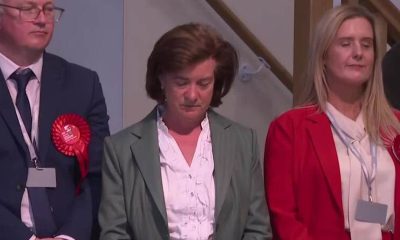
Catastrophe for Labour as Plaid and Reform reshape Welsh politics
ELUNED MORGAN LOSES SEAT AS OLD CERTAINTIES ARE SWEPT AWAY THE VOTERS of Wales have delivered one of the most...

News2 days ago
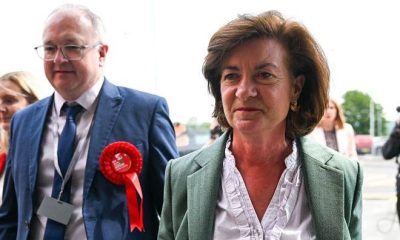
Labour wiped out in Ceredigion Penfro as Plaid tops poll and First Minister loses seat
Shock result sends political shockwaves across Wales as Reform also surges in historic Senedd count LABOUR suffered one of the...


News2 days ago
Labour deputy says party ‘will not form next Welsh Government’
LABOUR FACES HISTORIC DEFEAT AS COUNTING CONTINUES ACROSS WALES LABOUR’S Deputy Leader in Wales has effectively conceded the Senedd election,...

News2 days ago
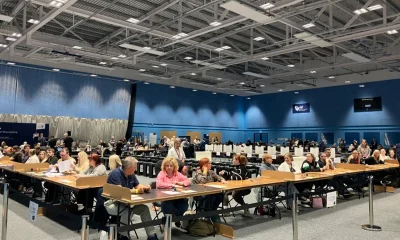
Counts underway in historic Senedd election
Wales waits for results as first election under new voting system reaches count stage COUNTING is underway across Wales today...


Charity3 days ago
Chief’s Tour honours fallen officers with 75-mile Pembrokeshire ride
Dyfed-Powys Police team raises thousands for bereaved police families charity A TEAM of officers and staff from Dyfed-Powys Police cycled...


Crime3 days ago
Racial abuse suspect barricaded himself inside Johnston lodge
ARMED police were called to a supported accommodation building in Johnston after a man allegedly barricaded himself inside a room...
-

 News5 days ago
Baby in critical condition after Fishguard emergency
-

 News4 days ago
Former housing officer admits drink-driving in Pembrokeshire retail park
-
 Crime4 days ago
Job loss threat for convicted Pembrokeshire drug-driver
-
 Crime4 days ago
Milford motorist disqualified for drug-driving
-

 Crime4 days ago
Police tip-off leads to driving ban for Milford motorist
-
Crime3 days ago
Racial abuse suspect barricaded himself inside Johnston lodge
-
 Crime4 days ago
Delivery driver caught twice over legal drink-drive limit
-

 Community4 days ago
Sixth-former firefighter balances schoolwork with saving lives