


Education
‘Physics education is at breaking point’: calls for teaching incentives to match England’s

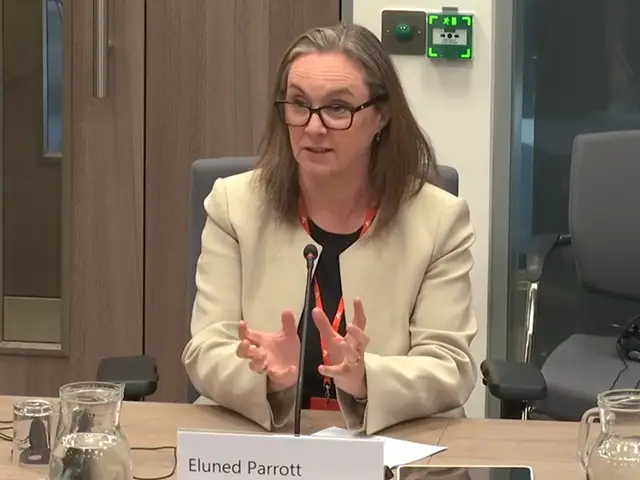
PHYSICS education is at breaking point in Wales due to a lack of teachers, yet training bursaries are £14,000 higher across the border in England, a committee heard.
Eluned Parrott, head of Wales at the Institute of Physics, warned Wales had fewer physics-trained teachers (174) than secondary schools (205) in 2024.
She told the Senedd’s education committee no one measure is going to be a silver bullet but evidence shows teacher training incentives work.
“That’s why we’re calling on the Welsh Government to increase our physics teacher trainee bursary from £15,000 to match England’s £29,000,” she said.
“We need a bold reset to recruit, retain and retrain the next generation of physics specialists to help secure the future of physics in Welsh schools.”

Ms Parrott, a former politician, said only seven specialist physics teachers qualified through Wales’ initial teacher education (ITE) system from an intake of ten in 2023/24.
She said: “The intake allocation target was 67, meaning the intake fell 86% short…. The intake allocation target has since been increased to 72. It is unlikely to be reached.”
Warning of systemic challenges, Ms Parrott expressed concerns about investment in Welsh ITE compared with centres in other parts of the UK.
Contrasting the two, she told the committee: “You could go to study in an ITE centre that has a full-time professional and professorial level of ITE tuition or you could go to somewhere else where they’re struggling to recruit part-time tutors to help you.”

Ms Parrott, a former Liberal Democrat member of the then-Assembly, suggested setting up a centre of excellence for science, technology, engineering, and mathematics (Stem).
She explained: “It is important to have ITE centres spread out across the country but – rather than spreading that expertise – maybe create something that is robust, academically respected, driving improvements across ITE.”
Ms Parrott said: “I think there’s also an equity issue here with the bursaries and what that means because you cannot realistically live on the bursary that you would get in Wales.

“So, if you come from a less wealthy background, it is a major financial choice to take on another year of study and take on another year of student debt and another year of living a hand-to-mouth existence.”
She warned teacher shortages are far worse through the medium of Welsh – describing Welsh-speaking, physics-trained teachers as like unicorns.
Ms Parrott told Senedd Members: “Obviously, a lot of Welsh students do their undergraduate study in England. We need to be attracting them back because they’ve got, potentially, a Welsh-language skill that they are therefore not using.”

Annette Farrell warned Wales is “way off the mark” for chemistry too, with seven passing their postgraduate certificate in education (PGCE) in 2023/24 against a target of 67.
The Royal Society of Chemistry expert warned financial barriers are a big issue, with cross-border differences on incentives making training an unviable option for some.
“If you compare the English bursary system to Wales,” said Ms Farrell. “Once you’ve taken account of… fees and everything, Welsh students next year will only take home £2,465. If you compare that with England… that’s £19,465.”
She lamented the loss of Bangor’s chemistry provision, with only centres in Cardiff and Swansea, creating a “massive cold spot in the north”.
Ms Farrell emphasised the need to look at the financial sustainability of higher education more generally and address workload issues for teachers.
She raised concerns about possible unintended consequences from plans to scrap separate science GCSEs in favour of separate teaching but a double-award qualification.
Shabana Brightley, from the Royal Society of Biology, echoed her colleagues’ comments as the trio gave evidence on June 18 to a wider inquiry on teacher recruitment and retention.

“Based on the bursaries in England and all the incentives they get…they would rather go across the border to go and get trained,” she said.
Ms Brightly, a former primary and secondary school teacher, told the committee: “Early career support is very important, especially having subject-specific mentors in schools.”
She warned: “Let’s say a biology teacher is then having to teach physics and chemistry, which they’ve maybe not done since GCSE – that is a huge burden.”



Top honour recognises commitment to Service children and families
PRENDERGAST CP School in Haverfordwest has been awarded the highest possible recognition for its support of Armed Forces families.
The school has secured Gold Armed Forces Friendly School Cymru status, marking a significant milestone in its ongoing work to support pupils from Service backgrounds.
Headteacher Louise John said the achievement reflects a strong, whole-school commitment to ensuring Service children feel supported and able to succeed.

She said: “We are committed to ensuring Service pupils feel welcomed, understood and able to thrive.
“We recognise the unique experiences of children from Service families and have worked hard to embed that understanding across the school.

“Our approach focuses on early identification, strong communication with families, and consistent pastoral support.
“Achieving Gold status recognises the dedication of our staff and the inclusive practices already in place, while reinforcing our ongoing commitment to supporting Service children’s wellbeing, sense of belonging, and educational success.”
The Gold award, delivered through Supporting Service Children in Education Cymru (SSCE Cymru), requires schools to demonstrate strong and sustained support for Service children. This includes creating a positive environment where pupils can share their experiences and strengthening links with the wider Armed Forces community.
Prendergast CP School previously achieved both Bronze and Silver awards before progressing to the top level.
Cllr Simon Hancock, Pembrokeshire County Council’s Armed Forces Champion, praised the achievement.
He said: “I would like to congratulate Prendergast School on achieving the coveted Gold Armed Forces Friendly School Cymru status.
“From my visits, it is clear the school actively engages with the Armed Forces community and provides a positive and supportive environment for Service children.”

Cllr Guy Woodham, Cabinet Member for Education and the Welsh Language, added: “This is fantastic recognition of the ongoing work at Prendergast School.
“It highlights the importance of supporting Armed Forces families and sets a strong example of best practice. Well done to everyone involved.”


Protecting your personal data and financial information is crucial. With scammers and hijackers getting more and more sophisticated, you need to implement proper cyber security systems in order to keep yourself protected.
With that in mind, here are four cybersecurity tips to help you stay safe online.
Use Strong Passwords
A strong password is a basic security essential. A password that’s difficult to guess makes it harder for unauthorised users to gain access.
When creating a password, consider these guidelines:
- Length – the longer the better, as there’s more opportunity to get it wrong
- Character variation – use a combination of upper and lower case, symbols, and numbers
- Avoid personal information – birthdays or other important dates, names, streets etc.
- Keep passwords unique – don’t use the same password on different sites
It’s also a good idea to set up two-factor authentication. This adds an extra layer of security, should your password be compromised.

Most people use simple passwords so they’re easy to remember, but this can be risky. If you struggle to remember complex passwords, consider using a password manager such as NordPass to securely store your passwords.
Remain Vigilant
It’s important to remain vigilant of scams or phishing attempts. They usually come through as emails or text messages and there are a few clear signs of malicious intent:
- Misspellings – particularly in the email address itself
- Pressure to take action – scammers often aim to create a sense or urgency to get you to take action without thinking
- Asking for sensitive information – legitimate companies don’t typically ask for passwords or financial details via text or email. Never give personal information away without verifying the legitimacy of the site and the correspondence
- Suspicious links – don’t click links that you’re unsure of or ones where the URL destination is completely different to the hyperlinked text (you can hover over links without clicking to see this)
Keep Your Software Up to Date
Keeping your software up-to-date ensures that you remain protected. Software updates are often designed to bridge security gaps and protect against new threats, plus new systems are typically better equipped to resist malware. Consider turning on automatic updates so you don’t miss any.
Remove Malware Immediately
If you notice that your device is slower than usual, apps that you don’t recognise have been installed, or pop-up ads are appearing everywhere, you may have malware on your device.

It’s important to run a scan to detect malware if you suspect your device has been affected, and remove it promptly. There is plenty of step-by-step help out there that can help you remove malware from your device.
Safeguard Your Data
By using strong passwords, remaining vigilant of scams and phishing attempts, keeping your software and devices up to date, and removing malware as soon as possible, you can help ensure your personal and financial information remains secure.

PLANS for a new £100 million school in Milford Haven have been unveiled, but the project has not yet secured full approval and remains subject to further funding decisions.
Pembrokeshire County Council this week released details of the proposed development, alongside a professionally produced video featuring First Minister Eluned Morgan, senior council figures and school leaders outlining the vision for a modern, state-of-the-art school.
The announcement comes just seven weeks before the Senedd election.
The proposed scheme would see the development of a new, purpose-built school designed to provide modern learning environments for pupils across Milford Haven and the surrounding area. Plans include specialist teaching facilities, improved accessibility throughout the site, and enhanced outdoor learning and play areas.
Council officials say the project will also place a strong emphasis on sustainability, incorporating energy-efficient systems and modern building standards aimed at reducing long-term environmental impact and running costs.
Outline stage only
Despite the high-profile launch, the project is currently at Strategic Outline Case (SOC) stage — an early stage in the public sector approval process.
SOC approval means the scheme has been accepted in principle, but key elements — including final costs, detailed design and overall value for money — have not yet been fully assessed.
Crucially, no final funding commitment has yet been made.
Before the project can proceed to construction, it must pass through the full business case (FBC) process. This stage requires detailed financial modelling, technical planning and formal sign-off from funding bodies, including the Welsh Government.
Only if that process is successfully completed will funding be formally approved and delivery authorised.
Political and funding context
Major school developments in Wales are typically delivered through joint funding arrangements between local authorities and the Welsh Government, often under long-term investment programmes aimed at modernising the education estate.
While both council leaders and Welsh Government representatives have expressed support for the Milford Haven project, schemes at SOC stage can still be subject to revision, delay or, in some cases, may not proceed if funding or value-for-money criteria are not met.

Large infrastructure announcements are often made at this stage to outline ambition and begin public engagement, ahead of final decisions on funding and delivery.
Long-running campaign
Cllr Guy Woodham, Cabinet Member for Education, said he had been working towards securing a new school for several years.
He said: “I have been Cabinet Member for Education since 2019 and I have been fighting for a new school for Milford all that time.
“This project represents a major investment in our children’s future and will provide a safe, modern and inclusive environment where pupils can thrive.”
The Welsh Government has also welcomed the plans, describing them as part of its wider programme to improve school facilities across Wales.
Community involvement
The council has confirmed that the next phase of the project will involve consultation and engagement with pupils, staff, parents and local residents.
This process is expected to help shape the detailed design of the school before a full business case is submitted.
Not yet a confirmed build
While the plans have been presented as a significant step forward for education in Milford Haven, the project remains a proposal rather than a confirmed construction scheme.
At this stage, timelines for delivery have not been finalised, and progression will depend on the outcome of the business case process and the availability of funding.
For now, the new school remains an ambition backed in principle — but not yet a guaranteed build.
Cover image:
Delighted with announcement: First Minister, Eluned Morgan MS



Crime13 hours ago
Publican jailed for six years for supplying cocaine and cannabis
Milford Haven man sentenced at Swansea Crown Court following drug dealing operation A MILFORD HAVEN publican has been jailed for...


Local Government15 hours ago
Poverty summit highlights support efforts across Pembrokeshire
A SUMMIT bringing together key organisations from across Pembrokeshire has highlighted both the scale of local poverty and the work...


Education1 day ago
Milford Haven school plans unveiled but funding not yet secured
PLANS for a new £100 million school in Milford Haven have been unveiled, but the project has not yet secured...


News2 days ago
Council unveils plans for new state-of-the-art secondary school in Milford Haven
PEMBROKESHIRE COUNTY COUNCIL has revealed plans for a new state-of-the-art school in Milford Haven, promising modern, inspiring learning spaces for...


Health2 days ago
NHS waiting list falls — but cancer delays and diagnostic backlog worsen
Record progress claimed by Welsh Government as critics warn key targets are still being missed THE NHS in Wales has...


Crime3 days ago
Rapist jailed after ‘abhorrent’ attacks on woman and children
Haverfordwest man told police “women won’t have sex without force” A HAVERFORDWEST man who raped a woman and a young...


News3 days ago
Reform secures first Pembrokeshire councillor in Hakin by-election win
Late Reform candidate takes seat as independent surge and Labour withdrawal shape contest REFORM UK candidate Scott Thorley has won...


News3 days ago
Scott Thorley elected as Pembrokeshire’s first Reform councillor
REFORM UK candidate Scott Thorley has won the Hakin by-election after securing 179 votes. The full result is as follows:...


News3 days ago
Police confirm man has died after being recovered from River Cleddau
Major emergency response in town centre after concerns raised for man in water A MAN has died after being recovered...


Community3 days ago
Davies and Kurtz urge groups to seek employability funding
Community organisations in Pembrokeshire encouraged to apply for new grants supporting skills and job access LOCAL Senedd Members Samuel Kurtz...
-

 News7 days ago
Rayner and Lammy visit Wales to discuss justice and community safety
-

 News6 days ago
Fishguard linked to allegations in Many Tears Animal Rescue investigation
-

 News4 days ago
Emergency services flood Haverfordwest after reports of person in river
-

 Local Government7 days ago
Investigation confirmed after inspectors visit Many Tears Animal Rescue
-

 Crime2 days ago
Mother given community order after admitting child cruelty offence
-

 Business7 days ago
Tesco B&Q Haverfordwest click and collect pod approved
-

 Business7 days ago
Legal action backed in case over development at Dinas Cross
-

 Business7 days ago
Oil firm praised for putting customers first during price surge