


Climate
Three new publicly owned wind farms announced for Wales

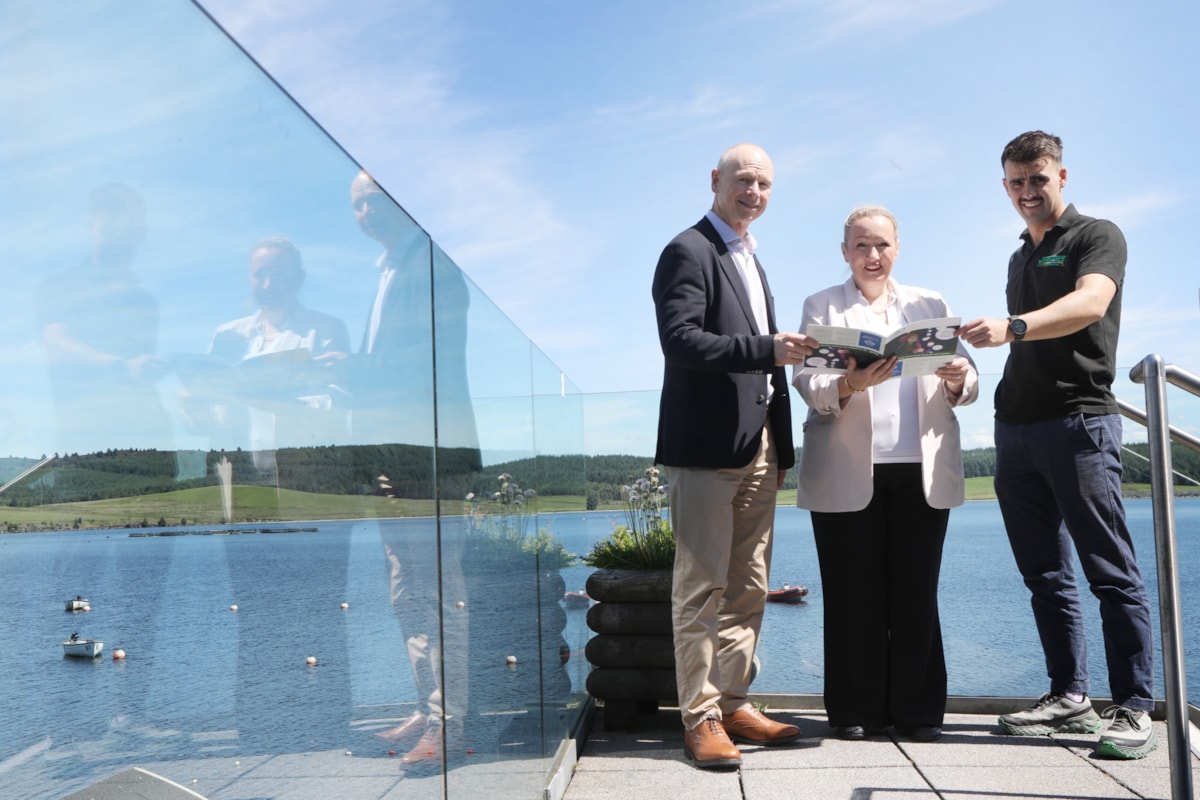
CPRW raises concerns over onshore impact as Welsh Government unveils green energy plan
A MAJOR step towards energy independence has been announced with the launch of three new wind farms under Trydan Gwyrdd Cymru, the publicly owned renewable energy developer for Wales.
The three proposed sites—Clocaenog Dau in Denbighshire/Conwy, Glyn Cothi in Carmarthenshire, and Carreg Wen in Rhondda Cynon Taf—are set to deliver up to 400 megawatts of clean electricity, enough to power 350,000 homes, equivalent to around a quarter of all households in Wales.
A national push for net-zero
The projects form part of the Welsh Government’s wider ambition to develop 1 GW of renewable energy capacity on public land by 2040, with a target of meeting 70% of Wales’ electricity demand from renewables by 2030, rising to 100% by 2035.
The Cabinet Secretary for Energy and Economy, Rebecca Evans MS, said: “These proposals demonstrate our commitment to harnessing Wales’ abundant natural resources to generate clean energy while ensuring the benefits are felt locally.”
She added that developing the projects on the Welsh Government Woodland Estate, which covers 6% of Wales, ensures public land is being used to combat the climate emergency and generate long-term economic benefits.

Concerns from countryside charity
However, not everyone has welcomed the announcement without reservation. The Campaign for the Protection of Rural Wales (CPRW) issued a statement on Thursday (Jul 10) expressing concern over the potential landscape and biodiversity impacts of large-scale onshore wind projects.
Dr Jonathan Dean, Trustee of CPRW, said: “We fully support the transition to renewable energy and the goal of retaining profits for the benefit of Welsh communities. However, we remain disappointed that Trydan Gwyrdd Cymru have not chosen to pursue a more effective and publicly acceptable approach offshore.”
Jonty Colchester, CPRW Chairman, added: “Publicly owned renewable energy projects must set the gold standard for sustainable development. This means not only clean energy generation but also protection of Wales’ treasured natural and cultural landscapes.”
The charity is calling for site-specific impact assessments, greater community involvement, and a transparent development process to ensure that renewable energy goals do not undermine the very environment they are meant to protect.

Jobs and investment for Wales
According to Trydan Gwyrdd Cymru Chief Executive Richard Evans, the developments are expected to create hundreds of jobs during both the construction and operational phases, with a strong emphasis on working with Welsh companies and supply chains.
“We will create and support quality jobs, contribute to skills initiatives and ensure funding supports local priorities,” Mr Evans said.
He also confirmed that profits from the projects will be reinvested in Welsh public services and communities.

Labour attacks Farage and Plaid Cymru
In a political aside, Ms Evans took aim at opposition voices, including Nigel Farage, accusing him of wanting to “turn back the clocks” by scrapping green projects and “sending people back down the pits.”
She also criticised Plaid Cymru for supporting net-zero targets while allegedly obstructing the infrastructure needed to achieve them.
“Only Welsh Labour are looking to the future,” she said, “with optimism and ambition to seize the opportunities that come with the green revolution and harness them to deliver for the people of Wales.”












Sector partnership targets 100% renewable electricity by 2035
A NEW deal has been launched to help Wales meet its renewable energy targets while ensuring greater benefits for local communities.
The Renewable Energy Sector Deal will see the Welsh Government and industry work in strategic partnership to unlock the full economic potential of Wales’ renewable energy future.
The announcement coincides with the publication of the latest Energy Generation and Energy Use in Wales report, which shows renewable electricity generation in 2024 was equivalent to 54% of Wales’ electricity consumption.
The Welsh Government has set a target for renewable electricity to meet 70% of demand by 2030 and 100% by 2035. It also aims to deliver at least 1.5 gigawatts of locally owned renewable energy capacity by 2035.
The Sector Deal is intended to accelerate deployment across onshore and offshore wind, solar, marine and hydro projects. It will also focus on strengthening supply chains, developing skills, and ensuring communities across Wales benefit directly from renewable energy developments.

Cabinet Secretary for Economy, Energy and Planning, Rebecca Evans, is launching the deal during a visit to the Morlais tidal energy project on Anglesey.
The Morlais scheme, owned and managed by social enterprise Menter Môn, is set to become the largest consented tidal energy project in Europe. The Welsh Government holds an £8 million equity stake in the project.
Rebecca Evans said: “Our ambition is to become a world leader in renewable energy, creating jobs and green growth to make families in Wales more prosperous and help with the cost of living.
“The current conflict in the Middle East has further highlighted the importance of energy independence. Our Renewable Energy Sector Deal will provide a strong foundation for future delivery, benefiting our economy, environment and energy security.
“The Morlais project shows how sustained partnership can unlock Wales’ natural energy resources and turn them into lasting economic opportunities for local communities and businesses.
“The latest energy report shows we are making progress towards our targets. Combined with the record 20 major renewable projects, totalling 1,400MW, backed in the most recent UK Government Contracts for Difference auction, it is clear we are building a more resilient, renewable-powered future.”
Dafydd Gruffydd, Managing Director of Menter Môn, added: “The Renewable Energy Sector Deal is an important step in accelerating growth in Wales and across the UK.

“It recognises the role marine energy schemes like Morlais can play in strengthening energy security, creating high-quality jobs and delivering long-term economic benefits for communities such as Anglesey.”
The Sector Deal was co-produced by a task and finish group made up of developers and community organisations.
Responding to the Welsh Government’s Renewable Energy Sector Deal, Welsh Liberal Democrat Leader Jane Dodds MS said: “This so-called ‘sector deal’ raises more questions than it answers.
“There is no clear plan for how we build the workforce needed, with no detail on training, skills or apprenticeships to deliver the green jobs Wales needs.
“Ministers also promise benefits for communities, but without minimum standards or enforcement, there is no guarantee local people will see the rewards.
“Most concerning is the lack of focus on energy bills. Families are struggling, yet there is no clear explanation of how this will bring down costs. Renewable energy should mean cheaper bills, but as long as electricity prices are tied to gas, households won’t feel the benefit, something Labour in Westminster has failed to fix.”

Bangor University scientists join £2.1m project investigating the impact of bottom trawling on carbon stored beneath the seabed
A STATE OF THE ART research vessel has set sail from Liverpool to investigate how bottom trawling may affect carbon stored in the seabed of the Irish Sea.
The scientific expedition is part of a £2.1 million research project funded by the Natural Environment Research Council and led by Professor Jan Geert Hiddink of Bangor University.
A team of eighteen scientists has embarked on the RRS Discovery, one of the world’s most advanced research vessels, for a three-and-a-half-week voyage studying the impact of fishing activity on carbon held in seabed sediments.
Before the ship departed, a number of local dignitaries were invited aboard for a tour of the vessel, including Liverpool City Region Mayor Steve Rotheram and National Oceanography Centre Operations Director Natalie Campbell.
Professor Jan Geert Hiddink, from Bangor University’s School of Ocean Sciences, said bottom-trawl fishing is both vital to global food supply and a major disturbance to seabed environments.
“Bottom-trawl fishing provides around a quarter of global seafood but is also the most extensive physical disturbance caused by human activities to stocks of carbon locked in seabed sediments,” he said.
“This is important because recent evidence suggests that disturbing the seabed could lead to the release of significant amounts of greenhouse gases from the seabed into the atmosphere.
“There are still major uncertainties about how this disturbance affects carbon stored beneath the seabed. As a result, the impact of these disturbances is largely unquantified and currently unregulated.
“The aim of this project is to gain a much clearer understanding of what is happening so that scientists, policymakers and regulators can make informed decisions in the future.”

Seven research organisations are collaborating on the project: Bangor University, the Centre for Environment, Fisheries and Aquaculture Science (CEFAS), Heriot-Watt University, the University of Leeds, Plymouth Marine Laboratory, the University of St Andrews, and Imperial College London.
Caption: Scientists prepare to begin their research aboard the RRS Discovery, one of the world’s most advanced research vessels.

Major investment expected to boost low-carbon industry and create skilled jobs in West Wales
A MAJOR green hydrogen project planned for the Milford Haven Freeport tax site has taken a significant step forward after developers approved the final investment decision.
Energy company MorGen Energy has confirmed it will proceed with the West Wales Hydrogen project, one of the first schemes backed through the UK Government’s Hydrogen Allocation Round (HAR1) to reach this stage.
The facility will be built within the Milford Haven Tax Site, part of the Celtic Freeport zone covering Pembrokeshire and Neath Port Talbot.
Construction is expected to begin in 2026, with the plant scheduled to become operational in early 2028.
Once completed, the site is expected to produce around 2,000 tonnes of low-carbon hydrogen each year, meeting the UK’s Low Carbon Hydrogen Standard.
The hydrogen produced will support a range of industries, including port operations, manufacturing and industrial heating, as well as use as a chemical feedstock.
Supporters say the development will help reduce carbon emissions while strengthening Milford Haven’s role in the UK’s emerging hydrogen economy.
The project is also expected to create skilled jobs and provide work for local contractors during the construction phase.
Further expansion may be possible in future phases as demand for hydrogen grows, potentially helping establish Milford Haven as a major hub for low-carbon energy production serving South Wales and beyond.

Luciana Ciubotariu, Chief Executive of Celtic Freeport, said the decision marked another milestone for the region.
She said: “MorGen Energy’s decision is another major step forward for the hydrogen economy in South West Wales.
“Projects like this within the Milford Haven Tax Site show how the Celtic Freeport is accelerating decarbonisation while creating high-value jobs.”

The UK Government’s Hydrogen Allocation Round scheme provides revenue support to help scale up the country’s low-carbon hydrogen sector and bring early projects to market.



Community5 hours ago
Broad Haven volunteers secure ‘national asset’ status for nature reserve
A SMALL stretch of woodland and former opencast coal mine has been transformed into a nationally recognised biodiversity site, in...


Entertainment1 day ago
Tenby steams up in spectacular style as crowds flock to festival
Colourful parade, towering creations and Victorian flair bring town centre to life TENBY was transformed into a vibrant Victorian fantasy...


Crime2 days ago
Publican jailed for six years for supplying cocaine and cannabis
Milford Haven man sentenced at Swansea Crown Court following drug dealing operation A MILFORD HAVEN publican has been jailed for...


Local Government2 days ago
Poverty summit highlights support efforts across Pembrokeshire
A SUMMIT bringing together key organisations from across Pembrokeshire has highlighted both the scale of local poverty and the work...


Education3 days ago
Milford Haven school plans unveiled but funding not yet secured
PLANS for a new £100 million school in Milford Haven have been unveiled, but the project has not yet secured...


News3 days ago
Council unveils plans for new state-of-the-art secondary school in Milford Haven
PEMBROKESHIRE COUNTY COUNCIL has revealed plans for a new state-of-the-art school in Milford Haven, promising modern, inspiring learning spaces for...


Health3 days ago
NHS waiting list falls — but cancer delays and diagnostic backlog worsen
Record progress claimed by Welsh Government as critics warn key targets are still being missed THE NHS in Wales has...


Crime4 days ago
Rapist jailed after ‘abhorrent’ attacks on woman and children
Haverfordwest man told police “women won’t have sex without force” A HAVERFORDWEST man who raped a woman and a young...


News5 days ago
Reform secures first Pembrokeshire councillor in Hakin by-election win
Late Reform candidate takes seat as independent surge and Labour withdrawal shape contest REFORM UK candidate Scott Thorley has won...


News5 days ago
Scott Thorley elected as Pembrokeshire’s first Reform councillor
REFORM UK candidate Scott Thorley has won the Hakin by-election after securing 179 votes. The full result is as follows:...
-

 News5 days ago
Emergency services flood Haverfordwest after reports of person in river
-

 Crime4 days ago
Mother given community order after admitting child cruelty offence
-
Health3 days ago
NHS waiting list falls — but cancer delays and diagnostic backlog worsen
-

 News5 days ago
Senedd vote to ban greyhound racing hailed as ‘landmark moment’ by charities
-
News5 days ago
Reform secures first Pembrokeshire councillor in Hakin by-election win
-
 News5 days ago
Senedd votes to ban Greyhound racing in Wales to protect animal welfare
-

 Crime4 days ago
Woman stole from pharmacy despite ban, court hears
-

 News6 days ago
£3.8m to help Welsh families struggling with soaring heating oil costs