


Business
Cresswell Quay potato farm allowed to keep holiday let

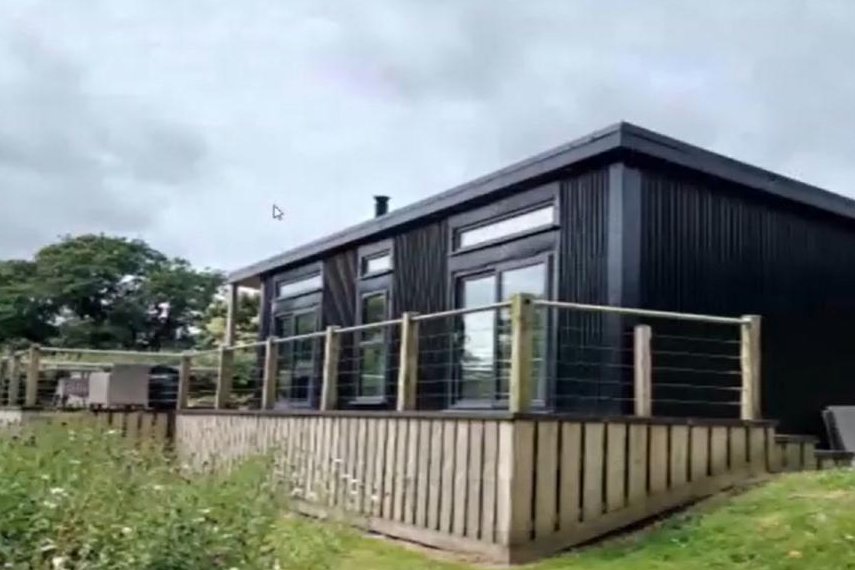
A CALL to allow a 600-acre Pembrokeshire potato farm to keep a holiday let erected “in innocence” without permission, which is said to be essential for supporting the business, has been approved.
In an application recommended for approval at the January 13 meeting of Pembrokeshire County council’s planning committee, Mr and Mrs I and F Elliot sought permission for the continued use of a mobile unit with a veranda as tourist accommodation at Cresswell Barn Farm, Cresswell Quay.
Cresswell Barn Farm supplies potatoes to Welsh supermarkets and the site has a certified campsite.
The application was before the committee rather than being delegated for an officer decision as it was recommended for approval, subject to the completion of a Section 106 legal agreement essentially keeping it for holiday use only, despite being in conflict with the development plan and was made by a close family member of an officer in the planning service.

An officer report accompanying the application said an enforcement investigation was started way back in 2012 following a claim a caravan was located at the site and was being used for residential purposes.

That was closed in 2023; a 2022 investigation taking place after an allegation a structure on-site was being used for holiday letting.
A 2023 certificate of lawfulness application was made to regularise the breach of planning, saying the unit had been used for residential purposes for more than a decade, but insufficient information was provided to allow it, the report said.

An appeal against this was later made to Planning and Environment Decisions Wales (PEDW) but was withdrawn by the applicant.
It said the enforcement action was ongoing, leading to the formal planning application.

Of the site itself, the report said: “The agent has confirmed that due to many variables, there is no typical year for the enterprise in terms of profitability and that the income generated from tourist related activities at the farm, is critical to the farming enterprise. The high-quality holiday unit therefore provides an additional income stream for the farming enterprise.”
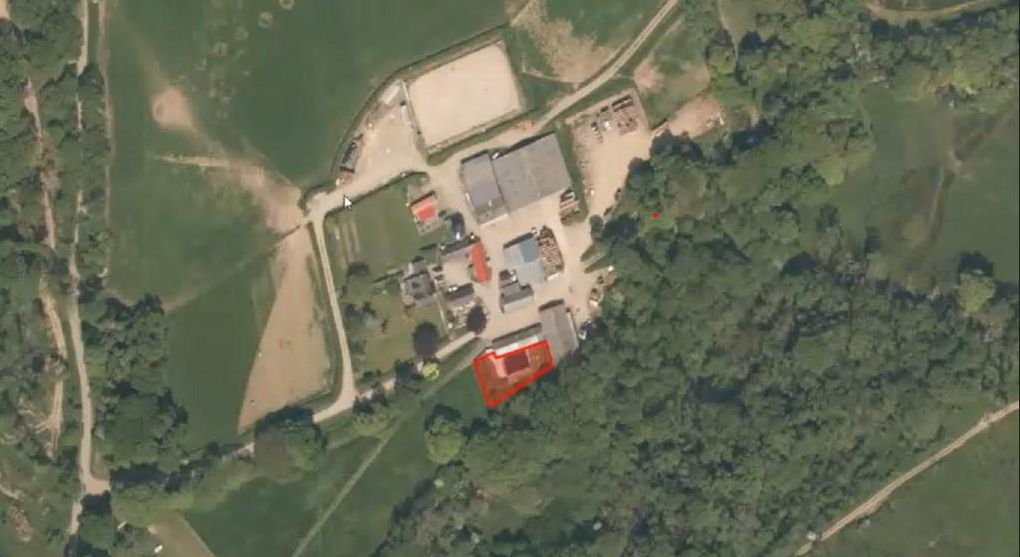
It added: “The holiday unit is located adjacent to buildings that make up the farm complex, with the accommodation offering guests an immersive rural experience that introduces them to aspects of the rural economy.
“Information submitted in support of this application confirms that the income from the holiday uses at the site is critical to supplementing the potato farming enterprise.”

Speaking at the meeting, Fiona Elliot said the holiday let was a small-scale part of the wider farm complex; the building having been on-site for some 15 years, the applicants more recently “in innocence” using it as a holiday let, which visitors have described as “five-star,” not realising they needed planning permission.
Following a call by Cllr Brian Hall to back the officer recommendation of conditional approval, members unanimously supported that.


A CALL to sell alcohol from a coffee shop at a Pembrokeshire railway station, which recently a mass violence incident which led to 11 arrests and several people being taken to hospital, has been given the go-ahead.
At the June 4 meeting of Pembrokeshire County Council’s licensing sub-committee, members were asked to consider the granting of a new premises licence for Lisheens Coffee Pod, Tenby Station, which included the sale of alcohol off-site from 11am to 10pm, seven days a week.
Emergency services were called to the station at around 9.50pm on Tuesday, April 7, following reports of disorder involving a group of people.
During the incident, one individual was reported to be carrying a knife. Four teenagers, aged 13 to 17 were injured and taken to hospital.
A total of 11 arrests for offences including grievous bodily harm and violent disorder were made. All of those arrested were aged between 13 and 19 years old and all local to the Tenby and Pembroke Dock area, police have previously said.
While the incident was unconnected to the licensing application, it was raised in objections to the scheme.
A report for members of the committee said two objections to the application by Mrs Nicola Nolan were received, from The British Transport Police, as a responsible authority, and another from a lease of the railway building, which said: “It encourages group gatherings, encouraging vandalism, and violence such at stabbings by group gatherings as of April 7.”
Jessica Jones, Designing Out Crime Officer for British Transport Police, who later spoke at the meeting had raised concerns “based on crime data, operational policing considerations, lone-working risks, public safety concerns, and Violence Against Women and Girls (VAWG) risks”.

Her report said, over the past two years, there had been 12 incidents of violence, three serious public order offences, and one motor vehicle crime incident, the majority between 9pm and 11pm, a timeframe overlapping the proposed hours of alcohol sales, raising concern that alcohol availability “may further exacerbate existing issues of violence and disorder”.
That report added there were many outlets in Tenby town centre selling alcohol, questioning the need for a further facility at the station, and there was “significant concern regarding the risk to a lone worker having to refuse alcohol sales to intoxicated individuals or manage customers who refuse to leave”.
It went on to say that, while British Transport Police already deploy dedicated policing operations throughout the six-week summer holiday period to manage increased passenger numbers and deter crime, “introducing another alcohol sales point during these peak periods may heighten existing risks”.
Jessica Jones later told committee members introducing the scheme in Tenby would mean it was the only such offer at an unmanned station in Wales.

Speaking at the meeting, Barry Nolan, husband of the applicant, said it was hoped to supplement the ‘coffee pod’ with “genteel” and “trendy alcoholic products” such as wine, “really cool craft beer,” and Barti Ddu rum in cans for consumption elsewhere rather than “pints of lager and triple vodkas”.
He said the facility wouldn’t lead to youths congregating due to the products being at the more premium price end; also offering security if needed.
He later offered a reduction in alcohol serving hours to 8.30pm, with committee chair Cllr Tim Evans mooting an 8pm finish.
After retiring to deliberate, members agreed to the granting of the licensing, subject to an 8pm cut-off, wishing the applicants well in their business.
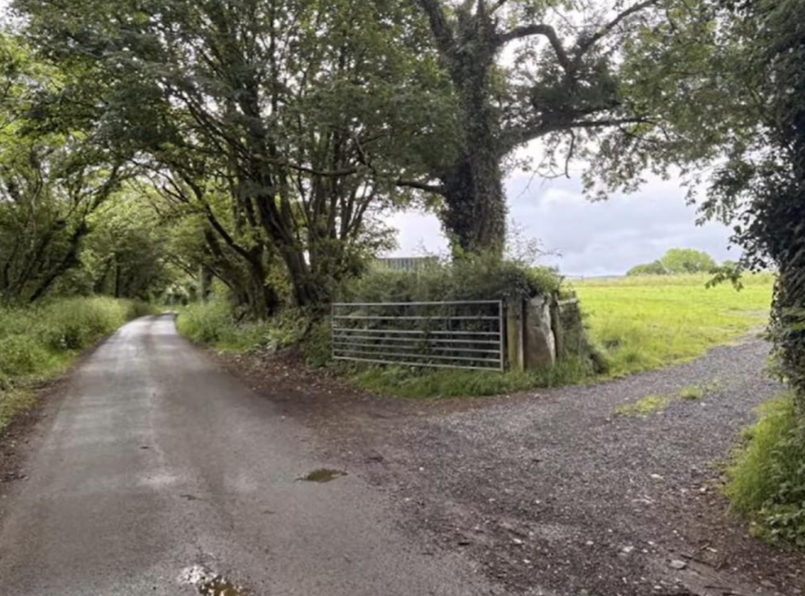
PLANS for new horse breeding sheds in north Pembrokeshire for “the longest continuously run Welsh pony stud in the world,” which is seeking to relocate to the county, have been given the go-ahead.
In an application recommended for approval at the June meeting of Pembrokeshire Coast National Park’s development management committee, Mr Davies, through agent Harries Planning Design Management, sought permission for the construction of an agricultural buildings for horse breeding stables at Let Wen, Felindre Farchog.
A supporting statement accompanying the application said a typical stable building to house breeding horses was sought, along with a building for feed, dung and implements to keep and maintain the horses within the site and two additional buildings proposed for general storage of items to run the agricultural business.
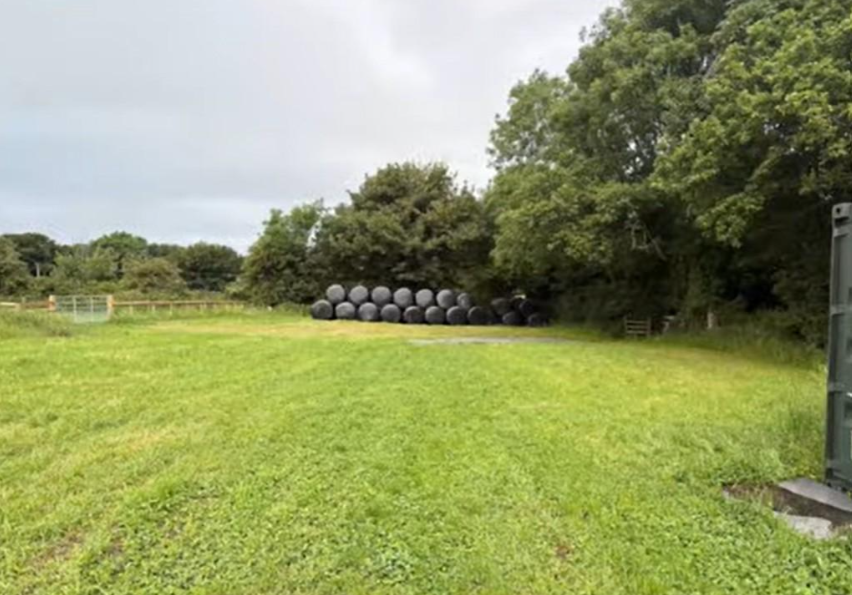
Detailing the background to the application, it said: “The horses on this site are breeding horses and the business trades under the name The Ceulan Stud and is the longest continuously run Welsh Pony Stud in the world.
“The business originally operated near to Aberystwyth, before relocating to Rhondda Cynon Taf for over 62 years. The business has now bought land in north Pembrokeshire and seeks to relocate here. The business operates with 10 breeding mares and two stallions and produces 10 foals per year all for direct sale.
“The proposed site allows for safe breeding of the stock, with the surrounding land being used for turning out the stock, which are only brought in to breed. The applicant does not ride the horses, and they are raised as livestock for sale.”
The application was brought for committee consideration as it was recommended for approval despite objections from local community council Nevern on the grounds including it being “a very large complex on a greenfield site,” with a loss of valuable agricultural land, and concerns about accessibility to and from the highway.
An officer report recommending approval said: “The proposal includes the erection of a stable block containing three stables together with ancillary feed storage, tack room, hay and implement storage buildings, turnout paddock, dung storage area, access improvements, permeable hardstanding, landscaping and biodiversity enhancement measures.
“The development has been amended following pre-application discussions to reduce the scale of development and minimise the amount of Grade 3a Best and Most Versatile agricultural land affected.”
It concluded: “In visual terms, whilst the proposal would introduce built development into part of an open field, the buildings are modest in scale and agricultural in appearance.
“The proposal also incorporates substantial mitigation measures including earth bunding, ecological buffers and significant native hedgerow planting intended to soften and assimilate the development into the wider countryside landscape over time.
“As such, the proposal is not considered unduly visually intrusive within the context of the surrounding agricultural landscape.”

The application was conditionally approved by committee members.


THE SHARE of UK businesses classed as “innovation-active” has fallen sharply over the past decade, raising concerns about the ability of firms in Wales and across the UK to compete, grow and adapt.
New figures show that only 34% of UK businesses were innovation-active between 2022 and 2024, compared with 53% ten years earlier — a fall of 19 percentage points.
The National Centre for Universities and Business (NCUB) said the decline should worry policymakers, universities and employers, particularly at a time when productivity, investment and economic growth remain under pressure.
For Wales, the figures are especially relevant. Many Welsh businesses are small or medium-sized firms operating in rural, coastal or post-industrial communities, where access to finance, skills, research partnerships and new technology can be more limited than in larger urban centres.
The warning comes despite repeated political promises to make the UK a science and technology leader. NCUB says the problem is not a lack of research talent, but a failure to turn ideas into commercial activity across the wider economy.
Rosalind Gill, Director of Policy at NCUB, said: “A shrinking base of innovative businesses is a serious concern. Innovation is not confined to a handful of frontier sectors or high-growth companies. It depends on businesses across the economy investing, adapting and bringing new ideas, products and services to market.
“The UK has many strengths. We continue to produce world-class research, generate promising discoveries and collaborate effectively across institutions. Innovation is not created by research alone, however.
“It depends on businesses investing in R&D and innovation, shaping demand, adopting new technologies and working with the research base to solve real-world challenges.”
Ms Gill said the Government’s focus on growth, innovation, reforms to UK Research and Innovation, and a new Industrial Strategy were welcome, but businesses needed clearer long-term priorities and simpler routes from research to market.
She added: “When we speak to business leaders, they consistently highlight the importance of clearer long-term priorities, stronger pathways from research to market, reduced complexity across the research and innovation system, and greater confidence that the UK is a place where innovative firms can start, scale and succeed.”
The NCUB said the challenge now is to ensure that research strengths translate into business investment, commercial activity and economic impact.
For Wales, that means ensuring universities, colleges, manufacturers, farming businesses, tourism operators, renewable energy firms and digital start-ups are not left behind as the UK attempts to rebuild its innovation economy.



Community21 hours ago
Crisis response dogs launched to support people through trauma and distress
A NEW project using specially trained dogs to support people during moments of trauma, grief and crisis has been launched...


News1 day ago
Major fire breaks out at Tata Steel site in Port Talbot
TATA STEEL has confirmed that a major fire broke out at its Port Talbot steelworks on Wednesday night, with emergency...


Community2 days ago
HMS Erebus tragedy links Pembroke Dock ship to Templeton family
DNA breakthrough identifies cabin boy David Young as exhibition marks 200 years since ship’s launch ON MAY 19, 1845, a...


Community2 days ago
Narberth cash machine closures spark urgent access review
CALLS have been made for an urgent review of access to cash in Narberth after two town centre ATMs were...


Health3 days ago
First Minister quizzed on Welsh NHS pressures in his first-ever FMQs
SENEDD Members pressed the First Minister over the state of the health service in Wales, as the Plaid Cymru leader...


Community3 days ago
Historic paddle steamer Waverley to return to Fishguard this month
THE WORLD’S last seagoing paddle steamer will return to Fishguard this month as part of her annual visit to South...


Local Government3 days ago
National Express use of new Haverfordwest interchange still subject to risk checks
A RUMOUR that National Express coaches may struggle to use Haverfordwest’s new transport interchange has been denied by Pembrokeshire County...


Crime3 days ago
Milford Haven man jailed for illegal Premier League streaming service
A MILFORD HAVEN man who supplied illegal Premier League streams and loaded Firesticks to almost 2,000 customers has been jailed...


Community4 days ago
RNLI lifeguards rescue beachgoers during busy heatwave weekend
FOUR PEOPLE RESCUED AS RIP CURRENTS AND OFFSHORE WINDS HIT PEMBROKESHIRE BEACHES RNLI lifeguards in Pembrokeshire rescued four people and...


Local Government4 days ago
Council and school staff pay row could hit Pembrokeshire services
COUNCIL workers, carers and school support staff in Pembrokeshire could be drawn into a growing UK-wide pay dispute after GMB...
-

 Crime2 days ago
Milford Haven man bit neighbour’s neck near cashpoint
-
Crime3 days ago
Milford Haven man jailed for illegal Premier League streaming service
-

 Crime3 days ago
Haverfordwest man admits cocaine offence as Crown disputes basis of plea
-

 Crime2 days ago
Pembroke Dock driver avoided jail after drug-drive crash
-
Local Government3 days ago
National Express use of new Haverfordwest interchange still subject to risk checks
-

 Crime2 days ago
Dinas Cross man jailed over shop thefts
-

 Community5 days ago
Charles Street to come alive for Milford Haven Founders Day
-

 Health5 days ago
Hywel Dda to hold second consultation on future of stroke services