


Charity
RNLI host ‘Find Your Float’ event for World Drowning Prevention Day 2025

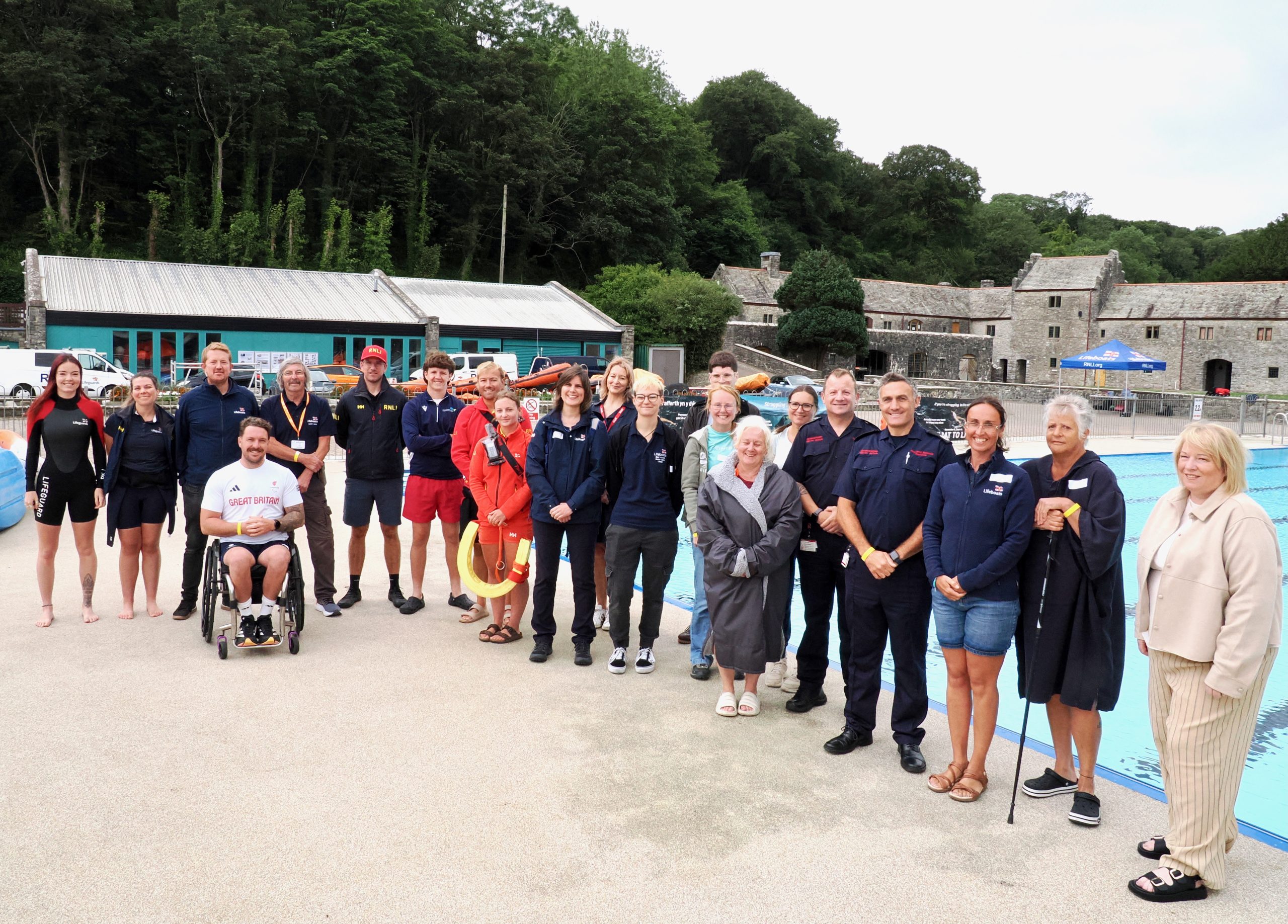
THE RNLI have hosted an event inviting people to ‘Find Your Float’ for World Drowning Prevention Day, supported by Paralympic and European para-rowing Champion, Ben Pritchard, and water safety campaigner Maxine Johnson.
This World Drowning Prevention Day (25 July) the National Water Safety Forum (NWSF) has launched a ‘Find Your Float’ campaign to encourage people to practise vital self-rescue and survival techniques. In support of this campaign, the RNLI held an event held at UWC Atlantic College this week, inviting a diverse group of participants to practice the lifesaving float technique.
Chris Cousens, RNLI Regional Water Safety Lead says: ‘We wanted to host this event in support of the campaign so people could get in the water themselves and practice floating – a technique we know saves lives.
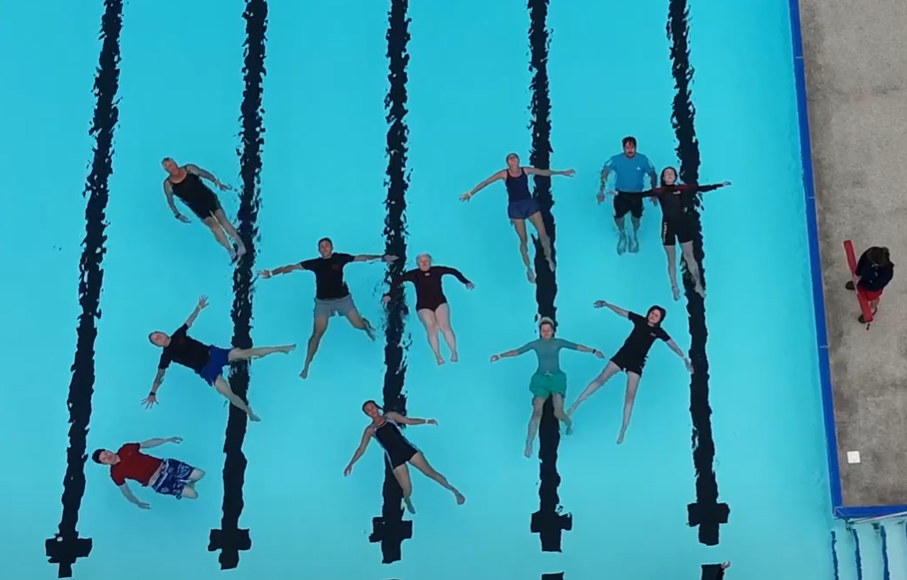
‘At the RNLI we are aware of at least 50 people who have used floating to help save themselves after getting into difficulty in the water. With the start of the summer holidays, many families and young people are planning on spending time at the coast and near water over the coming weeks – so we want to get as many people as possible to “Find Your Float” and have a go floating.
‘Everyone can float, although not everybody floats in the same way, so the more people we get finding out what floating looks and feels like for them by practising in a safe and supervised environment, the more potential lives that could be saved.’

Ben Pritchard, gold-medal winning Paralympic and European para-rower, and former RNLI lifeboat crew and lifeguard, was one of the participants who got in the water to find his float. Ben said:
‘I think for people in my position who have spinal injuries or are (wheel)chair users, this is a really important campaign, because our instant worry is that we do sink because we don’t have core control, we don’t have muscle activation to help us get up.
‘And what I found in the water today… even though my feet were dropping down, my airway was clear, just by making sure my ears were under the water and I was leaning back.
‘So I think for anyone that has mobility issues or may worry that they are not strong enough – the easiest thing was just to relax, tilt your head back, get those ears in the water and float.

‘Don’t be afraid to take a moment to relax as that will help you float. In instances where you fall in the water, or you may find yourself in trouble – relax. Get those ears in the water, get that airway clear and give yourself two minutes, and then start shouting for help and trying to get attention.’
Maxine Johnson’s son Reuben was 15 when he drowned after getting into difficulty in Pontsticill Reservoir, Bannau Brycheiniog in 2006. Since that heartbreaking incident, Maxine has campaigned tirelessly in the water safety space to spread lifesaving messages in the hope that no other family goes through what they have.
Maxine says: ‘Supporting “Find Your Float” for World Drowning Prevention Day means we are highlighting the dangers that open water can present and the importance of water safety education.

‘No one ever thinks it will happen to them, or their friend or family member – but the truth is, anyone can get into difficulty in the water.’
It was a very hot day when Reuben was celebrating with friends after finishing his GCSEs. They entered the water to swim across the reservoir and Reuben suffered cold-water shock, tragically never making it to the other side.
‘The impact of our loss is indescribable, but I want to make sure that other parents, children and young people, don’t go through the same pain we’ve suffered. I am keeping Reuben’s memory alive through raising awareness.’
Chris added: ‘The rate of accidental drowning in Wales is almost double that of the UK as a whole, so we want everyone of all age groups and backgrounds to go and find your float. Practice in your local swimming pool, or at a lifeguarded beach between the red and yellow flags.
‘Having Maxine’s and Ben’s support for our “Find Your Float” event is a powerful message that we should all take the time to practice this lifesaving technique – as you never know when you might need it.’
The NWSF has revealed that young people are the most high-risk group for accidental drowning in the UK. According to the Water Incident Database (WAID), more than a quarter (26 per cent) of all accidental drowning deaths that occurred in the last five years (2020 to 2024 inclusive) were young people aged 10 to 29.
Sadly, warm weather is a known factor in increasing these numbers – when the weather turns hot, many teenagers and young adults head to the water to socialise and cool off, often unaware of the dangers open water presents.
Because of this worrying correlation, water safety experts are urging anyone planning to spend time on or near the water this summer to prepare themselves for an emergency by practising an essential self-rescue skill: floating.
Floating is a science-backed, lifesaving technique that works in both salt and fresh water.[i] Everyone can float, although not everybody floats in the same way. Professor Mike Tipton, Chair of the NWSF and leading global voice in water safety said:
‘The hugely important “Find Your Float” campaign is designed to teach people – including the young – proven life-saving behaviour and encourages them to practice it, preparing them should they ever need to use it. I encourage everyone to get involved; a couple of hours devoted to “finding your float” could save decades of life.’
The RNLI shares a special history with UWC Atlantic College. The development of the Rigid Inflatable Boat (RIB) by students and staff at the college in the 60s and 70s was a revolutionary moment in boating design. The RIB became the model for the RNLI’s B class Atlantic lifeboats, with today’s Atlantic 85 as the latest model and the workhorse of the RNLI’s lifesaving fleet.
A UWC Atlantic Spokesperson said: “At UWC Atlantic, our legacy in lifesaving and water safety education dates back to the development of the first RIB (rigid inflatable boat), which was designed here and later donated to the RNLI. That spirit of innovation and service lives on today, and we’re proud to be part of this vital campaign – promoting the skills, knowledge, and awareness that continue to save lives.’
How to find your float:
- Tilt your head back with your ears submerged
- Relax and try to breathe normally
- Move your hands and legs to help you stay afloat
- It’s OK if your legs sink, we all float differently
- Once your breathing is under control, call for help or swim to safety.
For more information about the ‘Find your Float’ campaign and World Drowning Prevention Day, visit respectthewater.com.


STAFF at OC Davies used pedal power to cycle an incredible 453 miles as part of a fundraising event marking two major anniversaries.
The Cardigan-based dealership is celebrating 40 years as a Renault dealer in 2026, while the Wales Air Ambulance marked its 25th anniversary on St David’s Day (Mar 1).
To celebrate the milestones – and the launch of the new vehicle registration plate – the dealership held a community open day at its Cardigan site, raising £2,102 for the lifesaving charity.

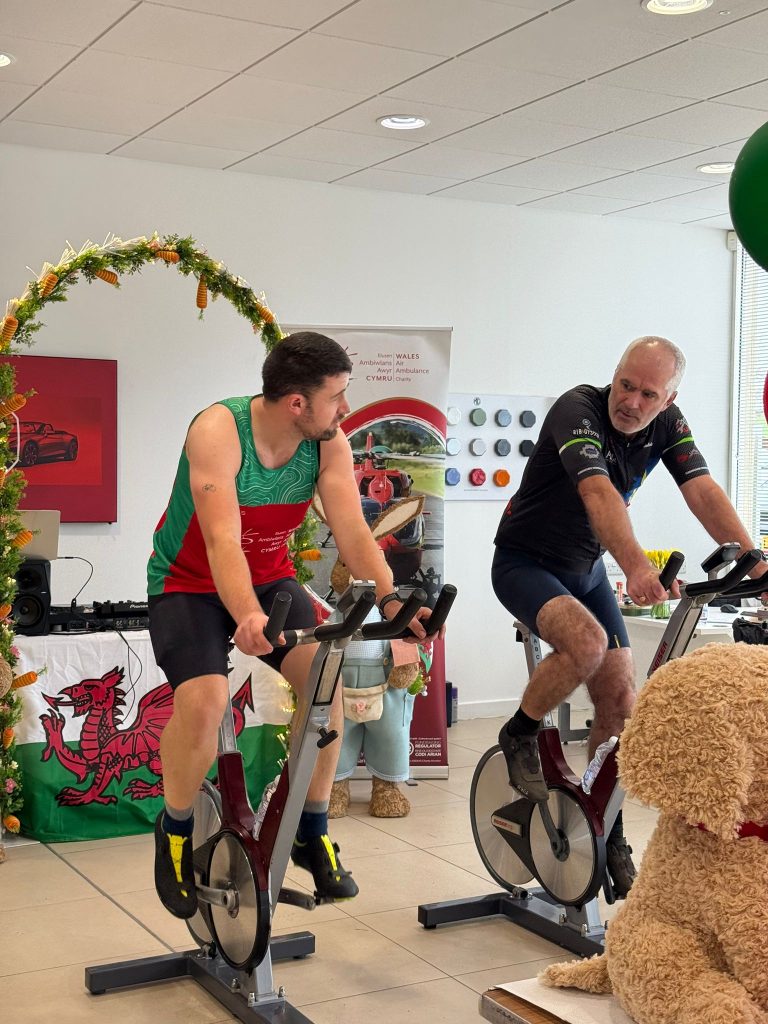
As part of the event, staff and supporters took on a spin bike challenge to cycle the equivalent of 104 miles – the distance between OC Davies’ three dealerships in Cardigan, Neyland and Carmarthen.
However, the participants far exceeded expectations.

During the 12-hour challenge, which ran from 8:00am to 8:00pm, a total of 37 people took part and collectively cycled an impressive 453 miles.
Over the years, OC Davies has now raised more than £6,600 for the Wales Air Ambulance Charity.
Nicola Lewis from OC Davies said: “We are incredibly proud to have raised £2,102. This fantastic amount exceeded all our expectations and shows just how supportive our community has been.
“The success of the event has inspired us to keep the momentum going and continue raising money for Wales Air Ambulance throughout the rest of the year.

“We currently have an Easter egg lucky dip running in the dealership and we’re also planning to raise further funds later in the summer at some outdoor events we’ll be taking part in.”
More than 200 visitors attended the open day and around 900 tickets were sold for a grand raffle.
Prizes were donated by local businesses including The Cliff Hotel & Spa, Tom Samways Butchers, U Melt Me, Tonnau, Theatr Mwldan, Folly Farm Adventure Park and Zoo, and The Queen’s Hall.

Additional prizes were also donated by the Scarlets and Swansea City FC.
Nicola added: “The open day was wonderfully supported by local businesses and members of the community, which helped make the event so special.
“We were overwhelmed by the generosity and support from businesses in Cardigan and beyond who kindly donated prizes for our grand raffle.”
The spin bikes used during the challenge were loaned by Neil Fulstow Fitness Coaching, with additional support from Clive Evans and Clive Davies.
The charity’s mascot Biggles also made an appearance during the day – even taking a turn on the DJ decks.
Emily Bell, Wales Air Ambulance’s Regional Fundraising Co-ordinator, said: “A huge congratulations to the staff at OC Davies, who smashed their original target while raising an incredible amount for our charity.
“It was a lovely open day which I was delighted to attend. OC Davies found a wonderful way to mark both anniversaries.
“Wales Air Ambulance needs to raise £13 million every year to keep our helicopters flying and our rapid response vehicles on the road. Fundraisers like this help ensure we can continue to be there for the people of Wales when they need us most.”
Wales Air Ambulance is a consultant-led service delivering hospital-standard treatment at the scene of an incident.
Through its partnership with the Emergency Medical Retrieval and Transfer Service (EMRTS), NHS consultants and critical care practitioners can provide advanced treatment including anaesthesia, blood transfusions and minor surgical procedures before transporting patients to the most appropriate hospital.
As a pan-Wales service, its crews travel across the country to deliver lifesaving emergency care wherever it is needed.
For more information visit www.ocdavies.com.

PET owners are being warned to avoid buying lilies this Mother’s Day after experts said the popular flowers can be fatal to cats.
The warning has been issued by the RSPCA ahead of Mothering Sunday (March 15), with the charity urging people to choose pet-friendly flowers instead.
RSPCA animal welfare expert Lauren Bennett said: “Flowers are a lovely gift for Mother’s Day, and like many people I enjoy receiving them whatever the occasion. But sadly some flowers and plants can be toxic to our pets, so it’s important to avoid these where animals are present.

“Lilies are a particular concern because they are so popular at this time of year, yet many people do not realise just how dangerous they are to cats. Even small amounts of petals can be deadly, and the leaves, pollen and even the water from the vase can pose a serious risk.
“It is vital that people understand lilies can be lethal to cats. Even cutting the stamens out once they have opened is not enough. A small amount of pollen can transfer to a cat’s fur and when they groom themselves, they can quickly become seriously ill.”
The charity says cat owners can help prevent accidental poisoning by choosing alternative flowers when buying bouquets this weekend.
Lauren added: “Cats can suffer terribly after lily poisoning and it is heartbreaking for owners to witness. Thankfully it is easy to avoid. We all want to treat mums this Mother’s Day, but if they are also cat mums, please do not buy them lilies.”
The RSPCA also warned that other plants including daffodils, tulips, holly and hyacinths can be toxic to cats and dogs.
Even flowers considered non-toxic can still cause stomach upset if eaten, so the charity advises keeping all plants and bouquets well out of reach of pets.
The charity added that chocolate poisoning remains the most commonly reported type of animal poisoning, and people are being urged to keep Mother’s Day treats away from curious pets.
Lauren said: “If you suspect that your pet has eaten chocolate, contact your vet immediately for advice. Your vet will want to know how much chocolate your pet has eaten and what type it was. If possible, keep the packaging and have your pet’s weight to hand.”
Signs of possible poisoning in pets can include depression, loss of appetite, vomiting, diarrhoea, breathing difficulties, twitching or seizures.

The RSPCA is encouraging pet owners to share the advice to help keep animals safe during the Mother’s Day celebrations.
For more information about toxic substances affecting pets, visit the Veterinary Poisons Information Service website.

Licensing authorities yet to explain purpose of visit at one of the UK’s largest dog rescues
INSPECTORS have visited the premises of one of the UK’s largest dog rescue organisations, with police attending in a supporting capacity during the operation.
Dyfed-Powys Police confirmed officers were present at Many Tears Animal Rescue in Carmarthenshire on Tuesday (Mar 10) but stressed that their role was limited to preventing any breach of the peace.
The force said the visit took place without any need for police intervention, and directed enquiries about the purpose of the visit to Animal Licensing Wales, which oversees animal establishment licensing across Wales.
A spokesperson for Dyfed-Powys Police told The Herald: “Officers attended the premises in a supporting capacity only, to prevent any breach of the peace. The visit took place without any need of police involvement or intervention.”
The police statement indicates that the visit itself was led by another agency rather than being a police investigation.
The RSPCA Cymru has also confirmed it was not involved in the visit.
An RSPCA Cymru spokesperson said: “The RSPCA did not attend this premises on March 10 so did not participate in any visit that took place.”
Many Tears Animal Rescue, based near Llanelli, is one of the largest dog rescue charities operating in the UK, rehoming thousands of animals each year and receiving dogs from a range of sources including commercial breeding establishments and other rescues.
Sources have told The Herald that investigators attended the site earlier this week, though the purpose and scope of the visit has not yet been confirmed.

The Herald has contacted Animal Licensing Wales, which administers animal establishment licensing under Welsh Government regulations, to clarify whether the visit formed part of a routine inspection, a complaint-led investigation, or an enforcement action.
At the time of publication, the organisation had not yet responded.
The Herald has also approached Many Tears Animal Rescue for comment.
Animal Licensing Wales operates under the Animal Welfare (Licensing of Activities Involving Animals) (Wales) Regulations 2021, which require organisations involved in activities such as animal boarding, breeding, and rehoming to meet strict standards relating to welfare, veterinary care, record-keeping, and the management of animals on site.
Any inspection or enforcement action carried out under the regulations can result in improvement notices, licence conditions being altered, or in serious cases the suspension or revocation of a licence.
It remains unclear whether the visit to the Carmarthenshire rescue was part of a routine regulatory inspection or a response to specific concerns.
The Herald will update this story when further information becomes available.



Sport17 hours ago
France crowned Six Nations champions after extraordinary final-day drama
Ramos penalty in Paris seals title as Ireland fall just short and Wales end losing run FRANCE were crowned 2026...


News21 hours ago
Fishguard linked to allegations in Many Tears Animal Rescue investigation
Claims about puppies arriving through Pembrokeshire port emerge as licensing probe continues FISHGUARD has been named in allegations linked to...

Local Government2 days ago
Investigation confirmed after inspectors visit Many Tears Animal Rescue
Licensing authority declines to comment as police confirm attendance at Carmarthenshire rescue centre AN INVESTIGATION is underway following a visit...


Business3 days ago
Work set to begin on £50m hydrogen plant in Milford Haven
A MAJOR new hydrogen production facility worth around £50 million is expected to begin construction in Milford Haven later this...


Education4 days ago
Manorbier school closure approved while insurance claim still unresolved
Council confirms negotiations with insurer ongoing following 2022 fire PEMBROKESHIRE COUNTY COUNCIL has confirmed that negotiations with its insurer over...


Crime5 days ago
‘Knife attack’ at Spittal property leaves man in hospital
POLICE have arrested a woman following what is being described as a ‘knife attack’ at a property in Spittal on...


Community5 days ago
Pembrokeshire to receive its first banking hub in Pembroke Dock
LINK, the UK’s Cash Access and ATM network, has today announced local people and businesses in Pembroke Dock will benefit from a new banking...


Health6 days ago
Future of Withybush Hospital petition sparks urgent call for Senedd debate
CALLS have been made for an urgent debate in the Senedd over the future of services at Withybush Hospital as...


Sport7 days ago
Sean Bowen set for historic Welsh clash at Cheltenham Gold Cup
PEMBROKESHIRE jockey Sean Bowen could be part of a historic all-Welsh showdown when he lines up in the Cheltenham Gold...


Community7 days ago
Tenby still waiting as Wales hits 50 rural mobile mast upgrades
Seaside town plagued by signal congestion again absent from latest government-backed coverage improvements A NEW milestone in the UK Government’s...
-

 Health3 days ago
Welsh Ambulance Service to host bi-monthly Board meeting
-

 News2 days ago
Rayner and Lammy visit Wales to discuss justice and community safety
-

 Local Government5 days ago
Register now to vote in May’s Senedd election
-

 Crime7 days ago
Former Pembrokeshire Army officer stripped of MBE after fraud conviction
-
Community7 days ago
Tenby still waiting as Wales hits 50 rural mobile mast upgrades
-
 Community7 days ago
Carmarthenshire woman celebrates 100th birthday surrounded by family
-

 News7 days ago
Hustings to focus on learning disability support ahead of Senedd election
-

 Crime6 days ago
E-bike rider who sped through pedestrian alley sentenced by court