


Charity
RNLI host ‘Find Your Float’ event for World Drowning Prevention Day 2025

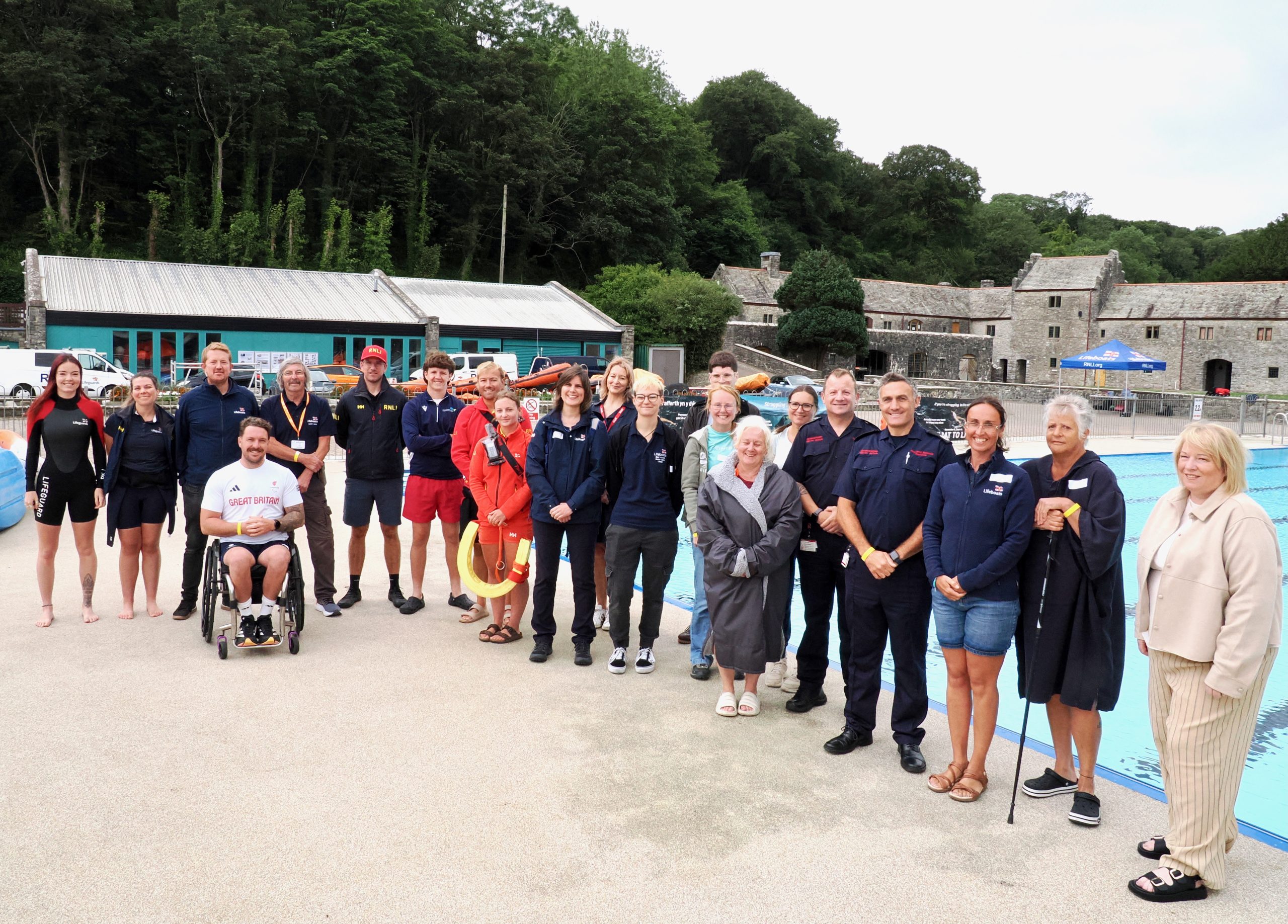
THE RNLI have hosted an event inviting people to ‘Find Your Float’ for World Drowning Prevention Day, supported by Paralympic and European para-rowing Champion, Ben Pritchard, and water safety campaigner Maxine Johnson.
This World Drowning Prevention Day (25 July) the National Water Safety Forum (NWSF) has launched a ‘Find Your Float’ campaign to encourage people to practise vital self-rescue and survival techniques. In support of this campaign, the RNLI held an event held at UWC Atlantic College this week, inviting a diverse group of participants to practice the lifesaving float technique.
Chris Cousens, RNLI Regional Water Safety Lead says: ‘We wanted to host this event in support of the campaign so people could get in the water themselves and practice floating – a technique we know saves lives.
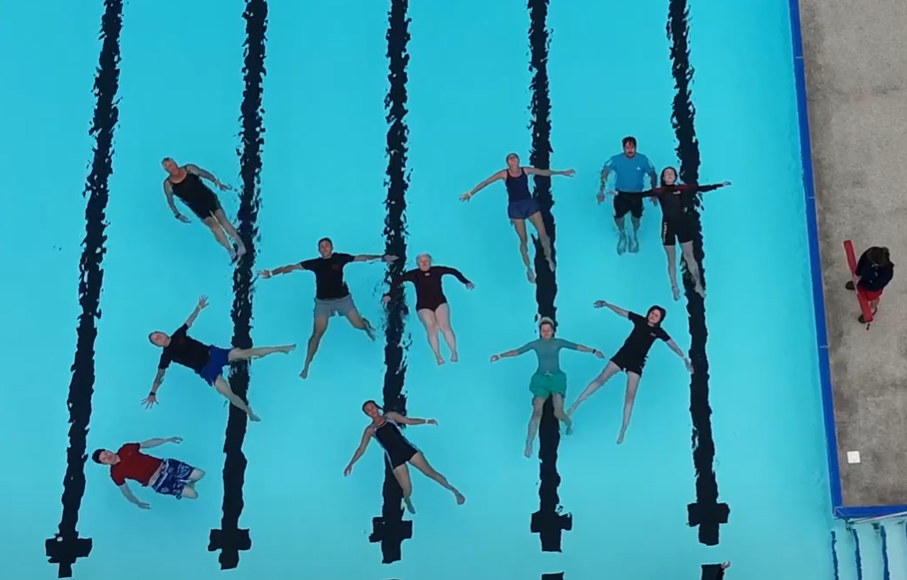
‘At the RNLI we are aware of at least 50 people who have used floating to help save themselves after getting into difficulty in the water. With the start of the summer holidays, many families and young people are planning on spending time at the coast and near water over the coming weeks – so we want to get as many people as possible to “Find Your Float” and have a go floating.
‘Everyone can float, although not everybody floats in the same way, so the more people we get finding out what floating looks and feels like for them by practising in a safe and supervised environment, the more potential lives that could be saved.’

Ben Pritchard, gold-medal winning Paralympic and European para-rower, and former RNLI lifeboat crew and lifeguard, was one of the participants who got in the water to find his float. Ben said:
‘I think for people in my position who have spinal injuries or are (wheel)chair users, this is a really important campaign, because our instant worry is that we do sink because we don’t have core control, we don’t have muscle activation to help us get up.
‘And what I found in the water today… even though my feet were dropping down, my airway was clear, just by making sure my ears were under the water and I was leaning back.
‘So I think for anyone that has mobility issues or may worry that they are not strong enough – the easiest thing was just to relax, tilt your head back, get those ears in the water and float.

‘Don’t be afraid to take a moment to relax as that will help you float. In instances where you fall in the water, or you may find yourself in trouble – relax. Get those ears in the water, get that airway clear and give yourself two minutes, and then start shouting for help and trying to get attention.’
Maxine Johnson’s son Reuben was 15 when he drowned after getting into difficulty in Pontsticill Reservoir, Bannau Brycheiniog in 2006. Since that heartbreaking incident, Maxine has campaigned tirelessly in the water safety space to spread lifesaving messages in the hope that no other family goes through what they have.
Maxine says: ‘Supporting “Find Your Float” for World Drowning Prevention Day means we are highlighting the dangers that open water can present and the importance of water safety education.

‘No one ever thinks it will happen to them, or their friend or family member – but the truth is, anyone can get into difficulty in the water.’
It was a very hot day when Reuben was celebrating with friends after finishing his GCSEs. They entered the water to swim across the reservoir and Reuben suffered cold-water shock, tragically never making it to the other side.
‘The impact of our loss is indescribable, but I want to make sure that other parents, children and young people, don’t go through the same pain we’ve suffered. I am keeping Reuben’s memory alive through raising awareness.’
Chris added: ‘The rate of accidental drowning in Wales is almost double that of the UK as a whole, so we want everyone of all age groups and backgrounds to go and find your float. Practice in your local swimming pool, or at a lifeguarded beach between the red and yellow flags.
‘Having Maxine’s and Ben’s support for our “Find Your Float” event is a powerful message that we should all take the time to practice this lifesaving technique – as you never know when you might need it.’
The NWSF has revealed that young people are the most high-risk group for accidental drowning in the UK. According to the Water Incident Database (WAID), more than a quarter (26 per cent) of all accidental drowning deaths that occurred in the last five years (2020 to 2024 inclusive) were young people aged 10 to 29.
Sadly, warm weather is a known factor in increasing these numbers – when the weather turns hot, many teenagers and young adults head to the water to socialise and cool off, often unaware of the dangers open water presents.
Because of this worrying correlation, water safety experts are urging anyone planning to spend time on or near the water this summer to prepare themselves for an emergency by practising an essential self-rescue skill: floating.
Floating is a science-backed, lifesaving technique that works in both salt and fresh water.[i] Everyone can float, although not everybody floats in the same way. Professor Mike Tipton, Chair of the NWSF and leading global voice in water safety said:
‘The hugely important “Find Your Float” campaign is designed to teach people – including the young – proven life-saving behaviour and encourages them to practice it, preparing them should they ever need to use it. I encourage everyone to get involved; a couple of hours devoted to “finding your float” could save decades of life.’
The RNLI shares a special history with UWC Atlantic College. The development of the Rigid Inflatable Boat (RIB) by students and staff at the college in the 60s and 70s was a revolutionary moment in boating design. The RIB became the model for the RNLI’s B class Atlantic lifeboats, with today’s Atlantic 85 as the latest model and the workhorse of the RNLI’s lifesaving fleet.
A UWC Atlantic Spokesperson said: “At UWC Atlantic, our legacy in lifesaving and water safety education dates back to the development of the first RIB (rigid inflatable boat), which was designed here and later donated to the RNLI. That spirit of innovation and service lives on today, and we’re proud to be part of this vital campaign – promoting the skills, knowledge, and awareness that continue to save lives.’
How to find your float:
- Tilt your head back with your ears submerged
- Relax and try to breathe normally
- Move your hands and legs to help you stay afloat
- It’s OK if your legs sink, we all float differently
- Once your breathing is under control, call for help or swim to safety.
For more information about the ‘Find your Float’ campaign and World Drowning Prevention Day, visit respectthewater.com.

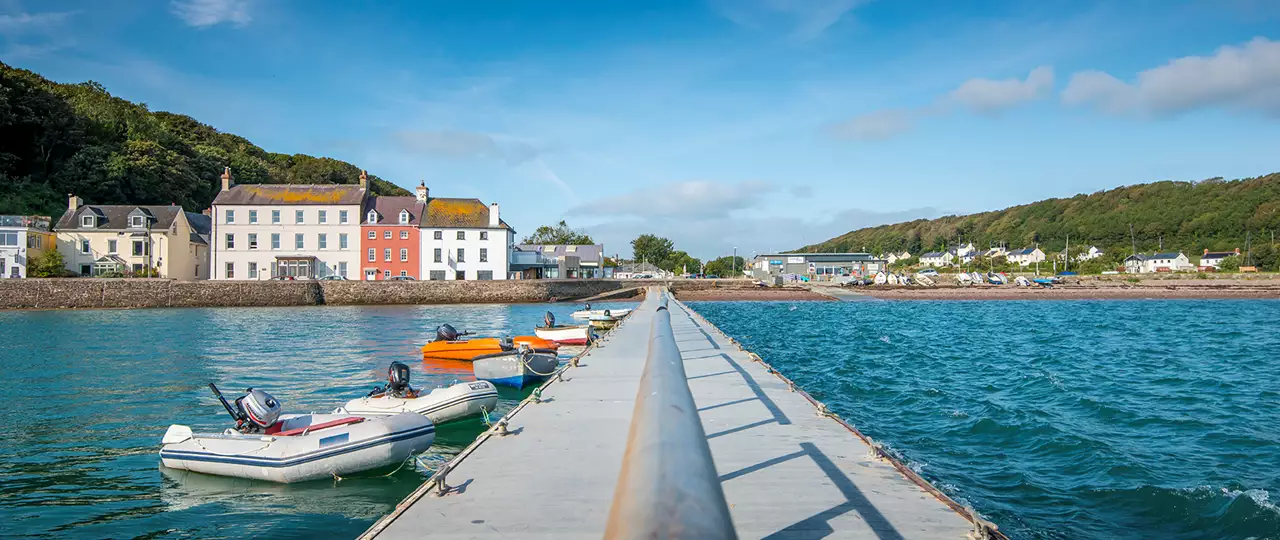
A CHARITY concert aimed at improving access to the coast for disabled people is set to take place at Dale Seafront later this month.
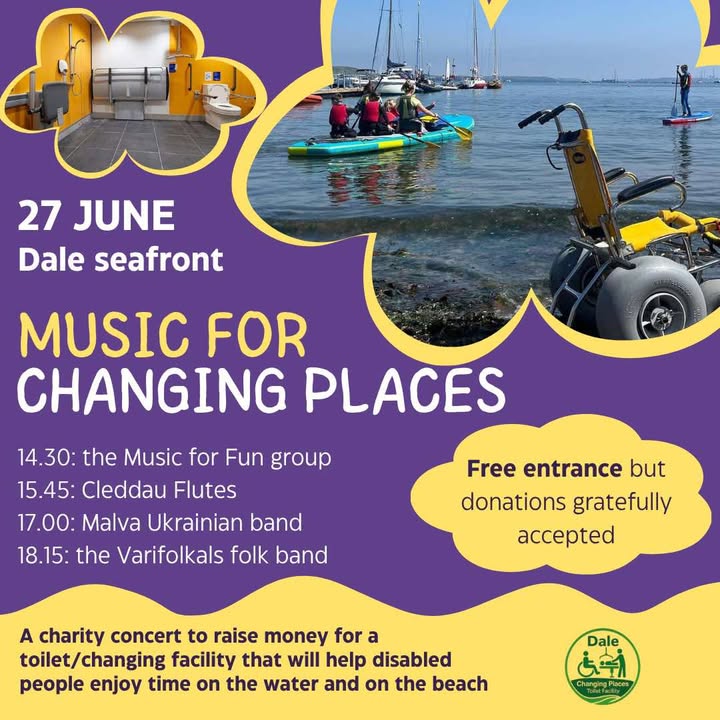
The event, called Music for Changing Places, will be held on Saturday, June 27, and will raise money for a new toilet and changing facility designed to help disabled people enjoy time on the water and at the beach.
Organisers say the project will support greater accessibility in Dale, helping more people enjoy watersports and the coastline through specialist facilities and equipment.
The afternoon and evening event will feature a range of live music acts, with free admission for visitors, although donations will be welcomed to support the cause.
Music will begin at 2:30pm with performances from the Music for Fun group, followed by the Cleddau Flutes at 3:45pm.
At 5:00pm, the Malva Ukrainian band will take to the stage, before the day concludes with folk music from the Varifolkals folk band at 6:15pm.
The fundraiser is linked to the Dale Changing Places project, which aims to create a specialist accessible toilet and changing facility for disabled visitors, helping ensure more people can enjoy Pembrokeshire’s coastline regardless of mobility needs.
The project also supports accessible water activities, with adapted equipment helping disabled users get onto the water safely.
Organisers are encouraging residents and visitors to attend, enjoy an afternoon of music by the sea, and support a cause designed to make Dale more inclusive for everyone.

Russell Watson headlines spectacular charity concert at Pembroke Castle
A SPECTACULAR evening of live music at Pembroke Castle has been hailed a major success after hundreds turned out to support the Paul Sartori Foundation.
Voices at the Castle went ahead on Saturday evening after the previous night’s Rock the Ramparts concert had been cancelled due to high winds affecting the stage area and creating unsafe conditions.
Organisers had reassured ticket holders that Saturday’s concert was still going ahead, and the night proved to be a major success, with crowds gathering inside the historic venue for an evening of music, community spirit and fundraising.
The event was held against the dramatic backdrop of the illuminated castle walls, with the stage set inside one of Pembrokeshire’s most recognisable landmarks.
The concert featured Bella Voce, Pembrokeshire Pop Voices, The Paul Sartori Community Choir and Pembroke and District Male Voice Choir, before internationally renowned tenor Russell Watson brought the evening to a close with the headline performance.
Gates opened at 4:00pm, with music beginning at 5:00pm and the concert continuing until around 10:30pm.
Charity ‘overwhelmed’
The Paul Sartori Foundation said it had been left “overwhelmed with the joy, talent, and support” shown during what it described as a very busy but unforgettable day.
In a statement after the event, the charity said: “What a night! We’ll share more updates tomorrow when the team have had a chance to compose ourselves after what was a very busy day.
“Safe to say that we’re overwhelmed with the joy, talent, and support that we witnessed in Pembroke Castle tonight, with all our amazing and varied musical acts, topped off by a phenomenal headline set by the talented Russell Watson.
“We’re not going to forget this one in a hurry.”
Audience praise
Audience members were quick to praise the event, with one describing it as “a brilliant evening of first-class entertainment,” while another said it had been “a truly wonderful night.”
Others paid tribute to the organisers, performers and volunteers, with one supporter saying: “What a superb evening – well done to all organisers and singers and volunteer supporters.”

Another added: “It was amazing, fantastic evening, a glorious night. Thank you all.”
The concert raised funds for the Paul Sartori Foundation and Pembroke Castle Trust.
The Paul Sartori Foundation provides hospice-at-home care across Pembrokeshire, supporting people living with life-limiting illnesses and their families.
While organisers are yet to confirm the final amount raised, the scale of the attendance and overwhelmingly positive reaction suggest the event was a major success for the charity and the castle.
Photo caption:
Magical setting: Hundreds gathered at Pembroke Castle for Voices at the Castle, headlined by Russell Watson (Pic: Paul Sartori Foundation).
Community spirit shines across Haverfordwest with museum displays, breakfasts, workshops and school sleep-out
THE VC GALLERY enjoyed one of its busiest Saturdays of the year as staff, volunteers, veterans and supporters spread across Haverfordwest for a packed day of community events.
From military artefacts at Pembrokeshire College to a riverside art exhibition, a veterans’ breakfast and a charity sleep-out involving local pupils, the veteran-led charity was at the centre of activity across the county town.
At Pembrokeshire College, the charity’s popular “Speak to a Veteran” initiative proved a success, with the VC mobile museum drawing attention from students and visitors alike. A range of military artefacts on display sparked conversations and helped veterans share stories and experiences with members of the public.
Meanwhile, the Pembrokeshire Veterans Breakfast at Waldo Lounge saw the VC minibus deployed to help bring people together, with staff at the restaurant praised for making attendees feel welcome.
The charity thanked Myles for driving and Gareth for helping organise the event.
On the riverside in Haverfordwest, the VC Gallery showcased artwork at its new gallery space, where RAF veteran Mark hosted members of the public throughout the day.
Back at Waldo Lounge, Charles, Donna, Phil, Rose, Lucy, Nia and the wider VC team kept busy with duck sales and jewellery workshops as families gathered for the afternoon activities. Pembrokeshire’s Armed Forces Liaison Officer, Hayley, was also among those lending support.
As day turned to night, pupils from Haverfordwest High VC School took part in a sponsored sleep-out to raise money for the charity, hearing first-hand about homelessness from veteran Pete.
The event saw pupils spending the night outdoors alongside former military personnel to better understand the realities faced by some ex-service men and women.
The day also included the Waldo duck race on the river, helping round off what the charity described as “an amazing community” effort.
Photo caption: Busy day: VC Gallery teams, veterans and supporters took part in events across Haverfordwest on Saturday, including museum displays, breakfasts, workshops and a charity sleep-out (Pic: VC Gallery).


Community7 hours ago
Beating of the Bounds brings music, boats and tradition to Haverfordwest
CENTURIES-OLD CEREMONY DRAWS FAMILIES TO THE RIVERSIDE HAVERFORDWEST’S historic Beating of the Bounds returned on Sunday (Jun 14), with boats,...

Community14 hours ago
Milford Haven School pupil praised after stepping in during real-life emergency
A YEAR 11 pupil at Milford Haven School has been praised after putting his first aid training into action to...

Community17 hours ago
River festival brings crowds to Haverfordwest
A CELEBRATION of the River Cleddau brought crowds into Haverfordwest on Saturday (June 13) as the town’s River Festival returned...


Charity18 hours ago
Voices at the Castle hailed as unforgettable night after weather setback
Russell Watson headlines spectacular charity concert at Pembroke Castle A SPECTACULAR evening of live music at Pembroke Castle has been...


Local Government2 days ago
Council admits 74 rights of way complaints remain unresolved
Key post vacant since February as walker raises safety concerns over paths near Llanteg and Amroth PEMBROKESHIRE COUNTY COUNCIL has...


Education2 days ago
Diocese threatens legal action as Manorbier school closure battle intensifies
Church says council could face judicial review over fire-hit school A BITTER row over the future of Manorbier Church in...


Health3 days ago
Baby loss charity calls for urgent action after latest Wales figures published
Sands says Welsh Government must set clearer targets to reduce stillbirths and neonatal deaths A BABY loss charity has called...

Health3 days ago
Cancer delays worsening as west Wales hospitals struggle to recruit specialists
Health board admits standards are difficult to meet as doctors warn of “extremely dangerous” shortages PATIENTS in west Wales are...


News3 days ago
Rhun ap Iorwerth highlights first 25 days in office as First Minister
Plaid Cymru leader says government is moving quickly on NHS, farming and economic priorities FIRST MINISTER Rhun ap Iorwerth has...


Crime4 days ago
Man accused of six rapes including alleged Haverfordwest offence
A MAN has been sent to Crown Court accused of six rapes, including an alleged offence at a Haverfordwest campsite....
-

 Crime7 days ago
Sex offender in senior role at Tenby family hotel
-
Education2 days ago
Diocese threatens legal action as Manorbier school closure battle intensifies
-

 Crime6 days ago
Haverfordwest pair accused of £80,000 rogue trading frauds
-
Crime4 days ago
Man accused of six rapes including alleged Haverfordwest offence
-
 Community7 days ago
Forgotten wartime archive found in Pembroke Dock attic after 80 years
-

 Crime6 days ago
Families condemn failed appeal by paddleboard boss jailed over Haverfordwest tragedy
-

 Crime4 days ago
Pembroke Dock teenager sentenced over train strangulation attack
-
 Crime6 days ago
Knife blankets call as school staff face rising violence fears