


Politics
Senedd seeks to cover up details of nepotism


SENEDD Members recommended concealing information about politicians giving jobs to their colleagues’ family members despite a clear conflict of interest.
When the Senedd expands to 96 members next year, politicians will be banned from giving jobs to their own family members – which has been commonplace over the past 26 years. But a loophole will remain allowing politicians to employ each other’s family.
More than 15 of the current 60 Senedd Members (25%) have employed family members, directly or indirectly, in the past and ten (16%) currently do so.
Now, the Senedd’s standards committee, which handles complaints against politicians, has suggested the names of family members be withheld from the public register of interests.
However, half of the politicians who sit on the committee that made the recommendation themselves have family members employed by colleagues at a cost to the public purse.

Labour committee chair Hannah Blythyn is married to Laura Murton who is employed by First Minister Eluned Morgan – according to the current, more open register – and Peredur Owen Griffiths’ spouse Angela has a job with his Plaid Cymru colleague Sioned Williams.
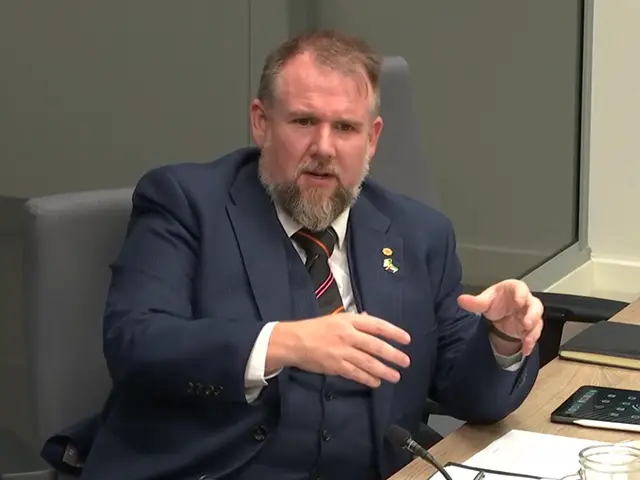
All meetings as part of an inquiry into declarations of interests were held in private, with the public and press excluded, and many of the related documents were declared secret.
Ms Blythyn and Mr Owen Griffiths did not recuse themselves nor declare an interest as the committee finalised its recommendations, according to records of latest meetings.
Their family ties were not mentioned in a 9,000-word report on the behind-closed-doors inquiry but reference was added retrospectively after a journalist raised concerns.

The pair flagged their interests at one earlier meeting but the transcript and video showed this was not in the public declarations part at the start of nearly every committee meeting. Instead, the declaration was made in private then disclosed in brief minutes weeks later.
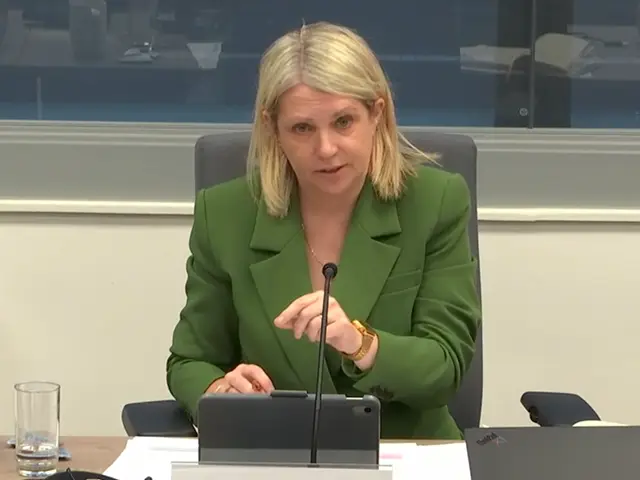
In the report, Ms Blythyn wrote: “The committee was mindful of the need to minimise the release of information about family members, simply for being related to an elected member.
“To that end, we agreed publishing the names of family members employed by other members on the register was an unnecessary risk to their safety.”

Details would be provided to officials but hidden from public view. The nature of the relationship would still be disclosed although the name would not.
Political parties warned of online abuse of politicians’ family members identified through the register. Douglas Bain, the Senedd’s standards commissioner, also recommended omitting names.
Following the first review of the rules in nearly a decade, the report talks a good game on transparency – with the Welsh Parliament characterised as currently the UK’s most opaque.
Under other proposals, politicians would be forced to reveal the amount received from outside jobs – bringing the Senedd in line with parliaments elsewhere in the UK.

The committee recommended lowering the current threshold of £350 for declaring gifts, benefits and hospitality – which is higher than elsewhere in the UK – to £280.
Some Senedd Members enjoy freebies including tickets to concerts and sporting events.
The Senedd, alongside only the House of Lords, does not require politicians to put a price tag on perks but this would be needed for publication in future. Members would have to provide a value for overseas visits for the public register too.
Politicians with property or shares portfolios would be under a closer microscope, with similar disclosure requirements to other UK parliaments. The Senedd would also introduce a voluntary category for registrations that fall outside strict requirements.
In her foreword, Ms Blythyn said: “Registering and declaring interests is an important tenet of a parliament. It provides transparency around financial interests and material benefits held by elected members which could be thought to influence them and their conduct.”
Ms Blythyn and Mr Owen Griffiths declined to take up an opportunity to reply after concerns about a conflict of interest were put to them.
But an anonymous spokesperson for the standards committee said: “Members are required to declare any interests at the relevant part of Senedd proceedings.
“Due to an administrative error, the original version of the report mistakenly omitted the declarations of interest made by two committee members. We apologise for this error and a correct version of the report is now available on the Senedd website.
“The proposals are based on extensive evidence and consultation responses including from the standards commissioner, political parties and experts from other parliaments.
“The recommendations will now be considered by the Llywydd [speaker Elin Jones], business committee, or the Senedd as appropriate.”


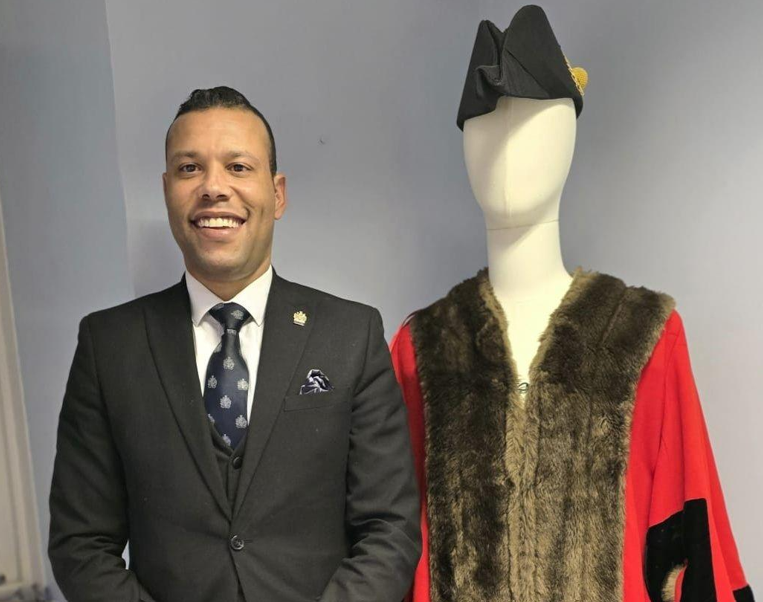
A PEMBROKESHIRE town council will soon have its first-ever person of colour as mayor, and its youngest mayor in a century.
Haverfordwest Town Councillor Randell Iziah Thomas-Turner, aged 37, is to become mayor this May.
Cllr Turner said: “Tonight [March 19], I had the honour of accepting the nomination as mayor-elect — a moment that will forever stay with me.
“In doing so, I am humbled to be making history as the first mayor of colour in Haverfordwest and the youngest mayor in a century. This is not just my achievement, it belongs to every person who believes in progress, representation, and the power of community. This is a new chapter for our town — one built on unity, opportunity, and hope.
“My mayor-making will take place this May, and I cannot wait to officially step into the role and begin serving the people of Haverfordwest with pride, passion, and purpose. Haverfordwest is the best in the West — and together, we are just getting started.

“Diversity is not a challenge to overcome, but a strength to embrace. When people from different backgrounds, experiences, and perspectives come together with respect and openness, we unlock new ideas, stronger solutions, and deeper understanding.”
It’s a double celebration for the Thomas-Turner family.
Wife, and fellow town councillor, Dani, has been voted as sheriff of the town for the second-year-running, the first woman to serve as sheriff for two consecutive years.
“The coming civic year will be one to watch as my husband Councillor Randell Izaiah Thomas-Turner is becoming the first mayor of colour in Haverfordwest’s history,” said Cllr Dani Thomas-Turner, adding: “It’s going to be a year of history and memory making for sure.”

A WELSH Government-funded scheme to provide rates relief for hospitality businesses has been backed by senior Pembrokeshire councillors.
A report for members of Pembrokeshire County Council’s Cabinet at their March meeting said: “Welsh Government has introduced the Food and Drink Hospitality Rates Relief, this relief is aimed at eligible businesses in Wales in the food and drink hospitality sector for example, pubs, restaurants, cafes, bars and live music venues.
“The aim of the relief is to support eligible businesses to manage continued cost pressures. The relief will apply to all eligible occupied properties by offering a discount of 15 per cent on non-domestic rate bills for the period April 1 to March 31, 2027. The relief is capped at £110,000 per business across Wales.
“As this is a temporary measure, Welsh Government is providing the relief by reimbursing local authorities that use their discretionary relief powers under Section 47 of the Local Government Finance Act 1988.”
It concluded: “The food and drink hospitality rates relief 2026-27 requires the local authority to adopt a discretionary scheme [as outlined] and in accordance with the criteria and conditions specified in the guidance issued by Welsh Government.
“It is proposed that Cabinet resolve to adopt [the scheme] which can be applied to administer the relief. Welsh Government will reimburse local authorities for the relief provided in line with their guidance via a grant under section 31 of the Local Government Act 2003.”
Members backed the recommendation.
All eligible businesses must apply for this relief by the March 31, 2027, and an application form will be available on the council’s website from the April 1.
The maximum cash value of the rates relief allowed, across all properties in Wales occupied by the same business should not exceed £110,000. Businesses claiming the relief must declare that the amount being claimed does not exceed those limits.
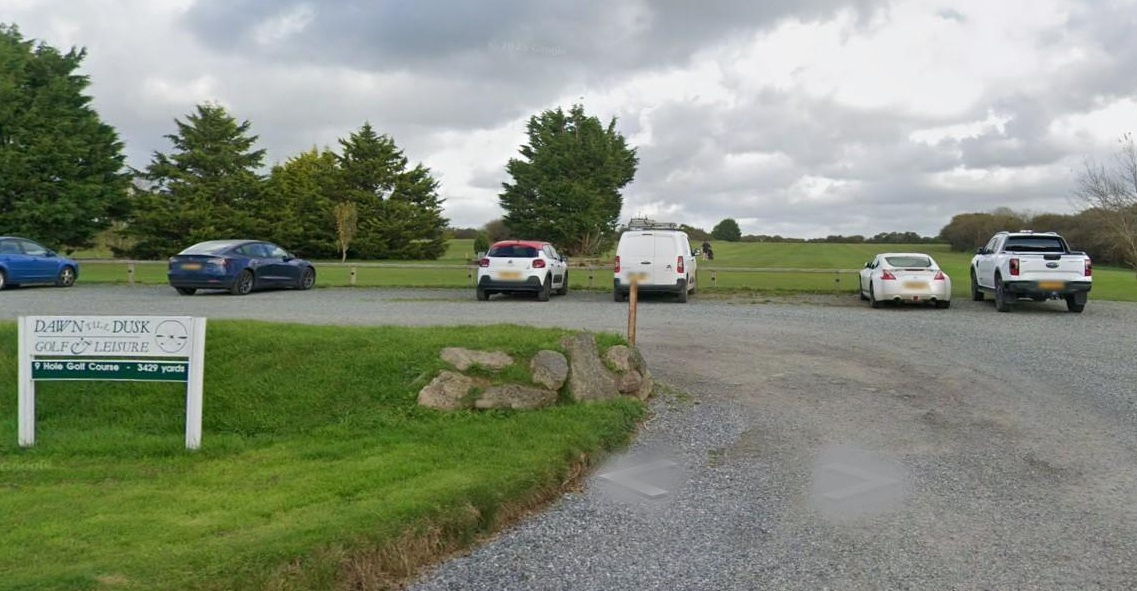
A CALL to extend a long-established Pembrokeshire golf club, bringing it up to a full 18 holes, has been submitted to county planners.
In the application, Mr and Mrs Young, through agent Preseli Planning Ltd, seek a change of use of land adjoining the Dawn Till Dusk Golf Club, Furze Hill Farm, Bastleford Road, Rosemarket, to form an extension to the existing golf course, along with landscaping and associated works.
A supporting statement through the agent says: “The application seeks full planning permission for the enlargement of the existing golf course to provide an additional six holes, to provide a total of 18 holes.
“The proposal would involve minor landscaping works to the fields and boundaries and the creation of a small number of ponds and bunkers. The extension would be located on land to the west of Furze Hill Farm and on the opposite side of the road to the existing golf course and clubhouse.
“An altered access to the land parcel is proposed as part of this application, which would provide an improved route for users crossing the public highway to avoid conflict with movements at the main entrance.
“The application site exceeds 1ha and therefore the proposal is considered major development necessitating a Pre-Application Consultation prior to formally submitting the planning application to the Local Planning Authority.”
It adds: “The existing golf course has operated in excess of 30 years and is popular with both visitors and locals. Club membership currently stands at approximately 350 and there is demand for enhancing the provisions of the course.
“The applicants’ sons have recently increased their involvement in the enterprise and in recent years wet winter months have necessitated the closure of the course, or parts of it, due to the ground becoming waterlogged, primarily due to the flat nature of the existing course.
“The extension would provide variation to the terrain, providing, dryer conditions, as well as the ability to alternate between the existing and proposed to maintain use, enhancing the viability of the enterprise.”

The application will be considered by Pembrokeshire County Council planners at a later date.



Crime16 hours ago
Publican jailed for six years for supplying cocaine and cannabis
Milford Haven man sentenced at Swansea Crown Court following drug dealing operation A MILFORD HAVEN publican has been jailed for...


Local Government18 hours ago
Poverty summit highlights support efforts across Pembrokeshire
A SUMMIT bringing together key organisations from across Pembrokeshire has highlighted both the scale of local poverty and the work...


Education2 days ago
Milford Haven school plans unveiled but funding not yet secured
PLANS for a new £100 million school in Milford Haven have been unveiled, but the project has not yet secured...


News2 days ago
Council unveils plans for new state-of-the-art secondary school in Milford Haven
PEMBROKESHIRE COUNTY COUNCIL has revealed plans for a new state-of-the-art school in Milford Haven, promising modern, inspiring learning spaces for...


Health2 days ago
NHS waiting list falls — but cancer delays and diagnostic backlog worsen
Record progress claimed by Welsh Government as critics warn key targets are still being missed THE NHS in Wales has...


Crime3 days ago
Rapist jailed after ‘abhorrent’ attacks on woman and children
Haverfordwest man told police “women won’t have sex without force” A HAVERFORDWEST man who raped a woman and a young...


News3 days ago
Reform secures first Pembrokeshire councillor in Hakin by-election win
Late Reform candidate takes seat as independent surge and Labour withdrawal shape contest REFORM UK candidate Scott Thorley has won...


News3 days ago
Scott Thorley elected as Pembrokeshire’s first Reform councillor
REFORM UK candidate Scott Thorley has won the Hakin by-election after securing 179 votes. The full result is as follows:...


News4 days ago
Police confirm man has died after being recovered from River Cleddau
Major emergency response in town centre after concerns raised for man in water A MAN has died after being recovered...


Community4 days ago
Davies and Kurtz urge groups to seek employability funding
Community organisations in Pembrokeshire encouraged to apply for new grants supporting skills and job access LOCAL Senedd Members Samuel Kurtz...
-

 News7 days ago
Rayner and Lammy visit Wales to discuss justice and community safety
-

 News6 days ago
Fishguard linked to allegations in Many Tears Animal Rescue investigation
-

 News4 days ago
Emergency services flood Haverfordwest after reports of person in river
-

 Local Government7 days ago
Investigation confirmed after inspectors visit Many Tears Animal Rescue
-

 Crime3 days ago
Mother given community order after admitting child cruelty offence
-

 Community7 days ago
Town hall takeover plan questioned as cost figures conflict
-

 News3 days ago
Senedd vote to ban greyhound racing hailed as ‘landmark moment’ by charities
-

 Business7 days ago
Oil firm praised for putting customers first during price surge