


Books
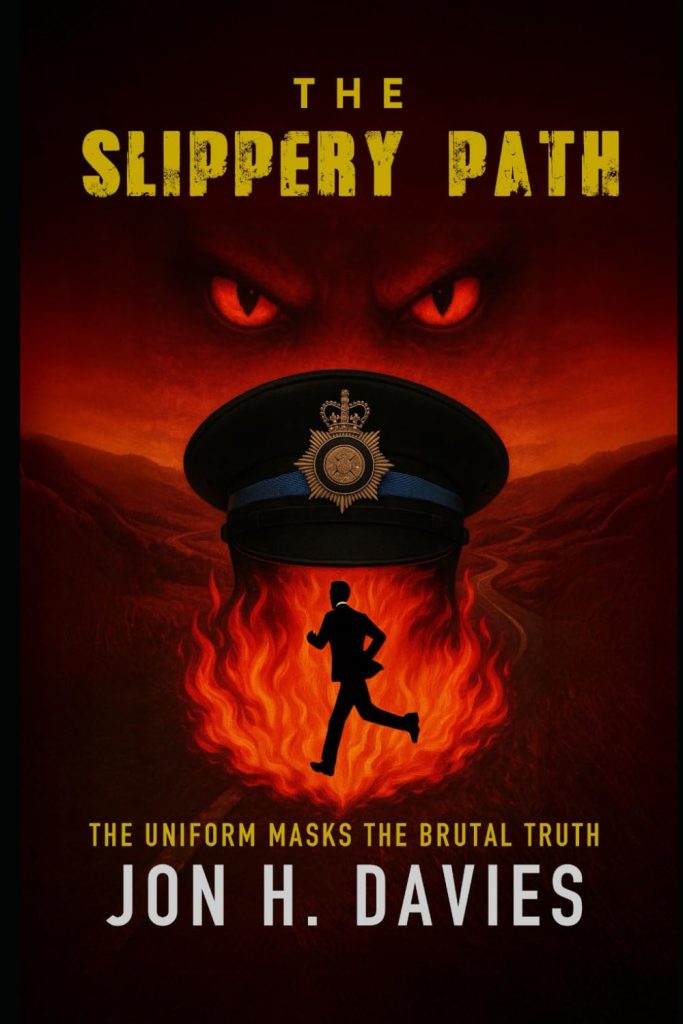
BOOK REVIEW: The Slippery Path by Jon H. Davies

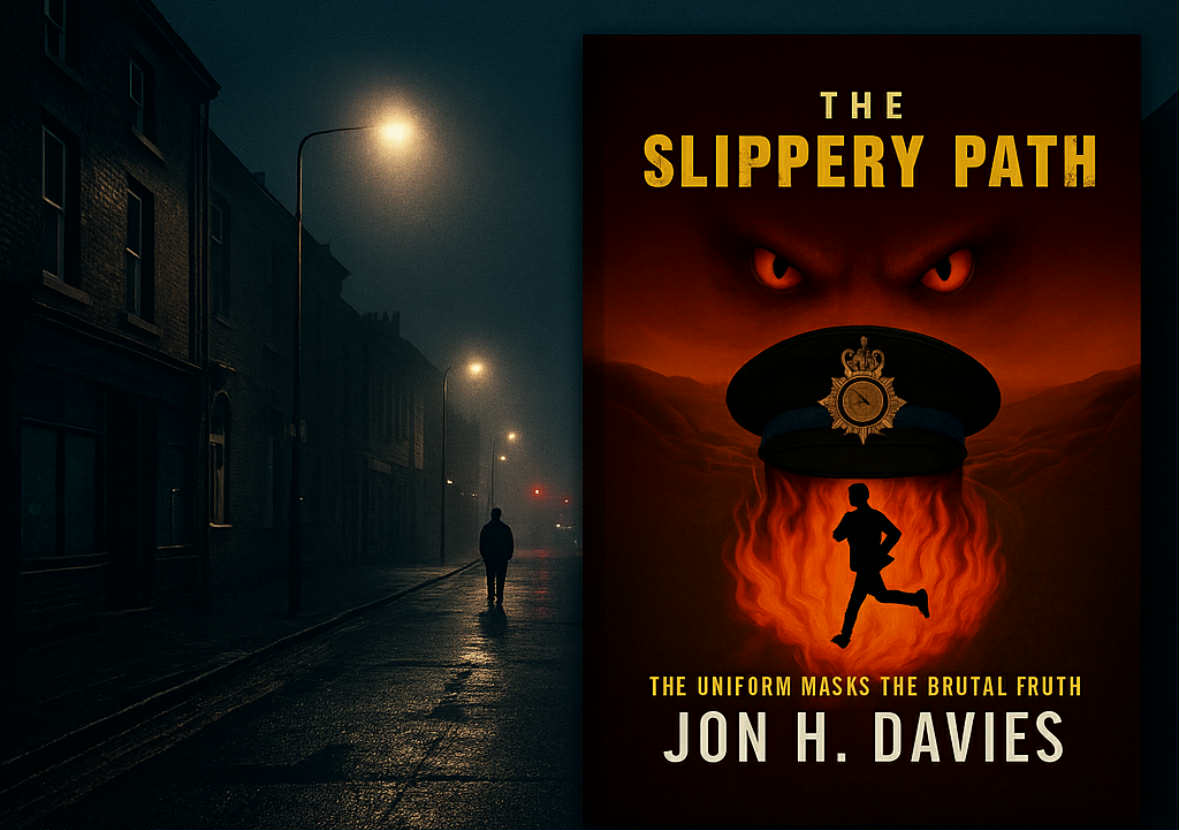
A must-read by a man who dedicated his career to fighting crime in West Wales.
WHEN crime fiction is written by someone who spent three decades in both uniform and plain clothes, it lands differently. Jon H. Davies — a Dyfed-Powys officer who spent his last eight years policing in Pembrokeshire — brings that authority to his debut novel The Slippery Path. It’s there in the clipped dialogue, the procedural confidence and the unvarnished portrait of West Wales crime.
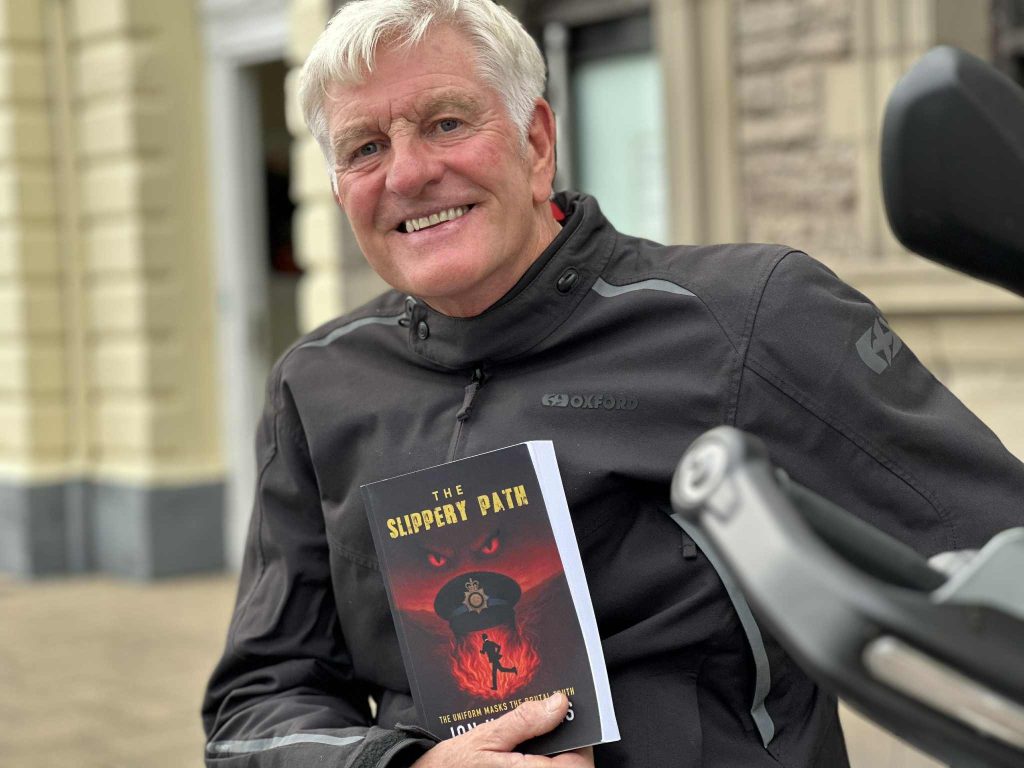
Davies is no stranger to notorious cases. Known as a tough, no-nonsense custody sergeant — the officer who booked in John Cooper, the “Bullseye Killer” — he writes with the steadiness of someone who has lived the charge room and the incident log.
The novel opens in Neath with a brutal set-piece. Jeweller Michael Moore, a proud creature of routine, is wrapping up for the day when a hooded thug erupts into violence. There’s no heist-movie gloss here; the attack is messy, frightening, extremely emotional and deeply believable — a statement of intent for what follows.
From there the canvas widens. We meet Detective Sergeant David Winters, a once charismatic copper, stuck in a world of paper pushing who is suddenly rejuvenated when a suspect for the case comes to light. The reader is taken from the back streets of West Wales to Liverpool’s darker corners, knitting together a present-day investigation with sickening, violent cold cases that refuse to stay buried.
Running beside the police thread is a Cadet with a past he’s desperate to keep hidden. His inner fight — whether to hold his line in uniform or slide back into old patterns — gives the book its title: the “slippery path” runs under badge and balaclava alike.

The underworld cast is sharply drawn. Taff Robbo is a frustrated and saddened, super-tough former SAS soldier, a man trained for violence who cannot quite leave it behind. Rose Price carries her own notoriety, while the unnamed thug of the opener embodies the impulsive brutality Davies saw too often on wet pavements and in custody suites.
Place matters. Davies doesn’t plaster names across every street, but locals will recognise a thinly disguised Pembroke Dock in the clock tower at St John’s Church and the old Sunderland seaplane hangars in the dockyard — landmarks that anchor a town scarred by decline. This isn’t brochure Pembrokeshire; it’s rain-slicked, functional and real, and it shapes the choices of those who live there.
Stylistically the book is relentless. Sentences push forward with the urgency of a foot chase; dialogue is raw and often cruel; violence is described frankly. That will divide readers, but it’s what gives the novel its charge. Davies isn’t offering cosy puzzles; he’s showing the world he worked in.
What elevates The Slippery Path is the insider’s perspective. Davies writes with clear sight about the corrosive effects of heroin and cocaine in West Wales, and about life at the desk — as a custody sergeant, the place where every offence crosses the counter and split-second decisions are owned. That procedural backbone holds firm even when tempers flare and fists fly.

As the threads tighten, the book becomes both a propulsive crime story and a study of temptation, trauma and responsibility. Winters grinds on; the Cadet teeters; the ghosts of old cases keep step. Bleak humour surfaces, but the narrative never looks away from what violence does to people.
If you want crime fiction that comforts, this won’t be for you. If you want crime fiction that confronts — that puts you on wet tarmac beneath sodium lamps and asks what you’d do next — this is compelling. With its brutal opening in Neath, its vividly sketched cast and its concrete sense of West Wales, The Slippery Path marks Jon H. Davies as a distinctive new voice in Welsh noir.
Our rating: ⭐⭐⭐⭐⭐ (5 out of 5)

TO BUY THE BOOK ON AMAZON CLICK HERE


We studied it in school, some of us may have re-opened its pages as adults and a few of us might even have been fortunate to see what’s hailed as Dylan Thomas’s greatest masterpiece – ‘Under Milk Wood’ – performed on stage.
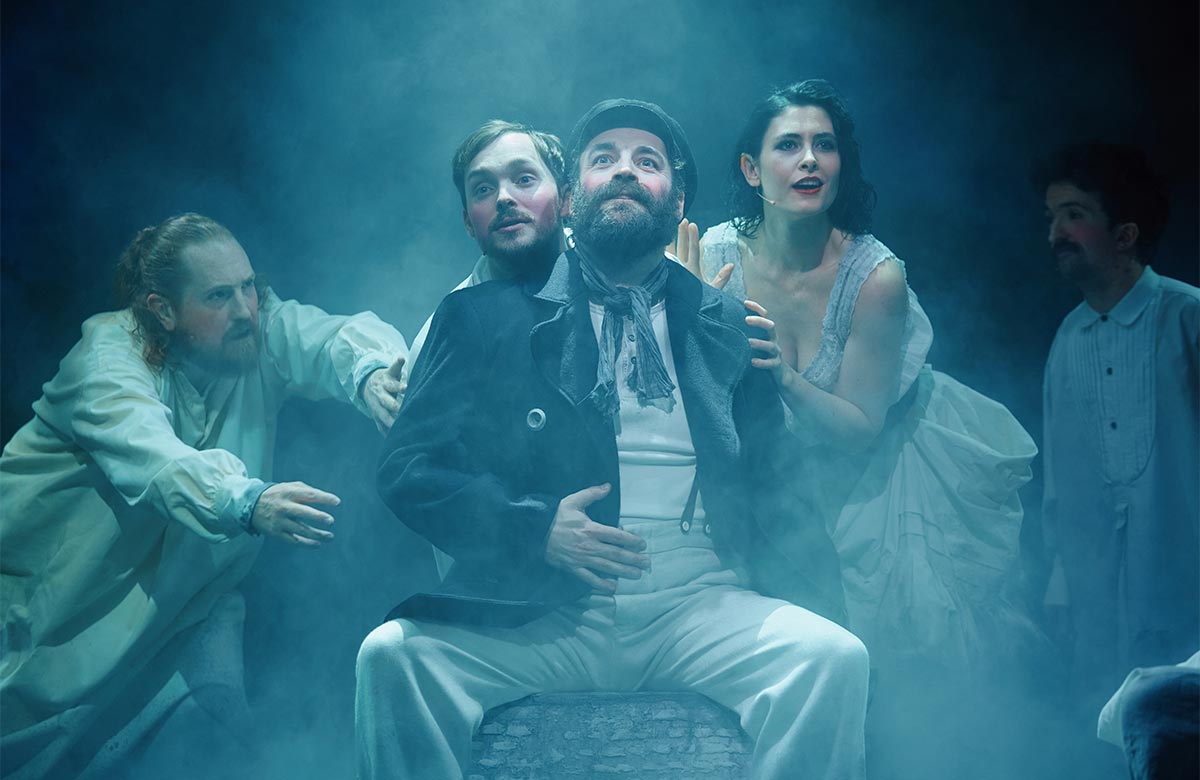
I fall into all three categories, but never have I been made so aware of Thomas’s sheer literary magnitude as I was during Theatr Clwyd’s production of ‘Under Milk Wood’, currently showing at The Torch Theatre, Milford Haven.
The cast’s command over this mighty work becomes manifest within minutes of curtain-up thanks to some exquisite stage definition and a magnificent yet unadorned script delivery. This, after all, is a poem where rhythm and precise diction are essential.
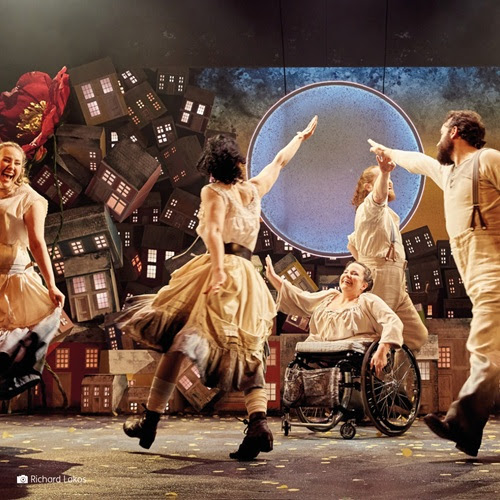
With each character dressed in white, characterised solely by a specific clothing item or prop, it was initially difficult to work out who was who. But then ‘Under Milk Wood’ was first aired in 1954 for radio, where the spoken word was the audience’s sole pilot.
Throughout Theatr Clwyd’s production, I was constantly reminded of just how strongly the Llarregyb community – I’m deliberately spelling it this way to match Theatr Clwyd’s laudable captioning – unites. So much happens during those intertwining 24 hours when everyone is interconnected in so many different ways. And Theatr Clwyd makes one realise just how canny Thomas was in his social observations of the busy lives that bustled around him. The play takes its inspiration from so many segments of the poet’s life, be it his childhood letters, his adolescent poems and the time he spent at his waterside homes in New Quay, Ceredigion, and Laugharne. The friendships and the social understanding that existed between the people of Llarregyb was intense but Thomas’ writing also depicts an honesty so indicative of post-war society. How many houseproud women would echo the words of the controlling Mrs Ogmore-Pritchard – she who’s already nagged two husbands to death – as she caws ‘Before you let the sun in, mind he wipes his shoes’?
In many ways the play typifies ‘Under Milk Wood’s’ ‘clock without hands’ as it presents a solid and changeless society, with many traits remaining just as strong in 2026. How many of us know a Nogood Boyo (Jacob Coleman) who flirts shamelessly with that deliciously naughty sparkle in his eyes, an uptight Mrs Ogmore-Pritchard (Georgia Griffiths) who hates people breathing over her immaculate home and maybe even an Evans the Death (Macsen McKay) who loves his job just that little bit too much.
Theatr Clwyd has to be commended for some creative staging set against Llarregyb’s piled up, box-like houses, their windows illuminated by nightlights, capturing the dreamlike, often dark nature, of Llarregyb’s bible blackness. Lighting, in many ways, is used to exemplify Thomas’ narrative as well as the relationship between darkness and light – good and evil – that’s found within the town.
The choreography is also exquisite, each character moving as one, with the result that the movement becomes an integral part of the production’s strength. Not once did I feel this movement overpower the words, but rather support it and magnify the poem even more.
Initially I felt that being able to see the script printed on the backdrop would be a detraction from what was going on on stage. But how wrong can one be? Seeing the text helped me appreciate the way in which Dylan Thomas was able to metamorphose his words into such an overwhelming power force but is also reinforces them as we watch the actors on stage.
Under Milk Wood also uses integrated BSL with signing, audio description (which doesn’t require headsets), and captioning, all built into the design of the show. This, incidentally, doesn’t detract one iota from the performance’s strength.
The play has over 60 characters, played by a cast of 11. And despite their considerable task, the actors capture the intimacy of this tightly-knit community so well. This particularly comes to the fore with Jacob Coleman’s Organ Morgan and Sean Carlsen’s portrayal of the Reverend Eli Jenkins who captures the Welsh passion and musicality so beautifully. “Praise the Lord! We are a musical nation.”

Mirain Fflur oozes sexiness with her stunning looks and her slightly revealing costume, speaking in a seductive manner as she delivers Rosie Probert’s immortal words ‘Come on up, boys. I’m dead’.

Talking of voices, I was immediately struck by Georgia Griffiths’ dulcet tones as she plays Polly Garter and Mrs Ogmore-Pritchard. But when Griffiths breaks into song, her vocal quality takes on a completely new level. Truly beautiful.
Also wonderful to watch is Macsen McKay as he flits through no fewer than five characters – the local undertaker Evans the Death; the town’s draper Mog Edwards who’s hopelessly in love with Miss Price in the sweet shop; Mr Pritchard who is one of Mrs O-P’s two long dead husbands; the would-be wife murderer Mr Pugh and finally the sadly troubled Lord Cut-Glass, for whom darkness always lurks on the horizon. McKay gives us five outstandingly quirky individuals, each displaying some fabulous facial expressions and a sizeable helping of humour.
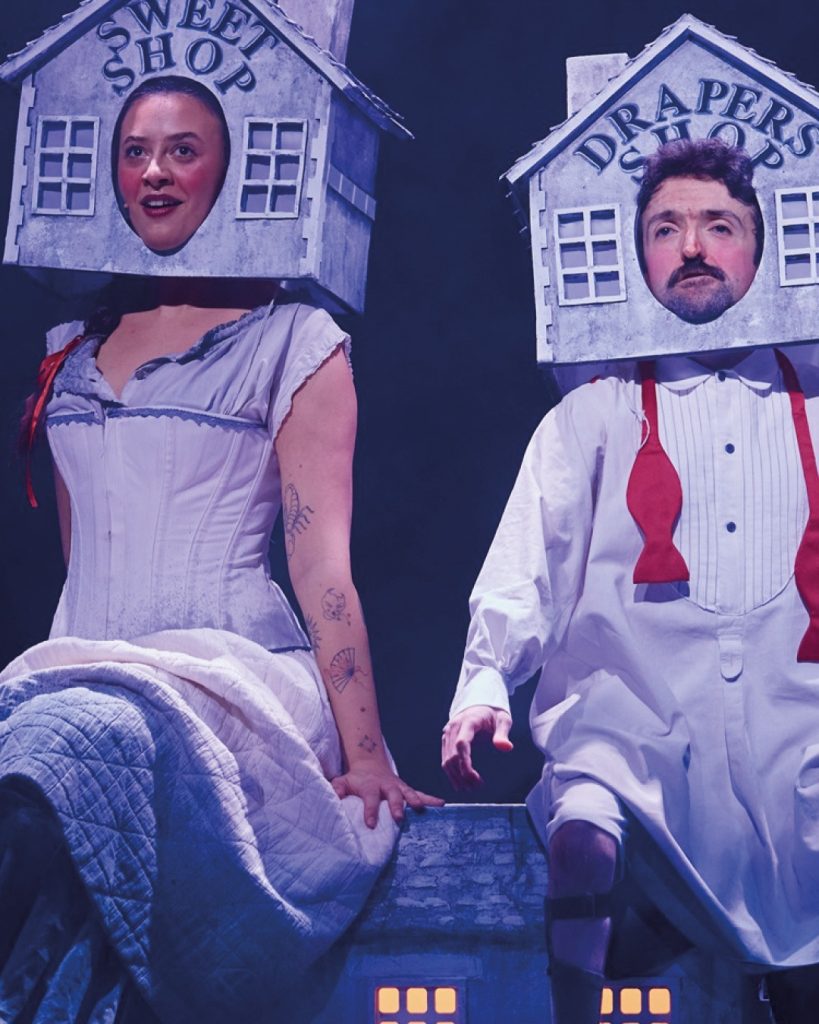
In a nutshell, this is a truly magnificent performance that captures every essence of Dylan Thomas’ legacy.
‘Under Milk Wood’ will be showing at The Torch Theatre, Milford Haven, from Tuesday April 21 to Friday, April 25.

FOR more than forty years, Ken Edwards has been both a player and the unofficial historian of Pembroke Dock Bowling Club. Few people are better placed to tell the club’s story — and its important role in Welsh bowling — than the man who has spent decades preserving its past.
This year, to mark the club’s centenary, Ken has written and published a comprehensive new history of the club.
Pembroke Dock Bowling Club was founded in 1925 at the newly opened Memorial Park on Bush Street, created in honour of the town’s servicemen who died in the First World War. The first woods were rolled on the new green that summer, beginning a tradition that continues to flourish a century later.
Ken was introduced to the sport by his late father, Syd Edwards — himself a former club president — in the early 1980s. Since then, he has assembled an extensive archive of photographs, documents and memorabilia charting the club’s activity, achievements and personalities. His research into the early years has added further depth, uncovering rare images and records that might otherwise have been lost.
The result is One Hundred Years, a beautifully produced 132-page book featuring almost 250 photographs spanning a century of bowling in Pembroke Dock. Many familiar faces appear throughout, including Ken’s wife Cynthia, a long-standing member of the club.
The book is available for £10 from the author on 01646 672501 or by emailing [email protected], and can also be purchased from the Bowling Club at Memorial Park. Printing was carried out locally by Monddi, Pembroke Dock.

A HAUNTING novel inspired by the largely unknown history of Welsh witchcraft has been published by an Aberystwyth University lecturer.
Set in sixteenth century Wales, amid the relentless rain and failing crops, a midwife is accused of witchcraft and her neighbours turn against her.
Through the eyes of a naïve gentry woman, associate lecturer Mari Ellis Dunning weaves a dark tale of suspicion and fear.
Her magical novel rooted in tradition and realism, tells a story rich with bold feminism that will captivate readers of “witcherature” fiction.
Author of the new novel and associate lecture at the Department of English and Creative Writing at Aberystwyth University, Mari Ellis Dunning, said:
“The stories of the women involved in early modern witch trials feel more relevant than ever at the moment, given the state of female reproductive rights and bodily autonomy across the globe.”
“The book has drawn on my research of early modern Wales – a country which was unique in its outlook on witchcraft. Distinct elements of Welsh culture, including superstition and religion, halted the witch trials seen across the rest of Britain and Europe.
“In fact, the witch is steeped in Welsh culture. There is speculation among some researchers that the traditional tall, black hat of the Welsh woman served as inspiration for the wide-brimmed hat of the fairy tale witch. Yet Wales saw no witch hunt. I hope the book is not only a thought-provoking read, but also gives people insight into some of our history as well.”
Mari Ellis Dunning’s debut poetry collection, ‘Salacia’, was shortlisted for Wales Book of the Year. Her second collection, ‘Pearl and Bone’, was chosen as Wales Arts Review’s Number 1 Poetry Choice of 2022. She has just begun teaching a new ‘Writing Women’ module at the University.
Her new book will be launched at 5:30pm on Friday 31 October in the National Library of Wales



Education17 minutes ago
Manorbier school closure process to continue after narrow council vote
Questions remain over insurance, rebuilding costs and possible legal action by Diocese PEMBROKESHIRE councillors have voted to press ahead with...


Community3 hours ago
The father, son and daughter lifeguard trio saving lives in Pembrokeshire
A FATHER, son and daughter are preparing to help keep beachgoers safe on the Pembrokeshire coast this summer as part...


Community13 hours ago
Beating of the Bounds brings music, boats and tradition to Haverfordwest
CENTURIES-OLD CEREMONY DRAWS FAMILIES TO THE RIVERSIDE HAVERFORDWEST’S historic Beating of the Bounds returned on Sunday (Jun 14), with boats,...


Community20 hours ago
Milford Haven School pupil praised after stepping in during real-life emergency
A YEAR 11 pupil at Milford Haven School has been praised after putting his first aid training into action to...


Community24 hours ago
River festival brings crowds to Haverfordwest
A CELEBRATION of the River Cleddau brought crowds into Haverfordwest on Saturday (June 13) as the town’s River Festival returned...


Charity1 day ago
Voices at the Castle hailed as unforgettable night after weather setback
Russell Watson headlines spectacular charity concert at Pembroke Castle A SPECTACULAR evening of live music at Pembroke Castle has been...


Local Government2 days ago
Council admits 74 rights of way complaints remain unresolved
Key post vacant since February as walker raises safety concerns over paths near Llanteg and Amroth PEMBROKESHIRE COUNTY COUNCIL has...


Education3 days ago
Diocese threatens legal action as Manorbier school closure battle intensifies
Church says council could face judicial review over fire-hit school A BITTER row over the future of Manorbier Church in...


Health3 days ago
Baby loss charity calls for urgent action after latest Wales figures published
Sands says Welsh Government must set clearer targets to reduce stillbirths and neonatal deaths A BABY loss charity has called...


News3 days ago
Rhun ap Iorwerth highlights first 25 days in office as First Minister
Plaid Cymru leader says government is moving quickly on NHS, farming and economic priorities FIRST MINISTER Rhun ap Iorwerth has...
-

 Community15 hours ago
Pembrokeshire Chess Club crowned Welsh champions
-
Education3 days ago
Diocese threatens legal action as Manorbier school closure battle intensifies
-
 Crime6 days ago
Haverfordwest pair accused of £80,000 rogue trading frauds
-

 Crime4 days ago
Man accused of six rapes including alleged Haverfordwest offence
-

 Community7 days ago
Forgotten wartime archive found in Pembroke Dock attic after 80 years
-

 Crime6 days ago
Families condemn failed appeal by paddleboard boss jailed over Haverfordwest tragedy
-
 Crime6 days ago
Knife blankets call as school staff face rising violence fears
-

 Crime4 days ago
Pembroke Dock teenager sentenced over train strangulation attack