


News
London march draws 110,000 as 5000 counter-protesters rally


“Whose streets? Our streets!” was the cry as thousands marched in the rain
TENS of thousands packed central London on Saturday (Sept 13) for the “Unite the Kingdom” march led by Tommy Robinson. The Metropolitan Police estimate around 110,000 people attended the march, with a counter-protest by Stand Up To Racism drawing about 5,000. The day was largely peaceful in its early hours but escalated into disorder later in the afternoon, with mounted police charging to hold lines, attempts to breach police cordons, and at least nine arrests.
Welsh flags were visible among the sea of Union Jacks and St George’s Crosses. Media outlets carried photographs of Welsh flags in the crowd alongside British flags. The marchers also displayed English, British, American and Israeli flags, wore MAGA hats, and carried slogans such as “send them home” and “we want our country back.”

Police operation, disorder and crowd dynamics
The Metropolitan Police deployed more than 1,600 officers across London, including about 500 from other forces such as South Wales Police. A “sterile area” was set up between the Robinson marchers and the counter-protesters to keep them apart, especially near Whitehall. Police said the march route could not accommodate the crowd and that overflow onto adjoining streets created difficulties. Efforts to stop people entering restricted areas led to clashes.
Objects including bottles, flares and traffic cones were thrown, and officers were punched and kicked as they tried to push back lines. Mounted units and horses were brought in to hold the cordons. Police confirmed nine arrests and said others may follow after evidence is reviewed. A statement from the force said: “We continue to see significant aggression directed at officers by Unite the Kingdom protesters.”

Counter-protest and speeches
The counter-protest organised by Stand Up To Racism remained largely peaceful, though tensions ran high. Counter-demonstrators carried placards reading “refugees welcome” and chanted “smash the far right” across the divide.

On stage, Tommy Robinson described the march as the “biggest demonstration in British history” and urged his supporters to remain calm when frustration grew among those who could not hear the speeches. Robinson and other speakers framed the protest as a defence of free speech, culture and heritage. Elon Musk addressed the rally by video link, calling for a change of government and accusing the political left of violence.
In Newtown, Powys, where rival demonstrations were also planned, Dyfed-Powys Police imposed a temporary flight restriction zone for drones from 9:00am to 6:00pm, making it an offence to fly unmanned aircraft below 2,000ft without police permission. A statement said: “A temporary ‘no-fly zone’ will be in place … it will be an offence for any unmanned aircraft to fly below 2,000ft … without the explicit permission of Dyfed-Powys Police.”
Crowd size: the numbers dispute
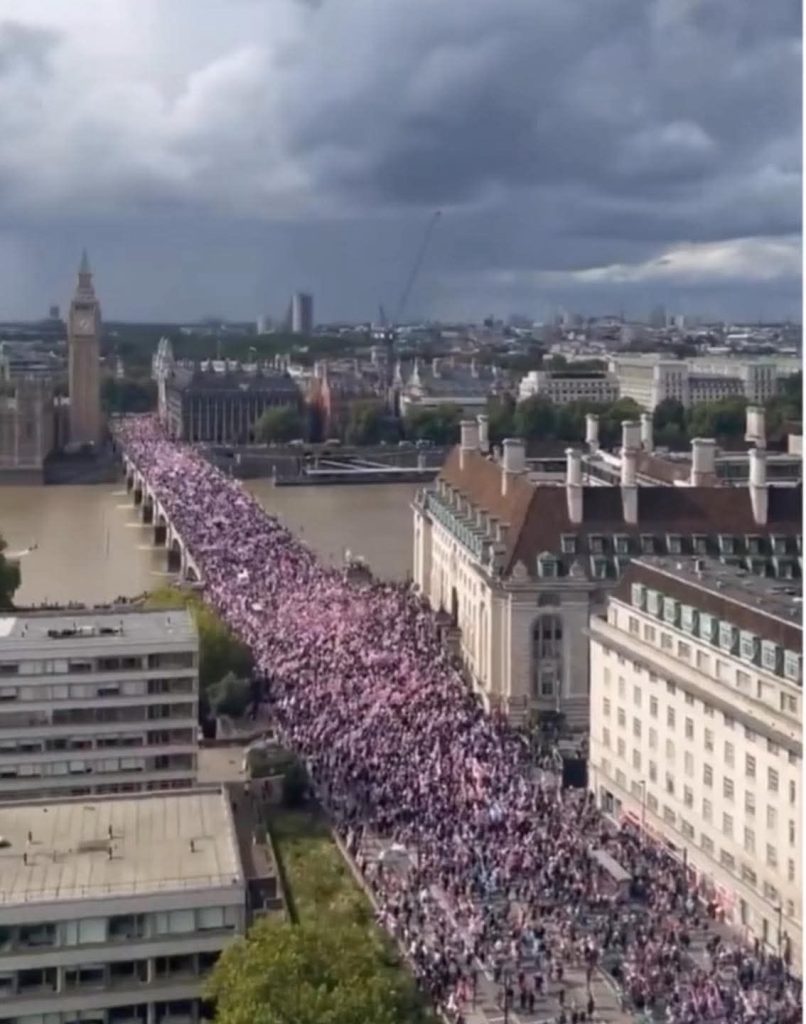
Police put Robinson’s march at 110,000 and the counter-event at 5,000, saying they used a combination of CCTV and helicopter footage to calculate attendance. Organisers claimed far higher figures, with Robinson calling it the “biggest protest in British history” and some supporters putting attendance in the millions. Independent media estimates did not support those claims.
Starmer silent and diverted

Prime Minister Keir Starmer has made no public comment on the protests. He was at the Emirates Stadium, about three miles away, watching Arsenal play Nottingham Forest. With central London roads closed and protest areas sealed, his motorcade had no choice but to take an alternative route to the stadium. His silence has already been described by commentators as loud, given that London witnessed one of the largest far-right mobilisations in recent years.

The march took place amid heightened public debate over immigration, with many protesters linking their grievances to Channel crossings and wider cultural issues. The presence of US and Israeli flags, MAGA hats, and references to the killing of US conservative activist Charlie Kirk showed the influence of international right-wing themes on the event. For observers, the scale of the demonstration marked one of the largest far-right mobilisations in recent times, fuelling debate over the direction of politics in Britain.










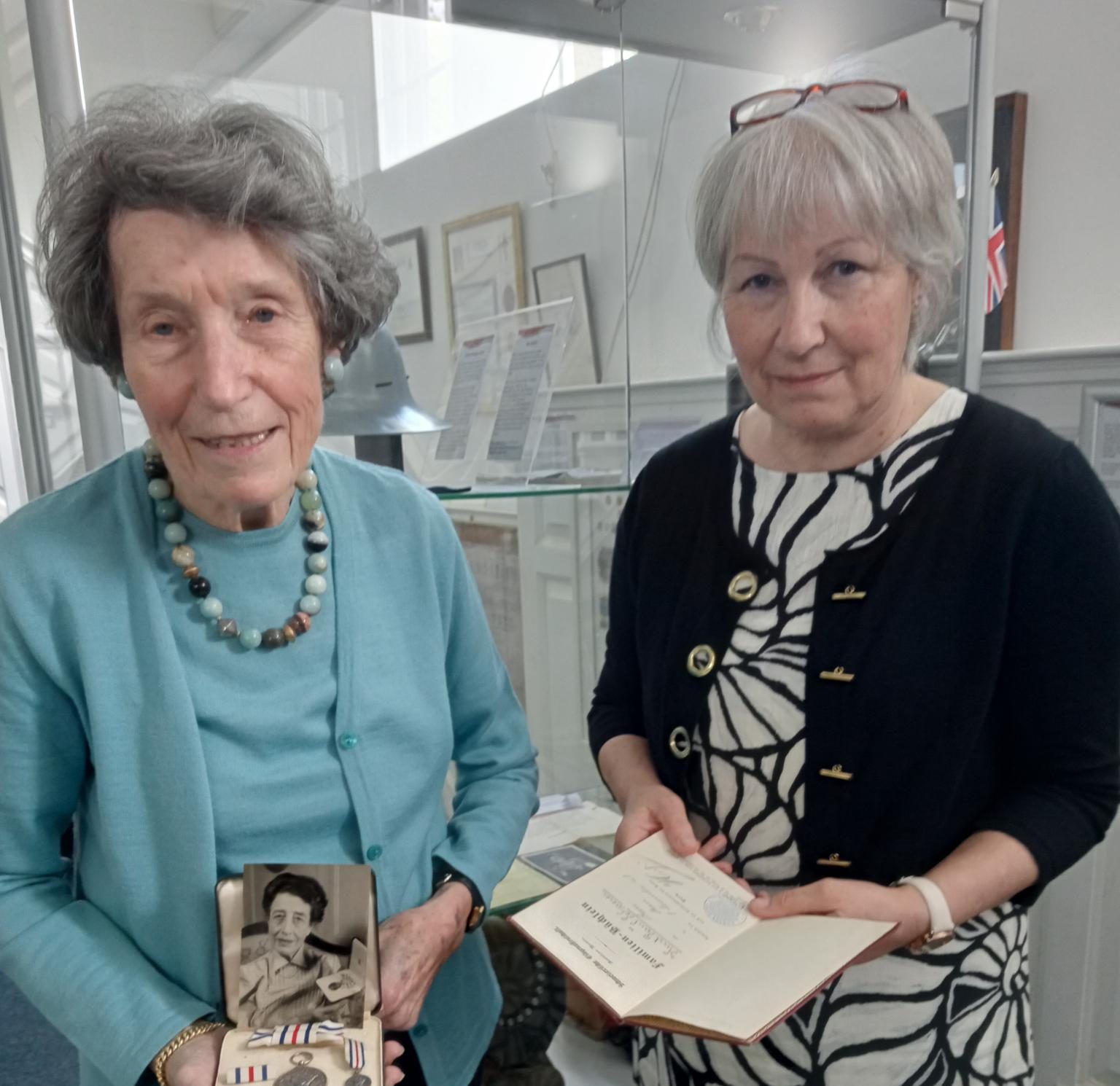
A SWISS woman has returned to Pembroke Dock Heritage Centre to see a special display celebrating her grandmother’s remarkable wartime work helping Allied servicemen who escaped into neutral Switzerland.
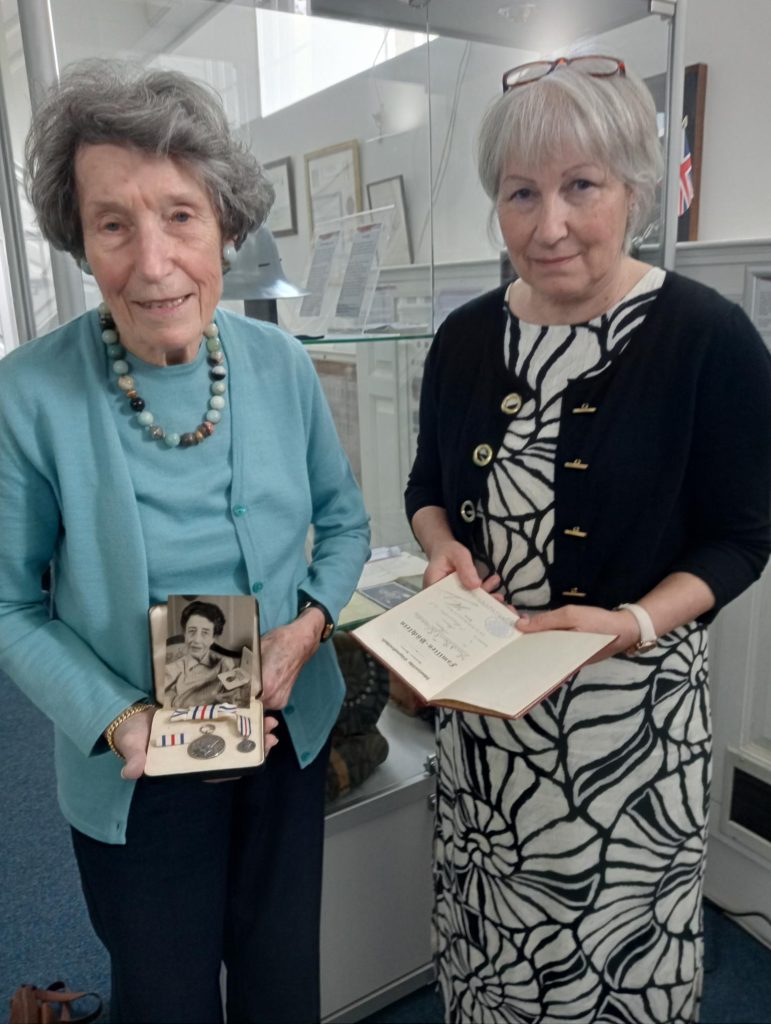
Therese Burckhardt, from Zurich, is the granddaughter of Mrs Beryl Schaerer Morse, a former Pembroke Dock woman who was awarded the King’s Medal in 1952 for her service during the Second World War.
The rare medal, one of only around 2,500 awarded, is now on display at the Heritage Centre alongside photographs, family records and an information panel telling Mrs Schaerer Morse’s story.
Beryl Schaerer Morse was born in Pembroke Dock in 1887, the daughter of Mr and Mrs Thomas Harrison Morse, who lived in Pembroke Dock and later Tenby.
After marrying a Swiss banker in 1913, she settled in Switzerland for the rest of her life, but always regarded Pembrokeshire as home. She returned for many summers to the family’s house in Tenby, which her grandparents had built in the 1930s.
During the Second World War, Mrs Schaerer Morse led an organisation assisting Allied servicemen who had escaped into neutral Switzerland. Her work was later recognised with the award of the King’s Medal.
Therese first visited the Heritage Centre last summer with childhood friend Penny Tighe, of Pembroke, bringing the medal and family records with her. She has now returned with further documents and family photographs to add to the centre’s archive.
Joining her again was Penny Tighe, along with Ruth Waddington, who now lives in the Tenby house where Therese spent many happy childhood holidays with her brother Roland, known affectionately to his grandmother as “Chips”.
Mrs Schaerer Morse died in 1967 and had expressly wished to be buried near her father at Llanion Cemetery, Pembroke Dock.
Therese said: “I am very pleased with how my grandmother’s medal and her story are displayed at the Heritage Centre, and also pleased to bring more records to add to the archive there.”
Pembroke Dock Heritage Centre is based at the Royal Dockyard Chapel and tells the story of the town’s maritime, aviation, military, social and community heritage.
Pembroke Dock was Wales’ only Royal Dockyard, a major garrison town, and during the Second World War was home to the largest flying boat station in the world.

The centre is currently open Monday to Friday, from 10:00am to 4:00pm.
Therese Burckhardt shows the King’s Medal, awarded to her grandmother, to Ruth Waddington at Pembroke Dock Heritage Centre (Pic: PDHC).
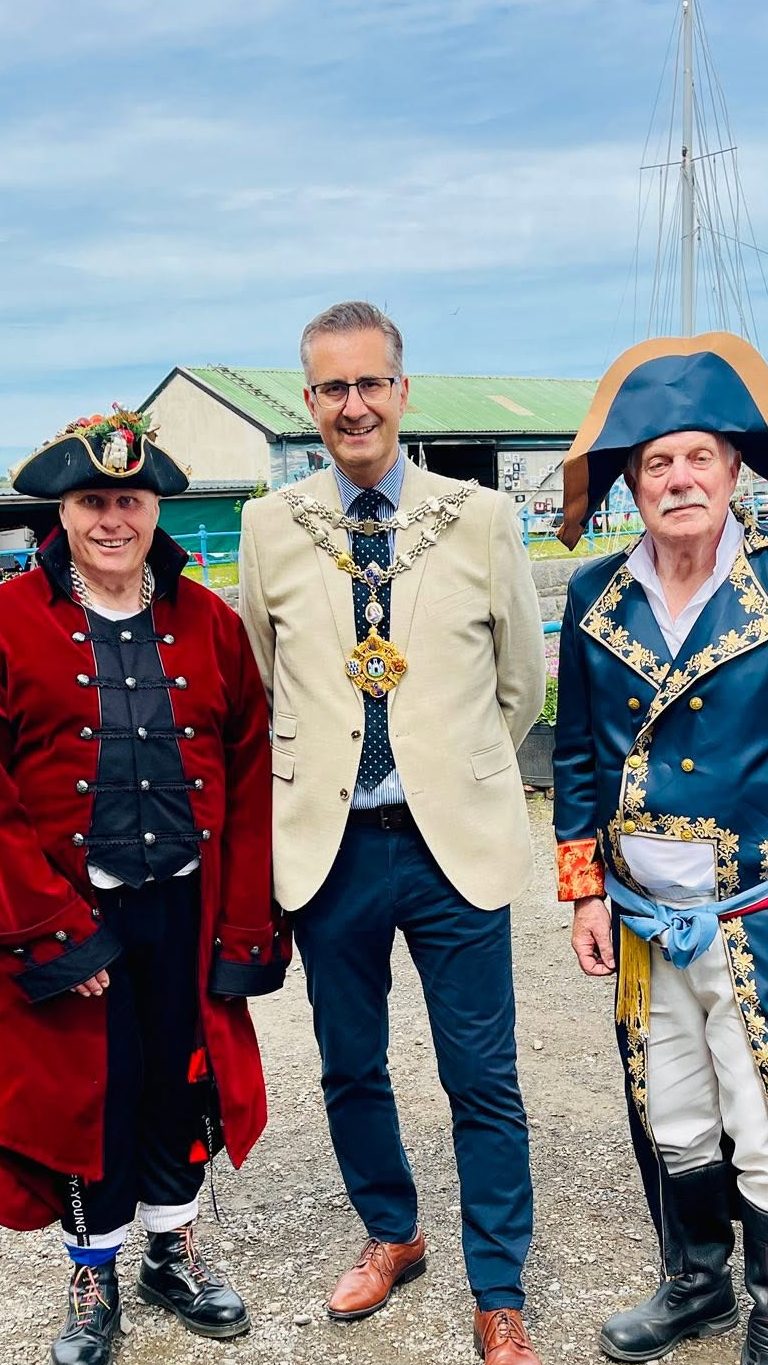
VOLUNTEERS at West Wales Maritime Museum were praised after another successful Pirates Party brought crowds to Pembroke Dock.
The family event was held at Hancock’s Yard, Front Street, on Saturday (Jun 20), with visitors enjoying a day of maritime-themed entertainment, stalls, refreshments and fancy dress.
The museum, run by the West Wales Maritime Heritage Society, hosted the event with the help of volunteers, with activities including a tombola, raffle, barbecue, face painting, children’s games and a prize for the best-dressed pirate.
There was also live entertainment from the Cantabile Singers and the Barti Waves.
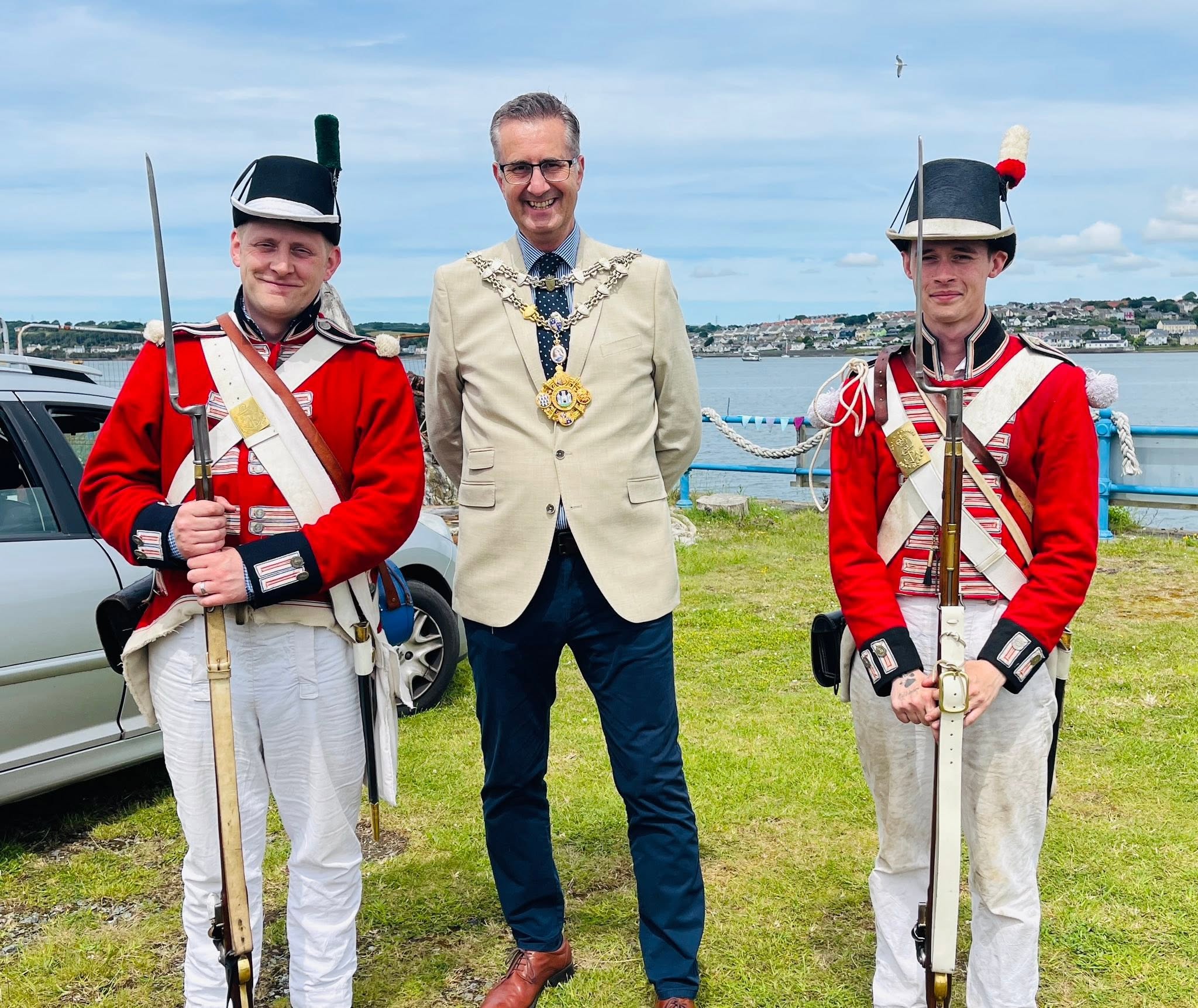
One of the highlights of the afternoon was a musket firing display by the H.M.S Wales Re-enactment Group, which drew strong interest from those attending.
County councillor Jonathan Grimes, who represents Pembroke St Mary South and Monkton, was among those who visited the event.
He said it had been “a fantastic afternoon” and praised the volunteers who had worked hard to put on “another brilliant event”.
Cllr Grimes said: “There was plenty to see and enjoy, but my personal highlight had to be the musket firing display from the H.M.S Wales Re-enactment Group — a real crowd-pleaser with live firing.
“It was wonderful to see so many people coming along and supporting yet another successful event at the museum.”
He also thanked Peter Kraus and everyone involved for their dedication in bringing the event to life.
The West Wales Maritime Museum is based at the historic Hancock’s Yard and is run by volunteers who work to preserve Pembroke Dock’s maritime heritage.
The society restores and maintains classic boats, operates a museum of maritime artefacts and offers visitors a chance to learn more about the town’s long connection with the sea.

The museum has become an increasingly popular community venue, with events such as the Pirates Party helping to bring families into the town while celebrating Pembroke Dock’s seafaring past.
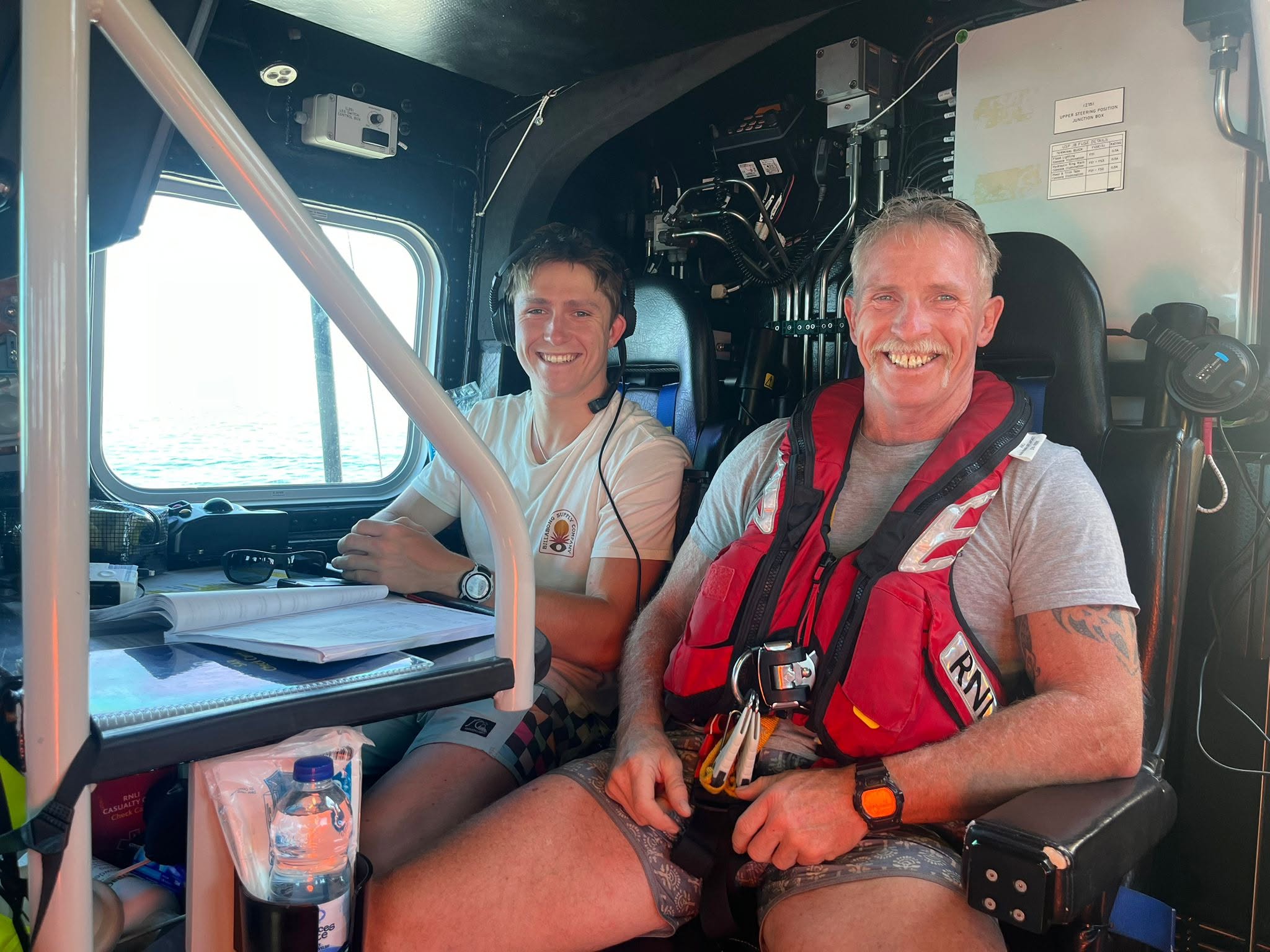
FATHER’S DAY celebrations were interrupted for several Tenby RNLI crew members on Sunday afternoon (Jun 21) after a five-metre RIB suffered engine failure off Broadhaven South and began drifting dangerously towards rocks.
The casualty vessel issued a Pan Pan call, prompting a Coastguard tasking to Tenby Lifeboats.
Among those responding were Coxswain Gary and his son Eddie, who still managed to spend part of Father’s Day together — although not quite in the way they may have planned.
The lifeboat was quickly launched and made best speed to the reported position, around nine miles west of Tenby Lifeboat Station.

When the crew arrived on scene, the engine of the casualty vessel had been restarted. However, with those on board concerned it could fail again, the Coxswain decided to escort the RIB back towards the entrance of the Milford Haven Waterway.
Once at the mouth of the waterway, the occupants were confident they could safely continue to their mooring without further assistance.
The lifeboat was then stood down and returned to station, arriving back at 5:50pm.



Community6 hours ago
The gentle giant behind the tattoos
Pembrokeshire security worker Josh Davies praised for professionalism, kindness and proving first impressions can be wrong JOSH Davies is hard...


Charity1 day ago
Toy Story fans fill charity toy box at Haverfordwest cinema
Donations pour in for SNAP Specialist Play as families embrace Toy Story 5 launch A TOY STORY-themed charity appeal at...


Community1 day ago
Lord Rhys emerges from the mist in St Davids
Giant puppet begins historic journey marking 850 years since the first Eisteddfod MIST swirled around St Davids Cathedral on Friday...


News2 days ago
Tragic tribute paid to Haverfordwest man after A4075 collision
FAMILY REMEMBERS “KIND AND LOVING” CALLUM HANSON THE FAMILY of a 22-year-old man from Haverfordwest who died following a road...

News3 days ago
Motorcyclist, 22, dies in A4075 crash in Pembrokeshire
A 22-year-old woman remains in hospital after two-vehicle collision A MOTORCYCLIST has died following a serious two-vehicle crash on the...

Community3 days ago
Why police will be visiting every home in Pembrokeshire
New operation aims to knock on more than 257,000 doors across Dyfed-Powys over the next three years DYFED-POWYS POLICE has...


Crime4 days ago
Prisons at breaking point: MPs warn Wales is paying the price of a failing system
Frozen healthcare budgets, overcrowded jails, homelessness on release and mounting pressure on staff are undermining rehabilitation across Wales, according to...


News4 days ago
Brexit at 10: How Britain was sold a dream that cost us dearly
A decade after the referendum, the promised benefits remain hard to find while the economic costs are increasingly difficult to...


Crime4 days ago
Worcestershire man jailed after violent attack on woman in Tenby
Defendant was already serving a suspended sentence when serious assault took place A WORCESTERSHIRE man has been jailed for more...


Climate4 days ago
Offshore wind ‘could bring new generation of jobs to Milford Haven’
Pembrokeshire ports and Celtic Sea projects placed at centre of Wales’ green energy ambitions MILFORD HAVEN and Pembroke Dock could...
-

 Crime4 days ago
Milford Haven man jailed for breaching domestic violence protection order
-

 Local Government5 days ago
Security privately arranged by Mayor at Beating of the Bounds
-

 News3 days ago
Crash on Freeman’s Way causes school-run chaos across Haverfordwest
-

 Crime5 days ago
Man wanted by court after failing to attend hearing over alleged shop thefts
-
 Crime5 days ago
Man banned from roads after drink-driving offence
-

 Crime5 days ago
Man jailed after admitting strangulation and assaults
-

 Crime5 days ago
Drug trafficker must repay £33,000 after court rules he made nearly £500,000
-
 Crime5 days ago
Man sentenced over stalking campaign and lock knife offence