


Local Government
Councillor allowances draft report published


THE DEMOCRACY and Boundary Commission Cymru has released its draft proposals for councillor allowances for the 2026–27 financial year.
The draft Annual Remuneration Report, published on Tuesday (Sept 23), will be open to public consultation for eight weeks, closing on November 18.
Under the plans, the basic salary for councillors on principal councils will rise to £21,044, reflecting a 6.4% increase in line with average Welsh earnings. The Commission said maintaining the link between councillor pay and average wages was “key in balancing fairness for each elected member and affordability for local authorities.”
Leadership roles such as council leaders and executive members are also set for an increase, with their remuneration adjusted in line with the same calculations.
However, the main allowances for members of community and town councils will remain unchanged.

The Commission’s remit covers principal councils, National Park Authorities, Fire and Rescue Authorities, and community and town councils across Wales.
The draft report, along with previous determinations, can be viewed online at www.dbcc.gov.wales/remuneration.
The Commission is inviting comments and feedback from members of the public, councils, and stakeholders before the November deadline.


Nearly 50,000 pounds in littering fines were issued across Wales in a single year, new figures reveal.
A REPORT analysing local authority data found that 564 Fixed Penalty Notices were handed out between April 2023 and March 2024, generating £47,190 in fines.
However, almost a quarter of those fines – 126 in total – remain unpaid, with some cases now progressing through the courts.
The data, compiled by waste management company Panda, suggests the true scale of littering enforcement could be even higher, as not all councils submitted figures.
The Vale of Glamorgan recorded the highest number of fines, issuing 111 penalties, closely followed by Cardiff with 107. Carmarthenshire and Rhondda Cynon Taf councils each issued 88 fines.
A spokesperson for Panda warned that littering carries wider consequences beyond appearance.

Recycling expert Colin Hayes said: “Littering isn’t just a harmless act; it’s a visible sign of disregard for the places we all share.
“Every dropped wrapper or bottle doesn’t just spoil how an area looks, it sends a message that our environment is disposable, when it is actually fragile and worth protecting.”
He added that litter can pose serious risks to both wildlife and people.
“The dangers go far beyond aesthetics. Litter can injure wildlife, contaminate soil and waterways, and create hazards such as broken glass or blocked drains that increase flood risk.
“What is thrown away in seconds can cause damage that lasts for years.”
Hayes said tackling litter requires both enforcement and public responsibility.
“Protecting our environment must be a joint effort. When individuals take responsibility for their waste, communities become safer, cleaner and more resilient.”

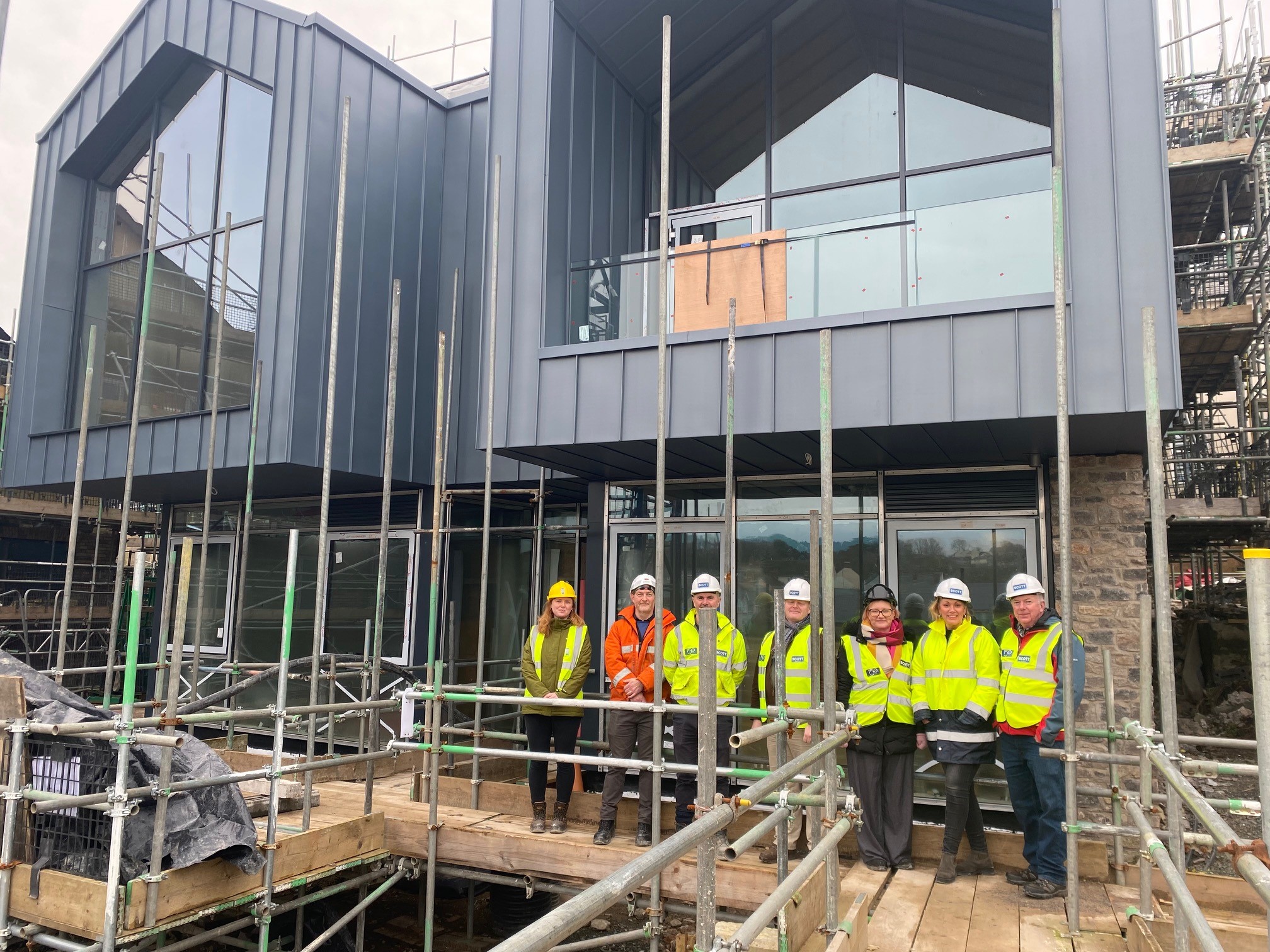
Visit highlights major step forward for Pembroke regeneration project
PEMBROKE Town councillors and the Leader of Pembrokeshire County Council have visited the new Henry Tudor Centre at South Quay to see progress on the landmark development.
Cllr Gareth Jones, Cllr Rose Blackburn and Cllr Jonathan Grimes were joined by County Council Leader Cllr Jon Harvey and Town Clerk Suzie Thomas for a guided tour of the site, which is due to open in spring 2027.
The centre will celebrate the life and legacy of Henry Tudor, born in Pembroke, exploring his Welsh ancestry and his lasting influence on national history, culture and heritage.
Cllr Harvey said: “It is encouraging to see the Henry Tudor Centre taking shape following the dedication and hard work of the Pembroke community and partner organisations, supported by Pembrokeshire County Council.
“The restoration of these previously derelict buildings will also provide a new library, community café, and facilities for healthcare, social services and supported employment in adjoining premises. This is a key development in the ongoing regeneration of Pembroke town centre.”
The Henry Tudor Trust will operate the heritage centre, which is المتوقع to attract around 30,000 visitors annually. The Trust has worked closely with the County Council over several years to bring the project forward, with construction work beginning in earnest in summer 2024.
Cllr Gareth Jones said: “This is an impressive space that will do justice to Pembroke’s unique heritage and its connection to Henry Tudor. The centre will be a major attraction for visitors, enhancing the town’s already strong heritage offer.
“It will also provide a vibrant hub for learning, volunteering and community engagement in the heart of Pembroke.”
Additional funding from The National Lottery Heritage Fund will support the creation of a one-year Community Programme Coordinator role, helping to deliver a programme of events and activities, alongside volunteering opportunities and educational resources for schools.
Caption: Checking out progress at the new Henry Tudor Centre in Pembroke.

Port of Milford Haven chief to give quarterly update as venue decision looms
MILFORD HAVEN Town Council will hold its next full council meeting on Monday (Mar 23) at 6:00pm at the Milford Haven Sea Cadets and Royal Marines Cadets Unit in Havens Head Business Park.
The meeting, chaired by Mayor Councillor W. Elliott, will include a quarterly update from Mr T. Sawyer, Chief Executive of the Port of Milford Haven, expected to outline developments at the port and its impact on the town.
Members of the public will have an opportunity to raise questions during a ten-minute session early in the meeting.
Venue decision on agenda
Councillors are also set to discuss the future location of town council meetings from March 31, a decision which could shape how residents engage with local democracy going forward.
The agenda includes consideration of minutes from the previous full council meeting held on Monday (Mar 9), along with reports and recommendations from the Public Events Sub-Committee.
Funding applications to be considered
Under financial matters, councillors will review applications for financial assistance, including requests from Pembrokeshire Vikings and the Paul Sartori Foundation.
The council will also consider its February accounts and a bank reconciliation dated March 2.
Community and civic updates
Routine items such as mayoral engagements, councillor activity reports, and updates from representatives on outside bodies will also be discussed.
The location of official town council church services is listed for consideration.

Private session likely
An item relating to HR matters may be discussed in private, with the public excluded if councillors vote to do so under the Public Bodies (Admission to Meetings) Act 1960.
Remote access to the meeting is available upon request in line with current legislation.



Crime2 hours ago
Rapist jailed after ‘abhorrent’ attacks on woman and children
Haverfordwest man told police “women won’t have sex without force” A HAVERFORDWEST man who raped a woman and a young...


News4 hours ago
Reform secures first Pembrokeshire councillor in Hakin by-election win
Late Reform candidate takes seat as independent surge and Labour withdrawal shape contest REFORM UK candidate Scott Thorley has won...


News15 hours ago
Scott Thorley elected as Pembrokeshire’s first Reform councillor
REFORM UK candidate Scott Thorley has won the Hakin by-election after securing 179 votes. The full result is as follows:...


News22 hours ago
Police confirm man has died after being recovered from River Cleddau
Major emergency response in town centre after concerns raised for man in water A MAN has died after being recovered...


Community22 hours ago
Davies and Kurtz urge groups to seek employability funding
Community organisations in Pembrokeshire encouraged to apply for new grants supporting skills and job access LOCAL Senedd Members Samuel Kurtz...


News1 day ago
Emergency services flood Haverfordwest after reports of person in river
Town centre sealed off as multi-agency response continues A MAJOR emergency response is underway in the centre of Haverfordwest after...


News1 day ago
Detectives receive surge of new information in bid to identify man found at Powys reservoir
Public response follows release of facial image as officers pursue fresh lines of enquiry DETECTIVES investigating the identity of a...


News1 day ago
Senedd committee urges next Welsh Government to prioritise Wales–Ireland links
A SENEDD committee has called on the next Welsh Government to continue prioritising Wales’s relationship with Ireland, describing it as...


Education2 days ago
New facilities open at Portfield School as redevelopment reaches key milestone
THE FIRST phase of a major redevelopment programme at Portfield School in Haverfordwest has been completed, marking a significant step...


News2 days ago
£377m spent saving blast furnaces months after Port Talbot closure
Government intervention keeps UK’s last primary steelmaking furnaces running THE UK GOVERNMENT spent £377 million to prevent the closure of...
-

 Health5 days ago
Welsh Ambulance Service to host bi-monthly Board meeting
-

 News4 days ago
Rayner and Lammy visit Wales to discuss justice and community safety
-

 News3 days ago
Fishguard linked to allegations in Many Tears Animal Rescue investigation
-
News1 day ago
Emergency services flood Haverfordwest after reports of person in river
-

 Crime7 days ago
‘Knife attack’ at Spittal property leaves man in hospital
-

 News6 days ago
Calls grow for water industry overhaul after Welsh Water faces £44.7m fine
-

 Education6 days ago
Manorbier school closure approved while insurance claim still unresolved
-

 international news7 days ago
Hormuz tensions raise concerns for Welsh LNG supplies through Milford Haven