


News
Dyfed-Powys Police log over 300 road casualties in 2025 as worst-hit areas revealed


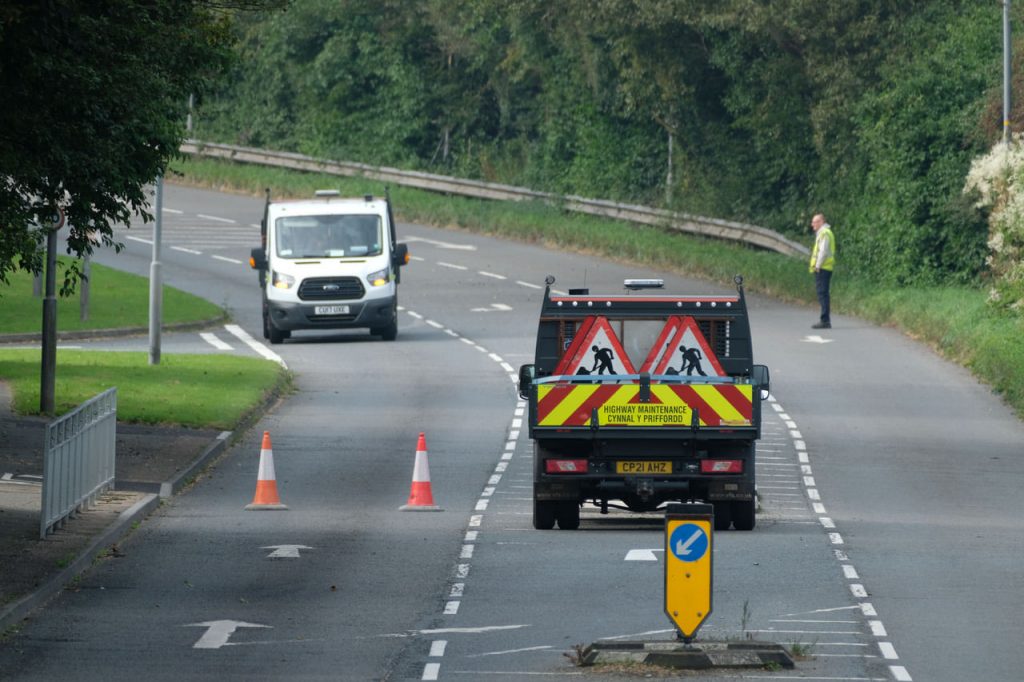
More than 300 people have been injured in road accidents across the Dyfed-Powys area this year, new figures show.
Data obtained by Accident Claims Advice reveals that in 2025 police recorded 330 casualties, including five fatalities, 121 serious injuries and 204 slight injuries.
Pedestrian accidents remain one of the most pressing concerns. In Great Britain in 2023, 405 pedestrians were killed, with more than 6,000 seriously injured and almost 13,000 suffering minor injuries.
Road Traffic Accident Manager for JF Law, Tracey Chick, said: “Each road traffic incident involving pedestrians represents a moment of distress and potential life-altering consequences for those involved. If you have been involved in an accident, your safety should be the immediate priority, before exchanging details with the other parties and reporting the incident to the police.”
The highest number of accidents in the Dyfed-Powys force area were logged in Carmarthenshire, with 119, followed by Powys with 92.

Accident Claims Advice said common causes of accidents include distracted or drunk driving, speeding, poor visibility, and pedestrians taking risks such as crossing without checking properly.
Tracey Chick added: “The safety of pedestrians on the roads is paramount, yet poor driving can result in devastating consequences when someone is struck by a vehicle.
“Regarding eligibility to claim, it’s vital to understand that every case is unique. Generally, if you’ve suffered injury due to the negligence of another driver, you may be eligible to pursue a claim for compensation.
“We urge people to prioritise their own safety by using designated crossings, making eye contact with drivers, and avoiding distractions like mobile phones. Let’s all commit to making our roads safer.”
Accident Claims Advice operates a 24-hour helpline and an online claims form, available via its website.



Restraining order imposed by Haverfordwest magistrates
A MAN has been sentenced after admitting stalking a woman in Milford Haven.
Andrew Richards, 39, of High Street, Neyland, appeared before Haverfordwest Magistrates’ Court for sentence on Monday (Mar 9).
Richards had previously pleaded guilty to stalking without fear, alarm or distress, contrary to section 2A(1) and (4) of the Protection from Harassment Act 1997.
The court heard that between December 2, 2025 and February 15, 2026, he pursued a course of conduct which amounted to the stalking of Tamsin Matthias and which he knew, or ought to have known, amounted to harassment.
Magistrates imposed a community order running until September 8, 2027.

As part of the order, Richards must undertake alcohol treatment for nine months under the direction of the probation service.
He must also complete up to twenty days of rehabilitation activity as directed by probation.
Richards was ordered to pay a £120 fine, £500 compensation to the victim, £85 prosecution costs and a £114 surcharge.
The court made a restraining order lasting until September 8, 2027.
Under the order, Richards must not contact the victim directly or indirectly and must not post, or cause to be posted, any material on social media or the internet referring to her directly or indirectly.
The court heard a victim personal statement from the complainant, which was read to the court by the prosecutor.
The case was prosecuted by Dennis Davies, with Richards represented by Mike Kelleher.

The hearing was before magistrates Mrs J Morris, Mr C Pattison and Mr J Steadman.

Restraining order imposed after Haverfordwest case
A MAN has been sentenced for stalking after admitting a campaign of unwanted contact and harassment in Haverfordwest.
Michael Lockheart, 80, of Daisy Lane, Haverfordwest, appeared before Haverfordwest Magistrates’ Court for sentence on Monday (Mar 9).
The court had previously heard that between July 27 and September 10, 2025, Lockheart pursued a course of conduct which amounted to stalking.
The offence involved sending numerous unwanted emails after being told to stop making contact, putting up defamatory posters in public places, and sending malicious correspondence to the complainant’s GP and local authority.
Lockheart had entered a guilty plea to stalking without fear, alarm or distress, contrary to section 2A(1) and (4) of the Protection from Harassment Act 1997, on January 27, 2026.
Magistrates imposed a community order running until March 8, 2028.
As part of that order, Lockheart must undergo non-residential mental health treatment for 12 months under Dr Cormac Duffy, as directed by probation.
He must also complete up to 25 days of rehabilitation activity.
Lockheart was ordered to pay £1,000 compensation, a £600 fine, £85 costs and a £114 surcharge.
The court also made a restraining order lasting until March 8, 2028.
Under that order, he must not seek, approach or communicate with the complainant by any means, directly or indirectly. He must not knowingly enter any address where she is living, and must not post, or cause to be posted, any material online or on social media referring to her directly or by implication.
A victim personal statement was read to the court by the prosecutor.

The case was heard by Mrs J Morris, Mr C Pattison and Mr J Steadman.

Case dismissed following hearing at Haverfordwest Magistrates’ Court
A MAN from Milford Haven has been cleared of a sexual assault allegation after magistrates ruled there was no case to answer.
David Fletcher, 45, of Chestnut Way, Mount Estate, appeared before Haverfordwest Magistrates’ Court on Monday (Mar 9).
He had been charged with sexual assault on a woman aged sixteen or over, contrary to section three of the Sexual Offences Act 2003.
The court heard the allegation related to an incident said to have taken place in Johnston, Pembrokeshire, on March 16, 2025.
Due to legal reporting restrictions, the complainant’s identity cannot be published under the Sexual Offences (Amendment) Act 1992.
During the hearing, the prosecution was represented by Dennis Davies, while Fletcher was represented by David Wheel of Welch & Co Solicitors.
After hearing the evidence presented by the prosecution, the magistrates ruled that there was no case to answer.
The bench, comprising Mrs J Morris, Mr C Pattison and Mr J Steadman, formally found Fletcher not guilty.
The case was dismissed and Fletcher was discharged.




Sport19 hours ago
France crowned Six Nations champions after extraordinary final-day drama
Ramos penalty in Paris seals title as Ireland fall just short and Wales end losing run FRANCE were crowned 2026...


News24 hours ago
Fishguard linked to allegations in Many Tears Animal Rescue investigation
Claims about puppies arriving through Pembrokeshire port emerge as licensing probe continues FISHGUARD has been named in allegations linked to...


Local Government2 days ago
Investigation confirmed after inspectors visit Many Tears Animal Rescue
Licensing authority declines to comment as police confirm attendance at Carmarthenshire rescue centre AN INVESTIGATION is underway following a visit...


Business3 days ago
Work set to begin on £50m hydrogen plant in Milford Haven
A MAJOR new hydrogen production facility worth around £50 million is expected to begin construction in Milford Haven later this...


Education4 days ago
Manorbier school closure approved while insurance claim still unresolved
Council confirms negotiations with insurer ongoing following 2022 fire PEMBROKESHIRE COUNTY COUNCIL has confirmed that negotiations with its insurer over...


Crime5 days ago
‘Knife attack’ at Spittal property leaves man in hospital
POLICE have arrested a woman following what is being described as a ‘knife attack’ at a property in Spittal on...


Community5 days ago
Pembrokeshire to receive its first banking hub in Pembroke Dock
LINK, the UK’s Cash Access and ATM network, has today announced local people and businesses in Pembroke Dock will benefit from a new banking...


Health6 days ago
Future of Withybush Hospital petition sparks urgent call for Senedd debate
CALLS have been made for an urgent debate in the Senedd over the future of services at Withybush Hospital as...


Sport7 days ago
Sean Bowen set for historic Welsh clash at Cheltenham Gold Cup
PEMBROKESHIRE jockey Sean Bowen could be part of a historic all-Welsh showdown when he lines up in the Cheltenham Gold...


Community7 days ago
Tenby still waiting as Wales hits 50 rural mobile mast upgrades
Seaside town plagued by signal congestion again absent from latest government-backed coverage improvements A NEW milestone in the UK Government’s...
-

 Health3 days ago
Welsh Ambulance Service to host bi-monthly Board meeting
-

 News2 days ago
Rayner and Lammy visit Wales to discuss justice and community safety
-

 Local Government5 days ago
Register now to vote in May’s Senedd election
-

 Crime7 days ago
Former Pembrokeshire Army officer stripped of MBE after fraud conviction
-
Community7 days ago
Tenby still waiting as Wales hits 50 rural mobile mast upgrades
-

 Community7 days ago
Carmarthenshire woman celebrates 100th birthday surrounded by family
-

 News7 days ago
Hustings to focus on learning disability support ahead of Senedd election
-

 Crime6 days ago
E-bike rider who sped through pedestrian alley sentenced by court