


Climate
Pembrokeshire to hear call to stop net-zero ‘backtracking’


A PETITION calling on Pembrokeshire County Council to reaffirm its own commitment to becoming a net-zero council in just five years is to be discussed by councillors next week.
The petition follows councillors agreeing, in July, to decision to set up a group to review its own decision to declare a climate emergency some six years ago.
In May 2019, the council declared a climate emergency following a notice of motion by Cllr Joshua Beynon calling on the authority to back the global consensus that climate change poses a risk to the well-being of future generations.
He had urged county councillors to back a motion to take “bold, decisive action” to fight “truly, catastrophic” climate change, with the council to committing to becoming a zero-carbon local authority by 2030.
The e-petition, by Lynda Duffill of West Wales Climate Coalition, on the council’s own website, reads: “We call upon Pembrokeshire County Council to a) reaffirm their Declaration of a Climate Emergency, and b) retain their ambition to deliver Net Zero Council operations by 2030 via their Action Plan towards Becoming a Net Zero-carbon Local Authority. This would align the council with Welsh Government policy, and the Well-being of Future Generations Act.

“We understand that financial constraints exist for the county council and are concerned that a review of the council’s zero carbon plan, for its own operations, will result in an erosion of ambition to make a difference to its own carbon footprint and consequently Pembrokeshire’s citizens.
“We are concerned that a plan designed to address what is still a climate emergency will be eroded if the ambition to reach Net Zero Council Operations by 2030 is not upheld. We are also concerned that any changes to the plan will prove contrary to the Well-being of Future Generations Act.”
The petition, started on September 1 and running through to November 7, gained 725 signatures, meaning it will now be brought to full council, meeting on October 9.
If the petition gets 500 signatures, the creator will have an opportunity to debate it at a future full council meeting.

Any petition of between 100 and 499 signatures triggers a debate at one of the council’s Overview and Scrutiny Committees.
West Wales Climate Coalition’s Lynda Duffill said: “We’ve been talking with many local people recently who are appalled that Pembs are even thinking of backtracking on this.”
One of the group, Sian Vaughan, a retired head teacher who lives in Fishguard said: “Climate change is a massive threat to every one of us. We can see the effects around us, we’re getting hotter summers, periods of drought and then sudden heavier rainfall, stronger storms and more flooding. What kind of a world are we leaving to our children?”

Cllr Beynon, recently said that removing a commitment to deliver Net Zero Council operations by 2030 could harm the economic future of the area, with renewable energy investment coming into the county.



Major investment expected to boost low-carbon industry and create skilled jobs in West Wales
A MAJOR green hydrogen project planned for the Milford Haven Freeport tax site has taken a significant step forward after developers approved the final investment decision.
Energy company MorGen Energy has confirmed it will proceed with the West Wales Hydrogen project, one of the first schemes backed through the UK Government’s Hydrogen Allocation Round (HAR1) to reach this stage.
The facility will be built within the Milford Haven Tax Site, part of the Celtic Freeport zone covering Pembrokeshire and Neath Port Talbot.
Construction is expected to begin in 2026, with the plant scheduled to become operational in early 2028.
Once completed, the site is expected to produce around 2,000 tonnes of low-carbon hydrogen each year, meeting the UK’s Low Carbon Hydrogen Standard.
The hydrogen produced will support a range of industries, including port operations, manufacturing and industrial heating, as well as use as a chemical feedstock.
Supporters say the development will help reduce carbon emissions while strengthening Milford Haven’s role in the UK’s emerging hydrogen economy.
The project is also expected to create skilled jobs and provide work for local contractors during the construction phase.
Further expansion may be possible in future phases as demand for hydrogen grows, potentially helping establish Milford Haven as a major hub for low-carbon energy production serving South Wales and beyond.

Luciana Ciubotariu, Chief Executive of Celtic Freeport, said the decision marked another milestone for the region.
She said: “MorGen Energy’s decision is another major step forward for the hydrogen economy in South West Wales.
“Projects like this within the Milford Haven Tax Site show how the Celtic Freeport is accelerating decarbonisation while creating high-value jobs.”

The UK Government’s Hydrogen Allocation Round scheme provides revenue support to help scale up the country’s low-carbon hydrogen sector and bring early projects to market.

POLICE appeal for witnesses after man reportedly attacked by group of eight men near Llanddarog junction
Local officers are investigating an alleged assault that took place on the A48 westbound at the Llanddarog junction, before the Nantycaws turn-off, at around 2:30pm on Saturday (Mar 7).
The incident is reported to have involved eight men who had parked Harley-Davidson motorcycles in a lay-by. The group allegedly assaulted a man who was travelling in a car.
The victim sustained moderate injuries and their vehicle was also damaged during the incident.
Anyone with information, or with private CCTV or dashcam footage showing suspicious activity in the area at the time, is asked to contact police in one of the following ways:
Online: https://orlo.uk/KRjzb
Email: [email protected]
Call: 101
Alternatively, information can be passed anonymously to the independent charity Crimestoppers by calling 0800 555111 or visiting crimestoppers-uk.org.
Please quote reference: DP-20260307-227.
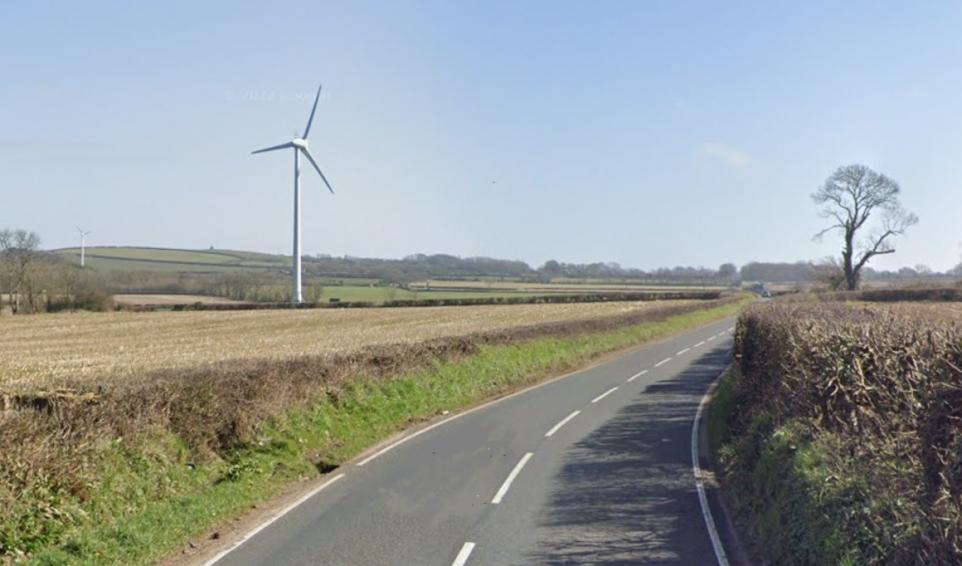
Countryside charity welcomes decision but warns over cumulative impact of dozens of schemes across Wales
THE WELSH countryside charity CPRW has welcomed the decision by energy developer Bute Energy to withdraw its planning application for the proposed Nant Ceiment Energy Park in Carmarthenshire.
The scheme would have seen up to thirteen large wind turbines constructed in the Teifi Valley landscape.
Bute Energy confirmed the withdrawal following what it described as a detailed review of environmental, land and commercial factors, concluding that the project was not viable in its current form.
Local residents and campaigners had raised concerns about the potential impact of the turbines and the wider cumulative effect of multiple large wind developments being proposed across rural Wales.
CPRW chairman Jonty Colchester said the decision demonstrated the importance of scrutiny and public engagement during the planning process.
He said: “We welcome the withdrawal of the Nant Ceiment proposal. It shows that careful scrutiny and community engagement matter.
“Wales does need renewable energy, but it must be delivered through a strategic and coordinated approach that fully respects our landscapes, biodiversity and rural communities.”
The charity says it is currently monitoring more than seventy wind energy proposals progressing through the planning system across Wales.
These include major schemes such as Lan Fawr, Banc y Celyn, Gaerwen, Nant Mithil, Mynydd Maen and projects being promoted by the publicly owned developer Trydan Gwyrdd Cymru.
CPRW warned that several developments in south Wales highlight growing concerns about cumulative impact.
Planning decisions are still pending for schemes including Mynydd Maen, proposed by RES, and Trecelyn, promoted by Pennant Walters. Both developments are linked to the recently approved 92-acre Cil-lonydd solar farm.
Further proposals include four turbines at Rhyswg, while hearings are due to consider the Mynydd Llanhilleth scheme, which would involve seven turbines standing up to 180 metres high.

Campaigners say that when these projects are considered together, they raise concerns about the gradual expansion of large-scale energy infrastructure and the potential industrialisation of wide areas of upland Wales.
While supporting the transition to renewable energy, CPRW says it wants to see a more strategic approach to development that balances the need for green power with protection for landscapes, biodiversity and tourism.
The organisation is calling for a national renewables strategy that takes cumulative impacts into account, with greater emphasis placed on offshore wind projects. It is also urging improved transparency and stronger community involvement earlier in the planning process, alongside robust environmental standards to prevent unsuitable developments going ahead.
Further information on onshore wind proposals across Wales is available on the CPRW website.



Sport3 hours ago
France crowned Six Nations champions after extraordinary final-day drama
Ramos penalty in Paris seals title as Ireland fall just short and Wales end losing run FRANCE were crowned 2026...


News8 hours ago
Fishguard linked to allegations in Many Tears Animal Rescue investigation
Claims about puppies arriving through Pembrokeshire port emerge as licensing probe continues FISHGUARD has been named in allegations linked to...


Local Government1 day ago
Investigation confirmed after inspectors visit Many Tears Animal Rescue
Licensing authority declines to comment as police confirm attendance at Carmarthenshire rescue centre AN INVESTIGATION is underway following a visit...


Business2 days ago
Work set to begin on £50m hydrogen plant in Milford Haven
A MAJOR new hydrogen production facility worth around £50 million is expected to begin construction in Milford Haven later this...


Education3 days ago
Manorbier school closure approved while insurance claim still unresolved
Council confirms negotiations with insurer ongoing following 2022 fire PEMBROKESHIRE COUNTY COUNCIL has confirmed that negotiations with its insurer over...


Crime4 days ago
‘Knife attack’ at Spittal property leaves man in hospital
POLICE have arrested a woman following what is being described as a ‘knife attack’ at a property in Spittal on...


Community4 days ago
Pembrokeshire to receive its first banking hub in Pembroke Dock
LINK, the UK’s Cash Access and ATM network, has today announced local people and businesses in Pembroke Dock will benefit from a new banking...


Health5 days ago
Future of Withybush Hospital petition sparks urgent call for Senedd debate
CALLS have been made for an urgent debate in the Senedd over the future of services at Withybush Hospital as...


Sport6 days ago
Sean Bowen set for historic Welsh clash at Cheltenham Gold Cup
PEMBROKESHIRE jockey Sean Bowen could be part of a historic all-Welsh showdown when he lines up in the Cheltenham Gold...


Community6 days ago
Tenby still waiting as Wales hits 50 rural mobile mast upgrades
Seaside town plagued by signal congestion again absent from latest government-backed coverage improvements A NEW milestone in the UK Government’s...
-

 Health2 days ago
Welsh Ambulance Service to host bi-monthly Board meeting
-

 News1 day ago
Rayner and Lammy visit Wales to discuss justice and community safety
-

 Local Government4 days ago
Register now to vote in May’s Senedd election
-

 Crime6 days ago
Former Pembrokeshire Army officer stripped of MBE after fraud conviction
-

 Community6 days ago
Carmarthenshire woman celebrates 100th birthday surrounded by family
-

 Entertainment5 days ago
How the Cheltenham Festival Captivates Racing Fans Every Year
-

 Crime5 days ago
E-bike rider who sped through pedestrian alley sentenced by court
-

 Community6 days ago
Funding event to support churches, chapels and graveyards