


Local Government
Cabinet brands nitrate policy ‘bonkers’


COUNCILLORS have slammed a policy that has brought Pembrokeshire’s housebuilding ambitions to a standstill.
At a meeting on Monday, members of Pembrokeshire County Council’s Cabinet tore into the nitrate neutrality directive issued by Natural Resources Wales (NRW), describing it as “bonkers”, “embarrassing”, and “all pain and no gain”.
The NRW policy requires all new developments in mid-Pembrokeshire to be nitrate neutral—meaning they must make no additional contribution to nitrate levels in the Cleddau catchment area. In practice, this applies to “any building with a toilet”, forcing applicants to show how nitrates from the development will be neutralised either on site or elsewhere before planning permission can be granted.
Cabinet member for planning, Cllr Jacob Williams, told colleagues that the rule affects around 75% of the county, effectively freezing hundreds of projects. A report before the meeting said that around 200 live planning applications and 600 new homes are currently at risk, while more than 2,200 homes proposed in the new development plan could also fall foul of the regulations.
97% from farming
What most angered Cabinet members was evidence presented at a recent seminar suggesting that agriculture accounts for 97% of nitrate pollution in local watercourses—while housing and other developments make up just 3%.

In that context, councillors said, the contribution of new homes would be so small as to be almost negligible. The 600 homes affected represent about 2% of the county’s housing stock—meaning, even if the full 3% were due to housing, the actual impact would amount to just 0.06%.
“It’s all pain and no gain,” one councillor remarked.
‘Heads should roll’
Cllr Williams called the situation “bonkers”, a view echoed by Cabinet member Cllr Tessa Hodgson, who warned of devastating consequences for the local construction industry and supply chain.
Cabinet member for housing, Cllr Michelle Bateman, said the ruling would cause severe delays to the council’s housebuilding programme.

Labour group leader Cllr Paul Miller went further, branding the actions of officials and ministers in Cardiff Bay “embarrassing”.
“With a Civil Service and 60 AMs paid to scrutinise these things,” he said, “it’s amazing they couldn’t see this nonsense coming. Heads should roll.”
£400,000 plan questioned
During the meeting, it was revealed that the council has set aside £400,000 to hire consultants to develop a nitrate mitigation strategy for future developments.

Cllr Hodgson pointed out that this figure excludes the actual cost of the mitigation work itself, which could be far higher. One proposal involves creating nitrate-absorbing wetlands on the county farm estate, but no cost estimate has yet been produced.
Several members questioned whether such schemes represented value for money, given the tiny potential environmental gain.
Call for Welsh Government action
A Notice of Motion by Cllr Jacob Williams, calling on the Welsh Government to lift or ease the block on development, will be debated at Thursday’s full council meeting.
It is understood that the 97% figure comes from a 2016 study, with an updated assessment not due until 2027. Even if that new research attributes a greater share to housing—say 10% or even 20%—councillors noted that the resulting effect on overall nitrate levels would still be minute, between 0.2% and 0.4%.


CONSULTATION DRAWS JUST 25 RESIDENTS AS RUNNING COST ESTIMATES VARY BY TENS OF THOUSANDS
THE PROPOSED transfer of Fishguard Town Hall to the town council has come under scrutiny after documents revealed conflicting estimates of the building’s running costs.
Freedom of Information responses and council documents suggest the historic building could cost tens of thousands of pounds a year to operate, raising questions about whether Fishguard and Goodwick Town Council can afford to take on responsibility for it.
Budget links tax rise to town hall plan
A budget report prepared by Fishguard and Goodwick Town Council shows the authority planning £166,336 in spending for the 2025–26 financial year, an increase on the previous year.
Within the administration section of the proposed budget, the council confirms that £20,000 has been allocated towards the proposed Community Asset Transfer of Fishguard Town Hall from Pembrokeshire County Council.
The document also links a proposed 16 per cent increase in the council’s precept directly to the takeover proposal.

After two years with no increase due to the cost-of-living crisis, the report states the rise is “directly related to the proposed CAT of Fishguard Town Hall.”
The council plans to request a £147,070 precept for the coming year.
Dispute over running costs
However, debate over the plan has intensified after different figures emerged for the building’s running costs.
Pembrokeshire County Council has said the average annual cost of utilities — including gas, electricity, water and sewage — for the building over the past three years was between £25,000 and £30,000.
But other figures circulating locally suggest the costs may be far higher.
One estimate cited by residents claims energy bills alone could be around £47,000 a year.
Separate operational figures released through a county council Freedom of Information request indicate that when staffing, maintenance, utilities and business rates are included, the total cost of running the building could exceed £70,000 annually.

Consultation numbers raise questions
Consultation figures released by the Town Council also show relatively modest public engagement with the proposal.
According to the council, 25 people attended the public consultation meeting held at the Town Hall.
A further 93 paper survey responses and 17 online responses were submitted through the council’s consultation process.
The council has not yet published the draft business plan or energy survey relating to the building, stating the documents are still under review.
Transfer still undecided
The potential Community Asset Transfer of Fishguard Town Hall from Pembrokeshire County Council to the town council has been under discussion since 2024, but the arrangement has not yet been formally agreed by either authority.
If the transfer goes ahead, responsibility for operating and maintaining the building would pass from the county council to Fishguard and Goodwick Town Council.
Supporters of the proposal say it would give the community greater control over the future of the historic building.
However, critics argue the long-term costs could place significant pressure on the town council’s finances.
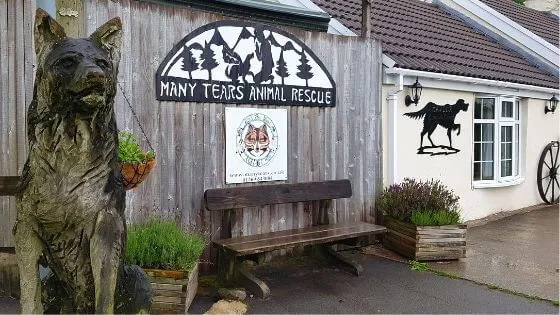
Licensing authority declines to comment as police confirm attendance at Carmarthenshire rescue centre
AN INVESTIGATION is underway following a visit by licensing inspectors to the premises of one of the UK’s largest dog rescue organisations.
Authorities attended Many Tears Animal Rescue on Tuesday (Mar 10), with Dyfed-Powys Police confirming officers were present during the visit in a supporting role.
Police stressed that their officers were not leading the operation and were only present to prevent any breach of the peace.
A spokesperson for Dyfed-Powys Police told The Herald: “Officers attended the premises in a supporting capacity only, to prevent any breach of the peace. The visit took place without any need of police involvement or intervention.”
Enquiries about the purpose of the visit were directed to Animal Licensing Wales, the body responsible for overseeing animal establishment licensing across Wales.
When contacted by The Herald, Animal Licensing Wales confirmed it could not comment further.
In a statement, the organisation said: “We are unable to comment on this matter due to an ongoing investigation.”
The RSPCA Cymru has also confirmed it was not involved in the visit.
An RSPCA spokesperson told The Herald: “The RSPCA did not attend this premises on March 10 so did not participate in any visit that took place.”

Many Tears Animal Rescue, based in Carmarthenshire, is one of the largest dog rescue charities operating in the UK and is known for rescuing and rehoming thousands of dogs each year.
Founded by Sylvia and Bill Van Atta, the organisation operates from the former Cawdor Kennels site, which it purchased in 2004. The centre houses large numbers of rescue dogs while also working with foster carers who temporarily care for animals before they are placed in permanent homes.
The organisation takes in animals from a variety of sources, including commercial breeding establishments and other rescues, before placing them with new owners across the country.

Animal Licensing Wales operates under the Animal Welfare (Licensing of Activities Involving Animals) (Wales) Regulations 2021, which require organisations involved in activities such as animal boarding, breeding, and rehoming to meet strict standards relating to animal welfare, veterinary care, record-keeping, and the management of animals kept at licensed premises.
The nature of the investigation has not yet been disclosed.
Many Tears Animal Rescue has built a significant following among dog adopters across the UK, regularly rehoming animals rescued from breeding establishments, pounds and other rescue organisations. The Carmarthenshire centre is widely known among rescue supporters and veterinary volunteers, with many dogs travelling to new homes across Britain after being rehabilitated at the site.
Investigations involving animal licensing authorities can include inspections of facilities, checks on welfare standards, and reviews of record keeping and veterinary care arrangements. Under Welsh regulations, organisations involved in activities such as boarding, breeding or rehoming animals must meet strict licensing conditions designed to safeguard animal welfare.
The story will be updated if further information becomes available.

VISITORS and harbour users in Tenby are being asked to take care while dredging work is carried out at the harbour entrance next week.
Sand will be removed from the mouth of Tenby Harbour and deposited at the northern end of North Beach. The work is not expected to affect vessel movements in the harbour.
Operations will begin on Monday (Mar 16) and are scheduled to continue until Wednesday (Mar 18).
Tenby Harbourmaster Chris Salisbury confirmed that the necessary licence for the dredging work is in place.
He said: “We ask that members of the public keep clear of the operating area while the machinery is in use and that dogs are kept on a lead during this time.”
Cllr Rhys Sinnett, Cabinet Member for Residents’ Services at Pembrokeshire County Council, said the work was essential to keep the harbour functioning properly.
“I’m grateful to our officers for carrying out this work at Tenby Harbour,” he said. “The dredging is essential for the continued operation of the harbour.
“The timing has been dictated by the tides, and these dates represented the final opportunity to complete the work before boats are returned to the water.”



Local Government13 hours ago
Investigation confirmed after inspectors visit Many Tears Animal Rescue
Licensing authority declines to comment as police confirm attendance at Carmarthenshire rescue centre AN INVESTIGATION is underway following a visit...


Business2 days ago
Work set to begin on £50m hydrogen plant in Milford Haven
A MAJOR new hydrogen production facility worth around £50 million is expected to begin construction in Milford Haven later this...


Education3 days ago
Manorbier school closure approved while insurance claim still unresolved
Council confirms negotiations with insurer ongoing following 2022 fire PEMBROKESHIRE COUNTY COUNCIL has confirmed that negotiations with its insurer over...


Crime3 days ago
‘Knife attack’ at Spittal property leaves man in hospital
POLICE have arrested a woman following what is being described as a ‘knife attack’ at a property in Spittal on...


Community3 days ago
Pembrokeshire to receive its first banking hub in Pembroke Dock
LINK, the UK’s Cash Access and ATM network, has today announced local people and businesses in Pembroke Dock will benefit from a new banking...


Health5 days ago
Future of Withybush Hospital petition sparks urgent call for Senedd debate
CALLS have been made for an urgent debate in the Senedd over the future of services at Withybush Hospital as...


Sport5 days ago
Sean Bowen set for historic Welsh clash at Cheltenham Gold Cup
PEMBROKESHIRE jockey Sean Bowen could be part of a historic all-Welsh showdown when he lines up in the Cheltenham Gold...


Community6 days ago
Tenby still waiting as Wales hits 50 rural mobile mast upgrades
Seaside town plagued by signal congestion again absent from latest government-backed coverage improvements A NEW milestone in the UK Government’s...


Crime6 days ago
Man raped 15-year-old girl in caravan while she was on family holiday in west Wales
Jury convicts Pendine man after court hears he raped intoxicated teenager in caravan during family holiday A MAN who raped...


Community6 days ago
Crash sparks fresh questions over future of former Haverfordwest library
CONCERNS have been raised about the future of a distinctive Haverfordwest building after a car crashed into it last week,...
-

 Health2 days ago
Welsh Ambulance Service to host bi-monthly Board meeting
-

 Local Government4 days ago
Register now to vote in May’s Senedd election
-

 Health6 days ago
Women’s health services ‘expanding’ across mid and west Wales says Health Board
-

 News13 hours ago
Rayner and Lammy visit Wales to discuss justice and community safety
-

 Cymraeg6 days ago
Commissioner’s five-year report highlights key opportunities to strengthen Welsh language
-

 Crime6 days ago
Former Pembrokeshire Army officer stripped of MBE after fraud conviction
-
Community6 days ago
Tenby still waiting as Wales hits 50 rural mobile mast upgrades
-

 Community5 days ago
Carmarthenshire woman celebrates 100th birthday surrounded by family