


Business
Traditional town centre business model is ‘dead’, ex-minister warns


A FORMER minister warned the traditional business model for Welsh town centres is “dead”, dismissing “magic bullets” such as free parking and abolishing business rates.
Labour’s Lee Waters argued the economic reality of online and out-of-town shopping means a new purpose must be found for struggling high streets.
Mr Waters described town centre regeneration as a “gnarly, knotty problem”, with economics at its heart, during a debate in the Senedd on October 15.
Warning of an “unfair, unlevel playing field”, he told the Senedd: “The business model of the town centre that we all grew up with is dead.”
The former transport minister said the business model has been “enormously disrupted” by supermarkets, out-of-town shopping, online retail and the pandemic.


Mr Waters warned of little evidence to support free parking which would take revenue from councils and fail to address the 25% of people who do not have access to a car.
“The world as we knew it has gone,” he said. “And simply abolishing business rates or providing free car parking is not going to bring it back. It’s a far more complex tapestry we require… and I’m afraid our rather glib debate on these things is getting us nowhere.
“But the fix is much more complex and involves far more partners in a granular way.”
The Labour politician, who is standing down in May, said it is much cheaper for a business to build out of town than to redevelop a town centre property.

He also explained how housing trends have changed the social and economic fabric of town centres, leaving them to cater to a different demographic.
Calling for a long-term plan, including the public and private sectors, Mr Waters raised an example of “disjointed” government leading to a college in Bangor moving out of town.
The debate was tabled by Plaid Cymru’s Luke Fletcher, who painted a similarly bleak picture of high streets with “vacant retail units, shuttered shopfronts and boarded-up windows”.


He warned government schemes were merely “plugging holes, not rebuilding foundations”, with Wales having the second highest rate of vacant shops in the UK.
The shadow economy secretary argued the real issue was “ownership”, calling for a community right to buy to tackle the problem of absentee landlords.
Plaid Cymru’s motion called for a comprehensive strategy for town-centre regeneration, preferential business rates, long-term funding and a law on “right to buy” powers.
South Wales East MS Delyth Jewell, the party’s deputy Senedd leader, said: “These buildings… tell the stories of our past…. It is a covenant with our past that is being corroded with these closures.”

The Conservatives’ Joel James warned Labour policies have driven businesses on high streets to extinction, with high business rates amounting to “economic punishment”.
He argued throwing money at regeneration projects is useless without first fixing the underlying business environment to ensure competition can thrive.
Mr James criticised the “anti-business, anti-growth” motion and its focus on local ownership, warning Plaid Cymru’s “financial fantasies” offer no hope for high-street businesses.
He told the Senedd the Conservatives would scrap rates for all small businesses and improve access to free car parking in town centres.

Labour backbencher Mike Hedges agreed with Plaid Cymru’s calls for a right to buy, saying: “The community right to buy is proven, popular and politically effective. We need to have it in Wales and… we need to have it now.”
Jayne Bryant, Wales’ local government secretary, pointed to £100m delivered through the transforming towns programme since 2022, with another £57m on the way.
Ms Bryant, whose responsibilities include regeneration, told the Senedd an empty property enforcement fund has been set up to help bring vacant buildings back into use.
She said the Welsh Government is providing £335m in rates relief this year, which includes £78m for retail, leisure and hospitality businesses.

Ms Bryant explained a “town centre first” principle has been embedded for planning decisions on where to locate public services such as colleges and health hubs.
The minister added that a commission – set up to explore local ownership models – is set to present its recommendations next month which will inform the introduction of a right to buy. Her goal, she said, is to bring “pride, purpose and prosperity back to the heart of our towns”.
At the end of the debate, Plaid Cymru’s original motion was voted down before ministers’ amended version – which supported the existing strategy – was narrowly passed, 24-23.



WOLFSCASTLE COUNTRY HOTEL and Spa in Pembrokeshire is celebrating national recognition after its luxury spa was included in the prestigious AA Recommended Spa Awards.
The accolade highlights the hotel’s commitment to delivering high-quality wellbeing experiences, exceptional service, and first-class facilities.
The AA Recommended Spa status is awarded to venues that provide an outstanding guest experience, combining professional expertise, premium treatments, and a relaxing environment. The recognition places Wolfscastle among a select group of leading spa destinations across the UK.

Hot stone massage in the Wolfscastle Country Hotel & Spa treatment room.
The spa, which has been open for nine years, has established itself as one of Pembrokeshire’s top wellness destinations, welcoming both hotel guests and day visitors seeking relaxation in a tranquil countryside setting.
Facilities include hydrotherapy experiences, thermal suites, and dedicated relaxation areas, alongside a wide range of luxury treatments designed to help guests unwind and recharge.

Bethan, Spa Manager at Wolfscastle Country Hotel & Spa, said: “We’re absolutely delighted to be recognised by the AA as a Recommended Spa. The team here work really hard to make sure every guest feels relaxed, welcomed and properly looked after from the moment they arrive.
“To receive this recognition is very special for us and reflects the care and effort our therapists put into every treatment.”
The award further strengthens the hotel’s reputation as one of West Wales’ leading hospitality destinations, offering award-winning dining, boutique accommodation, and premium wellness experiences.
Guests can enjoy spa days, overnight breaks, and tailored treatments throughout the year.
For more information or to book, visit www.wolfscastle.com.
The hotel is also marking a significant milestone this year, with owner Andrew Stirling celebrating 50 years at the helm.

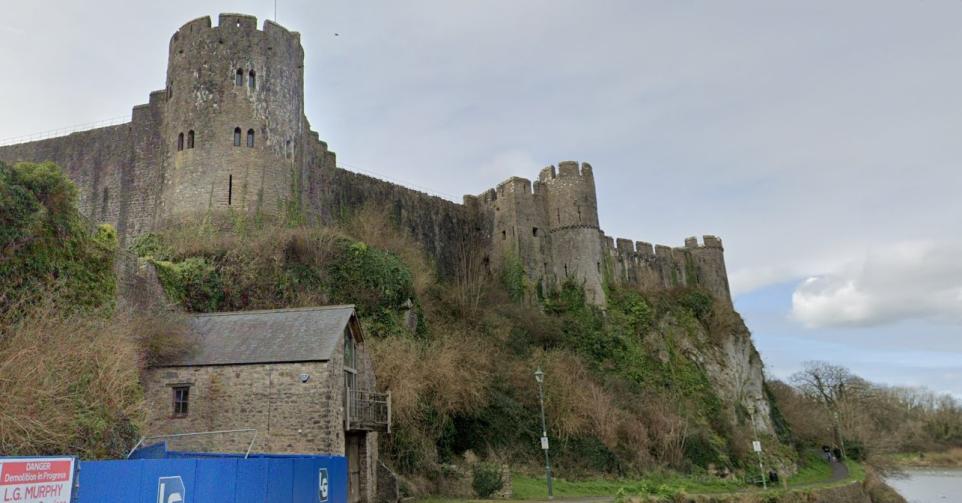
A PADDLEBOARDING and canoeing company’s call for an extension to a boat shed at Pembroke’s South Quay, below its historic castle, has been submitted to county planners.
In an application to Pembrokeshire County Council, G Booth of Paddle West CIC, through agent James Dwyer Associates, seeks permission for an extension to the stone-built boathouse, adjacent to the cliff on South Quay fronting the Mill Pond, Pembroke.
A supporting statement says: “It is intended to erect a single storey ‘lean-to’ building, or ‘shed’ for the storage of boats, such as canoes and kayaks, and related equipment, on a vacant space adjacent to the existing stone-built boathouse.”
It adds: “The boathouse and the intended adjacent boat storage shed is located, as is to be expected, in close proximity to water, the Mill Pond. The Mill Pond is the main area of activity for Paddle West, a Community Interest Company, providing boating activities, kayaking, canoeing and paddle boarding, frequently for young people and families.”
It goes on to say: “It is intended that the structure would be lightweight, erected on the exiting hard standing. The ‘shed’ would be used for the storage of boats and related equipment.”
With regard to the historic setting, it adds: “Although the stone-built boathouse appears not to be listed, it is recognised that the walls above are listed and together they are a piece.
“Accordingly, through form and external materials proposed, timber cladding and profile sheet roofing, the aim is to ensure that the structure would be subservient and muted and not detract or compete with the visual aesthetic of the boathouse or historic walls. In effect the addition would blend into the background.”
The application will be considered by county planners at a later date.
The boathouse is sited near to the new Henry Tudor Centre in South Quay, which is due to open in Spring 2027.
The centre, expected to receive around 30,000 visitors a year, will tell the story of Henry Tudor, son of Pembroke, his Welsh ancestry and his impact on our national story, Welsh culture and our wider British heritage.
The restored derelict South Quay buildings will also house a new library and community café, and a healthcare, social services and supported employment facility in the adjoining premises.

A WELSH Government-funded scheme to provide rates relief for hospitality businesses has been backed by senior Pembrokeshire councillors.
A report for members of Pembrokeshire County Council’s Cabinet at their March meeting said: “Welsh Government has introduced the Food and Drink Hospitality Rates Relief, this relief is aimed at eligible businesses in Wales in the food and drink hospitality sector for example, pubs, restaurants, cafes, bars and live music venues.
“The aim of the relief is to support eligible businesses to manage continued cost pressures. The relief will apply to all eligible occupied properties by offering a discount of 15 per cent on non-domestic rate bills for the period April 1 to March 31, 2027. The relief is capped at £110,000 per business across Wales.
“As this is a temporary measure, Welsh Government is providing the relief by reimbursing local authorities that use their discretionary relief powers under Section 47 of the Local Government Finance Act 1988.”
It concluded: “The food and drink hospitality rates relief 2026-27 requires the local authority to adopt a discretionary scheme [as outlined] and in accordance with the criteria and conditions specified in the guidance issued by Welsh Government.
“It is proposed that Cabinet resolve to adopt [the scheme] which can be applied to administer the relief. Welsh Government will reimburse local authorities for the relief provided in line with their guidance via a grant under section 31 of the Local Government Act 2003.”
Members backed the recommendation.
All eligible businesses must apply for this relief by the March 31, 2027, and an application form will be available on the council’s website from the April 1.
The maximum cash value of the rates relief allowed, across all properties in Wales occupied by the same business should not exceed £110,000. Businesses claiming the relief must declare that the amount being claimed does not exceed those limits.




Crime1 day ago
Publican jailed for six years for supplying cocaine and cannabis
Milford Haven man sentenced at Swansea Crown Court following drug dealing operation A MILFORD HAVEN publican has been jailed for...


Local Government1 day ago
Poverty summit highlights support efforts across Pembrokeshire
A SUMMIT bringing together key organisations from across Pembrokeshire has highlighted both the scale of local poverty and the work...


Education2 days ago
Milford Haven school plans unveiled but funding not yet secured
PLANS for a new £100 million school in Milford Haven have been unveiled, but the project has not yet secured...


News2 days ago
Council unveils plans for new state-of-the-art secondary school in Milford Haven
PEMBROKESHIRE COUNTY COUNCIL has revealed plans for a new state-of-the-art school in Milford Haven, promising modern, inspiring learning spaces for...


Health2 days ago
NHS waiting list falls — but cancer delays and diagnostic backlog worsen
Record progress claimed by Welsh Government as critics warn key targets are still being missed THE NHS in Wales has...


Crime3 days ago
Rapist jailed after ‘abhorrent’ attacks on woman and children
Haverfordwest man told police “women won’t have sex without force” A HAVERFORDWEST man who raped a woman and a young...


News3 days ago
Reform secures first Pembrokeshire councillor in Hakin by-election win
Late Reform candidate takes seat as independent surge and Labour withdrawal shape contest REFORM UK candidate Scott Thorley has won...


News4 days ago
Scott Thorley elected as Pembrokeshire’s first Reform councillor
REFORM UK candidate Scott Thorley has won the Hakin by-election after securing 179 votes. The full result is as follows:...


News4 days ago
Police confirm man has died after being recovered from River Cleddau
Major emergency response in town centre after concerns raised for man in water A MAN has died after being recovered...


Community4 days ago
Davies and Kurtz urge groups to seek employability funding
Community organisations in Pembrokeshire encouraged to apply for new grants supporting skills and job access LOCAL Senedd Members Samuel Kurtz...
-

 News6 days ago
Fishguard linked to allegations in Many Tears Animal Rescue investigation
-

 News4 days ago
Emergency services flood Haverfordwest after reports of person in river
-

 Crime3 days ago
Mother given community order after admitting child cruelty offence
-
Health2 days ago
NHS waiting list falls — but cancer delays and diagnostic backlog worsen
-

 Crime6 days ago
Man cleared of sexual assault allegation after magistrates rule no case to answer
-

 News4 days ago
Senedd votes to ban Greyhound racing in Wales to protect animal welfare
-

 News4 days ago
Senedd vote to ban greyhound racing hailed as ‘landmark moment’ by charities
-

 Sport7 days ago
Wales end Six Nations losing run with bonus-point win over Italy