


Farming
Farming inheritance tax changes spark calls for delay amid Welsh concerns


Committee warns of “confusion” as Government urged to review impact on Wales
PLANS to overhaul inheritance tax rules for agricultural estates have prompted a warning from MPs that Welsh family farms could face significant uncertainty unless ministers pause the reforms and assess their impact properly.
The cross-party Welsh Affairs Committee says the measures, due to take effect in April 2026, risk hitting small and medium-sized family farms far harder than the UK Government has suggested. Members argue that the changes have been developed without considering the distinct structure of Welsh farming, where many holdings are family-run, multi-generational and reliant on diversified income streams.
Under the proposals announced in last year’s Labour Budget, inherited agricultural assets valued above £1m would be taxed at 20%. While Treasury officials insist that only the largest estates will be affected, farming unions and rural accountants have produced far higher estimates. Some advisers say the reforms could touch the majority of Welsh farms, particularly where investment in tourism, renewables or on-site businesses has increased overall estate values.
The committee’s report highlights that no Welsh-specific data was published when the policy was announced, leaving what it describes as “a vacuum” filled by wildly different projections. MPs say this lack of clarity has fuelled anxiety across the sector, especially among families preparing for succession in the coming years.
Farmers who have expanded into caravan parks, holiday accommodation or wedding venues warn that diversification — encouraged for decades as a way of shoring up rural income — now risks pushing them over the proposed allowance. Several have told the committee that younger family members hoping to take over holdings are now unsure how to plan, with some reconsidering investment or delaying major decisions until the tax position is clearer.

The committee has urged the UK Government to halt the reforms until a full, Wales-specific impact assessment can be produced, scrutinised and debated. Members argue that any future policy must recognise that Welsh farms are typically smaller, more marginal and more culturally significant than the UK average, often forming the backbone of Welsh-speaking communities.
They also recommend that the Wales Office should take a leading role in assessing how UK-wide tax policies affect devolved nations, to avoid repeating what they describe as a “complacent” approach in this case.
Opposition parties in Wales have echoed the committee’s call for a pause, arguing that the reforms could destabilise rural communities and introducing that level of financial pressure without detailed analysis risks unintended harm. They say there are alternative ways to tighten tax rules for large estates or corporate landowners without imposing heavy costs on working family farms.
The Welsh Government said it welcomed the committee’s work and would consider its findings. The Treasury maintains that it is supporting British agriculture through investment allowances for machinery, funding for sustainable food production and measures designed to reduce EU export costs. Ministers say the reforms will ensure reliefs worth hundreds of millions of pounds are more fairly distributed and contribute to public services.

The next UK Budget is due within a fortnight, and farming organisations will be watching closely for any sign that ministers intend to slow down or revise the proposed changes.


THE FINAL stage of removing decades old agricultural planning condition ties to a Pembrokeshire property has been given the go-ahead by Pembrokeshire planners.
Back in December, Tim and Cathy Arthur were granted permission for the removal of an agricultural worker-only condition at New Creamson, Creamston Road, near Haverfordwest by members of Pembrokeshire County Council’s planning committee.
An officer report for members said the agricultural condition was imposed when the dwelling was built in 1988/89, with a recent certificate of lawful development granted after it was proven the site had been occupied for more than 10 years on breach of that condition.
An application for a certificate of lawfulness allows an applicant to stay at a development if they can provide proof of occupancy over a prolonged period.
Speaking at that meeting, agent Andrew Vaughan-Harries of Hayston Developments & Planning Ltd told members the original agriculture worker-only condition was a poor decision by planners back nearly four decades ago for a 50-acre farm that “should never have been approved as it shouldn’t have been viable”.
Since that approval, an application by Mr Arthur before the March committee sought removal of a Section 106 legal agreement, entered into back in 1994, tying New Creamson to the agricultural land along with an agricultural worker condition.
A report for members recommending approval added: “The applicant wishes to separate the land from the dwelling as the dwelling can lawfully be occupied not in connection with agriculture,” recommending that S106 agreement be removed.
Speaking at the March meeting, Mr Vaughan-Harries, who said his clients were not farming the land at all, described the latest application as “just tidying up the paperwork”.
“If you release this today it allows the useful farmland to be released to other agricultural uses.”
Approval was moved by Cllr Mark Carter and unanimously supported by committee members.
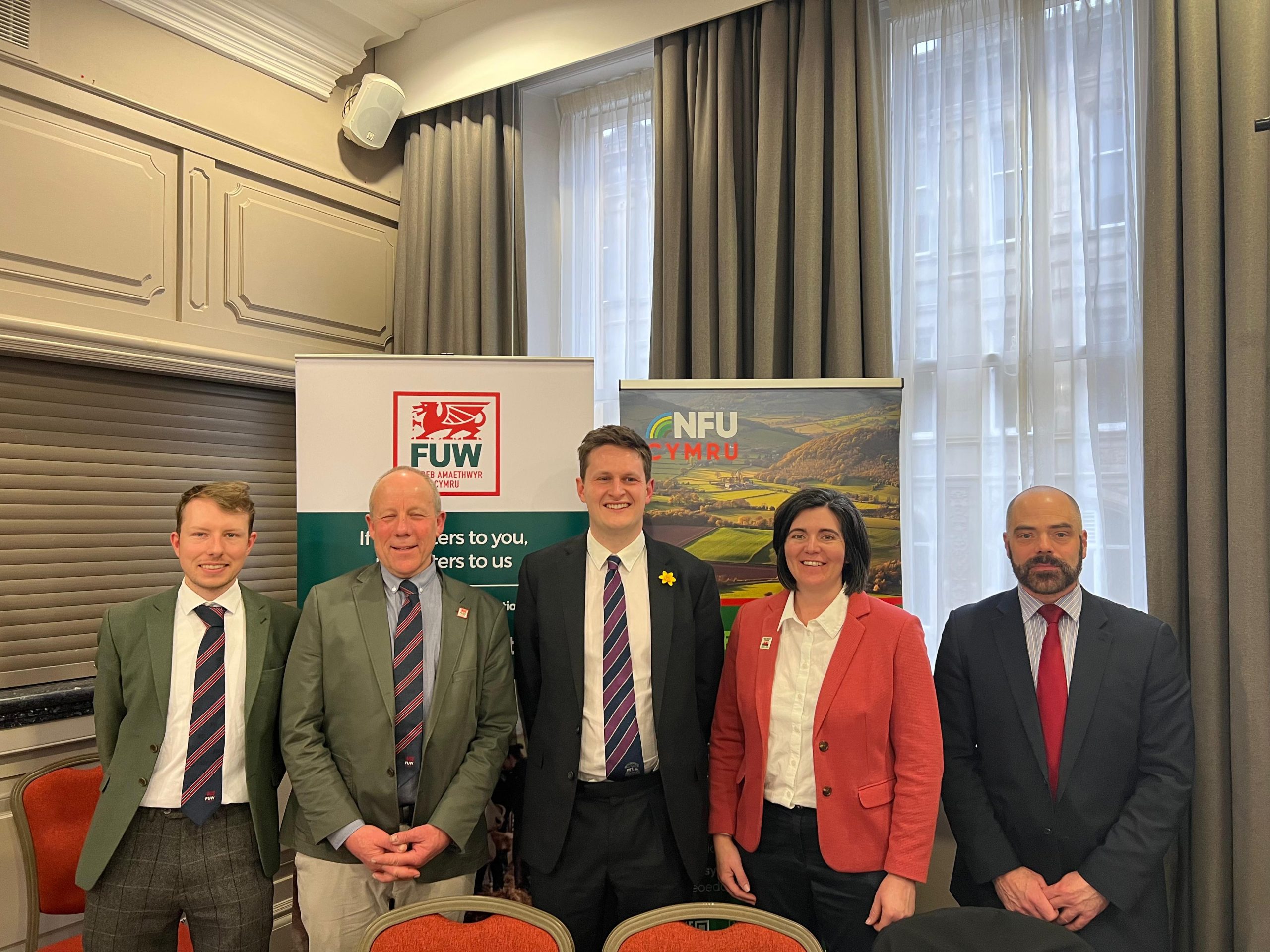
WALES’ two farming Unions, NFU Cymru and the Farmers’ Union of Wales (FUW) have used their joint fringe event at the Welsh Liberal Democrats’ spring conference in Cardiff, to set out some of their shared asks for the next Senedd and Welsh Government term to assembled delegates and politicians.
In the event chaired by Brecon and Radnor MP, David Chadwick, key messages from both Unions’ Senedd elections manifestos were communicated to the audience. Amongst these was the need for the SFS to provide stability for farmers in Wales, the necessity of fair and sufficient funding for Welsh agriculture, a genuinely comprehensive TB eradication strategy which combats the disease in all its sources, a risk-based and evidence-led approach to water quality, and a review of the regulatory burden faced by farmers.
With recent global events now placing additional financial pressures on the sector, NFU Cymru President Abi Reader said: “For well over a decade the amount of funding available to support Welsh farmers has remained cash-flat. Inflation has therefore made significant inroads into the real terms value of this funding, whilst farmers are also facing significant and rising costs associated with regulatory and environmental compliance. The unfolding conflict in the Middle East has underscored yet again the importance of ensuring that there is sufficient and secure funding available to support Welsh agriculture, and to ensure our farming families are able to carry on producing the food we need in a volatile world.”
Developing Abi’s comments further FUW President, Mr Ian Rickman said: “Had the agricultural budget kept pace with inflation it would now be well in excess of £500 million. We need the next Welsh Government to commit to an inflation adjusted, ring-fenced, multi-annual budget which matches our shared ambitions for the sustainable growth of the sector, with the majority of that funding directed towards stability, productivity, and efficiency gains on-farm.”
Delegates also heard from the Unions of how future uplifts to agricultural support funding in Wales are now subject to the Barnett formula, with both NFU Cymru and the FUW setting out their shared concerns about the disadvantage such an arrangement means for Wales. NFU Cymru President Abi Reader said: “When agriculture plays a more significant role in the national economy than in some other parts of the UK, we need to ensure that future uplifts to agricultural support fairly reflect the size and scale of the sector in Wales, rather than being tied to population size via the Barnett formula.”
There were also heartfelt thanks from both Presidents for the support of the Welsh Liberal Democrats during the 14-month battle with the UK Government over its inheritance tax changes. With Abi Reader commenting: “After a long, hard-fought campaign, a fantastic outcome was secured in December when we saw the threshold at which IHT kicks in raised significantly. Whilst the taxation of business assets as if they were personal wealth remains misguided, the adjustment of the thresholds upwards, combined with the transferability of the allowance now places most family farms in Wales outside the reach of this destructive tax and that is something to be welcomed.”
Bringing proceedings to a close Mr Rickman said: “Both Unions have today emphasised how fair and sustainable funding, evidence-based policymaking and regulatory reform will all be crucial to safeguarding the viability and long-term sustainability of Welsh agriculture.
On behalf of the FUW and NFU Cymru I want to say a big thank you to David Chadwick MP for chairing this afternoon’s session and to all those who came along, listened, and contributed to the discussion. Between now and May the 7th we look forward to continuing constructive engagement with all parties to ensure our shared asks are delivered for the benefit of our farmers, rural communities, and the wider Welsh economy.”
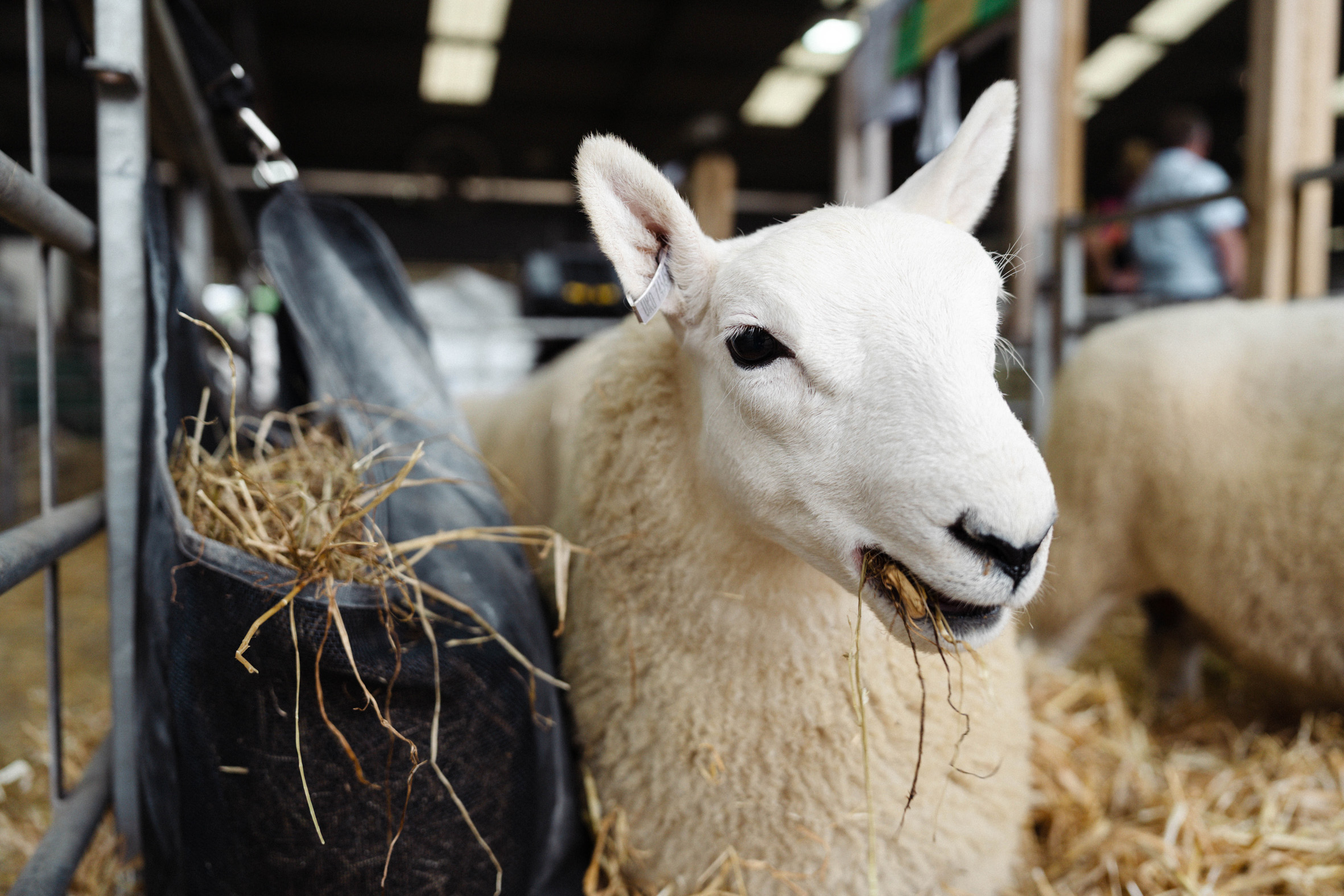
THE FUW has raised serious concerns over proposals to change the rules governing lamb castration and tail docking, warning that the measures could have unintended consequences for both animal welfare and sheep farming businesses.
Responding to the UK Government’s consultation on lamb welfare, the union said that while farmers recognise the importance of maintaining high welfare standards, the proposals as currently drafted are impractical and fail to reflect the realities of sheep farming across Wales and the wider UK.
The FUW stressed that although castration and tail docking do cause pain, they remain important management tools used to prevent serious welfare problems throughout an animal’s life. These procedures reduce the risk of fly strike, prevent unintended pregnancies in ewe lambs and minimise injuries caused by aggressive behaviour in ram lambs.
One of the union’s main concerns is a proposal requiring the use of pain relief medicines that are not currently authorised for use in young lambs. The FUW argues that the suggestion is premature because the range of approved medicines remains limited. At present, such treatments are only available through the veterinary cascade, meaning they have not been specifically tested or licensed for use in sheep.
The union also warned that the proposals could place significant pressure on veterinary services during the busy lambing season, potentially creating delays in treatment and increasing administrative burdens for both farmers and vets.
According to the FUW, the changes could introduce new risks, including accidental overdosing due to extremely small dose volumes, a higher chance of infection at injection sites and additional stress on lambs caused by repeated handling.
Concerns were also raised over plans to extend the upper age limit for routine castration and tail docking from seven days to three months. Farmers believe carrying out the procedures on older, larger lambs could increase welfare problems and infection risks.
While members broadly supported delaying procedures long enough for lambs to receive colostrum and bond with their mothers, the union said a strict 24-hour rule would not be practical across all farming systems.
The FUW also warned that introducing the proposals without equivalent standards for imported lamb could place UK sheep producers at a competitive disadvantage. Additional veterinary involvement, medicine costs and increased labour could significantly raise production costs for domestic farmers.

The union said the measures would particularly affect extensive upland farms, which play an important role in sustaining rural communities, maintaining landscapes and supporting the Welsh language.
FUW Animal Health and Dairy Committee chair Gerwyn Williams said: “Farmers care deeply about the welfare of their livestock and these procedures are never carried out lightly. However, the proposals outlined in this consultation do not reflect the practical realities of sheep farming and risk creating greater welfare problems than those they aim to solve.
“While we support efforts to reduce pain wherever possible, the lack of authorised medicines for young lambs and the reliance on off-label treatments raises serious safety and practical concerns. There is a real risk these proposals could increase stress on animals, worsen health and welfare issues and place further pressure on already stretched veterinary services.”

FUW President Ian Rickman added that any future policy must be developed in close partnership with farmers, vets and industry experts.
“It is essential that any new legislation genuinely improves animal welfare without creating unintended consequences for farmers or the animals in their care,” he said.
The union is calling for further research and deeper engagement with the farming sector before any legislative changes are introduced, arguing that future welfare policies must be practical, workable and effective across the wide range of sheep farming systems operating across the UK.



Sport3 hours ago
France crowned Six Nations champions after extraordinary final-day drama
Ramos penalty in Paris seals title as Ireland fall just short and Wales end losing run FRANCE were crowned 2026...


News7 hours ago
Fishguard linked to allegations in Many Tears Animal Rescue investigation
Claims about puppies arriving through Pembrokeshire port emerge as licensing probe continues FISHGUARD has been named in allegations linked to...

Local Government1 day ago
Investigation confirmed after inspectors visit Many Tears Animal Rescue
Licensing authority declines to comment as police confirm attendance at Carmarthenshire rescue centre AN INVESTIGATION is underway following a visit...


Business2 days ago
Work set to begin on £50m hydrogen plant in Milford Haven
A MAJOR new hydrogen production facility worth around £50 million is expected to begin construction in Milford Haven later this...


Education3 days ago
Manorbier school closure approved while insurance claim still unresolved
Council confirms negotiations with insurer ongoing following 2022 fire PEMBROKESHIRE COUNTY COUNCIL has confirmed that negotiations with its insurer over...


Crime4 days ago
‘Knife attack’ at Spittal property leaves man in hospital
POLICE have arrested a woman following what is being described as a ‘knife attack’ at a property in Spittal on...


Community4 days ago
Pembrokeshire to receive its first banking hub in Pembroke Dock
LINK, the UK’s Cash Access and ATM network, has today announced local people and businesses in Pembroke Dock will benefit from a new banking...


Health5 days ago
Future of Withybush Hospital petition sparks urgent call for Senedd debate
CALLS have been made for an urgent debate in the Senedd over the future of services at Withybush Hospital as...


Sport6 days ago
Sean Bowen set for historic Welsh clash at Cheltenham Gold Cup
PEMBROKESHIRE jockey Sean Bowen could be part of a historic all-Welsh showdown when he lines up in the Cheltenham Gold...


Community6 days ago
Tenby still waiting as Wales hits 50 rural mobile mast upgrades
Seaside town plagued by signal congestion again absent from latest government-backed coverage improvements A NEW milestone in the UK Government’s...
-

 Health2 days ago
Welsh Ambulance Service to host bi-monthly Board meeting
-

 News1 day ago
Rayner and Lammy visit Wales to discuss justice and community safety
-

 Local Government4 days ago
Register now to vote in May’s Senedd election
-

 Crime6 days ago
Former Pembrokeshire Army officer stripped of MBE after fraud conviction
-

 Entertainment5 days ago
How the Cheltenham Festival Captivates Racing Fans Every Year
-

 Crime5 days ago
E-bike rider who sped through pedestrian alley sentenced by court
-
Community6 days ago
Tenby still waiting as Wales hits 50 rural mobile mast upgrades
-
 Community6 days ago
Carmarthenshire woman celebrates 100th birthday surrounded by family