


Crime
Are vulnerable autistic men being criminalised by online decoy stings?

SPECIAL HERALD INVESTIGATION
Welsh court case, local safeguarding concerns and insider testimony raise serious questions about whether current tactics target predators — or vulnerable adults who never posed a real-world risk
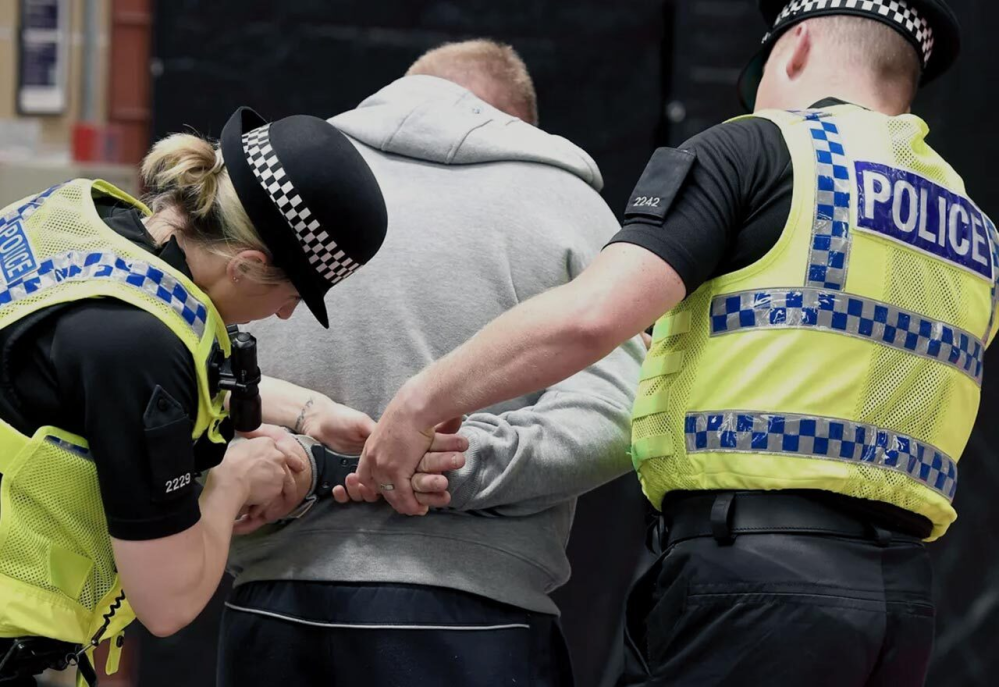
A MAJOR Welsh court case, multiple safeguarding disclosures in Pembrokeshire and new insider testimony from a long-standing paedophile hunter have triggered urgent questions about whether UK decoy stings are criminalising vulnerable adults — particularly autistic men and those with additional learning needs — rather than consistently catching genuine predators.
The Herald has spent months examining the pattern through court reports, academic studies, professional testimony and local case examples. What emerges is a troubling picture of a system that may be pulling socially vulnerable adults into engineered online exchanges they cannot navigate, while sophisticated offenders using encrypted platforms remain largely undetected.
This investigation is not claiming that every decoy sting is unjustified, nor that everyone caught is innocent. Police-led decoy deployments have exposed dangerous offenders who pose a clear risk to children. But evidence from criminologists, police data, safeguarding teams and defence solicitors suggests that unregulated hunter-group activity disproportionately catches men who are low-risk, socially naïve, neurodivergent or lonely, and who would almost certainly never have harmed a real child.
Who gets caught — and who doesn’t
Academic studies and public FOI data highlight a concerning trend: vulnerable adults are far more likely to be drawn into decoy conversations than experienced predators.
Autistic individuals and adults with additional learning needs (ALN) are over-represented across the criminal justice system, often due to literal interpretation, difficulty with social cues and heightened susceptibility to pressure. A 2021 Home Office analysis — released via FOI — found that 26% of individuals referred to the government’s Prevent programme had diagnosed or suspected autism, far above the 1–2% prevalence in the general adult population. Safeguarding experts say similar traits appear repeatedly in decoy-originating cases.

Solicitors and probation officers told The Herald that pre-sentence reports in these cases commonly quote phrases such as:
- “No evidence of paedophilic interest in real children.”
- “High degree of social naïvety or literal thinking.”
- “Engaged only after persistent prompting by the decoy.”
And yet — even when vulnerability is clear — conviction under section 15A brings a mandatory Sexual Harm Prevention Order (SHPO) and at least ten years on the Sex Offenders’ Register.
One recurring issue is the “impossible offence” scenario:
A decoy begins a chat as a 19- or 20-year-old.
A normal conversation develops.
Only later does the decoy say: “Actually I’m 13/14. Is that OK?”

For neurotypical adults, this is a clear red flag.
For neurodivergent adults — who might panic, freeze or try to be polite — it can lead to continued conversation.
Under section 15A, that alone is enough for conviction.
A landmark 2021 Durham University study by Dr Sarah Leng concluded that paedophile-hunter activity “displaces rather than disrupts” serious child sexual abuse, and tends to “widen the net around socially impaired, lonely, neurodivergent and low-risk men while high-risk predators using encrypted platforms avoid detection.”

A law with a dangerously low threshold
Under section 15A of the Sexual Offences Act 2003, inserted in 2015, an adult can be convicted of attempting to engage in sexual communication with a child even if:
- he did not initiate sexual talk
- the “child” does not exist
- most or all messages were non-sexual
- he expressed concern for the child
- he stated he did not want to meet
- the decoy changed age mid-conversation
- he has autism or ALN affecting judgement
The offence is complete the moment the adult continues messaging after being told the “child” is under 16.
Legal academics have described section 15A as “one of the broadest and least nuanced offences in modern UK criminal law”.
The hidden human cost: reported suicides
A 2019 BBC Panorama investigation identified at least eight men who died by suicide after being confronted by hunter groups or following decoy-led arrests. Several were described by families as autistic, socially vulnerable or struggling with mental health problems.
Safeguarding charities say the real number is likely higher because coroners do not record “sting involvement” as a formal category.
One national safeguarding worker told The Herald: “Families only come forward when they’re desperate. There is no doubt this is happening more than people think.”
Rising reliance on unregulated groups
Specialist undercover policing units have faced budget reductions for over a decade. As a result, some forces rely increasingly on evidence packages delivered by hunter groups.
According to National Police Chiefs’ Council (NPCC) data:
Some groups fund operations via donations or livestreams. While not unlawful, senior officers warn this creates incentives for ever-more dramatic confrontations.
The College of Policing issues guidance discouraging collaboration with vigilante groups, but it is advisory, not mandatory.
THE CASE THAT EXPOSED A FAULT LINE: DR LLION EVANS
In one example of the system’s weaknesses, former government scientist Dr Llion Evans, 41, appeared at Cardiff Crown Court after exchanging messages with what he believed was a 12-year-old girl.
The “girl” was an undercover police decoy.
Crucially, the court heard that many messages were not sexual and that Evans’ first reaction was to warn the supposed child that Kik “isn’t a safe place”.
Evans — an Aberystwyth University physics graduate with a PhD — had no previous convictions. His lawyer said he was socially isolated, in emotional crisis following marital breakdown and currently undergoing assessment for autism.
Despite no evidence of predatory behaviour, he fell under section 15A.
Safeguarding specialists say his case typifies the problem: “confused, literal, vulnerable men pulled into conversations they don’t understand.”
In this case however, he did also admit having indecent photos of children on his computer as well as the section 15A offence.
A MOTHER’S WARNING FROM FISHGUARD
One Pembrokeshire mother contacted The Herald to say her autistic son was targeted by a hunter group.
We are not naming her at her request.
“My son James (not his real name) has autism,” she said. “He takes things literally. When a hunter group contacted him, he had no idea he was being manipulated. People like him aren’t predators — they’re victims waiting to happen.”
The supposed girl told him she lived in Macclesfield.
The chats became daily.
Then James came to his mother frightened.
“He said, ‘Mum… she’s been showing me her boobs and wants to see my private area.’ He didn’t understand how to stop it.”
She later discovered the “girl” was a decoy.
“James didn’t pursue anyone. They came after him. If I hadn’t stepped in, I genuinely believe they would have tried to set him up.”
TRAIN STATIONS: THE PEMBROKESHIRE PATTERN
Pembrokeshire has seen multiple sting operations arranged at Pembroke Dock, Tenby and Haverfordwest railway stations.
Safeguarding professionals told The Herald this pattern reveals something crucial.
“Genuine predators tend to travel by car and control the meeting environment. The repeated pattern of train-station arrests suggests many of those being lured into stings have limited independence rather than predatory intent.”
Autistic adults, those with low income or learning disabilities often rely on trains.
Experienced offenders do not.
‘WE SEE THIS FAR MORE OFTEN THAN PEOPLE REALISE’ — SAFEGUARDING EXPERT
A retired manager from Pembrokeshire County Council’s Community Team for Learning Disabilities contacted The Herald after learning of this investigation.
She said: “People with learning disabilities and autistic adults are very trusting. They take things literally. They can be led very easily into conversations they don’t understand.”
She added: “For years we’ve seen adults with ALN end up in huge trouble online. The public have no idea how widespread this is.”
She stressed she was not speaking about any particular case but warned: “Unregulated hunter groups pose a real danger to vulnerable adults who can’t grasp what’s happening.”
INSIDE A HUNTER GROUP: DAVE SPEAKS
To understand how stings are run, The Herald interviewed “Dave”, a long-standing volunteer with a Welsh hunter group.
Dave said: “We do get cases where the person seems confused or autistic. If a chat feels off — if the person doesn’t understand — we back off. We don’t push.”
But he admitted: “There are bad groups out there. Some bait. Some push. Some don’t care who they’re talking to.”
He said his group avoids borderline cases:
“If there’s any doubt, we stop. We’d rather drop a case than ruin someone’s life.”
Dave is clear that regulation is urgently needed: “Right now it’s hit-and-miss which groups do this properly.”
Dave told The Herald his group avoids borderline or vulnerable cases entirely: “If there’s any doubt, we stop. We’d rather drop a case than manufacture one. This area desperately needs regulation — proper training, vulnerability flags, clear handover rules and no glory hunting.”
He is not alone. Several high-profile hunter groups across the UK have publicly claimed in interviews that they attempt to screen out individuals who appear socially vulnerable or confused, and that they avoid escalation where neurodivergence is suspected.
But academic research suggests practice is inconsistent.
A 2024 study from Oxford University analysed real hunter-group Facebook chat logs and found internal debate about whether to proceed when individuals appeared confused, literal or unsure. One extract quoted in the study included a discussion about whether a target might be vulnerable, with one volunteer advising caution and another pushing to continue the sting.
The study concluded that while some groups attempt to adopt safeguarding-led approaches, others prioritise confrontation, footage and online engagement, widening the net around people who may not understand what they have been drawn into.
JUDICIAL CONCERN
Judges across England and Wales have begun expressing unease. Sentencing remarks seen by The Herald include:
- “This operation was provocative and artificially created an offence.”
- “The line between detecting crime and manufacturing it appears to have blurred.”
- “The defendant’s vulnerability is a significant concern.”
Legal commentators say judicial discomfort is growing — especially where autism or ALN are apparent.
THE JUSTICE GAP
Taken together — the Evans case, the Fishguard testimony, train-station stings, professional warnings, academic research, NPCC evidence and reported suicides — the same conclusion emerges:
We may be criminalising vulnerability at scale, while the most dangerous offenders operate unseen.
Autistic men.
Literal thinkers.
Adults with learning disabilities.
Lonely, socially isolated men.
These individuals repeatedly appear in decoy-originating prosecutions.
Meanwhile, offenders with:
- grooming expertise
- planning ability
- cars
- encrypted communication
- real-world victims
…rarely appear in sting-generated cases at all.
WHAT NOW?
Professionals across safeguarding, law and psychology are calling for:
- urgent parliamentary review of section 15A
- statutory regulation or licensing of hunter groups
- mandatory autism/ALN screening before charge
- higher charging thresholds where vulnerability is clear
- proper resourcing for police online-abuse units
- trauma-informed procedures for neurodivergent suspects
Until then, families like the one in Fishguard fear that vulnerable adults will continue to be steered into criminality they never intended — and may suffer lifelong or even fatal consequences.
As one senior safeguarding professional told The Herald:
“Protecting children is non-negotiable. But we cannot protect children by destroying vulnerable adults who never intended harm.”
These are not abstract debates.
These are lived realities — in Pembrokeshire, in Wales, and across the UK.

A HAVERFORDWEST woman has been ordered to pay more than £1,000 after admitting to unlawfully collecting rent at a property she was not licensed to manage.
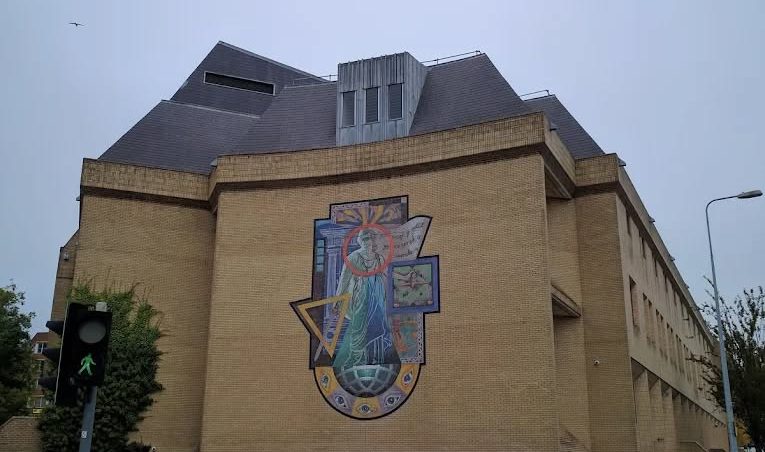
Majeda Sikdar appeared at Cardiff Magistrates’ Court where she pleaded guilty to the offence, which took place at a property on Tasker Way in the town last April.
The court handed Sikdar a total bill of £1,046, made up of a £293 fine, £636 in costs, and a £117 surcharge.
A DANGEROUS driver has been sentenced after attempting to evade the police and hitting speeds of up to 70mph in residential streets.
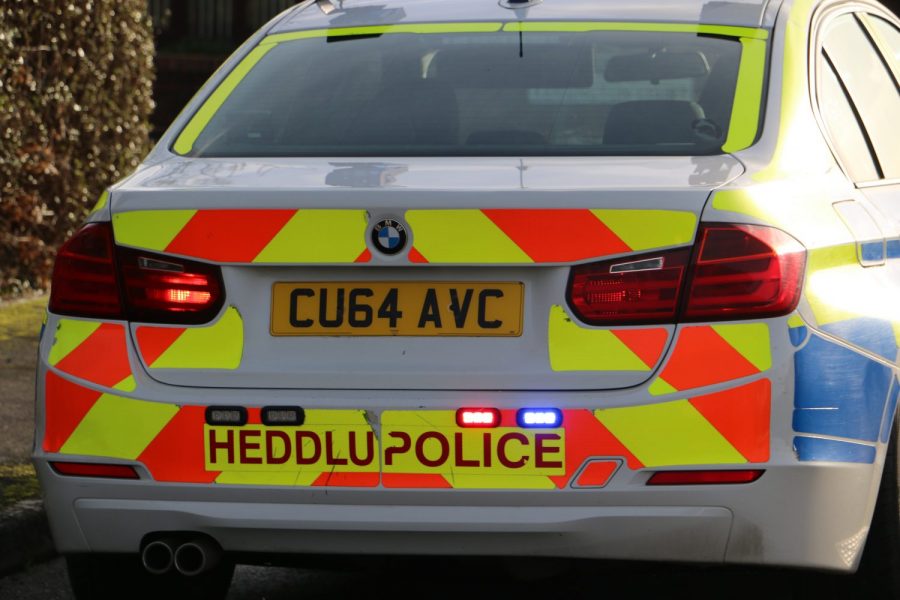
Liam Williams, 31, from Station Road in Llanelli, was arrested on February 23 after he failed to stop for officers whilst driving without a valid licence and under the influence of drugs.
His black Jaguar XF was spotted travelling along New Dock Road, Llanelli, at around 2am. Williams quickly accelerated away from officers after turning into a residential area. Despite being warned to stop with blue lights, he reached an estimated speed of 50mph over the speed bumps on the 20mph road.
He then cut across a junction and turned on to the 40mph coastal road on the wrong side of a bollard. He continued to reach around 80mph to try and get away from pursuing officers.
Williams was unaware that Dyfed-Powys officers had set up a stinger site to puncture his tyres further along the road. He sped through the stinger site and continued towards the sandpiper roundabout. He reached speeds of 70mph and then appeared to lose control of the car at the roundabout. Officers noted that his front offside tyre was deflated and his brake disc was red hot and sparking.

Despite this, Williams exited the roundabout towards Llanelli town centre and appeared to lose control again. Officers attempted to pass him as he accelerated back up to speeds around 50mph on the 20mph road. Williams turned into smaller side streets to try and escape but was quickly followed by supporting officers.
As he returned to the main road towards Llanelli town centre, officers moved to box the vehicle in. The pursuit quickly came to an end and Williams was arrested for multiple offences.
A drug wipe showed that Williams was under the influence of cocaine. A further blood specimen was taken in custody, before he was charged and remanded.
He appeared in Llanelli Magistrates Court on Tuesday 10th March. He was found guilty of dangerous driving, failing to stop for police, driving without a licence and driving without insurance.

Williams was handed a 34-week prison sentence, suspended for 24 months. He was disqualified from driving for 34 months, followed by an extended re-test. He must also complete 100 hours of unpaid work within 12 months and pay £85 in court costs and a £187 surcharge.


A CARDIFF man who used fake identities on dating sites to defraud three women of almost £50,000 has been jailed.
Rodney Roberts, aged 40, of Trowbridge, Cardiff, was sentenced at Newport Crown Court to five years and one month in prison after pleading guilty to fraud by false representation.
Officers from the Proactive Economic Crime Team at the Tarian Regional Organised Crime Unit (ROCU), working with South Wales Police, found that Roberts defrauded three victims of a combined £49,580 between 2021 and 2024. He contacted the women through online dating and social media platforms while using the false name “Paul Smith”.
Roberts first contacted a victim in February 2021. He initially claimed to be an American from California working in the UK as an attorney and financier. He later told the victim this was merely a cover story and that he was in fact an intelligence agent. Roberts claimed that because of his work he did not have direct control of his finances and asked the victim for financial help.
During the relationship he persuaded the woman to invest money in a fictitious investment company. He also assisted her in selling her home so she could invest more money into the scheme and encouraged her to open a bank account in her name for him to use. Unknown to the victim, Roberts also opened a cryptocurrency account in her name.
Roberts contacted a second victim in October 2022. Again he encouraged her to invest in what he claimed was a lucrative opportunity promising high returns. He showed her screenshots which appeared to show the investment growing in value, but these images were fabricated. Throughout the relationship Roberts repeatedly gave excuses for why he was unable to repay the money.
He contacted a third victim in March 2024, this time claiming to be an American television producer working for the BBC on a two-year visa. Roberts told the victim he was struggling to access his American bank accounts and asked for money to help him put down a deposit on a flat. As before, he used fake screenshots of accounts to convince her the investment was genuine, before providing excuses as to why the borrowed money could not be returned.
The third victim eventually became suspicious and carried out online searches, which led her to two historic news reports detailing previous fraud offences committed by Roberts under the alias Paul Smith. She then contacted South Wales Police.
Detective Constable Amanda Davies, of Tarian ROCU, said romance fraud was a growing and highly damaging crime.
“Offenders deliberately exploit trust and vulnerability,” she said. “Victims are often left with not only significant financial losses but also psychological distress and embarrassment, which can prevent them from reporting the offence.
“I am pleased with the sentence handed down today and hope it sends a message to others who would behave in such an abhorrent way for financial gain.
“I would also like to recognise the courage shown by the victims in helping us pursue a conviction and bring Roberts to justice.”

DC Davies urged anyone forming relationships online to remain cautious.
“Common warning signs include requests for money, reluctance to meet in person or by video call, or pressure to keep a relationship secret. Another warning sign is ‘love bombing’, where a new or prospective partner overwhelms someone with excessive attention, affection or grand gestures early in the relationship.
“Fraudsters are skilled at creating narratives that sound believable. If something feels too good to be true, trust your instincts and speak to friends or family.
“If you believe you may have been a victim of romance fraud, report it to Action Fraud.”
She added that Tarian ROCU would continue to pursue fraudsters and bring them before the courts.


Local Government20 hours ago
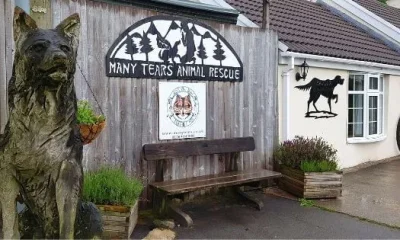
Investigation confirmed after inspectors visit Many Tears Animal Rescue
Licensing authority declines to comment as police confirm attendance at Carmarthenshire rescue centre AN INVESTIGATION is underway following a visit...


Business2 days ago
Work set to begin on £50m hydrogen plant in Milford Haven
A MAJOR new hydrogen production facility worth around £50 million is expected to begin construction in Milford Haven later this...


Education3 days ago
Manorbier school closure approved while insurance claim still unresolved
Council confirms negotiations with insurer ongoing following 2022 fire PEMBROKESHIRE COUNTY COUNCIL has confirmed that negotiations with its insurer over...


Crime4 days ago
‘Knife attack’ at Spittal property leaves man in hospital
POLICE have arrested a woman following what is being described as a ‘knife attack’ at a property in Spittal on...

Community4 days ago
Pembrokeshire to receive its first banking hub in Pembroke Dock
LINK, the UK’s Cash Access and ATM network, has today announced local people and businesses in Pembroke Dock will benefit from a new banking...


Health5 days ago
Future of Withybush Hospital petition sparks urgent call for Senedd debate
CALLS have been made for an urgent debate in the Senedd over the future of services at Withybush Hospital as...


Sport6 days ago
Sean Bowen set for historic Welsh clash at Cheltenham Gold Cup
PEMBROKESHIRE jockey Sean Bowen could be part of a historic all-Welsh showdown when he lines up in the Cheltenham Gold...


Community6 days ago
Tenby still waiting as Wales hits 50 rural mobile mast upgrades
Seaside town plagued by signal congestion again absent from latest government-backed coverage improvements A NEW milestone in the UK Government’s...

Crime7 days ago
Man raped 15-year-old girl in caravan while she was on family holiday in west Wales
Jury convicts Pendine man after court hears he raped intoxicated teenager in caravan during family holiday A MAN who raped...


Community7 days ago
Crash sparks fresh questions over future of former Haverfordwest library
CONCERNS have been raised about the future of a distinctive Haverfordwest building after a car crashed into it last week,...
-

 Health2 days ago
Welsh Ambulance Service to host bi-monthly Board meeting
-

 Local Government4 days ago
Register now to vote in May’s Senedd election
-

 Health7 days ago
Women’s health services ‘expanding’ across mid and west Wales says Health Board
-

 News20 hours ago
Rayner and Lammy visit Wales to discuss justice and community safety
-

 Cymraeg7 days ago
Commissioner’s five-year report highlights key opportunities to strengthen Welsh language
-

 Crime6 days ago
Former Pembrokeshire Army officer stripped of MBE after fraud conviction
-
Community6 days ago
Tenby still waiting as Wales hits 50 rural mobile mast upgrades
-
 Community6 days ago
Carmarthenshire woman celebrates 100th birthday surrounded by family