


Community
SARS boss published children’s photos, named social-workers and claims “legal trafficking”

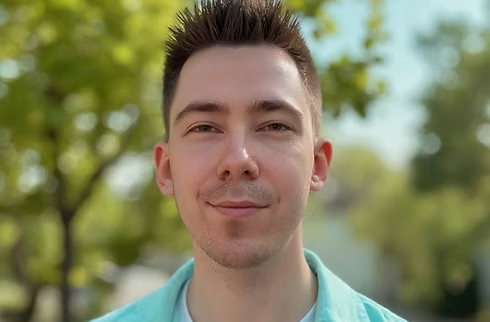
Residents say group bans, naming officials and safeguarding questions have created fear — Ajay Owen rejects all claims.
A GROWING number of Pembrokeshire and Ceredigion residents have contacted The Herald with concerns about the conduct of SARS Cymru director, community Facebook group administrator and former prospective Reform UK candidate, Ajay Owen.
The Herald understands that tensions have escalated over several months, involving disputes in local Facebook groups, allegations of harassment from both sides, questions about Mr Owen’s public statements on social care and asylum issues, and confusion over the perceived role of his volunteer organisation, SARS Cymru.
Mr Owen has strongly rejected many of the concerns raised. He has supplied The Herald with a detailed written response, which is published in full at the end of this article.
He also chose to publish the same response in full on his Facebook page prior to this article’s publication.
Background: political fallout and community rows
Mr Owen first came to wider public attention locally during the Schools of Sanctuary debate earlier this year, when he criticised participating schools and parents who supported the programme. His posts prompted significant backlash, including from teachers, parents and community members.

Around the same time, it was suggested online that he intended to stand as a prospective Reform UK candidate in Pembrokeshire. Reform sources later told The Herald that comments he made about the scheme “brought the party into disrepute”.
This dispute contributed to the first major split within the community Facebook groups he ran. Several residents say they were removed after questioning his posts. Others say he blocked them or prevented them from commenting.
Mr Owen says these removals were justified and based on group rules.
Previous Herald coverage: blue-light allegations
In November 2024, The Herald reported that Mr Owen — then Director and Chair of Dyfed-Powys Neighbourhood Watch — had been stopped twice by police following false reports that he was using illegal blue lights on his vehicle. No blue lights were found, and he was cleared on both occasions.

Mr Owen has repeatedly cited this incident as an example of what he calls “malicious reporting” against him, and has since joked publicly about the matter.
Some residents say the blue-light article marked the point where his relationship with The Herald deteriorated. Mr Owen wrote on Facebook that The Herald had “made him out to be the bad person”.
However, our reporting was accurate, and confirmed by the police.

Growth of SARS Cymru and public presentation
Since early 2024, Mr Owen has built SARS Cymru — a volunteer-run organisation that provides “situational updates”, weather warnings, community information and occasional on-scene assistance such as sandbagging or checking on residents.
The organisation now has around 11,000 followers on Facebook.
Residents say they appreciate some of the information provided, but others have expressed concern about:
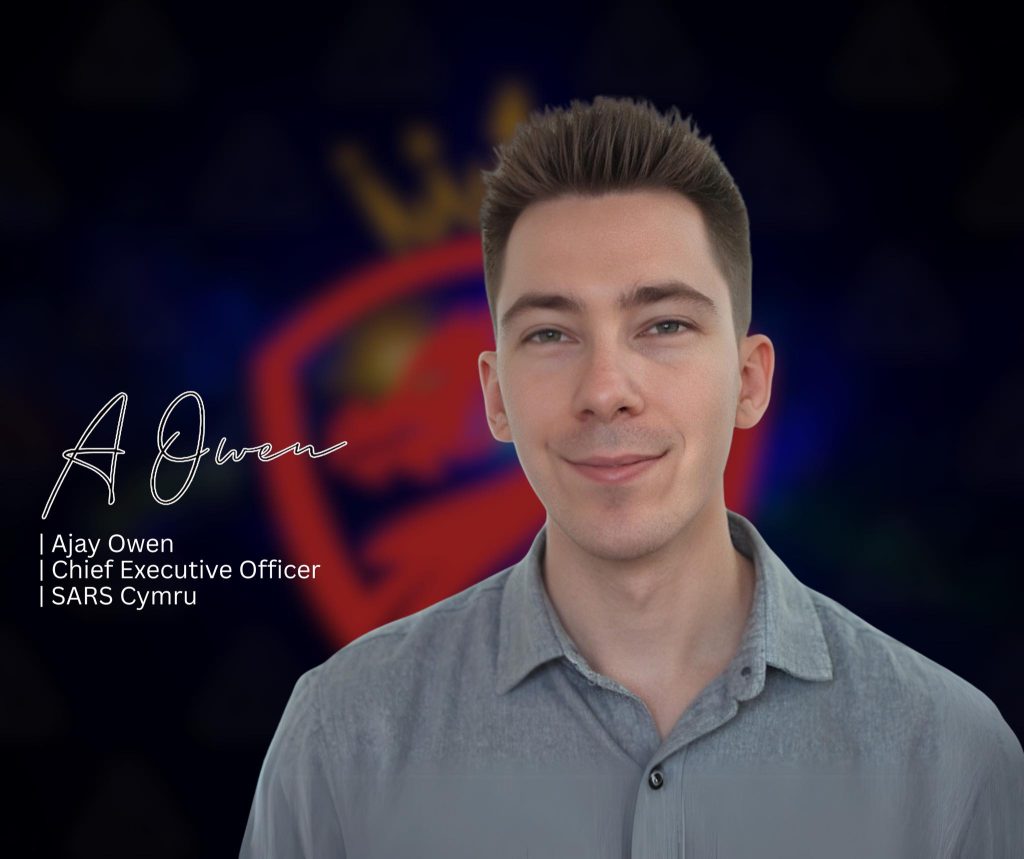
- the use of heavily edited “Director” photographs
- posts referring to SARS Cymru volunteers as being “on the frontline”
- the listing of a single “emergency number” which is Mr Owen’s personal mobile
- confusion over whether SARS Cymru has any official status
Several emergency service sources have confirmed to The Herald that SARS Cymru does not hold any statutory powers, has no formal agreements with police, fire or local authority services, and has no legal authority to respond to emergencies.
Mr Owen disputes that SARS Cymru’s presentation is misleading.
Recent flashpoint: publication of residents’ photographs
One of the most serious concerns raised with The Herald relates to screenshots that appeared to show photographs of children — taken from residents’ personal Facebook pages — being reposted publicly by Mr Owen without parental consent.
Residents say this happened after disagreements in one of the community groups.
Mr Owen says the images were visible on public profiles, that he removed them after complaints, and that he posted an apology which he later deleted following what he describes as threats against him and his family.
Parents who contacted The Herald described the incident as “deeply distressing”, “intimidating” and “beyond acceptable behaviour”.
Safeguarding referral confirmed in council documents
A further concern relates to a safeguarding referral that met the Section 5 ‘person in position of trust’ threshold, according to correspondence disclosed in a subject access request.
Mr Owen confirmed the referral in his response to The Herald. He maintains the concerns were “unsubstantiated”, says the matter was connected to his support for an elderly resident, and states that the Disclosure & Barring Service took no action.
The Herald makes no allegation of wrongdoing but reports the safeguarding referral because it has been repeatedly referenced both by residents and by Mr Owen himself.
Posts about social workers and serious allegations
Several residents also highlighted a post Mr Owen shared on 16 October containing an “EXPOSED” graphic naming two social workers.
In his commentary, Mr Owen wrote that local authority children’s services were “trafficking children in a legal way”. One quote he reposted from an online page claimed a senior former social worker was “running a child trafficking network, in a legal way”.
These posts caused alarm among residents, several of whom said they felt the language was “irresponsible”, “inflammatory” or “defamatory”.
Mr Owen stands by the statements, saying they reflected long-standing concerns raised by families.
Community group administration
During October and November, a new wave of complaints emerged. Residents accuse Mr Owen of:
- removing or banning users for questioning him
- contacting employers of individuals who disagreed with him
- reposting screenshots of residents’ profiles
- monitoring public comments and “keeping screenshots”
- creating an atmosphere where some people feel unable to speak openly
Several residents provided The Herald with extensive screenshots. Some have filed reports with Dyfed-Powys Police. Others say they no longer trust local online spaces administered by Mr Owen.
Mr Owen says he has himself reported more than 100 screenshots to police and considers the criticism part of a “campaign of harassment” against him.
Official response from statutory agencies
Dyfed-Powys Police, Mid & West Wales Fire and Rescue Service, Pembrokeshire County Council and Hywel Dda University Health Board were contacted for comment about SARS Cymru and whether any formal working arrangements exist.
All confirmed there are no formal agreements with SARS Cymru and that emergency incidents must always be reported via 999 or statutory channels.
Ajay Owen’s response
Mr Owen provided The Herald with a lengthy written response and has also published the full version publicly on his Facebook page.
He told the Herald that he has received threats, believes he is the victim of a harassment campaign, and will “continue to out people who mistreat” him or his family. He says criticism reflects a “small, narrow-minded” community backlash.
Mr Owen also told us:
- Removals from community groups were due to “spam and bullying”, and because of “political backlash” when he briefly considered standing for election. He says moderators—not just himself—removed people.
- Contacting employers was, he says, justified where he believed individuals made threats or engaged in harassment. He said public-facing workers “represent their organisations” and employers “have a right to know”.
- Posting screenshots of children from residents’ Facebook pages was, he says, done on his personal page and later deleted. He argues people should understand the risks of sharing images publicly, and described this as giving residents a “reality check”.
- Claims he causes fear or retaliation are rejected. He says residents “can speak freely”, but must not “slag off” locals or businesses. He says he has submitted over 100 screenshots to police alleging harassment against him.
- SARS Cymru’s presentation is, he says, clear that it is not an emergency service. He accepts wording about being “the true frontline” may have been poorly phrased, but says volunteers deserve recognition. He confirmed SARS Cymru has no formal agreements with police, fire, or council services.
- The safeguarding investigation into him earlier this year was, he says, “unsubstantiated”. He says the DBS raised no concerns and he is not barred from working with vulnerable adults or children.
- Complaints about public officials were, he says, raised on behalf of others. He says he “does not need to gather intelligence” because “locals talk” and he receives information via social media.
- He stands by comments describing children’s services as “trafficking children in a legal way”, and defended naming two social workers publicly, saying they are “public servants” and should expect scrutiny.
- He defended naming a police staff member in a welfare-concern post, saying the officer publicly identified themselves first.
- He said professionally edited “Director” photos are used so people can recognise him if they need to raise concerns.











A local beauty therapist earns recognition in prestigious UK competition
A MILFORD HAVEN beauty therapist has been shortlisted for a major national award celebrating excellence in the hair and beauty industry.
Charlotte Mitchell-Johns, of The Attic Hair & Beauty, has been named a finalist in the Hair Extensions Specialist category at the UK Hair and Beauty Awards 2026.
Ms Mitchell-Johns, who is a Level four beauty therapist, also works as a hair extensions specialist and beauty educator with HB Training.
Speaking about the recognition, she said she was “truly honoured” to be named among the finalists.
She added that she believes the industry thrives on collaboration rather than competition, and that supporting others is key to long-term success.
Ms Mitchell-Johns has been recognised for her technical skill, commitment to clients, and efforts to maintain high standards within the beauty sector.
The UK Hair and Beauty Awards highlight leading professionals from across the country, celebrating talent, creativity and dedication within the industry.


THE FINAL sign-off for a pilot scheme for foster carers in Pembrokeshire to be exempt from council tax payments, has been backed by senior councillors.
Last July, Pembrokeshire County Council Cabinet members backed a pilot scheme, giving 100 per cent exemptions for those meeting the criteria, running from April 1 of this year, up to March 31, 2029.
In a report presented by Cabinet Member for Young Persons, Community, Well-being and Future Generations Cllr Marc Tierney, members heard the average yearly cost of a young person being supported by an in-house foster carer per year is £22,770, while the cost for those in in residential care per year is £409,812, a variance of £387,042 per year.
“It is evident that if we can support more people to foster through a council tax discretionary discount scheme, this will benefit the Local Authority by reducing reliance on far more expensive residential care placements, or independent fostering agency arrangements, whilst enabling children to remain in their own communities,” the report said.
It added: “Based on the 25/26 Council Tax (Band D) equivalent rate of £2,059.82 per annum, the cost of implementing a 100 per cent discount per year for current mainstream foster carers would be £133,888.30. It is noted that there may be some households within this cohort who are already receiving some sort of discount, however £133,888.30 should be the maximum impact.”

Offset against that, current costs for Independent Fostering Agencies placements are some £1,956,500; the spend for the same number of children placed with in-house foster carers based on average placement costs would £796,920 per annum, an annual variance of £1,159,580 less per year compared to IFA placement costs.
“Introducing this discount on a pilot basis would be with a view to identifying if additional costs incurred by implementing this scheme would be offset by reducing the number of children and young people placed with Independent Fostering Agencies and increasing the number of children being cared for via in-house foster carers,” the report said.
It added: “This proposal will also have the added benefit of creating capacity for more young people looked after to remain close to their families, their homes, their schools, and communities thus retaining crucial local links and support networks.”
At the March meeting of Cabinet, members were asked to again back the scheme, with minor amendments to eligibility, which was supported by Cabinet.

Animal seen galloping through residential streets and towards main road
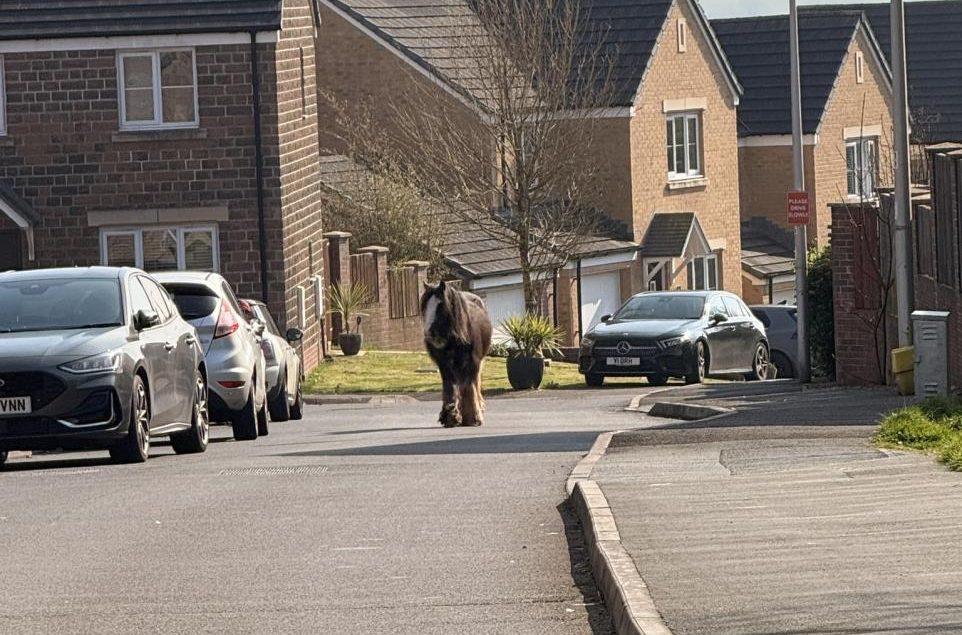
POLICE are reportedly tracking a loose horse which strayed into a residential area of Pembroke.
The animal was first spotted in Gatehouse View before making its way onto a nearby main road.
A post on the Pembroke and Pembroke Dock Citizens’ Forum said the horse had left Gatehouse View and was seen heading towards the road by Pembroke Leisure Centre.
The resident wrote: “Anyone recognise it? Police following it.”
The horse was later reported to be galloping down Buttermilk Lane in the direction of Martha’s.

Stray horses are not uncommon in the area. In January, several animals were reported loose around Pembroke and along the A477, particularly near Buttermilk Close and the Cleddau Bridge.
Those incidents created a hazard for motorists, prompting Pembrokeshire County Council to step in and return the animals. Drivers were advised to take extra care and avoid startling them.



Entertainment1 day ago
Tenby steams up in spectacular style as crowds flock to festival
Colourful parade, towering creations and Victorian flair bring town centre to life TENBY was transformed into a vibrant Victorian fantasy...


Crime2 days ago
Publican jailed for six years for supplying cocaine and cannabis
Milford Haven man sentenced at Swansea Crown Court following drug dealing operation A MILFORD HAVEN publican has been jailed for...


Local Government2 days ago
Poverty summit highlights support efforts across Pembrokeshire
A SUMMIT bringing together key organisations from across Pembrokeshire has highlighted both the scale of local poverty and the work...


Education3 days ago
Milford Haven school plans unveiled but funding not yet secured
PLANS for a new £100 million school in Milford Haven have been unveiled, but the project has not yet secured...


News3 days ago
Council unveils plans for new state-of-the-art secondary school in Milford Haven
PEMBROKESHIRE COUNTY COUNCIL has revealed plans for a new state-of-the-art school in Milford Haven, promising modern, inspiring learning spaces for...


Health3 days ago
NHS waiting list falls — but cancer delays and diagnostic backlog worsen
Record progress claimed by Welsh Government as critics warn key targets are still being missed THE NHS in Wales has...


Crime4 days ago
Rapist jailed after ‘abhorrent’ attacks on woman and children
Haverfordwest man told police “women won’t have sex without force” A HAVERFORDWEST man who raped a woman and a young...


News4 days ago
Reform secures first Pembrokeshire councillor in Hakin by-election win
Late Reform candidate takes seat as independent surge and Labour withdrawal shape contest REFORM UK candidate Scott Thorley has won...


News5 days ago
Scott Thorley elected as Pembrokeshire’s first Reform councillor
REFORM UK candidate Scott Thorley has won the Hakin by-election after securing 179 votes. The full result is as follows:...


News5 days ago
Police confirm man has died after being recovered from River Cleddau
Major emergency response in town centre after concerns raised for man in water A MAN has died after being recovered...
-

 News5 days ago
Emergency services flood Haverfordwest after reports of person in river
-

 Crime4 days ago
Mother given community order after admitting child cruelty offence
-
 Crime7 days ago
Man cleared of sexual assault allegation after magistrates rule no case to answer
-
Health3 days ago
NHS waiting list falls — but cancer delays and diagnostic backlog worsen
-

 News5 days ago
Senedd vote to ban greyhound racing hailed as ‘landmark moment’ by charities
-
 News5 days ago
Senedd votes to ban Greyhound racing in Wales to protect animal welfare
-
News4 days ago
Reform secures first Pembrokeshire councillor in Hakin by-election win
-

 News6 days ago
£3.8m to help Welsh families struggling with soaring heating oil costs