


Health
Hundreds of lives changed a decade after Wales pioneered deemed consent law


WALES today marks ten years since becoming the first part of the UK to introduce deemed consent for organ donation – a change that has helped transform and save hundreds of lives.
The landmark law, which came into force on 1 December 2015, presumes that a person is willing to donate their organs after death unless they have formally opted out during their lifetime. Families are always consulted, and they are far more likely to support donation when they know it reflects their loved one’s wishes.
Since the legislation began, more than 2,000 organs have been donated in Wales. Of these, 640 organs came from 198 deceased donors under deemed consent, with 550 successfully transplanted to patients across the UK.
The Welsh model has since been adopted across the rest of the UK, becoming one of the most significant changes in recent public health policy.
‘Saved or changed hundreds of lives’
Chief Medical Officer Professor Isabel Oliver described the anniversary as a moment of pride for Wales.

She said: “Wales was the first country in the UK to introduce deemed consent. This important legislation has saved or changed hundreds of lives.
“But changing the law alone is not enough. To save even more people, it is really important that we all register our organ donation decision – whether opting in or opting out. You can do this through the NHS Wales App or online, and it really helps to discuss the decision with loved ones. This gives families certainty and helps clinicians save more lives.
“Thank you to everyone who has already registered – and to the wonderful people who have donated organs to help others.”
Families finding comfort through donation
Among those touched by the change is Peter Sturgess, whose wife Ronnie died at the Grange University Hospital. Ronnie had not opted out, and Peter supported her decision to donate under the new system.
He said: “Knowing Ronnie’s organs have given others the chance to improve their lives is a great source of comfort. Her liver and two kidneys now reside in three men aged over 60, so, for me, there is still a little piece of her out there.”
Call for more people to register their wishes
Anthony Clarkson, director of organ donation and transplant at NHS Blood and Transplant, praised the impact of deemed consent but said public participation remains crucial.
“Deemed consent is now the system for the whole of the UK and has provided additional organs for transplant each year,” he said.

“However, the legislation is not a silver bullet. It is an important piece of the jigsaw, but to improve donation and transplant rates further, we need more people to clearly register their decision.
“It only takes two minutes, but it could save the lives of people who desperately need a transplant.”


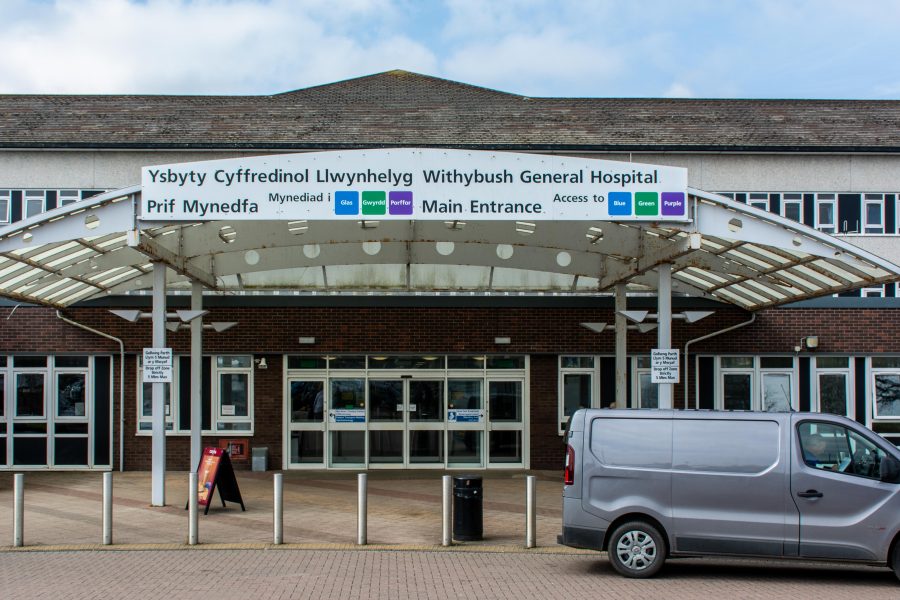
AN EMERGENCY call for councillors to fight a “total failure of the people of Pembrokeshire” downgrading of services at Withybush hospital has been backed.
At the March meeting of Pembrokeshire County Council, an emergency notice of motion by the council’s 11-strong Conservative Party group demanded that the Welsh Government immediately reverses the decision to cease emergency general surgery at Withybush Hospital.
Last year, Hywel Dda University Health Board consulted with its communities on options for change in critical care, dermatology, emergency general surgery, endoscopy, ophthalmology, orthopaedics, stroke, radiology and urology.
At a recent two-day meeting, the board, amongst its many other decisions, backed changes into emergency general surgery which will see no emergency general surgery operations taking place at Withybush, but a strengthening of the same-day emergency care (SDEC).
At the March council meeting, the Conservative council group, led by Cllr Di Clements, proposed a motion which read: “This council requests that the Labour Welsh Government intervenes in Hywel Dda University Health Board’s recent decision to cease emergency general surgery at Withybush hospital and immediately reverses their decision.
“We believe removing this service critically undermines the sustainability of Withybush hospital’s A&E department.
“Also, the decision by the Health Board does not take into account the impact and potential serious risks it will have on Pembrokeshire residents.”
Cllr Clements’ supporting statement, which included a call for Leader Cllr Jon Harvery to write to the First Minister and Welsh Government, said Pembrokeshire residents “have seen continual downgrading of services over the years, and this has been detrimental to all residents,” adding: “We believe this recent decision is life threatening to those who need emergency surgery and a matter of resident’s safety.”
At the meeting, Cllr Michael John said “there had been an erosion of services for many years,” supporting Cllr Clements’ call, but proposing the addition of calling on the health board to meet with councillors.
Newly-elected Fishguard county councillor Billy Shaw, himself a former biomedical scientist who had worked at Withybush, said the service under Hywel Dda University Health Board had become “Carmarthenshire-centred”.

Following the request by Cllr Clements, Leader Cllr Jon Harvey agreed to any letter writing, saying he had “fought long and hard to return services to Withybush”.
He gave the personal example of an operation he had over a decade ago at Withybush, saying if he had had to travel to Glangwili he had been told he “wouldn’t be here today, as simple as that”.
“There’s been an erosion of services year-on-year, it’s just not acceptable.

He finished: “It’s important we show the health board and Welsh Government we care for our residents.”
Cllr Rhys Jordan said: “It’s a total failure of the people of Pembrokeshire, Hywel Dda has taken emergency services away Pembrokeshire and once again it will be the people of Pembrokeshire that pay the price; it’s our families, our neighbours, our elderly and children.”
He added: “What does that say about how we are managed? Pembrokeshire can be managed with less, that we should be grateful for less; Pembrokeshire is not a second-class Wales.
“This decision must be reversed. Pembrokeshire deserves better than being failed again and again.”
Members backed Cllr Clements’ call, with Cllr John’s amendment added.
Welsh Labour has said that, if it wins the May Senedd lections, it will commit to a new multi-billion-pound west Wales hospital, a proposal described as a “pre-election distraction” by Conservatives.
The long-mooted hospital plan, previously proposed in St Clears and Whitland locations, was put on hold by the health board for financial reasons.
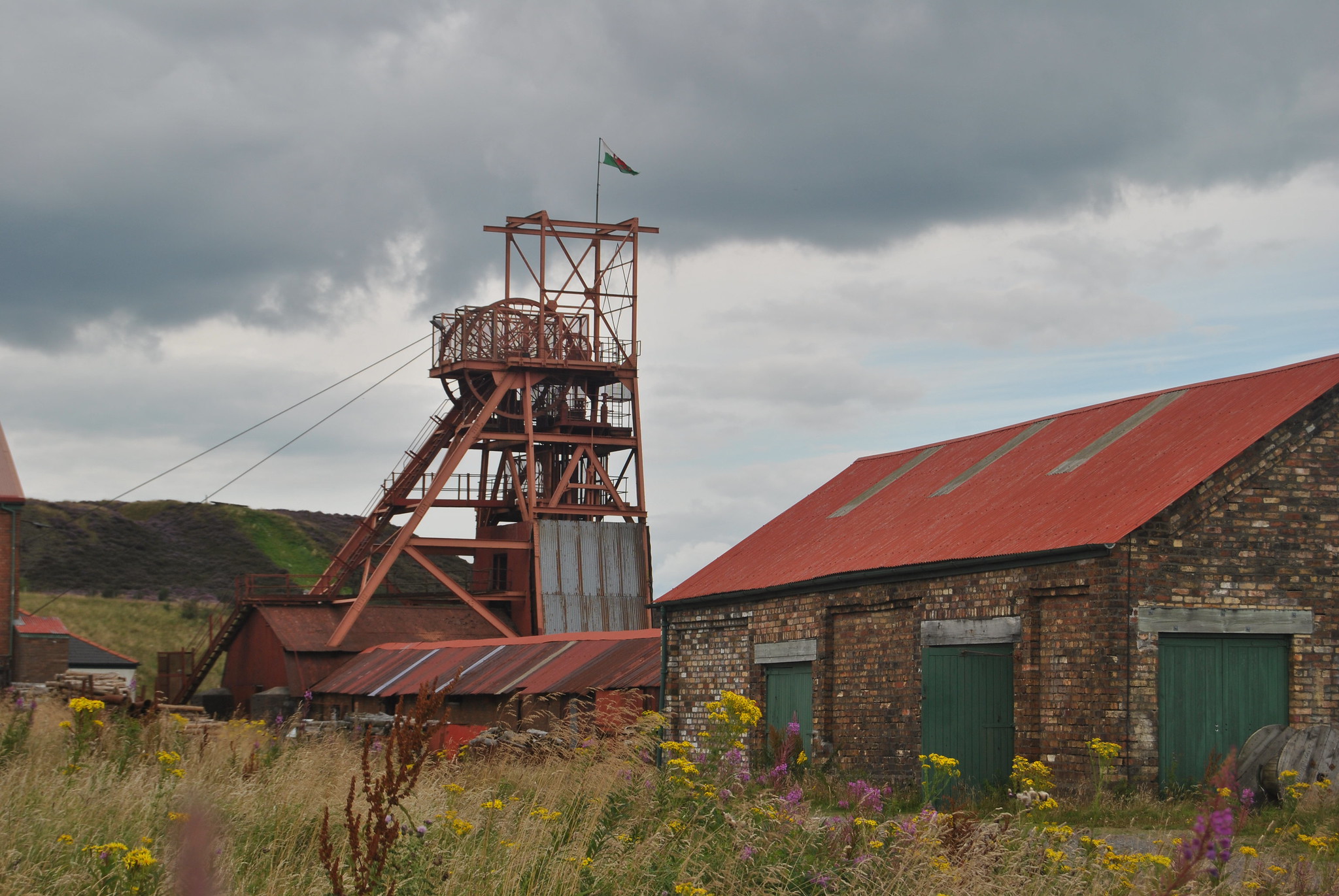
Research suggests legacy of pit closures still shaping health and mortality across former mining communities
A NEW academic study has found that communities with a history of coal mining experience dramatically higher rates of deaths linked to suicide, alcohol misuse and drug poisoning.
Researchers from Bangor University analysed mortality data from across England and Wales and found that so-called “deaths of despair” are 53% higher in areas with a coal mining past compared with places without a mining history.
The study, published in the journal Social Science & Medicine, examined patterns of mortality between 2015 and 2023 and is believed to be the first research of its kind to investigate the long-term health impact of coal mining’s decline.
Long shadow of industrial decline
The term “deaths of despair” refers to deaths caused by suicide, alcohol-related disease and drug poisoning. It was originally coined by researchers in the United States to describe rising mortality among working-class communities experiencing economic decline.
The Bangor study suggests similar patterns are visible in Britain, particularly in areas where coal mining once dominated local economies.
Researchers say the data points to the lasting impact of industrial collapse, economic instability and deep-rooted health inequalities that continue decades after pits closed.
Lead author Eurwen Williams, who conducted the research while training as a clinical psychologist at Bangor University, said the findings reflect the lived reality of many communities.
“As a clinical psychologist, reflecting on our research into deaths of despair in former coal mining communities, I am struck by how clearly the data echoes the lived realities of growing up and practising in North Wales,” she said.
“Behind every data point is a life lost and the story of a community living with the consequences of industrial decline, economic instability, and longstanding health inequalities.

“Distress does not arise in a vacuum; it is profoundly shaped by social and structural change.”
Warning for the future
Co-author Dr Christopher Saville said the findings highlight how persistent health inequalities can become once industrial communities lose their economic base.
“It is sad to see just how persistent these health inequalities are,” he said.

“At a time when we are talking about AI causing a new wave of deindustrialisation, it is vital that we learn the lessons from the last time around and avoid some of the mistakes that were made.”
Lessons from the coalfields
Coal mining shaped large parts of Wales for generations, particularly the South Wales Valleys where entire towns grew around pits.
However, the industry’s rapid decline during the late twentieth century, culminating in widespread pit closures in the 1980s and 1990s, left many communities facing unemployment, economic hardship and social upheaval.
Researchers say the study demonstrates how those changes may still be affecting public health decades later.
While the coal industry itself has largely disappeared, its social legacy remains deeply embedded in many former mining areas.
The researchers say their findings underline the importance of tackling structural inequality alongside individual health support.
Communities still paying the price
The study concludes that the health consequences of industrial decline can persist across generations if communities are not supported through economic transition.
Researchers say the findings should inform future policy decisions, particularly as new technological changes threaten to reshape labour markets once again.
The authors warn that without careful planning and investment, new waves of economic disruption could produce similar long-term consequences for communities across the UK.

Elin Jones and shadow health minister call for upgrading Bronglais
PLAID CYMRU has pledged to develop Bronglais Hospital into a “Hospital of Rural Excellence”, arguing that healthcare in mid Wales must be designed specifically for rural communities rather than based on models developed for major cities.
The commitment was made by Ceredigion MS Elin Jones, who is also Plaid Cymru’s lead Senedd candidate for the new Ceredigion Penfro constituency, alongside the party’s Shadow Health Minister Mabon ap Gwynfor.
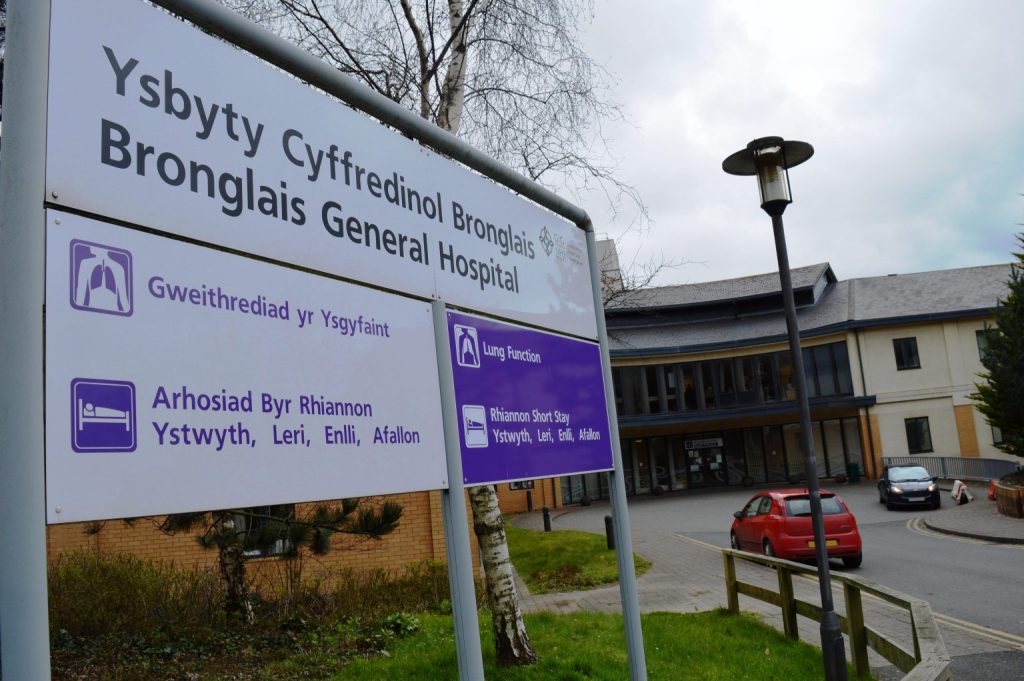
The pledge comes as concerns continue about the future of services at the Aberystwyth hospital, including proposals which could see the stroke unit downgraded.
Ms Jones said Bronglais has faced repeated threats of service reductions over the years and called for renewed focus on recommendations made in the 2014 Mid Wales Healthcare Study, led by Professor Marcus Longley and commissioned by the Welsh Government.
The study was carried out following earlier proposals to centralise emergency surgery and obstetric services away from the hospital.

Ms Jones said: “We know that Bronglais is a small hospital and the numbers coming through its doors are not the same as in large city hospitals. Models of service delivery designed for large population centres are not always appropriate for smaller rural hospitals.
“However, being smaller does not mean a hospital cannot be modern, innovative or cutting-edge. In fact, rural hospitals often need to be even more innovative, particularly in the use of telemedicine and new ways of delivering care.
“There was real momentum following the Marcus Longley review to design bespoke rural health services for mid Wales, and progress was made for a time. Unfortunately that momentum appears to have been lost during the covid period.
“It is now time to revisit those ambitions and work across health board boundaries to develop Bronglais as a hospital of rural excellence.”
Plaid Cymru says the hospital’s catchment area stretches across a vast geographical region, serving communities in Ceredigion as well as large parts of Powys and Gwynedd.
Mr ap Gwynfor said rural healthcare systems in other parts of the world could offer useful lessons.
“Bronglais serves a very large geographic area covering much of Gwynedd, Powys and Ceredigion,” he said.
“With the right political direction from the next Welsh Government, we have an opportunity to plan services in Bronglais in a way that genuinely meets the needs of rural Wales.
“Countries such as Canada and Australia have developed successful models of rural health excellence. By learning from best practice internationally, working across health board boundaries, and collaborating with professional bodies such as the Royal Colleges, we can build a service that excels in telemedicine and has a workforce plan suited to rural areas.”
Plaid Cymru says it believes Bronglais could become a national centre for innovation in rural healthcare if the right long-term strategy and investment are put in place.


Crime13 hours ago
Man jailed after threatening to chop teen’s ears off in drunken phone call
17-year-old victim said she feared for her life after a series of threats A MAN who threatened a teenage girl...


Sport13 hours ago
Sean Bowen set for historic Welsh clash at Cheltenham Gold Cup
PEMBROKESHIRE jockey Sean Bowen could be part of a historic all-Welsh showdown when he lines up in the Cheltenham Gold...


Community14 hours ago
Tenby still waiting as Wales hits 50 rural mobile mast upgrades
Seaside town plagued by signal congestion again absent from latest government-backed coverage improvements A NEW milestone in the UK Government’s...


Crime1 day ago
Man raped 15-year-old girl in caravan while she was on family holiday in west Wales
Jury convicts Pendine man after court hears he raped intoxicated teenager in caravan during family holiday A MAN who raped...

Community1 day ago
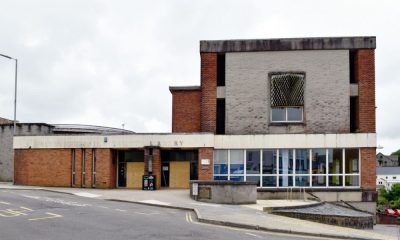
Crash sparks fresh questions over future of former Haverfordwest library
CONCERNS have been raised about the future of a distinctive Haverfordwest building after a car crashed into it last week,...

Community2 days ago
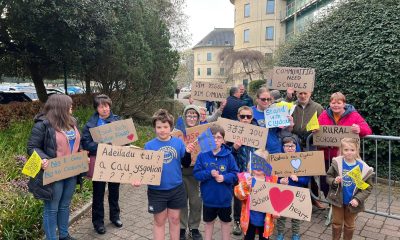
Councillors vote to close Ysgol Clydau despite community concerns
Petition and protests fail to prevent closure of small rural school near Tegryn PEMBROKESHIRE COUNTY COUNCIL has voted to close...


News3 days ago
Rescue drama at Swanlake Bay as lifeboats race to aid hypothermic casualty
TENBY lifeboat crews were involved in a dramatic multi-agency rescue on Saturday morning (Mar 7) after a person suffering from...


Sport3 days ago
Wales show heart in Dublin but Ireland hold firm
Ireland 27 – 17 Wales – Aviva Stadium, Dublin – Guinness Six Nations, Round Four WALES produced their most encouraging...

Community3 days ago
Farm matriarch who built family poultry business dies aged 90
Tributes have been paid to the woman described as the “heart and soul” of a well-known Pembrokeshire family farm following...


Local Government4 days ago
Clean-up after yacht wrecked on rocks at Lower Town, Fishguard
A YACHT that ran aground on rocks at Lower Town in Fishguard is being cleared by Pembrokeshire County Council after...
-

 Community5 days ago
Whitland Post Office re-opens under new management
-
 Health2 days ago
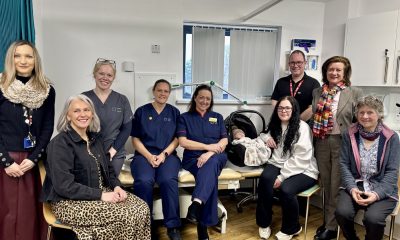
Women’s health services ‘expanding’ across mid and west Wales says Health Board
-
 Health6 days ago
Davies and Kurtz attack ‘fantasy hospital’ pledge for west Wales
-
 Crime5 days ago
Man who threatened to kill police during Milford Haven standoff avoids jail
-

 Ministry of Defence6 days ago
Welsh pride HMS Dragon to sail to shield UK’s Cyprus base
-

 Education6 days ago
NEU Cymru publishes manifesto to save education in Wales
-
 Health7 days ago
Hywel Dda warns of ‘significant pressure’ as A&E departments remain packed
-

 News6 days ago
Hotel at centre of asylum housing row closes with immediate effect