


News
Government unveils new border security powers as pressure mounts over illegal migration


New Act allows raids, phone seizures and tougher offences — but critics say legislation comes amid growing political pressure
THE UK GOVERNMENT has announced sweeping new border security powers aimed at disrupting small-boat crossings and dismantling organised smuggling networks — but the move comes at a time of intense political pressure over illegal migration and a sharp rise in support for Reform UK among voters concerned about immigration policy.
The Border Security, Asylum and Immigration Act, which received Royal Assent today (Tuesday 2 December), gives Immigration Enforcement, police and the National Crime Agency (NCA) significant new powers including the ability to seize phones long after arrival, raid properties and vehicles, and arrest smugglers earlier in the planning stages of a Channel crossing.
While ministers say the changes represent the “strongest ever” toolkit against smuggling operations, the legislation also arrives against a backdrop of record small-boat arrivals, rising public frustration and a political environment increasingly shaped by migration concerns.
New powers inspired by counter-terror law
The Act includes provisions modelled partly on counter-terror legislation, allowing officers to act at a much earlier stage of investigations — such as when a suspect downloads maps or information on how to launch a small boat.
Other offences include:

- Supplying or handling small-boat components such as engines and pumps (up to 14 years in prison)
- Researching or downloading information related to crossings (up to five years)
- Creating hidden vehicle compartments used for smuggling
- Endangering life during a Channel crossing
- Publishing online adverts promoting smuggling services
Foreign nationals convicted of sexual offences will also be automatically excluded from protections under the Refugee Convention.
Home Secretary: “Restoring order and control”
Home Secretary Shabana Mahmood said the new powers would allow officers to “intercept, detain and arrest” smuggling gangs more effectively.
“I will not stop until we’ve restored order and control at the border,” she said.
The NCA, which has around 100 ongoing investigations into organised immigration crime, said the legislation would help disrupt activity “at a much earlier stage”.
Political backdrop: migration now a top-tier issue
While the Government emphasises the enforcement benefits, the timing of the legislation is politically significant.
Opinion polls over the past year show immigration rising to one of the top concerns for voters, with dissatisfaction from both sides — those who believe asylum processes are too slow, and those who want tougher enforcement.
The rise of Reform UK, which has made border control its flagship issue, has also shifted the national debate. In several recent by-elections and national polling snapshots, Reform has polled ahead of or close behind the Conservatives among voters prioritising immigration and small-boat crossings.

This pressure has pushed the Government to be seen delivering concrete action after previous flagship policies — including the Rwanda removal scheme — faced years of legal and operational obstacles.
Political analysts say the Act represents an attempt to show decisive progress at a time when the Government is struggling to rebuild trust on border control.
Enforcement cases rising but crossings remain high
The Government cites recent enforcement data showing:
- Nearly 900 organised immigration crime networks dismantled
- A 33% rise in smugglers’ arrests, convictions and asset seizures
- Almost 4,000 interventions against smuggling activities in the past year
However, small-boat arrivals remain a persistent challenge, with more than 50,000 migrants removed or deported since July 2024, but continued pressure on accommodation, enforcement teams and coastal border operations.
Border Security Command formalised
The Act also gives statutory footing to the UK’s Border Security Command, led by Martin Hewitt CBE QPM, who said the powers would allow officers to “go further and faster” in dismantling the networks.
But he acknowledged the scale of the challenge, saying organised immigration crime “continues to adapt” to enforcement efforts.


Ministers confirm talks with allies after Donald Trump calls on Britain to help protect vital oil shipping route
THE UK GOVERNMENT is examining “all options” to help secure the Strait of Hormuz as tensions in the Middle East threaten one of the world’s most important oil routes.
Energy Secretary Ed Miliband said Britain is already in discussions with allies, including the United States, about how to restore safe navigation through the narrow shipping corridor, through which around one fifth of the world’s oil supply passes.
Speaking on BBC One’s Sunday with Laura Kuenssberg, Miliband said reopening the strait was a global priority but stressed the government favours de-escalation rather than military confrontation.
“It is very important that we get the Strait of Hormuz reopened,” he said. “We are in talks with allies about how to secure that key shipping route. Any options to help the Strait reopen are being looked at.”

The comments come after US President Donald Trump called on several major powers — including the UK, France, Japan, South Korea and China — to send warships to the region to ensure the vital oil corridor can no longer be threatened by Iran.
The escalating conflict between the US, Israel and Iran has already led to attacks on shipping in the Gulf, raising fears that Tehran could attempt to block or severely disrupt the strait.
Political divisions in Westminster
The prospect of British military involvement has exposed sharp political divisions in Westminster.
Shadow energy secretary Claire Coutinho said the UK should explore deploying ships or surveillance drones to the region if doing so would protect Britain’s national interests.
She argued that keeping international shipping lanes open and protecting military assets abroad was vital for global stability and the UK economy.
However, Liberal Democrat leader Ed Davey warned Britain should not automatically follow Washington into another conflict.
He said the quickest way to stabilise oil markets and secure the route was through diplomatic de-escalation rather than military intervention.
Davey also criticised President Trump’s approach to the crisis, warning the UK should not be “at the beck and call” of an American president.


Global oil supply at risk
The Strait of Hormuz is widely regarded as one of the most strategically important shipping routes in the world.
Bounded by Iran to the north and Oman and the United Arab Emirates to the south, the narrow channel connects the oil-rich Gulf region to the Arabian Sea and global markets.
Around 3,000 vessels pass through the strait every month, carrying an estimated 20 million barrels of oil per day.
Any prolonged disruption could send global oil prices soaring and drive up fuel and energy costs in countries including the UK.
Government sources have warned the economic impact of the Middle East conflict could be “huge”, with ministers already examining measures to shield households and businesses from potential spikes in energy prices.
The developments are being closely watched in Pembrokeshire, home to the South Hook and Dragon LNG terminals at Milford Haven. Tankers carrying Qatari liquefied natural gas frequently pass through the Strait of Hormuz before reaching the UK, meaning any disruption in the Gulf could have implications for energy supplies and prices in Wales.
For now, the government insists diplomacy remains the preferred path — but with tensions rising and pressure from Washington increasing, Britain may soon face difficult choices about how far it is willing to go to secure the world’s most critical oil chokepoint.


Affordable housing proportion rises as apartment plans replaced with family homes
AMENDMENTS to the final phase of a housing development in Saundersfoot have been approved, reducing the overall number of homes while increasing the proportion of affordable properties on the site.
Morgan Construction (Wales) Limited, through agent Evans Banks Planning Limited, sought permission to reconfigure the third phase of a residential development at Whitlow, Narberth Road, Saundersfoot.
The application was recommended for approval and came before members of Pembrokeshire Coast National Park’s Development Management Committee at its March meeting.
The original scheme, granted permission in 2023 and already partly built, allowed for a total of 54 homes. Under the revised proposals the number will be reduced to 47.
A planning officer’s report explained that the development is being built in phases. Phase one consists of 16 market homes, while phase two includes 19 affordable properties.

The application concerned the final stage of the project, known as phase three.
Under the original consent, phase three would have delivered 19 one- and two-bedroom apartments located in the centre of the site. However, the revised plans replace those flats with a mix of houses.
The new layout will include two three-bedroom detached houses, three two-bedroom detached bungalows, four two-bedroom terraced townhouses and three three-bedroom terraced townhouses.
This change reduces the number of homes in phase three from 19 apartments to 12 houses.

Although the number of affordable homes across the development will remain unchanged, the reduction in market housing increases the proportion of affordable properties on the site from 35.1 per cent to 40.4 per cent.
The applicants told planners that demand for the previously approved apartments had been limited. They said there was already a considerable supply of such properties in the lower part of Saundersfoot, while demand locally appeared stronger for homes suited to young families and for older residents wishing to downsize into smaller bungalows.
The report added that without the changes the final phase of the development could remain unbuilt, leaving future residents living on a partially completed site.
Committee members agreed to grant delegated approval to planning officers, subject to the completion of legal agreements covering planning obligations.
These include provisions to secure the affordable housing in perpetuity, along with financial contributions towards library services, recreational open space and sustainable transport.
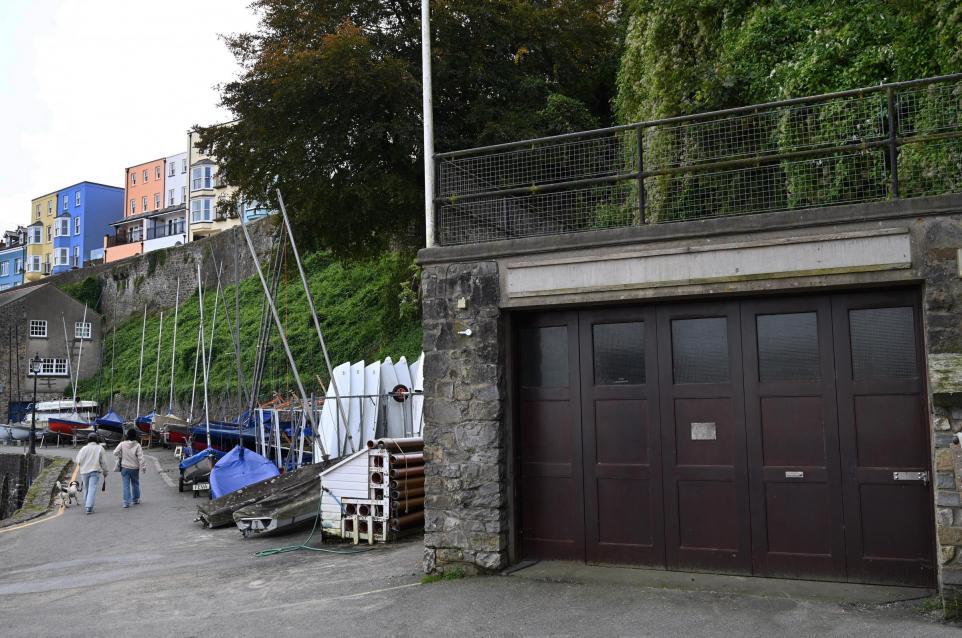
AN APPEAL has been lodged against the refusal of plans for a takeaway food kiosk at a former lifeboat store in Tenby’s seaside harbour, despite planning officers recommending the scheme for approval.
Last March, members of the Pembrokeshire Coast National Park Authority development management committee rejected proposals to site a takeaway food kiosk at the former RNLI lifeboat store at Penniless Cove, Tenby Harbour.
The application, submitted by Ruby Goodrick, sought permission to convert the old store into a takeaway cold food outlet operating seven days a week from 10:00am to 10:00pm.
The scheme came before councillors rather than being determined under delegated powers after Tenby Town Council objected to the proposal.
Despite the objection, planning officers recommended the scheme for approval, even though it represented a departure from the adopted development plan.
An officer report said: “Whilst it is acknowledged that the proposed use would introduce a retail element to this area of the harbour, on balance officers consider that no significant harm would be caused to the character of Tenby Harbour as a result of this development.
“The use proposed occupies a relatively small floor area and would not be a destination in and of itself. Rather, it would rely on the existing footfall within the harbour.”
Speaking at the meeting in March (2025), Alistair McKay, representing Tenby Sailing Club, warned the proposal could create potential conflicts with other harbour users.
The applicant told councillors she was “more than happy” to adjust the proposed opening hours. Ms Goodrick said the business would build on the success of her mother’s former sandwich shop in the town, Truly Scrumptious.
The proposed outlet, called Truly@The Harbour, would “contribute positively to the local economy,” she said.
However, committee members raised concerns including congestion in the harbour area and the handling of waste.
Members eventually voted by 12 votes to three to refuse the application.
The applicant has now lodged an appeal with Planning and Environment Decisions Wales (PEDW).
In a statement supporting the appeal, Ms Goodrick said: “The proposal is modest in scale, does not harm the retail hierarchy, is in close proximity to the town centre, and has received no objections from the majority of the statutory consultees.”
The appeal statement adds that the refusal was based on the kiosk being outside the defined town centre boundary.
However, it argues that the building is located only around 25 metres outside the retail centre boundary and would otherwise represent a use considered acceptable within the town centre.



Sport1 hour ago
France crowned Six Nations champions after extraordinary final-day drama
Ramos penalty in Paris seals title as Ireland fall just short and Wales end losing run FRANCE were crowned 2026...


News6 hours ago
Fishguard linked to allegations in Many Tears Animal Rescue investigation
Claims about puppies arriving through Pembrokeshire port emerge as licensing probe continues FISHGUARD has been named in allegations linked to...


Local Government1 day ago
Investigation confirmed after inspectors visit Many Tears Animal Rescue
Licensing authority declines to comment as police confirm attendance at Carmarthenshire rescue centre AN INVESTIGATION is underway following a visit...


Business2 days ago
Work set to begin on £50m hydrogen plant in Milford Haven
A MAJOR new hydrogen production facility worth around £50 million is expected to begin construction in Milford Haven later this...


Education3 days ago
Manorbier school closure approved while insurance claim still unresolved
Council confirms negotiations with insurer ongoing following 2022 fire PEMBROKESHIRE COUNTY COUNCIL has confirmed that negotiations with its insurer over...


Crime4 days ago
‘Knife attack’ at Spittal property leaves man in hospital
POLICE have arrested a woman following what is being described as a ‘knife attack’ at a property in Spittal on...


Community4 days ago
Pembrokeshire to receive its first banking hub in Pembroke Dock
LINK, the UK’s Cash Access and ATM network, has today announced local people and businesses in Pembroke Dock will benefit from a new banking...


Health5 days ago
Future of Withybush Hospital petition sparks urgent call for Senedd debate
CALLS have been made for an urgent debate in the Senedd over the future of services at Withybush Hospital as...


Sport6 days ago
Sean Bowen set for historic Welsh clash at Cheltenham Gold Cup
PEMBROKESHIRE jockey Sean Bowen could be part of a historic all-Welsh showdown when he lines up in the Cheltenham Gold...


Community6 days ago
Tenby still waiting as Wales hits 50 rural mobile mast upgrades
Seaside town plagued by signal congestion again absent from latest government-backed coverage improvements A NEW milestone in the UK Government’s...
-

 Health2 days ago
Welsh Ambulance Service to host bi-monthly Board meeting
-

 News1 day ago
Rayner and Lammy visit Wales to discuss justice and community safety
-

 Local Government4 days ago
Register now to vote in May’s Senedd election
-

 Crime6 days ago
Former Pembrokeshire Army officer stripped of MBE after fraud conviction
-
Community6 days ago
Tenby still waiting as Wales hits 50 rural mobile mast upgrades
-

 News6 days ago
Hustings to focus on learning disability support ahead of Senedd election
-

 Community6 days ago
Carmarthenshire woman celebrates 100th birthday surrounded by family
-

 Crime5 days ago
E-bike rider who sped through pedestrian alley sentenced by court