


Charity
Paul Sartori Hospice at Home celebrates Co-op Community Fund support

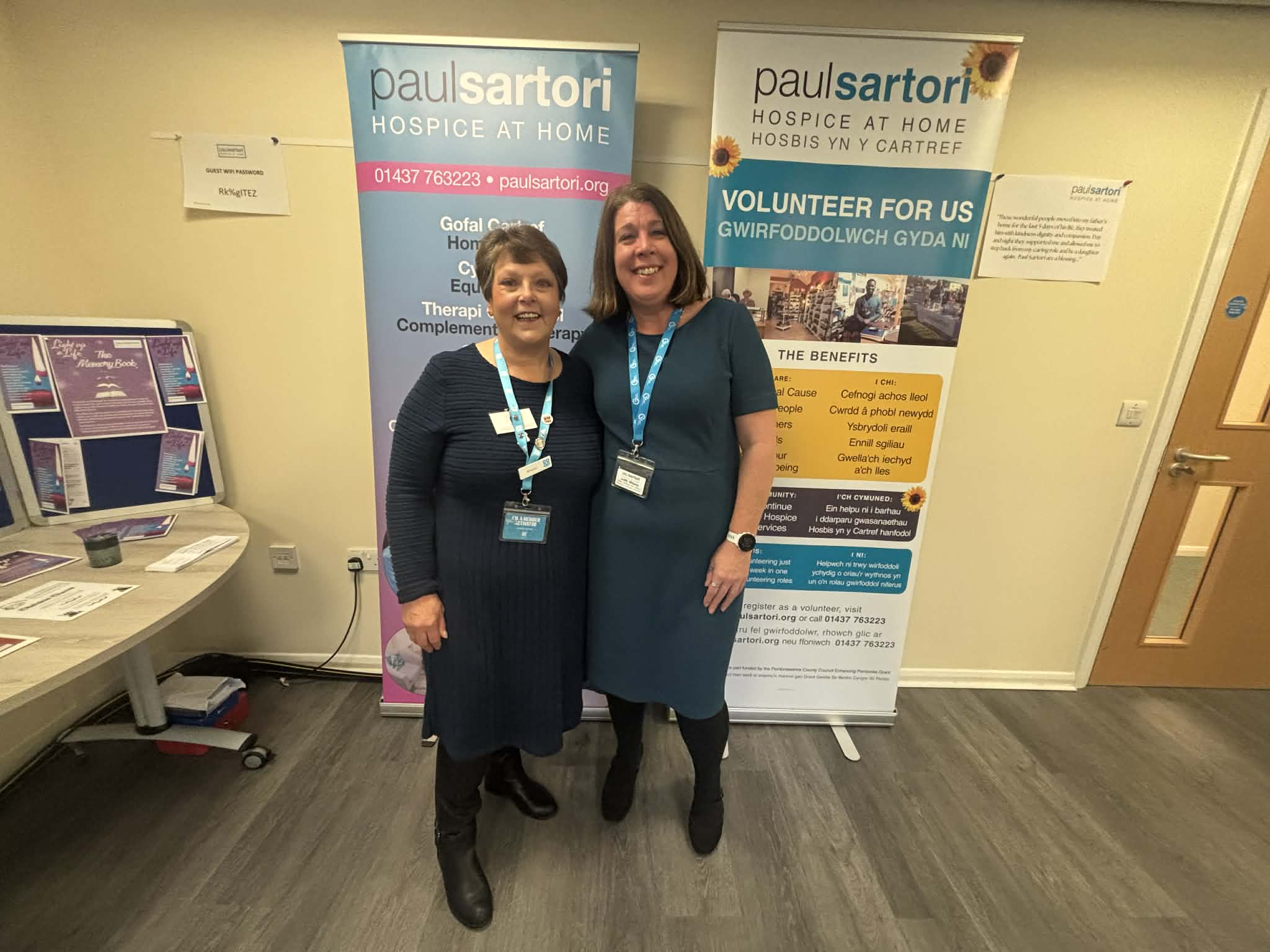
PAUL SARTORI Hospice at Home is celebrating more than £3,000 of funding from the Co-op Local Community Fund and has announced it has once again been selected as a beneficiary for the 2025/2026 funding round.
The Haverfordwest-based hospice at home charity is now appealing to Co-op members across Pembrokeshire to choose Paul Sartori as their nominated cause, helping to secure crucial support until October 2026.
Co-op members can decide how the Local Community Fund is distributed simply by selecting a preferred local cause via the Co-op Membership App.
“We welcome this opportunity once again to appeal to Co-op members to choose us as their local Co-op cause, especially as funds for charitable organisations are becoming more difficult to access, with greater competition,” said Judith Williams, Grant Development Officer. “This is an opportunity for us to engage and encourage our community – and it doesn’t cost Co-op members a penny. Engaging with our local Membership Activator, Anwen, has really helped us to do this.”
The charity has received £3,044 in the 2024/2025 funding year. “This, along with the Co-op’s ongoing support, will help us make a difference and continue supporting end-of-life patients and their families in Pembrokeshire by providing the resources and equipment they need to live independently at home,” Judith added.

Since its launch in 2016, the Co-op Local Community Fund has supported nearly 40,000 community projects across the UK, with a focus on enabling communities to thrive by improving access to food, boosting mental wellbeing, creating opportunities for young people, strengthening community cohesion and supporting sustainable futures.
David Luckin, Head of Social Value and Community Engagement at Co-op, said: “We are delighted to hear the difference that our funding for Paul Sartori Hospice at Home is making in the community. As a co-operative, we are focused on creating value for our members and communities, and members have a say in where and how our funding is shared. We know that things are increasingly challenging for local causes, and our funding can make a real difference — helping people and communities thrive.”
The new round of support will help sustain the charity’s Equipment Loan Service, which provides essential items at short notice to help patients remain at home. The service complements statutory healthcare provision and often steps in where statutory services struggle to respond quickly, offering a compassionate, community-led model of care that promotes dignity and independence at the end of life.
All Paul Sartori services are free of charge and available 24 hours a day, 365 days a year thanks to local generosity. The charity provides home nursing care, 24-hour support, standby services, complementary therapies, physiotherapy, bereavement and counselling support, future care planning and training. These services enable people with life-limiting illnesses to remain at home — pain free, supported and surrounded by loved ones, where that is their wish.

Further information about Paul Sartori Hospice at Home is available at www.paulsartori.org or by calling 01437 763223.
Pic: Anwen Evans, Co-op West Wales Membership Activator (left), with Judith Williams, Grant Development Officer at Paul Sartori Hospice at Home.


New perinatal service aims to help families cope with the pressures of early parenthood
NSPCC CYMRU has launched a new perinatal support programme aimed at helping expectant and new parents across Wales navigate the challenges of caring for a baby.
The Baby Steps service, a redeveloped early-intervention programme, is designed to give parents the tools, confidence and emotional support needed during pregnancy and in a child’s first months of life.
The service was officially launched this week at an event held at BT headquarters in London, attended by The Duchess of Edinburgh, who is a Patron of NSPCC, alongside childcare professionals and public figures.
Baby Steps will initially be piloted through three NSPCC hubs, including the Wales hub, placing Cymru at the forefront of the charity’s rollout of the service.
Carl Harris, Assistant Director for the NSPCC Wales hub, said the evidence-based programme could make a significant difference to families during a crucial stage of a child’s development.
He said: “The early stages of a baby’s life can feel daunting for parents, as they face new challenges every day while trying to give their child the best possible start.
“It is a critical time for a child’s development, and perinatal services like Baby Steps can offer enormous support to help parents through what is an exciting, but sometimes very difficult, period.
“NSPCC Cymru is proud to be leading the way in rolling out this service and supporting parents and children across Wales.”
Figures released alongside the launch highlight the scale of need. During 2024/25, the NSPCC Helpline referred more than 3,800 children under the age of two to external agencies across the UK, including police and social services. This represented almost one fifth (18%) of all referrals made by the Helpline on behalf of a child during the year.

One father who contacted the service described the pressures faced by new parents, saying: “We just can’t get our baby into a routine. It’s been eight weeks, we’re new to parenting and have different opinions, and then our friends all have different advice. It’s causing major arguments and nothing’s working.”
In addition to Baby Steps, the NSPCC website offers a wide range of guidance for parents and carers, including advice on bonding with babies and raising children safely.
Chris Sherwood, Chief Executive of the NSPCC, said the charity was pleased to mark the launch with a royal visit.

He said: “It’s always a privilege to be part of a Royal visit, and we were delighted that HRH The Duchess of Edinburgh was able to join us to celebrate our Baby Steps service.
“As our Helpline data shows, the first couple of years of a child’s life can be an extremely difficult time for parents. Our Helpline regularly hears from parents struggling with the pressures of a newborn, as well as from concerned members of the community.
“The Baby Steps service provides essential building blocks to help parents navigate the earliest stages of their child’s life and ensure they thrive. Any parent or carer who needs support or advice can always contact the NSPCC Helpline.”
.

MILFORD HAVEN ROUND TABLE has formally thanked Milford Haven Town Council for its continued support, saying the council’s backing helps make some of the town’s biggest free events possible.
The group said the Town Council is a major supporter of its work in Milford Haven and plays a vital role in enabling community celebrations including the Milford Haven Carnival and the annual Fireworks Extravaganza, which draw thousands of people.
Representatives from the Round Table said it was “great to catch up” with the Mayor, Councillor William Elliott, at the Christmas Lights Switch On in December, where they presented a small token of thanks to mark another year of collaboration.
Milford Haven Round Table said it is proud to support the town through fundraising, volunteering and delivering events which create memories, raise money for local causes and strengthen community spirit.
The group added that none of its work would be possible without strong partnerships across Milford Haven, and thanked the Town Council for its “ongoing support, trust and commitment” to the town and its residents.

THE PAUL SARTORI FOUNDATION is celebrating an act of generosity from local classic car enthusiast Roger Handcock, whose donation of a cherished Mazda MX5 has helped raise £5,500 plus Gift Aid for end-of-life care across Pembrokeshire.
Roger made the decision to donate his 1990 MX5 after a period of ill health over the summer meant the car was no longer being driven. He said he wanted it to be enjoyed — and properly cared for — by someone who would appreciate it as much as he had.
A long-standing member of the Pembrokeshire Classic Car Club, Roger said: “I was ill this summer and my 1990 MX5 was not getting any use, so I decided to part with it in the hope that it would bring some enjoyment and be maintained properly. However, I didn’t have the energy to try to sell it for the highest possible price.
“Being a member of Pembrokeshire Classic Car Club, I decided to donate the car to Paul Sartori Hospice at Home which is one of their favoured charities. In the end a great price was secured for the vehicle, and I am pleased to say that it will still be seen on Pembrokeshire’s roads.”
The Foundation said donations like Roger’s provide a vital source of income, helping to fund free hospice at home support for people nearing the end of life. The service enables patients to remain in the comfort of their own homes, supported by specialist equipment and professional care, while also offering help to families at an incredibly difficult time.
A spokesperson for the Paul Sartori Foundation said they were grateful for Roger’s kindness, adding that the impact of his gift would continue long after the MX5 begins its next chapter on Pembrokeshire’s roads.
Brave donation: Roger Handcock with Paul Sartori Events and Fundraising Officer Joanne Lutwyche (Pic: Paul Sartori Foundation).



Health17 minutes ago
Consultation reveals lack of public trust in health board
EARLIER this week, Hywel Dda UHB published the results of a consultation into the future configuration of its clinical services....


Community1 hour ago
Specialist team searches River Teifi in ongoing hunt for missing man
A SPECIALIST search team has carried out a renewed and highly technical search of the River Teifi in Cardigan as...


News22 hours ago
Wales’ first minister keeps distance from Starmer before May vote
Senedd race not Westminster THE FIRST MINISTER has moved to draw a clear dividing line between the Welsh Labour campaign...

News1 day ago
Kurtz raises Gumfreston flooding in the Senedd as petition deadline nears
LOCAL Senedd Member Samuel Kurtz has raised the long-running flooding problems affecting the B4318 at Gumfreston in the Senedd, as...


Community2 days ago
Anchor re-dedicated to mark 30 years of US–Haverfordwest ties
Service honours shared history, service and friendship on the Quayside A SYMBOL of Haverfordwest’s wartime and Cold War connections with...


Business2 days ago
Senedd urged to act as Welsh pubs fall further behind England on business rates
Industry leaders warn of closures and job losses as pressure mounts on ministers to pass on funding PUBS across Wales...


Crime2 days ago
Haverfordwest man jailed for online death threat
A Haverfordwest man has been sentenced to a year in prison after sending a threatening message online. Michael Carruthers, 34,...


Community2 days ago
Storm Chandra: Morning impacts across Pembrokeshire
HEAVY overnight rain and strong winds brought by Storm Chandra have caused disruption across Pembrokeshire, with fallen trees and localised...


Business3 days ago
Business voices heard as Kurtz and Davies urge action on business rates
LOCAL businesses from across West Wales have voiced serious concerns about the impact of business rates at a dedicated roundtable...


Crime3 days ago
Milford Haven man appears in court charged with burglary and GBH
Bail granted with tagged curfew and ban from Pembrokeshire A MILFORD HAVEN man has appeared in court charged with burglary...
-
 Community7 days ago
CPRW welcomes long-awaited grid report and calls for more transparency
-

 Health7 days ago
Hywel Dda board to consider refreshed health strategy to 2040
-
Health5 days ago
Health Board to decide on future model for nine clinical services
-

 News7 days ago
Milford Haven School placed in special measures after Estyn inspection
-
Health7 days ago
Withybush staff fear crèche fee rise will price parents out
-

 News1 day ago
Caldey still unsafe, survivors warn — despite Abbey’s reform claims
-

 Business6 days ago
New planning rules could block Welsh pubs from running pop up campsites
-

 News7 days ago
IPSO rejects complaint concerning Pembrokeshire Herald court report